Beyond Stretching: How Somatic Movement Therapy Rewires Your Relationship with Stress and Chronic Pain
Most of us treat our bodies like high - maintenance machinery. We push them to perform, fuel them with caffeine, and try to fix them with aggressive stretching or intense workouts when they begin to creak and groan. Yet, despite our best efforts at the gym or on the yoga mat, a persistent tightness often remains. We carry a clenching in the jaw, a heaviness in the shoulders, or a dull ache in the lower back that seems immune to traditional methods. This is because these patterns are not just physical issues; they are neurological habits stored deep within the nervous system. This is where somatic movement therapy offers a profound shift in perspective.
Somatic movement therapy is not about how you look from the outside; it is about how you feel from the inside. The word "soma" comes from the Greek, referring to the body as perceived from within. Unlike traditional exercise, which focuses on external goals like flexibility, strength, or aesthetics, somatic movement therapy prioritizes interoception - the ability to sense the internal state of your body. By slowing down and paying exquisite attention to the sensations of movement, we can begin to communicate with the parts of our brain that control muscle tone and stress responses, effectively "rewiring" the pathways that keep us stuck in cycles of pain and tension.
Understanding the "Soma": More Than Just a Physical Body
In the context of somatic movement therapy, the body is not an object to be manipulated but a living, sensing process. Most people navigate their daily lives in a state of "cortical blindness" or what Thomas Hanna, a pioneer in the field, called sensory - motor amnesia. This occurs when the brain has lost the ability to feel and control specific muscle groups due to repeated stress, injury, or postural habits. When the brain can no longer sense a muscle, it cannot tell that muscle to relax. Consequently, the muscle stays chronically contracted, leading to fatigue, restricted movement, and eventually, chronic pain.
Somatic movement therapy works to reverse this amnesia. It uses the brain - to - muscle connection to re - educate the nervous system. By performing small, conscious movements, you invite the motor cortex to "re - inhabit" areas of the body that have gone numb or tight. This process is less about "doing" a movement and more about "witnessing" the movement as it happens. It is a form of moving meditation that treats the nervous system as the primary gateway to physical health.
Why Somatic Movement Therapy Succeeds Where Stretching Often Fails
When we feel tight, our first instinct is usually to stretch. However, if a muscle is chronically contracted because the nervous system is stuck in a "fight or flight" response, stretching can actually be counterproductive. The brain perceives the intense pull of a stretch as a threat to the muscle's integrity and triggers the "stretch reflex" , causing the muscle to tighten even further to protect itself. This is why you might feel loose for twenty minutes after a yoga class, only to have your hamstrings feel like lead weights an hour later.
Somatic movement therapy bypasses this protective reflex by using a technique called pandiculation. Pandiculation is what cats and dogs do when they wake up from a nap - they don't just stretch; they slowly contract and then consciously release their muscles. This "biofeedback loop" tells the brain exactly how much tension is in the muscle and allows the brain to reset the resting length of that muscle. Instead of forcing a muscle to lengthen, you are teaching the brain how to let go of the contraction voluntarily.
The Core Pillars of a Somatic Practice
To truly engage with somatic movement therapy, one must adopt a specific mindset that differs from traditional fitness. These pillars ensure that the practice remains a therapeutic tool for the nervous system rather than just another item on a to - do list.
- Slowness is Key: The brain cannot learn new patterns if you are moving quickly. Speed relies on established habits. Slowness allows the nervous system to notice the "glitches" or jerky movements that indicate sensory - motor amnesia.
- The Power of Smallness: Large movements often recruit the "big" muscles we already use too much. Small, subtle movements help us find the deeper, stabilizing muscles and the subtle connections between different body parts.
- Effortless Effort: If you find yourself straining or holding your breath, you have moved out of the somatic realm and back into the "performance" realm. The goal is to move with the least amount of effort possible.
- Non - Judgmental Curiosity: Instead of thinking "my hip is tight" , a somatic practitioner might think "I notice a sensation of density in my right hip as I rotate my leg". This shift from labeling to sensing reduces the emotional stress associated with pain.
A 5-Step Daily Somatic Integration Framework
You do not need a clinical setting to begin exploring somatic movement therapy. Use this framework to begin re - establishing a connection with your nervous system. Spend at least 10 to 15 minutes on this daily, preferably in a quiet space where you won't be interrupted.
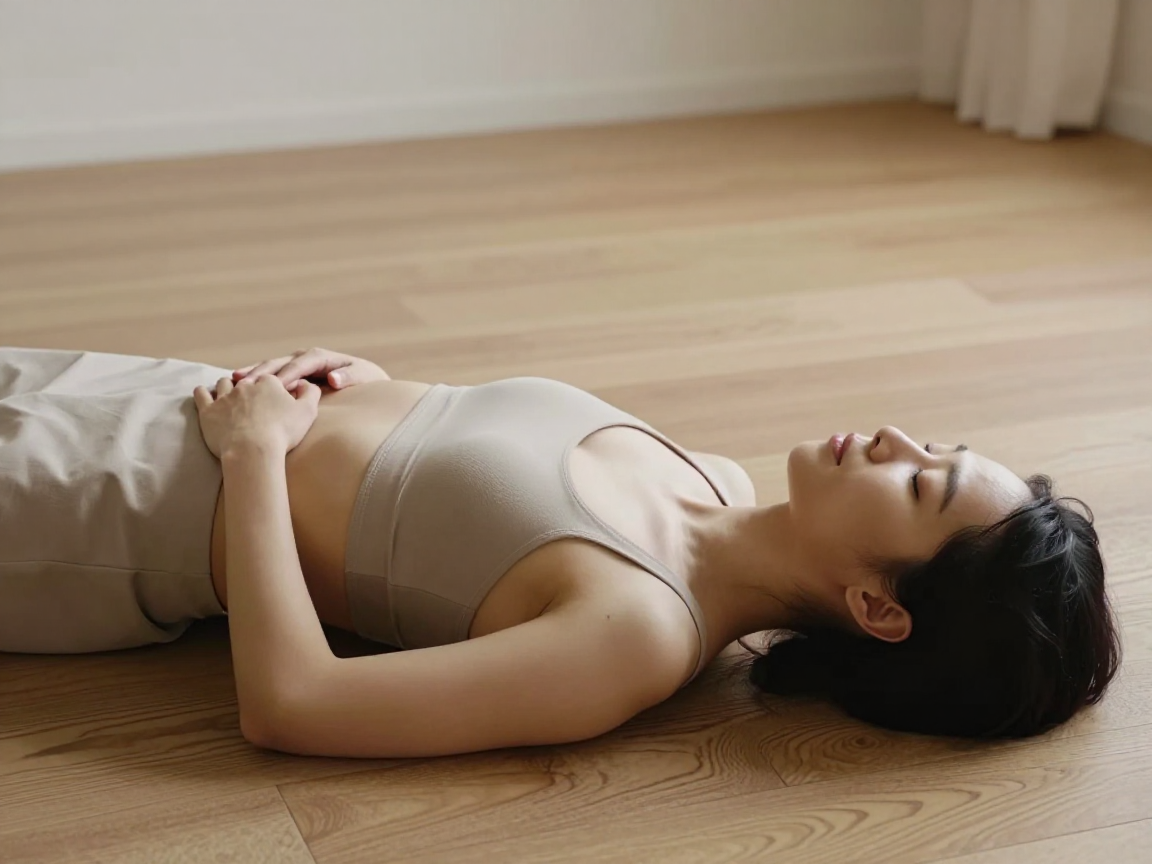
- Establish the Container: Lie down on a comfortable, firm surface (a rug or a yoga mat is better than a bed). Close your eyes and take three deep breaths. Notice where your body makes contact with the floor. Does one side feel heavier than the other? Is there a gap between your lower back and the mat?
- The Sensory Scan: Without trying to change anything, scan your body from feet to head. Notice areas of "void" where you cannot feel much sensation, and areas of "noise" where you feel tension or pulsing. This is your baseline.
- Initiate Micro-Movements: Choose one area, such as the pelvis. Slowly, almost invisibly, tilt your pelvis forward and backward. Focus entirely on the sensation of the vertebrae moving and the muscles of the lower back engaging and releasing. Do this for 2 minutes.
- The Somatic Reset (Pandiculation): Gently tighten the muscles you just moved, feeling the contraction clearly. Then, take a full 10 to 15 seconds to slowly, incrementally release that tension until the muscle is completely soft. Rest and feel the "afterglow" of the release.
- Integration and Quietude: After exploring a few areas, lie still for several minutes. Re - scan your body and notice if the floor feels different beneath you. Often, you will find that you feel "flatter" or more supported as the nervous system lets go of its grip.
Who Can Benefit from Somatic Movement Therapy?
Because somatic movement therapy addresses the nervous system directly, its applications are incredibly broad. It is particularly effective for those who feel that their physical symptoms are exacerbated by stress or past emotional experiences. Some common reasons people turn to this modality include:
- Chronic Pain Management: Especially for non - specific lower back pain, neck tension, and tension headaches that haven't responded to physical therapy.
- Post-Traumatic Stress (PTSD and CPTSD): Trauma is often "stored" in the body as chronic bracing. Somatic work provides a safe, gentle way to discharge that energy without necessarily having to revisit the traumatic narrative.
- Anxiety and Burnout: For those who feel "wired but tired" , somatic movements help shift the body from the sympathetic (stress) branch of the nervous system to the parasympathetic (rest and digest) branch.
- Improved Athletic Performance: By resolving sensory - motor amnesia, athletes can improve their coordination, balance, and efficiency of movement, reducing the risk of injury.
Moving Toward a Felt Sense of Freedom
Somatic movement therapy reminds us that the body is not the enemy. The pain or tension we feel is often just a signal from a nervous system that is trying its best to protect us. By learning to listen to those signals with compassion and curiosity, we stop fighting ourselves. We begin to move through the world with a sense of internal space and agency that no amount of traditional stretching can provide.
As you continue this journey, remember that the goal is not perfection. There is no "right" way to feel a somatic movement. The magic happens in the noticing. Every time you catch yourself bracing and choose to take a soft, conscious breath or a slow, mindful movement, you are reclaiming your soma. You are not just fixing a body; you are coming home to yourself.