Waking Up in the In-Between: Understanding the Sleep Paralysis Spiritual Connection
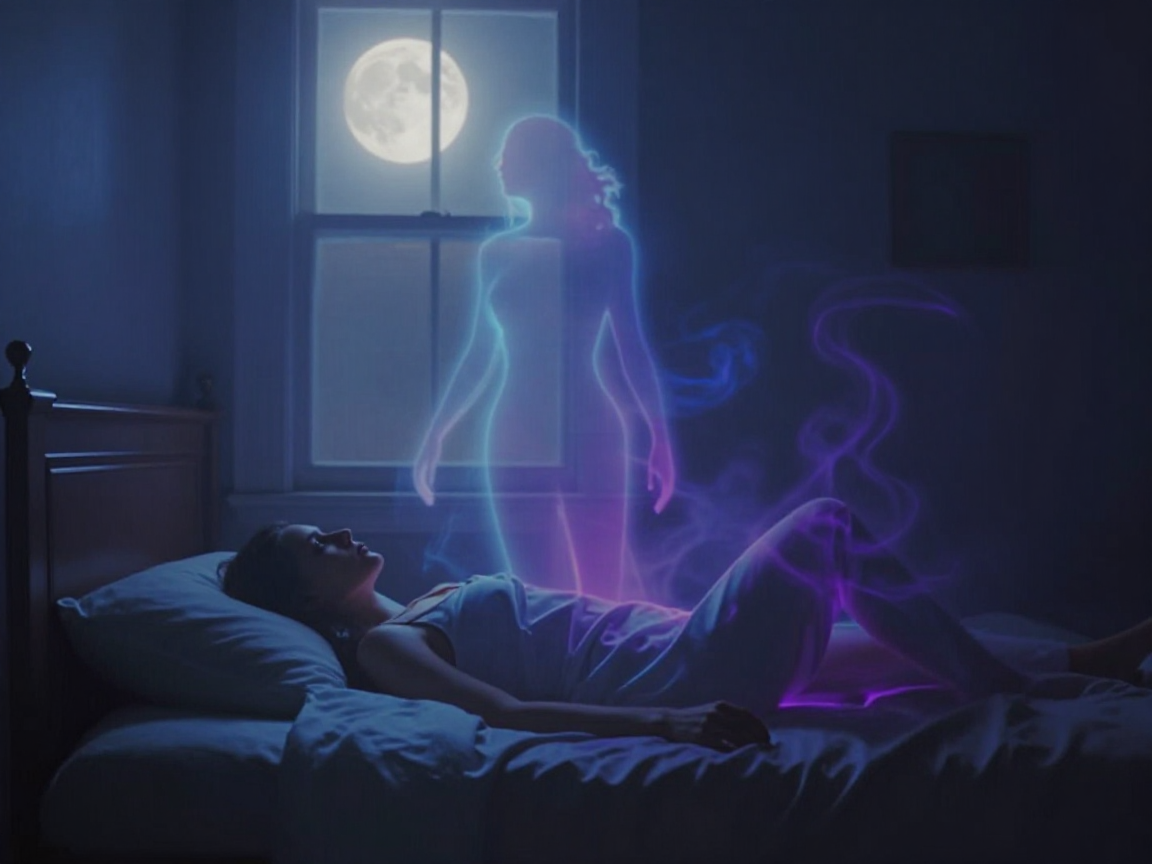
Few experiences are as universally terrifying as waking up in the dead of night, fully conscious, only to find that your body is completely unresponsive. You try to shout, but no sound emerges. You try to sit up, but an invisible weight presses against your chest. For many, this physiological phenomenon is accompanied by the chilling sensation of a presence in the room—a shadow figure watching from the corner or a heavy entity sitting upon the bed. This state, known scientifically as REM atonia, has a profound sleep paralysis spiritual dimension that has been documented across cultures and centuries.
While modern science explains this as a temporary disconnect between the brain and the body during the transition out of sleep, those who have experienced it often feel that a biological explanation is insufficient. The sheer intensity of the fear, the vividness of the hallucinations, and the consistency of the archetypal imagery suggest something deeper is at play. When we look at sleep paralysis spiritual interpretations, we find a rich tapestry of beliefs that view this state not as a medical malfunction, but as a threshold—a gateway between the physical world and the vast realms of the subconscious or the astral plane.
The Intersection of Science and Spirit: Defining the Experience
To understand the sleep paralysis spiritual significance, we must first look at what is happening on a physical level. During REM (Rapid Eye Movement) sleep, the brain paralyzes the muscles to prevent us from physically acting out our dreams. Sleep paralysis occurs when the mind wakes up before this paralysis has worn off. You are effectively caught between the waking world and the dream world. From a spiritual perspective, this "in-between" state is highly significant. In many esoteric traditions, the moments before sleep and immediately upon waking are considered times when the "veil" is thinnest.
In this liminal space, the ego—the part of us that manages our daily logic and social standing—is temporarily sidelined. This allows for a direct encounter with aspects of the psyche or the spiritual environment that we are usually too distracted to notice. Many practitioners of meditation and astral projection actually seek out this state intentionally. What the average person perceives as a terrifying "attack," the seasoned practitioner views as the "vibrational stage"—a necessary precursor to out-of-body experiences. This shift in perspective, from victim to observer, is the first step in mastering the sleep paralysis spiritual journey.
Biologically, the brain is flooded with DMT and other neurochemicals during sleep. When the conscious mind interrupts this process, the result is a hyper-vivid projection of our internal fears. However, spiritually, this can be seen as the activation of the pineal gland, often referred to as the Third Eye. The "hallucinations" may not be mere glitches, but a sudden influx of sensory data from a frequency we aren't usually tuned into.
Historical and Cultural Perspectives: The Old Hag and Beyond
Humanity has been trying to make sense of the sleep paralysis spiritual connection for millennia. Long before we had the term "REM atonia," every culture had a name for the entity that visits in the night. These stories reflect a collective human attempt to name the unnamable fear that accompanies the experience.
- The Old Hag: In Newfoundland and parts of the Southern United States, the experience is often called "the hagging" or being "hag-ridden." Folklore suggests a supernatural witch sits on the chest of the sleeper, stealing their breath.
- Kanashibari: In Japan, the term translates to "bound in metal chains." It was historically attributed to vengeful spirits or monks using magic to bind their enemies.
- The Incubus and Succubus: In medieval Europe, sleep paralysis was often interpreted through a religious lens, where demons were thought to visit sleepers to tempt or torment them, often linked to repressed desires.
- The Jinn: In Islamic traditions, some forms of sleep paralysis are attributed to the Jinn—beings made of "smokeless fire" who inhabit a parallel dimension and occasionally interact with humans in their sleep.
- The Shadow People: In modern spiritual circles, the "Shadow Man" is a frequent visitor. He is often described as a tall silhouette wearing a wide-brimmed hat, standing silently at the foot of the bed.
While these names vary, the core experience remains the same. The consistency of these visions across time and geography suggests that we are tapping into a universal layer of the human subconscious, or perhaps, interacting with a reality that exists just beyond our five senses. The recurrence of the "heavy weight" on the chest suggests a physical response to an energetic shift that the primitive brain interprets as an intruder.
3 Common Spiritual Interpretations of Sleep Paralysis
If we move beyond the immediate fear, what might the sleep paralysis spiritual meaning actually be? There are several schools of thought regarding why a person might find themselves in this state repeatedly.
1. The Astral Threshold and Out-of-Body Preparation
Many believe that sleep paralysis is the body’s way of preparing for the soul to leave the physical form. During the "vibrational state" that often precedes paralysis, people report hearing loud buzzing, feeling intense electrical sensations, or hearing their name called. In the context of astral projection, these are signs that the astral body is decoupling from the physical body. The fear we feel is often just the ego reacting to the loss of control over the physical vessel. If one can remain calm, they can often "roll out" of their body and enter a lucid dreaming or astral state.
2. Energetic Sensitivity and Thinning of the Veil
People who are naturally intuitive, empathic, or sensitive to energy tend to report sleep paralysis more frequently. From a spiritual standpoint, these individuals may have a "thinner" energetic boundary. When they enter the hypnagogic state (falling asleep) or hypnopompic state (waking up), they become aware of residual energies or entities in their environment that are usually invisible. In this view, sleep paralysis is an indicator of latent psychic potential that has not yet been disciplined or shielded. It is a call to strengthen one's own energetic sovereignty.
3. Shadow Work and the Subconscious Mind
Psychologically and spiritually, the "presence" felt during sleep paralysis can be seen as a manifestation of our own suppressed fears, traumas, or "shadow" aspects. When we are unable to move, we are forced to confront whatever is in the room with us. This can be a profound, albeit difficult, opportunity for "shadow work"—the process of integrating the parts of ourselves we have rejected or hidden away. The "demon" on the chest might actually be a personified representation of a heavy emotion or an unresolved conflict that demands our attention. By facing the entity with love or neutrality instead of fear, the experience often transforms or ceases entirely.
Navigating the Threshold: A Practical 4-Step Action Plan
When you find yourself in the middle of a sleep paralysis spiritual event, logic often goes out the window. Having a pre-planned "action plan" can help you move from a state of victimhood to a state of mastery. Use the following four steps to regain control and shift the energy of the room.
- Surrender to the Sensation: The more you struggle against the paralysis, the more the panic intensifies, and the more vivid the "hallucinations" become. Resistance creates friction, which feeds the fear loop. The first step is to tell yourself, "I know what this is. My body is asleep, but my mind is awake. I am safe." Stop trying to move. Surrender to the heaviness as if you are sinking into a warm bath.
- Focus on the Breath: While your skeletal muscles are paralyzed, your diaphragm is not. You can still breathe. Take slow, deliberate breaths. Deep breathing signals to the nervous system that there is no immediate physical danger, which can help break the chemical loop of the paralysis. Try to make your exhalations longer than your inhalations to trigger the parasympathetic nervous system.
- The "Wiggle" Technique: Instead of trying to sit up or throw your arms around, focus all your mental energy on a very small part of your body. Try to wiggle just your pinky finger or your big toe. This requires less neural energy than a full-body movement. Once you get one small part of the body to move, the brain receives the signal that the body is awake, and the rest of the body usually follows suit instantly, "breaking" the spell.
- Use an Affirmation or Mantra: If you feel a presence, use your mental voice to assert your authority. You do not need to be angry; you simply need to be firm. Phrases like "I am in control of my space," "Only light is welcome here," or "I am protected by my own light" can shift your internal frequency out of the "fear zone," often causing the presence to vanish immediately. You are the occupant of your body; you have the highest authority.
Energetic Hygiene: Protecting Your Space
If you find that sleep paralysis is becoming a frequent and distressing part of your life, you can take proactive steps to "seal" your energetic space. Combining physical sleep hygiene with spiritual practices often yields the best results in preventing unwanted intrusions during the night.
- Grounding Before Bed: Many people who experience frequent sleep paralysis are "top-heavy" energetically, meaning their energy is focused in the head and upper chakras. Use grounding techniques such as a salt bath, walking barefoot on the earth during the day, or visualizing roots growing from your feet into the ground before you tuck yourself in. This anchors your consciousness firmly in the physical realm.
- Clear Your Sleeping Space: Regularly use smoke cleansing (such as sage, cedar, or rosemary), sound (like a singing bowl or 417 Hz frequencies), or simple intention-setting to clear the energy of your bedroom. Treat your bedroom as a sanctuary. Avoid having electronics, work-related items, or clutter near your bed, as these can create fragmented energy fields.
- Adjust Your Sleeping Position: Statistically, sleep paralysis occurs most frequently when sleeping on the back (the supine position). This position may put pressure on certain nerves or alter breathing patterns, triggering the REM disconnect. Experiment with sleeping on your side to reduce the physiological triggers.
- The Golden Light Shield: Before falling asleep, visualize a sphere of brilliant golden light surrounding your entire body. Set the intention that this light acts as a filter, allowing only peaceful, restorative energy to enter your field while you sleep. This is not just a visualization; it is an act of setting a boundary in the subtle realms.
Reclaiming Your Sovereignty
While the sleep paralysis spiritual connection can be one of the most frightening experiences a person can go through, it also offers a unique window into the hidden mechanics of the soul and the mind. It challenges us to face our deepest fears and to recognize that we are more than just physical bodies.
By understanding the historical context, the scientific triggers, and the spiritual possibilities, you transform the experience from a random act of terror into a manageable aspect of your spiritual life. You are the master of your own consciousness. Whether sleep paralysis is a biological glitch or a spiritual threshold, the power to navigate it lies within your own breath, your own intention, and your own refusal to be ruled by fear. When you stop fearing the shadow at the foot of the bed, you may find that it has no choice but to dissolve back into the light of your own awareness, leaving you stronger and more grounded than before.