Beyond the Clutter: How to Create a Sacred Space at Home That Actually Heals Your Spirit
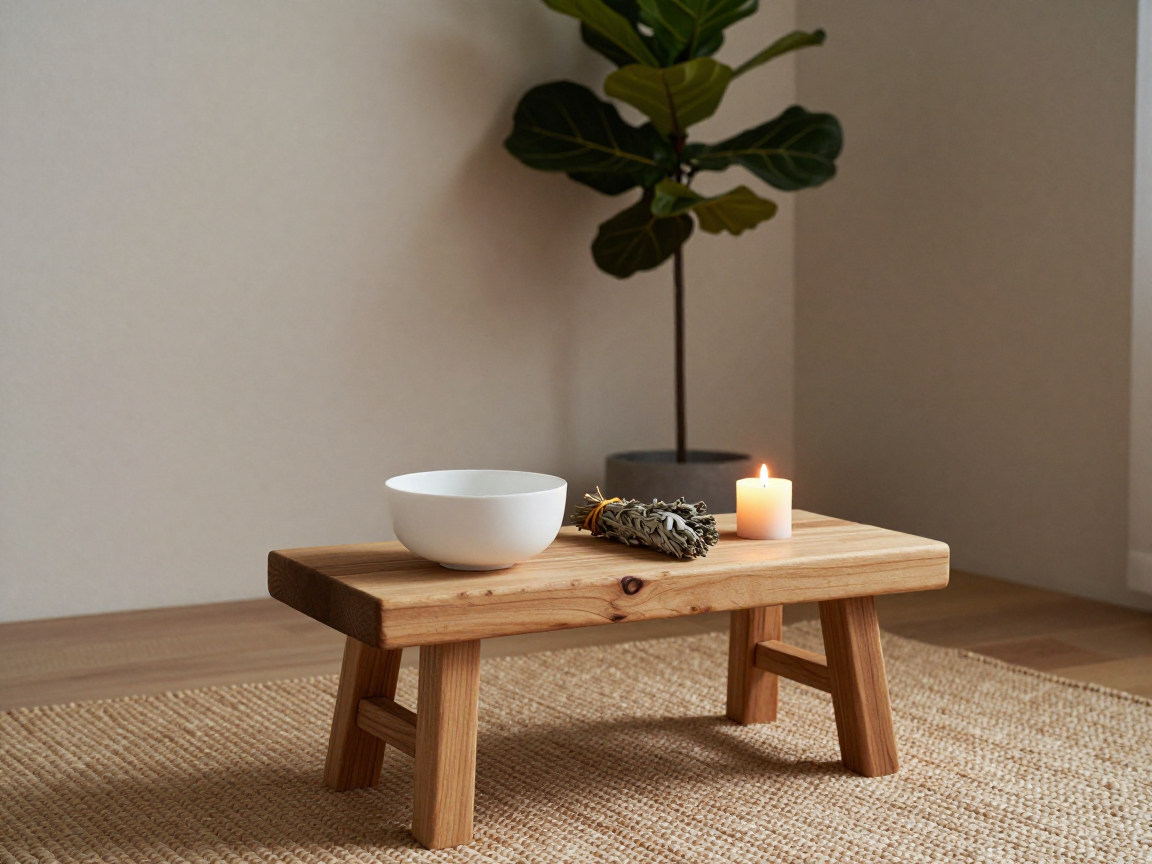
Most of us treat our homes like logistical hubs. They are places where we sleep, eat, answer emails, and manage the administrative weight of being alive. Because our living rooms have become makeshift offices and our kitchens have become homework stations, the boundary between the external world and our internal world has effectively dissolved. We find ourselves constantly tethered to a digital or domestic to-do list, rarely finding a moment where the atmosphere itself commands us to be still. This lack of clear energetic boundaries is why so many people feel chronically overstimulated and unable to truly rest, even when they are technically off the clock.
A sacred space at home acts as a necessary intervention. It is a dedicated physical area where the primary goal is not productivity, consumption, or entertainment, but rather connection and presence. It is a portal to a different state of mind. When you cross the threshold of this space, you are signaling to your nervous system that it is finally safe to downshift. Whether it is a whole room or a small corner of a bedroom, creating a sacred space at home is an act of reclaiming your environment as a tool for healing rather than a site of labor.
The Psychological Necessity of a Personal Sanctuary
Human beings are deeply affected by environmental cues. Our brains associate specific places with specific activities and emotional states. This is known as associative learning. If you work from your bed, your brain starts to associate your sleeping area with the stress of deadlines, making it harder to fall asleep. Conversely, if you create a sacred space at home where you only engage in prayer, meditation, or reflection, your brain will eventually develop a Pavlovian response to that area. The moment you sit down, your heart rate begins to slow and your mind begins to quiet because it knows that in this specific square footage, there is nothing to fix and nothing to solve.
This need for a sanctuary is rooted in our evolutionary history. We have always sought out places of refuge that offer a sense of prospect and retreat—areas where we can see the world without being threatened by it. In a modern context, the threat is rarely a physical predator; it is the "noise" of information, expectations, and the weight of social comparison. By intentionally carving out a sacred space at home, you are building a modern-day refuge that protects your mental health from the relentless pace of the 21st century. It serves as an anchor, preventing you from being swept away by the currents of external demands.
Furthermore, the psychological concept of "place identity" suggests that our physical surroundings are an extension of our selves. When our entire home is dedicated to external functions (work, chores, socializing), we lose a physical representation of our internal lives. Dedicating even three square feet to the sacred reminds us that our value is not tied to our output. It validates the quiet, contemplative parts of our humanity that the modern world often ignores.
Finding Your Corner: Where the Energy Flows
You do not need a sprawling estate or a spare room to establish a sacred space at home. In fact, many of the most potent sanctuaries are found in the most unlikely places. The key is to find a spot that feels inherently protected or quiet. This might be a nook by a window where the morning light hits just right, a corner of your bedroom that stays relatively cool, or even a section of a walk-in closet if you live in a high-traffic household where privacy is a premium.
When selecting your location, consider the following environmental factors to ensure your sacred space at home remains effective:
- Traffic Flow: Avoid areas that serve as main thoroughfares for other family members or roommates. You want to avoid the "startle response" that occurs when someone walks past you while you are in a deep state of reflection.
- Natural Light and Airflow: Sunlight has a profound effect on our circadian rhythms and mood. If possible, choose a space that receives natural light. Similarly, ensure the area has decent ventilation; stagnant air can lead to a stagnant mind.
- The Power of Corners: In many spiritual traditions, corners are seen as places where energy can be contained and focused. A corner provides a literal backstop, giving you a sense of physical security as you close your eyes.
- Proximity to Nature: If you can see a tree, a garden, or even the sky from your chosen spot, the connection to the natural world will automatically deepen the sense of peace in your sacred space at home.
- Acoustic Buffer: While you can use headphones, a location that is naturally shielded from the hum of the refrigerator or the sound of the television will make the transition into stillness much easier.
The Six Pillar Framework for Your Sacred Space at Home
Once you have selected your location, you can begin the process of curation. Rather than filling the area with random decor, use this framework to ensure the space is balanced and serves your specific emotional needs. This approach ensures that every object in your sacred space at home serves a purpose.
1. The Pillar of Scent (Olfaction)
Our sense of smell is the only sense with a direct link to the limbic system, the part of the brain that processes emotions and memory. Use high-quality incense, essential oil diffusers, or beeswax candles. Scents like sandalwood and frankincense are classic choices for grounding, while lavender and chamomile promote relaxation. Over time, the mere smell of these scents will act as a psychological trigger, immediately inducing a state of calm.
2. The Pillar of Sound (Audition)
Your space should be a sonic sanctuary. This might mean the total absence of sound through noise-canceling headphones, or the addition of soft bells, singing bowls, or a small water fountain. Many find that listening to specific hertz frequencies—such as 432 Hz or 528 Hz—helps to align their energy and quiet the inner critic. The sound of trickling water is also particularly effective at masking background street noise.
3. The Pillar of Touch (Somatosensory)
Your physical comfort determines how long you will stay in the space. If you are distracted by a sore back or a cold floor, you won't reach a deep state of meditation. Invest in a high-quality floor cushion (zafu), a soft wool throw, or a smooth wooden bench. The textures should feel natural and inviting to the skin, emphasizing organic materials over synthetics.
4. The Pillar of Vision (Visual Curation)
Clear the visual clutter. In your sacred space at home, everything in your field of vision should have a high degree of "meaning per square inch." This might include a single piece of art, a collection of stones found on a meaningful hike, or a photograph that evokes a sense of expansion. Avoid bright, jarring colors; instead, opt for muted tones that allow the eyes to rest.
5. The Pillar of Life (Biology)
Every sacred space at home should contain something living. A small potted plant, a single flower in a vase, or even a bowl of fresh fruit represents the cycle of growth and the presence of life force. Plants also serve as natural air purifiers and provide a silent, grounding companionship that reminds us of our connection to the earth.
6. The Pillar of Intention (The Altar)
An altar is simply a surface—a shelf, a small table, or even a tray—where you place objects that represent your goals or your gratitude. This is the heart of your sacred space at home. It could hold a journal, a specific crystal, or a symbol of your spiritual lineage. The altar is where you focus your gaze and your energy, acting as a physical focal point for your intentions.
Incorporating the Five Elements for Balance
A powerful way to ground your sacred space at home is to represent the five elements: Earth, Air, Fire, Water, and Ether (or Spirit). This ancient practice creates a sense of cosmic balance within a small physical area. You can do this through very simple, understated objects:
- Earth: Represented by crystals, stones, or a small bowl of soil or sand. This provides stability, physical health, and grounding.
- Air: Represented by the smoke of incense, the sound of a chime, or the presence of a feather. This represents clarity, communication, and the intellect.
- Fire: Represented by a candle flame or a salt lamp. Fire is the element of transformation, passion, and the "light" of awareness.
- Water: Represented by a ceramic bowl filled with fresh water or a small indoor fountain. Water represents the flow of emotions, intuition, and purification.
- Ether: Represented by the space itself or a symbol that represents your personal connection to the infinite, such as a sacred geometry pattern, a mandela, or even an empty vessel. It represents the source from which all other elements arise.
Rituals to Activate and Maintain Your Sanctuary
Building the space is only half the work; the other half is "charging" it through consistent use. A sacred space at home that sits dusty and ignored becomes just another part of the furniture. To keep the energy fresh, you must develop a ritual of entry and exit.
When you enter your space, perform a small, repeatable action. This might be lighting a specific candle, ringing a small bell, or simply taking three deep, audible breaths. This acts as a "clearance" ritual that separates your mundane day from your sacred time. Similarly, when you leave, offer a small gesture of gratitude or a moment of silence to "seal" the practice. This ensures that the peace you found stays with you as you transition back into your daily responsibilities.
Cleaning the space is also a ritual. In many traditions, sweeping or dusting a sacred area is seen as a form of active meditation. Do not let "life clutter" such as mail, laundry, or electronics creep into this area. If you find a coffee mug or a phone in your sacred space at home, remove it immediately. The physical purity of the space reflects the mental clarity you are trying to achieve. Once a week, consider "clearing" the air with sage, palo santo, or a simple salt-water spray to reset the energy.
Overcoming Common Obstacles
Many people feel they cannot have a sacred space at home because of their living situation. However, a sanctuary is more of a state of mind supported by physical anchors. If you share a small apartment with others, your "space" might be a portable altar—a beautiful box that holds your candle, your stones, and your journal—that you set up on the coffee table only when you are practicing. The act of setting it up becomes the ritual itself.
If noise is the primary issue, do not fight it. Instead, incorporate it. Use a white noise machine or a "frequency" track playing through headphones to create an invisible wall of sound. The goal is not to find a perfect, silent monastery, but to create a pocket of intentionality within the life you actually have. Even a dedicated chair used only for reading and reflection can serve as a sacred space if the intention behind it is consistent.
For those with children or pets, boundaries can be more difficult to maintain. In these cases, timing is your greatest ally. Your sacred space at home might only be "active" during the early morning hours or late at night. The physical location remains, but the sacredness is activated by your presence and the temporary boundary you set with those you live with.
A Place to Become Yourself Again
Ultimately, a sacred space at home is a physical manifestation of your self-respect. It is a statement that your inner peace is valuable enough to warrant its own territory. In a world that is constantly trying to sell you something, distract you from yourself, or demand your attention, having a small square of ground that belongs entirely to your soul is a radical act of self-care. It provides the "pause" button that allows you to respond to life rather than merely reacting to it.
As you spend more time in your sanctuary, you will find that the peace you cultivate there begins to leak out into the rest of your home. You become less reactive, more observant, and more grounded in your daily life. The sacred space at home becomes a battery that recharges your spirit, allowing you to return to the world with a sense of clarity that no amount of digital consumption could ever provide. Start small, be intentional, and let the space grow with you. What matters most is not the cost of the items or the size of the room, but the sincerity of the silence you find within it.