The Invisible Architecture of Reality: A Deep Dive into Sacred Geometry
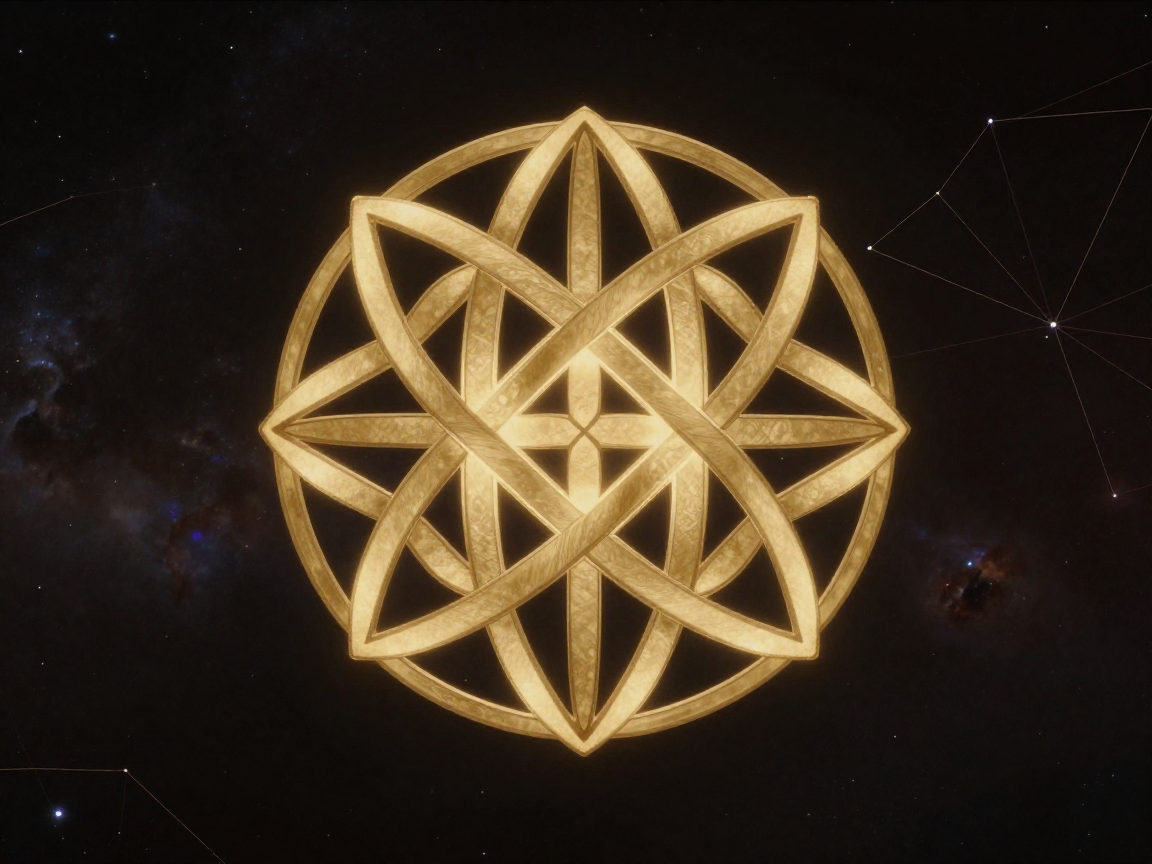
Look closely at the center of a sunflower, the spiral of a galaxy, or the intricate structure of a snowflake, and you will find a recurring logic that defies coincidence. There is a specific grammar to the physical world - a set of geometric blueprints that repeat across every scale of existence. This is what many call sacred geometry. It is the study of geometric forms and the metaphorical relationships between them, suggesting that the universe is not a chaotic accident but a structured masterpiece governed by elegant, mathematical laws.
For thousands of years, civilizations ranging from the ancient Egyptians to the Renaissance masters have recognized these patterns as something more than mere decoration. They saw them as a bridge between the seen and the unseen, a visual language that describes how energy transforms into matter. By understanding sacred geometry, we begin to see the world not as a collection of separate objects, but as a deeply interconnected web of frequency, proportion, and form. This exploration is about more than just shapes; it is about recognizing our own place within the grand design of the cosmos.
The Mathematical Heart of Sacred Geometry
At the core of sacred geometry lies a few fundamental principles that act as the DNA of the universe. The most famous of these is the Golden Ratio, often represented by the Greek letter Phi. This mathematical constant - roughly 1.618 - appears with startling frequency in nature. It dictates the spiral of sea shells, the arrangement of leaves on a stem, and even the proportions of the human face. It is often described as the 'divine proportion' because it creates a sense of organic balance and aesthetic harmony that the human eye is naturally drawn to.
Alongside the Golden Ratio is the Fibonacci Sequence, a series of numbers where each number is the sum of the two preceding ones. As this sequence progresses, the ratio between the numbers gets closer and closer to the Golden Ratio. This sequence isn't just a mathematical curiosity; it is a growth strategy. Plants use it to ensure every leaf gets maximum exposure to sunlight and rain. It represents the concept of 'unfolding' - the way life expands from a single point into a complex, functional organism.
These mathematical realities suggest that sacred geometry is the intersection of physics and metaphysics. It provides a framework for understanding how nature optimizes itself for efficiency and beauty simultaneously. When we study these proportions, we are looking at the 'operating system' of reality itself. It reminds us that there is a fundamental order underneath the surface of our often chaotic daily lives.
The Primary Symbols and Their Hidden Meanings
To navigate the world of sacred geometry, one must understand the primary symbols that serve as its building blocks. These symbols are not just static images; they are considered to be vibrational blueprints for various aspects of existence. Each one builds upon the last, moving from simplicity to infinite complexity.
The Vesica Piscis
The 'Vesica Piscis' is formed by the intersection of two circles of the same radius, where the center of each circle lies on the circumference of the other. This almond - shaped center is one of the most significant symbols in sacred geometry. It represents the 'womb' of creation - the point where duality meets to create something new. It is the intersection of spirit and matter, or the masculine and the feminine. Historically, this shape has been used in religious art and architecture for millennia to signify a portal or a transition between worlds.
The Seed of Life and the Flower of Life
Starting from a single circle and expanding through seven overlapping circles, we find the 'Seed of Life'. This pattern is said to represent the seven days of creation found in various cosmologies. When this pattern continues to expand, it becomes the 'Flower of Life', a complex hexagonal grid of overlapping circles. This symbol has been found in the Temple of Osiris in Egypt, in ancient ruins in China, and throughout Europe. It is considered the 'blueprint of the universe', containing within its lines every possible mathematical formula, every law of physics, and every musical harmony.
Metatron's Cube and the Platonic Solids
If you connect the centers of every circle in the Fruit of Life - a derivative of the Flower of Life - you get 'Metatron's Cube'. This complex structure is a map of the five Platonic Solids: the Tetrahedron, Hexahedron (Cube), Octahedron, Dodecahedron, and Icosahedron. These are the only five shapes in existence that are perfectly symmetrical - every face, edge, and angle is identical. Ancient philosophers like Plato believed these shapes were the fundamental building blocks of the five elements: fire, earth, air, ether, and water. Modern science has confirmed that these shapes do indeed mirror the crystal structures of minerals and the arrangement of atoms in various molecules.
Nature's Infinite Blueprint
One of the most compelling arguments for the validity of sacred geometry is its omnipresence in the natural world. It is not a human invention but a human discovery of an existing reality. When we look at the 'Sacred Geometry' found in nature, we see a logic that prioritizes resilience and flow.
Consider the hexagon, a shape found in honeycombs, basalt columns, and the eyes of insects. It is the most efficient shape for tiling a flat surface with the least amount of material while providing the maximum amount of storage space and structural integrity. Or look at the 'Torus', a donut - shaped energy field that is considered the most stable form in the universe. The Torus governs the magnetic field around the Earth, the flow of blood through the heart, and even the shape of galaxies.
This repetition of form across different dimensions suggests a 'fractal' nature of reality. A fractal is a pattern that repeats itself at every scale, meaning the small reflects the large. The branching of a tree looks like the branching of the veins in your lungs, which looks like the branching of a river delta seen from space. Sacred geometry teaches us that by understanding a single part of the system, we can begin to understand the whole. It is a philosophy of 'as above, so below' - a reminder that we are made of the same geometric logic as the stars.
How to Integrate Sacred Geometry into Your Daily Life
While the theoretical side of sacred geometry is fascinating, the real power lies in its application. You do not need to be a mathematician to benefit from these patterns. They can be used as tools for grounding, focus, and environmental design. Here is a practical framework for bringing this ancient wisdom into your modern routine:
- Intentional Observation
Spend time in nature specifically looking for geometric patterns. Notice the spiral of a snail shell or the symmetry of a maple leaf. This practice shifts your brain from 'analytical mode' to 'connected mode'. It helps reduce stress by reminding the nervous system of the inherent order in the world.
- Geometric Meditation and Drawing
You don't have to be an artist to draw sacred geometry. Using a simple compass and straightedge to draw the Seed of Life or a Golden Spiral can be a profound form of moving meditation. The act of physically tracing these proportions helps 'tune' your mind to their frequency, promoting mental clarity and spatial awareness.
- Harmonizing Your Environment
Use sacred geometry in your home or workspace. This could mean placing artwork featuring the Flower of Life in areas where you need to feel creative, or arranging your furniture according to the proportions of the Golden Ratio to create a more balanced flow of energy. Many people find that these shapes act as 'visual anchors' that help them feel more centered.
- Visualization in Breathwork
During meditation, visualize yourself sitting inside a 'Merkaba' (a three - dimensional star tetrahedron). This shape is said to represent the light body and can be used as a visualization tool to feel more protected, energized, and balanced within your own energy field.
The Architecture of Purpose
Throughout history, humanity has used sacred geometry to build structures that resonate with the divine. From the Parthenon in Greece to the Great Pyramid of Giza and the Gothic cathedrals of Europe, architects utilized these proportions to create spaces that evoke awe and silence. They understood that a building constructed with sacred proportions would physically influence the state of mind of those who entered it.
In our modern world, where so much of our architecture is functional but aesthetically 'empty', reconnecting with these principles can be a form of cultural healing. When we surround ourselves with the patterns that life naturally uses to grow, we feel more 'at home'. We are no longer living in a series of boxes; we are living in a continuation of the natural world.
Why These Patterns Matter Today
In an age of digital noise and increasing disconnection from the physical world, sacred geometry offers a much - needed sense of grounding. It provides a visual proof of our connection to the universe. If the same math that shapes a galaxy also shapes the DNA in your cells, then you are never truly separate from the cosmos.
Understanding these patterns helps dismantle the feeling of being an 'outsider' in the universe. It encourages a deeper respect for the environment - because when you see the geometry in a forest, you realize you are looking at a living cathedral. It also encourages a deeper respect for yourself, as you recognize that you are a complex, geometric masterpiece of biological engineering.
Ultimately, sacred geometry is a tool for perception. It changes the way you look at a flower, a building, and even your own reflection. It invites us to stop looking at the world as a collection of things and start seeing it as a symphony of patterns. By aligning our thoughts and environments with these universal blueprints, we can find a sense of harmony that is both ancient and eternally new.