The Mirror in the Stars: Why Psychological Astrology is the Ultimate Tool for Self-Discovery
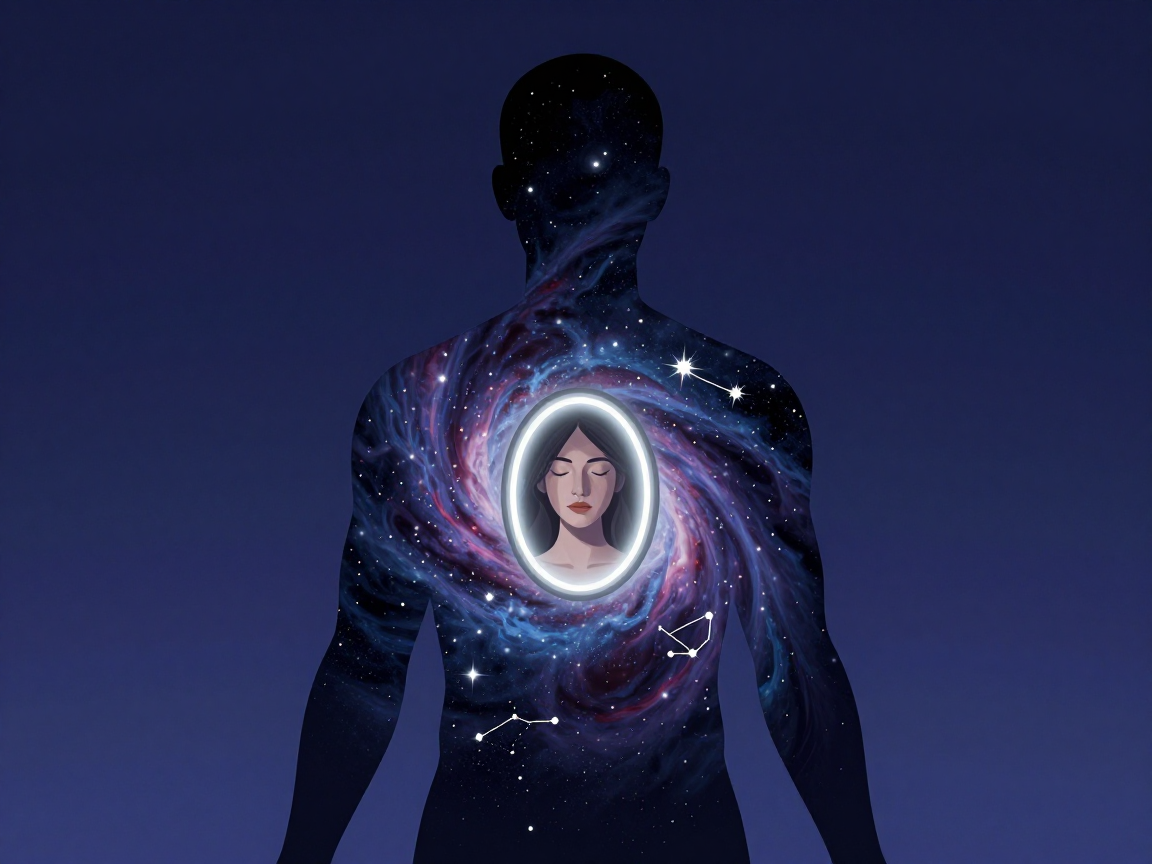
Most people approach their birth chart with a list of external questions. They want to know when they will find love, if a career change is coming, or why their luck seems to have run out. While traditional astrology has spent centuries attempting to predict these external events, a different branch of the craft has emerged over the last hundred years that focuses on the landscape within. This is the realm of psychological astrology, a discipline that views the heavens not as a set of instructions for the future, but as a mirror reflecting the human psyche.
At its core, psychological astrology represents a marriage between the ancient language of the stars and the modern insights of depth psychology. Instead of telling you what is going to happen to you, it aims to explain why you experience the world the way you do. It shifts the focus from fate to agency, suggesting that by understanding our internal patterns, we can consciously navigate the challenges that once felt like random acts of destiny. It is less about "what stars are doing to us" and more about "what parts of ourselves are we projecting onto the world?"
Beyond Prediction: What is Psychological Astrology?
To understand psychological astrology, we first have to deconstruct the common misconception that astrology is purely about fortune-telling. In the early 20th century, pioneers like Dane Rudhyar and Liz Greene began to integrate the concepts of Carl Jung into astrological practice. They realized that the birth chart - the map of the sky at the exact moment of your birth - functioned remarkably well as a symbolic map of the unconscious mind.
In this framework, the planets are not literal bodies exerting a physical force on your life. Instead, they represent archetypes - universal patterns of behavior and energy that exist within every human being. For example, Mars represents our drive and aggression, while Venus represents our need for connection and our sense of value. Psychological astrology looks at how these different parts of ourselves interact. If your Mars and Venus are in a "challenging" relationship in your chart, you might find that your desire for independence constantly clashes with your need for intimacy. The goal of the practitioner is not to fix the chart, but to help the individual integrate these competing inner voices.
This approach removes the fear often associated with "bad" omens. In psychological astrology, there is no such thing as a bad chart. There are only complex charts that require a higher level of self-awareness to navigate. A difficult transit from Saturn is not a sign of impending doom; it is an invitation to build better boundaries and take responsibility for your life. The focus remains squarely on personal growth and the evolution of the soul.
The Jungian Connection: Archetypes and the Collective Unconscious
Much of what we call psychological astrology today owes a debt to the work of Carl Jung. Jung himself was a student of astrology, famously stating that it represented the sum of all psychological knowledge of antiquity. He introduced the concept of the "Collective Unconscious" - a reservoir of symbols and themes shared by all humanity across time and culture. These symbols are what he called archetypes.
When we look at a birth chart through a Jungian lens, we are looking at a snapshot of how these universal archetypes are uniquely distributed within one individual.
The Sun and the Ego
In psychological astrology, the Sun represents the center of the conscious personality. It is the "I am" - the hero on a journey toward self-actualization. A person with a Sun in Leo might find their path to wholeness through creative expression, while a Sun in Virgo might find it through service and refinement. The Sun is the light of awareness that must learn to illuminate the darker corners of the psyche.
The Moon and the Shadow
If the Sun is our conscious self, the Moon represents our emotional, instinctive, and unconscious world. It is our "inner child" and our subjective experience of safety. Often, the Moon points toward our needs that we are not fully aware of. In more advanced psychological astrology, the Moon is often the gateway to "Shadow Work" - the process of identifying the parts of ourselves we have repressed or denied because they didn't fit our conscious image.
Saturn: The Inner Critic and the Great Teacher
Saturn is often feared in traditional astrology because it represents limitation. Psychologically, however, Saturn represents our internal authority. It is the voice that tells us we aren't good enough, but it is also the structure that allows us to master a skill. By working with Saturn, we transform our deepest insecurities into our greatest strengths.
Transforming Shadow into Strength: A 5-Step Framework for Your Chart
One of the most practical applications of psychological astrology is the ability to take a "difficult" placement and turn it into a tool for empowerment. Instead of feeling victimized by your personality traits, you can use this framework to consciously evolve.
- Identify the Conflict: Look for the areas of your life where you feel a constant internal tug-of-war. Is it between your career and your family? Your need for freedom and your need for security? Locate the planets in your chart that correspond to these themes.
- Observe the Projection: We often project the parts of our chart we haven't integrated onto other people. If you have a suppressed Mars, you might find that you constantly attract "angry" people. Recognize that these people are mirrors reflecting an unexpressed part of your own energy.
- Name the Archetype: Give a name to the part of you that is causing the friction. Is it the "Inner Saboteur"? The "Perfectionist"? The "Pleaser"? Seeing these as distinct archetypal energies helps you detach from them so you can work with them objectively.
- Dialogue with the Symbol: In psychological astrology, we can use active imagination to speak to these parts of ourselves. What does your Saturn need to feel safe? What is your Moon trying to protect you from?
- Integrate Through Action: Once you understand the psychological need behind a placement, find a healthy way to express it. If you have a highly sensitive Neptune, you might need a creative or spiritual outlet to prevent that energy from turning into escapism or confusion.
The Role of Free Will in the Birth Chart
A common question is: "If my personality is mapped out at birth, do I have any free will?" Psychological astrology answers this with a resounding "Yes!" The chart provides the "what" and the "why", but you provide the "how".
Think of the birth chart as a deck of cards you have been dealt. You cannot change the cards, but you have infinite ways to play the hand. A person with a "difficult" aspect between Pluto and the Sun might use that energy to become a manipulative power-seeker, or they might use it to become a profound healer who helps others navigate their own darkness. The energy is the same; the level of consciousness is different.
This is why psychological astrology is so closely linked to therapy and coaching. It provides a diagnostic language that can cut through months of talk therapy by getting straight to the core archetypal conflicts. It helps individuals stop asking "Why is this happening to me?" and start asking "What is this calling forward in me?"
Practical Ways to Use Psychological Astrology Daily
While a full birth chart reading is a deep dive, you can begin using the principles of psychological astrology immediately by observing your reactions to daily life through an archetypal lens.
- Watch Your Triggers: When someone upsets you, ask yourself: "Which planet in my chart is being activated?" If your sense of value is threatened, it may be a Venus issue. If your sense of safety is rocked, it is likely a Moon issue.
- Track the Lunar Cycle: The Moon moves through a different sign every two and a half days. Notice how your internal emotional weather changes. This isn't about the Moon "making" you feel things; it is about noticing the natural ebb and flow of your own unconscious.
- Reflect on Your Saturn Return: If you are between the ages of 27 and 30, you are likely experiencing your first Saturn Return. Psychologically, this is the transition from childhood to true adulthood. It is a time when the universe asks: "Are you living a life that is truly yours, or are you living the life your parents or society expected of you?"
The Path to Wholeness
Ultimately, psychological astrology is a tool for individuation - the process of becoming the unique person you were always meant to be. It encourages us to stop trying to be "perfect" and start trying to be "whole". Wholeness includes our light and our dark, our strengths and our neuroses.
In a world that often feels chaotic and disconnected, this practice offers a sense of profound meaning. It suggests that our internal struggles are not random glitches in our biology, but necessary components of our growth. When we stop fighting the patterns in our chart and start listening to what they are trying to teach us, we move from being victims of our personality to being the conscious architects of our lives. The stars may not tell us who we will marry or when we will die, but they offer something much more valuable: a map back to ourselves.