The Secret Architecture of Avoidance: Why Procrastination and Fear Are Two Sides of the Same Coin
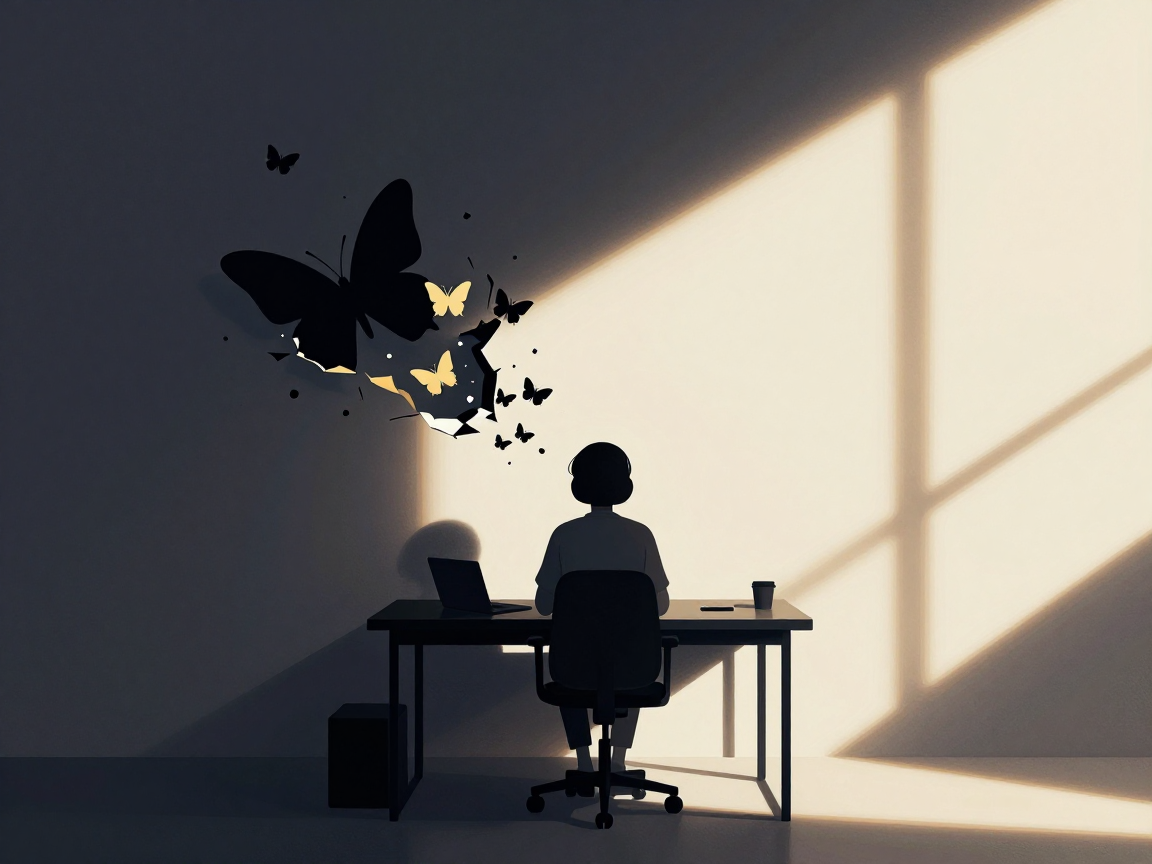
Most of us have been taught from a young age that procrastination is a character flaw. We are told it is a sign of laziness, a lack of discipline, or a failure of willpower. We look at our growing to-do lists and feel a mounting sense of shame, assuming that if we just worked harder or bought a better planner, the problem would vanish. However, decades of psychological research suggest a much more complex reality. Procrastination is rarely about being disorganized or lazy. Instead, it is a sophisticated emotional defense mechanism. When we look closely at the mechanics of why we turn away from the tasks that matter most, we find that procrastination and fear are inextricably linked, forming a cycle of avoidance that protects us from discomfort while simultaneously stalling our lives.
At its core, procrastination is an issue of emotional regulation, not time management. When we face a task that triggers anxiety, insecurity, or a sense of incompetence, our brain’s primary objective shifts from long-term achievement to immediate survival. We are not avoiding the work itself; we are avoiding the difficult emotions that the work stirs up. This creates a state of internal paralysis where the logical mind knows what needs to be done, but the emotional mind—the part of the brain that prioritizes safety and comfort—refuses to engage. To bridge this gap, we must look beyond the surface level of productivity and address the underlying emotional landscape that keeps us frozen.
The Neurobiology of Avoidance: How Your Brain Misinterprets Tasks
To understand the relationship between procrastination and fear, we have to look at how our brains process stress. When you are faced with a high-stakes project or a task that challenges your self-image, your amygdala—the brain's emotional sentinel—may interpret that task as a threat. The amygdala is not particularly good at distinguishing between a physical threat, like a predator in the wild, and an emotional threat, like the possibility of failing at a new endeavor. It simply recognizes a surge of cortisol and adrenaline and triggers a "fight, flight, or freeze" response.
In the context of modern work, this response often manifests as a freeze. Your prefrontal cortex, the part of the brain responsible for complex planning and execution, wants to get to work. But the amygdala is screaming that the work is a source of potential pain. Because the brain is wired to prioritize immediate relief over future benefits, it seeks a way to soothe the current distress. This is where procrastination enters the picture. By turning away from the task to engage in a low-stakes distraction—like checking social media, cleaning the kitchen, or answering non-essential emails—you provide your brain with a hit of dopamine and a temporary sense of relief. You have effectively "escaped" the threat, reinforcing the neural pathway that says avoidance equals safety.
The Three Faces of Fear That Fuel Chronic Procrastination
While the general feeling of being "stuck" is universal, the specific fears driving the avoidance can vary significantly from person to person. Identifying which type of fear is at the root of your procrastination is essential for finding a way forward. Most chronic avoidance can be traced back to one of three primary psychological triggers.
1. The Fear of Failure and the Perfectionism Trap
For many, the link between procrastination and fear is rooted in perfectionism. If you believe that your performance is a direct reflection of your inherent worth, then a mediocre result is not just a mistake—it is a catastrophic indictment of your character. This creates an unbearable amount of pressure. By procrastinating, you create a psychological buffer. If you wait until the last minute and the result is subpar, you can tell yourself it was because you ran out of time, not because you lack ability. It is a way of protecting your ego from the terrifying possibility that your "best" might not be good enough.
2. The Fear of Judgment and Emotional Exposure
This fear is social in nature. We procrastinate because we are afraid of what others will think once our work is finalized and visible. This is especially common in creative or leadership roles where personal expression is required. We worry about being criticized, misunderstood, or exposed as an "imposter." Procrastination acts as a shield, keeping our ideas and efforts hidden from the gaze of others. As long as the project remains unfinished, it remains safe from the harsh reality of external evaluation.
3. The Fear of Success and the Weight of Expectation
Surprisingly, success can be just as frightening as failure. Success often brings higher expectations, greater visibility, and increased responsibility. If you finish this project successfully, what will be expected of you next? Will you be able to maintain that standard? Will your life change in ways that feel uncontrollable? This fear creates a subconscious "handbrake" that keeps you in a state of familiar mediocrity. Staying stuck feels safer than stepping into the unknown territory of high achievement and the new demands it might place on your time and energy.
The Hidden Toll: How Avoidance Erodes Self-Trust
The tragedy of the procrastination and fear cycle is that the relief provided by avoidance is incredibly short-lived. While you may feel a brief reprieve when you decide to "do it tomorrow," that relief is almost immediately replaced by a heavy layer of guilt, shame, and self-criticism. This is the "procrastination hangover." Instead of resting, you spend your time off-task ruminating on what you should be doing, which means you never actually recover from the stress.
Over time, this pattern erodes your self-trust. Every time you set an intention to work and then fail to follow through, you send a message to your subconscious that your word is not reliable. This diminishes your self-efficacy—the belief in your ability to handle challenges. As your self-efficacy drops, your fear of future tasks increases, because you no longer believe you have the tools to complete them. This creates a downward spiral where the very act of avoiding the work makes the work feel more frightening the next time you approach it.
A 5-Step Framework to Dismantle Procrastination and Fear
Breaking the bond between procrastination and fear requires a shift in strategy. You cannot simply "will" yourself to stop being afraid, but you can change how you respond to that fear. Use this framework to move through the paralysis and regain your momentum.
- Name the Emotion, Not the Flaw: Instead of calling yourself "lazy," identify the specific emotion you are feeling. Say, "I am feeling anxious about this project because I am afraid of being judged." Naming the emotion shifts the activity from the reactive amygdala to the logical prefrontal cortex, giving you a sense of distance and control.
- Lower the Barrier to Entry: Perfectionism thrives on high stakes. Counteract this by giving yourself permission to do a "bad first draft." Tell yourself that the only goal is to produce something mediocre. By lowering the standards for the initial phase, you remove the threat of failure, making it easier for the brain to engage.
- The Ten-Minute Contract: Commit to working on the task for exactly ten minutes with the explicit permission to stop afterward. Most of the fear associated with procrastination is concentrated in the "starting" phase. Once you are ten minutes in, the brain realizes the task is not a life-threatening emergency, and the momentum often carries you forward.
- Break Tasks Into "Micro-Actions": We often procrastinate because a task feels too large to fathom. "Write the business plan" is a mountain; "Open a blank document and save it as 'Plan'" is a molehill. Shrink your tasks until they no longer trigger a fear response. If a task still feels scary, it’s still too big.
- Practice Radical Self-Forgiveness: Research has shown that people who forgive themselves for procrastinating are significantly more likely to finish the task later. Self-criticism is a form of stress, and stress is what caused the avoidance in the first place. Compassion lowers your cortisol levels, allowing your logical brain to come back online.
Developing Emotional Resilience: Beyond the Quick Fix
Ultimately, overcoming the link between procrastination and fear is about increasing your "distress tolerance." We live in a culture that prioritizes comfort, which makes us less prepared to handle the natural friction that comes with meaningful work. Every significant achievement—whether it’s writing a book, starting a business, or improving a relationship—requires a period of uncertainty and frustration.
To build this resilience, start seeing your procrastination as a signal rather than a symptom. It is a sign that you are doing something that matters to you. If you didn't care about the outcome, you wouldn't be afraid. By reframing the fear as evidence of your values, you can begin to transform it from a barrier into a source of energy. The goal is not to become a person who never feels afraid, but to become a person who can feel the fear and still take the next small step.
When you stop fighting the fear and start understanding its origin, the "invisible wall" of procrastination begins to dissolve. You realize that you have the capacity to handle discomfort. You learn that "done" is better than "perfect." And most importantly, you realize that your worth is not defined by your productivity, which ironically gives you the freedom to be more productive than ever before. Real progress doesn't happen when the fear disappears; it happens when you decide that your goals are more important than your momentary need for comfort.