The Architecture of Breath: How Pranayama for Beginners Can Rewire Your Stress Response
Most of us navigate our daily lives using only a fraction of our respiratory capacity. We breathe shallowly into the upper chest, a habit reinforced by hours of sitting at desks and the persistent hum of low - level anxiety. This restricted breathing sends a constant signal to the brain that we are in a state of mild survival mode. However, there is a bridge between the conscious and unconscious mind that has been studied for millennia: the breath. When we explore pranayama for beginners, we are not just learning to breathe - we are learning to hack the nervous system.
Pranayama is a Sanskrit word often translated as "breath control", though its literal meaning is more profound. "Prana" refers to the vital life force that animates all living things, while "ayama" means to extend or draw out. By practicing pranayama for beginners, you are essentially learning how to direct your internal energy through the rhythm of your breath. It is a foundational pillar of yoga that offers immediate physiological benefits, shifting the body from a sympathetic "fight or flight" state into a parasympathetic "rest and digest" state within minutes.
The Biological Bridge: Why Breathwork Works
To appreciate why pranayama for beginners is so effective, we must look at the Vagus nerve. This is the longest cranial nerve in the body, acting as a two - way communication highway between the brain and the internal organs. When you take a slow, deep breath that expands the diaphragm, you physically stimulate the Vagus nerve. This stimulation triggers a relaxation response that lowers the heart rate, reduces blood pressure, and decreases levels of cortisol, the primary stress hormone.
Unlike the heartbeat or digestion, which are largely automatic, the breath is the only vital function that we can control at will. This makes it a unique tool for emotional regulation. If you can change the pace of your breath, you can change the state of your mind. For those starting out with pranayama for beginners, the goal is not to achieve complex or athletic feats of breath retention, but to develop an intimate awareness of how air moves through the body and how that movement dictates our mood and energy levels.
Setting the Stage for Your Practice
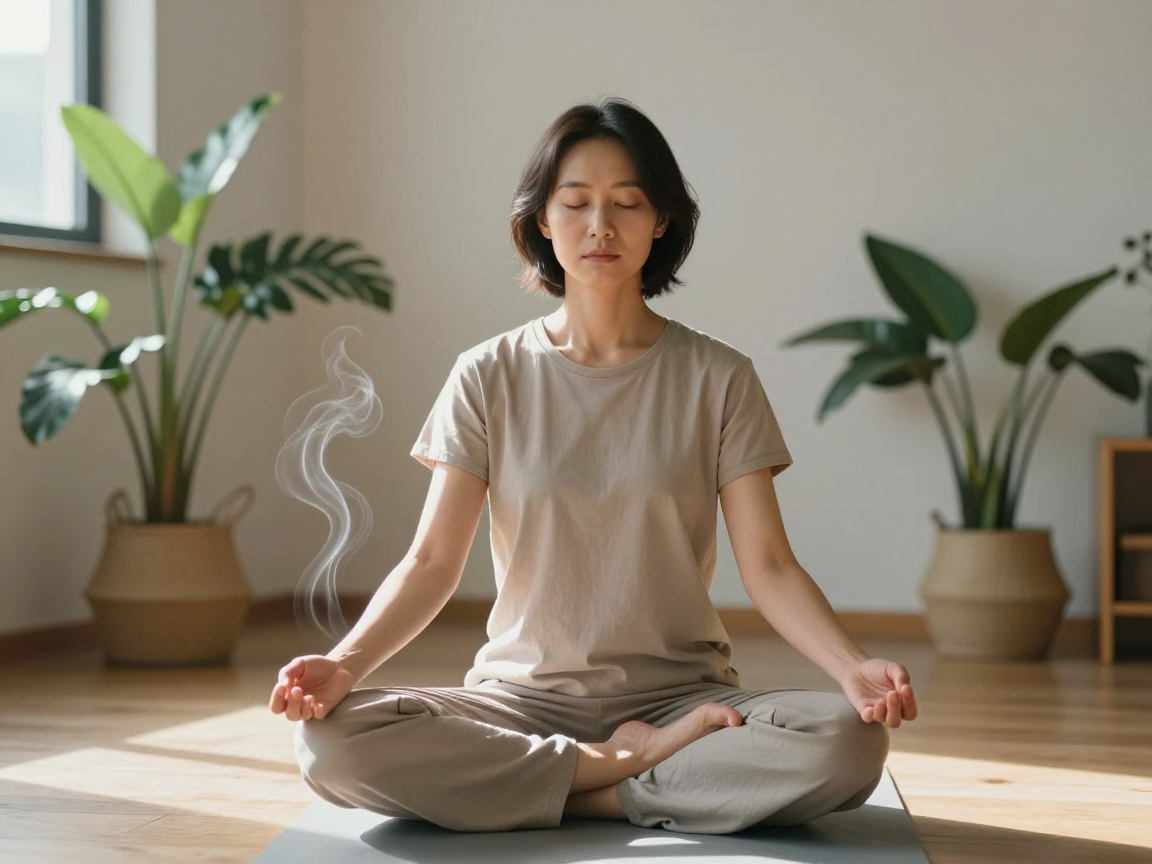
Before diving into specific techniques, it is essential to create an environment conducive to stillness. You do not need a dedicated studio, but you do need a space where you will not be interrupted for ten to fifteen minutes. The physical posture you choose is equally important because it determines the freedom of your diaphragm.
- Find a Stable Seat: You can sit cross - legged on a cushion (Siddhasana) or in a chair with your feet flat on the floor. The key is to keep the spine tall and the shoulders relaxed.
- Align the Spine: Imagine a silver thread pulling the crown of your head toward the ceiling. This opens the chest and allows the lungs to expand fully without restriction.
- The Nasal Path: In most pranayama for beginners, we breathe exclusively through the nose. The nostrils filter, warm, and humidify the air, while also stimulating the olfactory bulb, which has direct links to the emotional centers of the brain.
- Soften the Gaze: You may choose to close your eyes or keep them softly focused on a single point on the floor. This minimizes external distractions and draws your attention inward.
4 Essential Techniques of Pranayama for Beginners
When beginning your journey, it is best to stick to foundational practices that are safe and grounding. These four techniques offer a balanced introduction to the power of directed breathing.
1. Dirga Pranayama (The Three - Part Breath)
This is often the first technique taught in any curriculum of pranayama for beginners because it teaches you how to use the full capacity of your lungs. It breaks the breath into three distinct parts: the belly, the rib cage, and the upper chest.
To practice, place one hand on your belly and one on your heart. Inhale slowly into the belly so it expands like a balloon. Continue the inhale as you feel your ribs expand outward to the sides. Finally, draw the breath up into the collarbones. On the exhale, reverse the process - release from the chest, then the ribs, and finally the belly. This practice grounds the nervous system and creates a sense of internal space.
2. Sama Vritti (Equal Breathing or Box Breathing)
Sama Vritti focuses on mental clarity and balance. The term "Sama" means equal, and "Vritti" refers to the fluctuations of the mind. By making the inhale and exhale exactly the same length, you create a rhythmic symmetry that quiets an overactive brain.
Start by inhaling for a count of four, then exhaling for a count of four. Once you feel comfortable, you can add a brief hold at the top and bottom of the breath, creating a "box" shape. This technique is used by high - performers and athletes to maintain composure under pressure because it quickly stabilizes the heart rate.
3. Nadi Shodhana (Alternate Nostril Breathing)
This is perhaps the most beloved practice in pranayama for beginners for its ability to harmonize the left and right hemispheres of the brain. It is said to clear the "Nadis", or energy channels, in the body.
Using your right hand, fold your index and middle fingers toward your palm. Use your thumb to close your right nostril and inhale through the left. Then, close the left nostril with your ring finger, release the thumb, and exhale through the right. Inhale through the right, close it, and exhale through the left. This constitutes one round. Nadi Shodhana is deeply soothing and is perfect for practicing before sleep or after a stressful workday.
4. Bhramari (The Bee Breath)
If you find your mind racing with intrusive thoughts, Bhramari is an excellent tool. It involves making a gentle humming sound on the exhale, which creates a physical vibration in the skull. This vibration acts as a focal point, making it nearly impossible for the mind to wander. It is particularly effective for releasing tension in the jaw and neck, areas where many of us store emotional stress.
Avoiding the Common Pitfalls
As you integrate pranayama for beginners into your routine, it is easy to fall into the trap of "trying too hard". Breathwork is an exercise in surrender, not force. Watch out for these common mistakes that can hinder your progress:
- Forcing the Breath: If you feel gasping or lightheaded, you are pushing too hard. The breath should feel like a smooth, continuous wave, not a jerky or strained effort.
- Clenching the Body: Many beginners unconsciously tighten their jaw, forehead, or shoulders while focusing on the breath. Periodically check in and soften these areas.
- Over - inhaling: We often think more air is better, but over - inhaling can trigger the "fight or flight" response. Focus more on the quality and smoothness of the breath than the sheer volume.
- Inconsistency: Like any physical or mental skill, the benefits of pranayama are cumulative. Five minutes every day is far more effective than an hour once a week.
A Framework for Your Daily Practice
To make your exploration of pranayama for beginners sustainable, follow this simple framework to build a 10 - minute daily habit. Consistency is the key to seeing long - term changes in your baseline stress levels.
- Minutes 1 - 2 (Centering): Sit in silence and simply observe your natural breath without trying to change it. Notice the temperature of the air and the movement of your body.
- Minutes 3 - 5 (Dirga Pranayama): Engage in the three - part breath to wake up the diaphragm and fully oxygenate the blood.
- Minutes 6 - 9 (Nadi Shodhana or Sama Vritti): Choose one technique to focus your mind and balance your energy. Stick with one technique for at least a week before switching to another.
- Minute 10 (Integration): Release all control of the breath. Sit in stillness and notice the shift in your mental state before returning to your day.
The Path Forward
Starting a journey with pranayama for beginners is an act of reclaiming your internal landscape. In a world that constantly demands our attention and pulls us in a thousand different directions, the breath remains a constant, accessible sanctuary. It requires no special equipment, no membership, and no prerequisite level of fitness. All it requires is your presence.
As you continue to practice, you will likely find that the benefits extend far beyond the ten minutes you spend sitting on a cushion. You may find yourself naturally taking a deep, diaphragmatic breath when a car cuts you off in traffic, or using a slow exhale to steady your nerves before a difficult conversation. This is the true power of pranayama - it transforms the breath from an unconscious reflex into a conscious tool for living with greater ease and resilience. The architecture of your breath is the architecture of your life; build it with intention.