Beyond Burnout: Recognizing Nervous System Dysregulation Symptoms and Finding Your Way Back to Calm
We have all experienced those days where the world feels too loud, the smallest task feels like a mountain, and our patience seems to have evaporated. For most, these moments are fleeting responses to a stressful deadline or a bad night of sleep. However, for a growing number of people, this state of high alert or profound exhaustion is not a temporary visitor - it is a permanent resident. When your body loses its ability to return to a state of calm after a stressor, you are likely experiencing nervous system dysregulation symptoms. This is not a flaw in your character or a lack of willpower; it is a physiological state where your internal alarm system has become stuck in the 'on' position.
Understanding how your body communicates distress is the first step toward recovery. The autonomic nervous system is designed to oscillate between states of mobilization and states of rest. When it functions correctly, you can navigate a stressful meeting and then naturally 'come down' to enjoy a meal or a conversation. But when the system becomes dysregulated, the 'off switch' breaks. Recognizing nervous system dysregulation symptoms is essential because these signs are often misdiagnosed as purely mental health issues or general fatigue, when they are actually rooted in a biological imbalance that requires a somatic approach to heal.
The Hidden Architecture of Your Stress Response
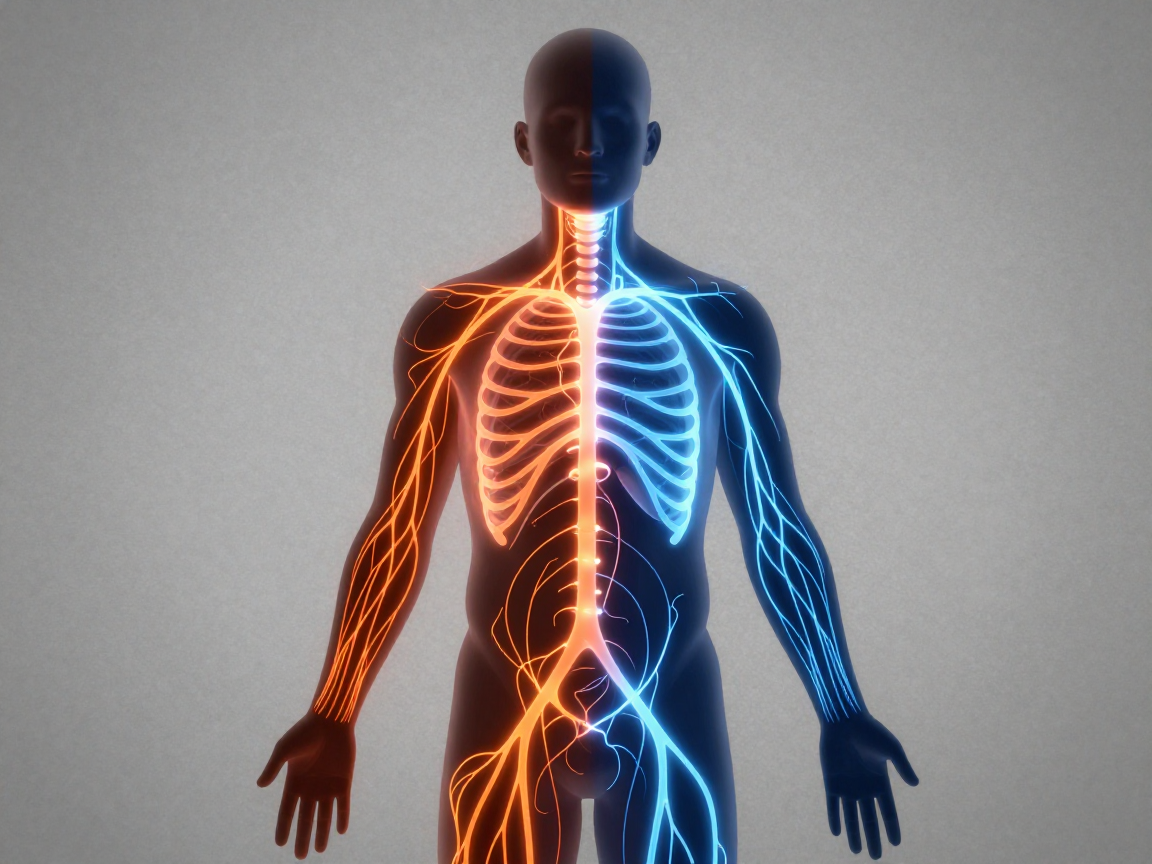
To understand why nervous system dysregulation symptoms occur, we must look at the Autonomic Nervous System (ANS). The ANS is the control center for everything your body does without you thinking about it, such as breathing, heart rate, and digestion. It is divided into two primary branches: the Sympathetic Nervous System (SNS) and the Parasympathetic Nervous System (PNS). The SNS is often called the 'gas pedal' because it prepares you for action (fight or flight). The PNS is the 'brake pedal' which facilitates 'rest and digest' functions.
In a healthy system, these two branches work in a fluid dance. You face a challenge, the gas pedal kicks in, you handle the challenge, and the brake pedal brings you back to baseline. Dysregulation happens when this dance stops. Your body might stay stuck on the gas pedal, leading to chronic anxiety and restlessness, or it might slam on the brakes so hard that you fall into a state of 'freeze' or 'faint'. This state of chronic imbalance is what produces the wide array of nervous system dysregulation symptoms that can affect every organ and system in your body.
A Comprehensive Guide to Nervous System Dysregulation Symptoms
Because the nervous system touches every part of our biology, the symptoms of its dysfunction are diverse. They can be broadly categorized into physical manifestations and emotional or cognitive shifts. By identifying which category you fall into, you can begin to tailor your regulation strategies to your specific needs.
Physical Manifestations: When the Body Keeps the Score
Many people spend years visiting specialists for various ailments without realizing that their issues are actually nervous system dysregulation symptoms. When the body is in a state of perceived threat, it deprioritizes non-essential functions like digestion and immune repair. This leads to a host of physical issues:
- Digestive Distress: Chronic bloating, IBS, or acid reflux are common. When the body is in survival mode, blood flow is diverted away from the gut to the limbs.
- Sleep Disturbances: You may find yourself 'wired but tired'. Even when you are exhausted, your brain refuses to shut down, or you wake up frequently during the night in a state of panic.
- Chronic Tension and Pain: Tight shoulders, a clenched jaw, or unexplained muscle aches are often the body's way of 'armoring' itself against a perceived attack.
- Exaggerated Startle Response: Jumping at a door slamming or a phone ringing indicates that your nervous system is hyper-vigilant.
- Changes in Heart Rate: Palpitations or a racing heart even when you are sitting still are hallmark nervous system dysregulation symptoms.
Emotional and Cognitive Signs: The Mind in Survival Mode
Your psychological state is a direct reflection of your physiological state. If your body feels unsafe, your thoughts will follow suit. Common emotional and cognitive nervous system dysregulation symptoms include:
- Emotional Volatility: Feeling like you go from zero to sixty in seconds. You might experience sudden outbursts of anger or bouts of uncontrollable crying.
- Brain Fog and Dissociation: If the system is overwhelmed, it might 'check out' to protect you. This feels like being spaced out, having difficulty concentrating, or feeling disconnected from your surroundings.
- Anxiety and Intrusive Thoughts: A nervous system stuck in 'fight or flight' will constantly scan the environment for danger, leading to chronic worry about things that haven't happened yet.
- Social Withdrawal: When your system is dysregulated, being around others can feel overstimulating or threatening, leading you to isolate yourself even from loved ones.
The Window of Tolerance: Why You Feel Overwhelmed or Numb
A helpful concept for understanding nervous system dysregulation symptoms is the 'Window of Tolerance', a term coined by Dr. Dan Siegel. This window represents the zone where you can effectively manage and process your emotions. When you are within your window, you feel grounded, flexible, and resilient. You can handle life's ups and downs without losing your cool.
When your nervous system is dysregulated, your window of tolerance shrinks. It becomes very easy to be pushed out of the window into one of two states:
- Hyper-arousal: This is the 'too much' state. You feel frantic, overwhelmed, and reactive. This is where symptoms like racing heart, anger, and panic reside.
- Hypo-arousal: This is the 'too little' state. You feel numb, empty, and paralyzed. You might feel like a 'zombie' or experience heavy limbs and a lack of motivation. This is common in chronic 'freeze' responses.
Most people who struggle with nervous system dysregulation symptoms oscillate between these two extremes, rarely spending time in the calm center. Healing involves gradually widening this window so you can stay regulated even when life gets challenging.
The RESET Framework: A Daily Action Plan for Regulation
If you identify with the nervous system dysregulation symptoms listed above, the most important thing to know is that your system can be retrained. This process is called 'neuroplasticity'. By consistently applying small, safe interventions, you can teach your body that the danger is over. Use the RESET framework as a daily checklist to begin moving out of survival mode.
- R - Recognize the State: The moment you feel a symptom - whether it is a tight chest or a sudden flash of irritation - pause. Identify it without judgment. Say to yourself, "My nervous system feels threatened right now".
- E - Exhale Long and Slow: Your breath is the most direct way to communicate with your Vagus nerve. Make your exhales twice as long as your inhales. Try breathing in for four seconds and out for eight. This signals to the brain that there is no immediate physical threat.
- S - Sensory Grounding: Dysregulation often pulls us into the past or the future. Bring yourself back to the present using the 5-4-3-2-1 technique. Name five things you can see, four things you can touch, three things you can hear, two things you can smell, and one thing you can taste.
- E - Externalize the Energy: If you are in hyper-arousal, you need to move that 'fight' energy. Shake your hands, go for a brisk walk, or push against a wall. If you are in hypo-arousal, gently stretch or use a weighted blanket to feel the boundaries of your body.
- T - Touch for Comfort: Self-soothing touch can release oxytocin and lower cortisol. Place one hand on your heart and the other on your belly. Feel the warmth of your hands and the rise and fall of your breath. This provides a sense of 'containment' and safety.
Moving From Survival to Vitality
Living with chronic nervous system dysregulation symptoms can make the world feel like a hostile place. It is exhausting to live in a body that is constantly scanning for threats that aren't there. However, your nervous system is not broken; it is protective. It is doing exactly what it thinks it needs to do to keep you alive based on past experiences or chronic stress.
Healing is not about 'fixing' yourself, but about befriending your biology. It requires patience and a shift away from 'top-down' thinking (trying to talk yourself out of it) toward 'bottom-up' sensing (using the body to calm the mind). As you begin to address your nervous system dysregulation symptoms through small, daily acts of regulation, you will find that your window of tolerance begins to grow. The world will start to feel a little bit quieter, your body a little bit lighter, and the 'motor' that has been running for years will finally begin to slow down. You aren't just managing symptoms; you are reclaiming your life.