Why Your Bank Account and Your Values Are Clashing: A Guide to Building Wealth with Integrity
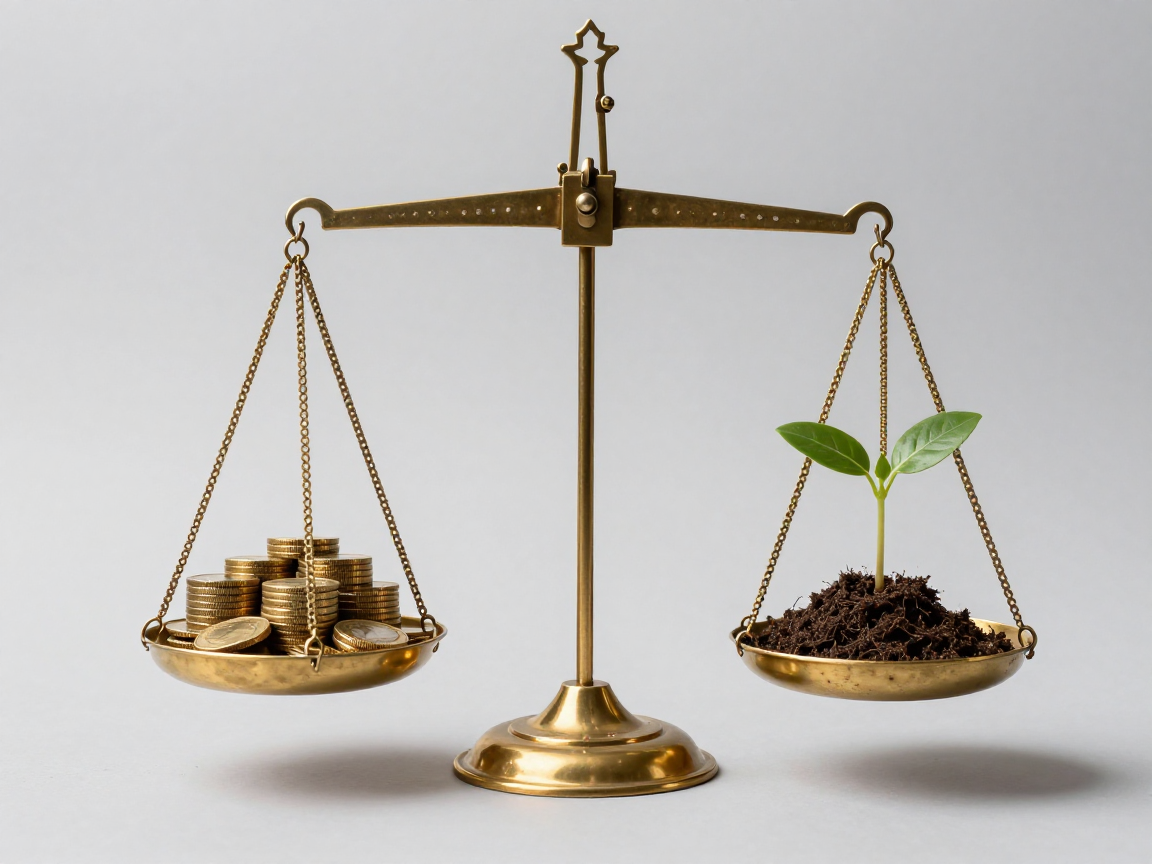
We are often raised with a binary view of the world: you can either be wealthy or you can be a good person. This cultural narrative, reinforced by decades of cinema and folklore, suggests that the path to financial abundance is paved with cut corners, broken promises, and a calculated disregard for the well-being of others. We see the trope of the "greedy corporate villain" and the "noble, starving artist" so often that it becomes an internalized script. On the other side, we are told that a life of service and high moral standing requires a vow of relative poverty—that to be truly "spiritual" or "ethical," one must remain unattached to material gain. This tension creates a profound internal conflict for anyone who desires both financial security and a clean conscience. The reality is that money and integrity are not mutually exclusive; in fact, they are the two most powerful engines for sustainable, long-term success in the modern world.
When we talk about money and integrity, we are really talking about the alignment of our external actions with our internal compass. Wealth that is built on a foundation of deceit is inherently fragile because it relies on the absolute absence of discovery. It is a house of cards waiting for a light breeze. True wealth—the kind that provides not just luxury but also deep, restorative peace of mind—is built through the accumulation of trust. In an era where information travels at the speed of thought and a single review can dismantle a decade of branding, your reputation is your most valuable asset. Once you understand that integrity is a form of social and economic capital, the false choice between profit and principles begins to dissolve, revealing a path where doing good and doing well are one and the same.
Deconstructing the Myth of the Ethical Trade-Off
The idea that we must sacrifice our values to get ahead is often a byproduct of short-term thinking. In the vacuum of a single, isolated transaction, it might seem like "getting one over" on a customer or partner results in more money in your pocket. However, this is a narrow, almost primitive view of economics. In game theory, this is known as a "one-shot game." But life and business are "iterated games." When you prioritize money over integrity, you are essentially borrowing from your future reputation to pay for your present comfort. This is a high-interest loan that eventually comes due with devastating penalties. When the bill arrives, it often costs far more than the initial gain in the form of lost opportunities, legal fees, and the permanent loss of community trust.
Modern markets are increasingly rewarding transparency and ethical behavior. As consumers become more conscious of where their dollars go—scrutinizing supply chains, labor practices, and corporate environmental footprints—they are choosing to support businesses and individuals who stand for something more than just a bottom line. This shift represents a return to a more natural, ancient state of commerce where your word was your bond because your survival depended on the tribe's trust. When you view money and integrity as partners, you stop looking for the quickest way to make a buck and start looking for the most sustainable way to create value. Creating value is the only honest way to attract money, and doing so with integrity ensures that the money stays where it is welcomed.
The Hidden Value of Reputation Capital
Think of integrity as a lubricant for the gears of commerce. When people know you are honest, transactions happen faster. Contracts become simpler. Negotiations become less adversarial and more collaborative. This is because "trust" dramatically reduces what economists call the "transaction cost" of doing business. If a partner has to spend thousands of dollars on lawyers, auditors, and inspectors to verify every word you say, that is money and time that could have stayed in the deal. When your money and integrity are aligned, you become a "low-friction" person to work with. Over a decade or a lifetime, this efficiency compounds into a massive, nearly insurmountable competitive advantage.
Furthermore, the psychological cost of misaligned values is a silent drain on your creative and productive energy. Living a double life—acting one way to get paid while feeling another way in your heart—creates a state of chronic cognitive dissonance. This internal friction uses up vital mental bandwidth that could be better spent on innovation, problem-solving, or presence with your family. Those who master the art of combining money and integrity often report feeling a sense of "quiet confidence." They don't have to look over their shoulders or keep a mental log of which version of the truth they told to whom. This mental clarity is a luxury that no amount of unethical wealth can purchase; it is the freedom to be whole.
5 Signs Your Money and Integrity are Misaligned
It is not always easy to tell when you are drifting off course. The erosion of integrity usually happens in millimeters, not kilometers. It starts with a small exaggeration here or a hidden fee there. Use this checklist to determine if your pursuit of wealth is starting to compromise your character:
- The "Mirror Test" Failure: You find it difficult to look yourself in the eye after a workday, or you feel a physical sense of relief when you can finally stop "performing" your professional persona and be "the real you."
- Compartmentalized Honesty: You find yourself saying things like "it's just business" or "business is war" to justify actions that you would never take in your personal life, with your friends, or with your children.
- The Fear of Discovery: You feel a spike of cold anxiety at the thought of a client, boss, or the public finding out the "behind-the-scenes" details of how you made a specific profit or landed a particular deal.
- Transactional Relationships: You view people solely as rungs on a ladder, data points, or obstacles to be moved, rather than as human beings with their own intrinsic value and needs.
- The "Price Tag" Mentality: You have a specific dollar amount in your head for which you would be willing to lie, cheat, or betray a confidence, suggesting that your integrity is for sale if the bid is high enough.
If you recognize these symptoms, it is not a reason for shame, but an invitation to recalibrate. Wealth without a foundation of character is a house built on sand; the larger it gets, the more certain its eventual collapse becomes. Realignment is the only way to safeguard what you have built.
The Integrity Framework: A 4-Step Guide to Ethical Wealth
Building a life where money and integrity coexist requires more than just good intentions; it requires a structural, proactive approach to your career and finances. Here is a framework to help you navigate the complexities of modern earning without losing your soul.
1. Define Your Non-Negotiables
You cannot protect your integrity if you haven't defined what it looks like in practice. Sit down and write out your "moral floor"—the absolute minimum standards you will adhere to, regardless of the financial incentive or the pressure from superiors. This might include rules such as "I will never misrepresent the results of my work," "I will never profit from a product that I know to be harmful," or "I will always credit those who contribute to my success." By setting these boundaries in advance, you remove the need to make difficult, emotionally charged decisions in the heat of a high-stakes moment.
2. Practice Radical Transparency
One of the best ways to ensure money and integrity stay aligned is to operate as if everything you do is being recorded and will be broadcast to everyone you respect. Transparency acts as a natural disinfectant for unethical behavior. When you are open about your pricing, your processes, and especially your mistakes, you build a level of credibility that becomes your greatest marketing tool. If a deal requires extreme secrecy or "hiding the ball" from those it affects, it is usually a sign that integrity is being compromised for a temporary gain.
3. Seek "Win-Win" Outcomes
Unethical wealth usually comes from "win-lose" scenarios, where your profit is directly correlated to someone else's loss or exploitation. Ethical wealth is generated through "win-win" scenarios. Before entering a contract or making a sale, ask yourself: "Is the other party going to be significantly better off for having done business with me?" If the answer is "no," or even a hesitant "maybe," walk away. There is an infinite supply of opportunities in the world that benefit everyone involved; you don't need to settle for the ones that require a victim.
4. Optimize for the Long View
Integrity is, by definition, a long-term play. When you are faced with a choice between a quick, questionable profit and a slower, ethical path, always choose the latter. Remind yourself that you are building a legacy, not just a bank account. A reputation for honesty takes years to build but only seconds to destroy. By constantly optimizing for the version of yourself that exists ten or twenty years from now, you will find that the daily choices regarding money and integrity become much clearer and less stressful.
Navigating the Grey Areas of Modern Finance
Of course, the world is not always black and white. There are grey areas in taxation, marketing, and competitive strategy where the line between "smart business" and "lack of integrity" can feel blurry. In these moments, it is helpful to ask the "Newspaper Question": How would I feel if my decision today was the front-page headline of the local newspaper tomorrow? If the thought of your spouse, parents, or children reading that headline makes you cringe, you have your answer.
Marketing is a common area where integrity is tested daily. There is a fine line between highlighting the benefits of a product and making false promises. To maintain the balance between money and integrity, aim for "truth well told." Be enthusiastic about what you offer, but be radically honest about its limitations. Ironically, being honest about what your product cannot do often makes people trust you more when you tell them what it can do. This creates a higher quality of customer, more referrals, and significantly fewer headaches in the long run.
Taxation and legal structures are another area of struggle. While it is perfectly legal and ethical to use the law to minimize your tax burden, there is a point where aggressive avoidance turns into a violation of the spirit of the law and the social contract. Integrity in finance means paying what is legally and ethically owed while being a disciplined steward of what remains. When you view your wealth as a tool for broader impact rather than a score in a game, the desire to "cheat the system" often fades, replaced by a desire to contribute to the very systems that allowed you to succeed in the first place.
The Ultimate Dividend of Aligned Wealth
At the end of the day, the greatest benefit of keeping money and integrity together isn't the size of your investment portfolio; it is the quality of your sleep. There is a specific kind of exhaustion that comes from maintaining a facade, from the constant mental gymnastics required to justify unethical choices. Conversely, there is a specific kind of sustainable energy that comes from knowing that your success has harmed no one and helped many. This is the "integrity dividend."
When your values and your value-creation are in sync, you move through the world with a sense of authority and gravitas that cannot be faked. You don't have to worry about being "canceled," "exposed," or "found out" because there is nothing to find out. You are the same person in the high-pressure boardroom as you are at the dinner table. This integration of the self is the ultimate form of wealth. Money can buy you a house, but integrity makes that house a home. Money can buy you a clock, but integrity gives you the peace to enjoy the time you have left.
As you move forward in your financial journey, remember that you are the architect of your own character. Every dollar you earn is a vote for the kind of person you want to be and the kind of world you want to live in. Choose to be the person who proves that excellence and ethics are not just compatible, but inseparable. By prioritizing both money and integrity, you aren't just building a career; you are building a life worth living, a legacy that will stand long after the balance sheet is forgotten.