Why You Keep Repeating the Same Hard Lessons: A Deep Dive into Karmic Debt Numbers
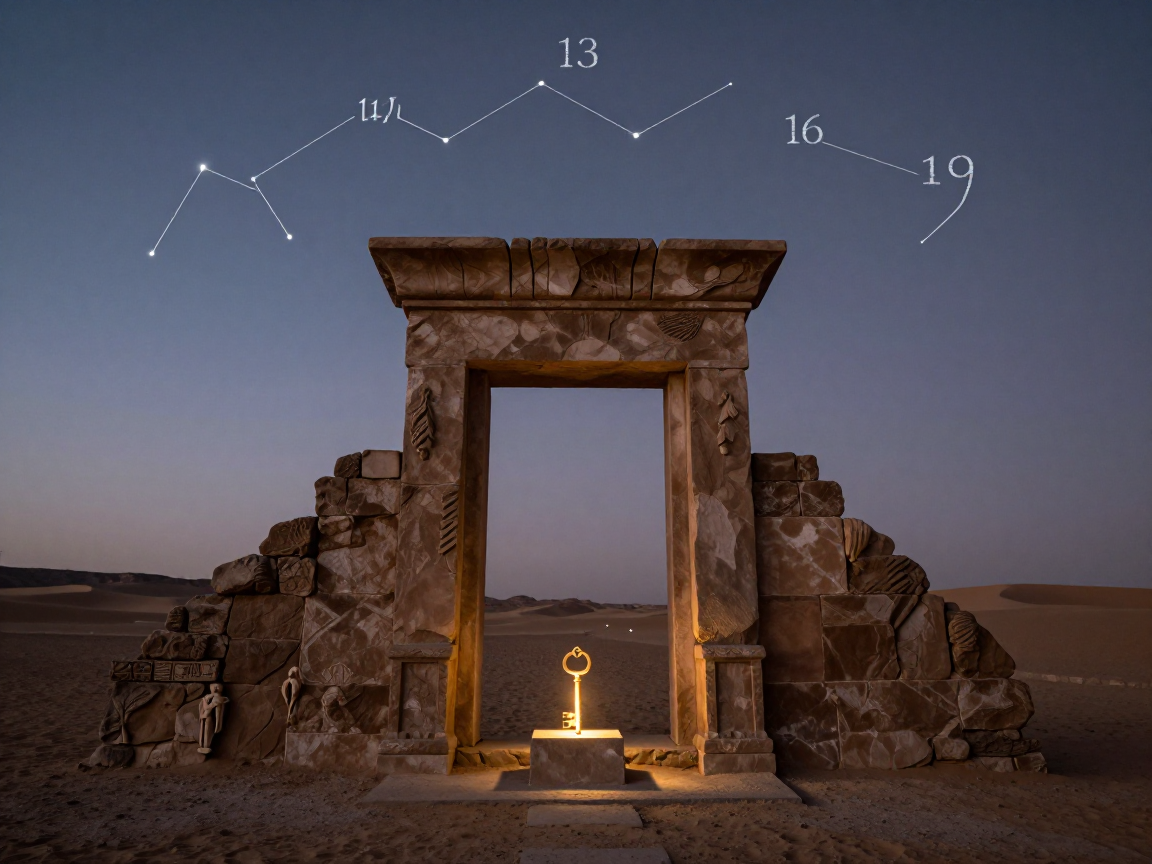
We have all experienced those moments where life feels like a recurring script. Perhaps you find yourself repeatedly entering relationships with the same toxic dynamics, or maybe every time you reach the verge of a professional breakthrough, an unexpected obstacle forces you back to zero. While modern psychology often attributes these patterns to childhood conditioning or subconscious habits, numerology offers a deeper, more ancestral perspective. It suggests that these cycles are not merely coincidental—they are the manifestation of karmic debt numbers.
In the study of numerology, most numbers in our charts represent our talents, personalities, and inherent potential. However, certain numbers carry a heavier energetic weight. These are known as karmic debt numbers, and they act as indicators of specific lessons our souls failed to master in previous incarnations. Rather than seeing them as a cosmic punishment or a sign of being 'bad,' it is more helpful to view them as a specialized curriculum. Understanding these numbers allows us to stop asking "Why is this happening to me?" and start asking "What am I meant to learn from this?"
What Are Karmic Debt Numbers?
The concept of karma is rooted in the universal law of cause and effect. In the context of numerology, it is believed that the soul carries an energetic ledger from one lifetime to the next. When we misuse our power, neglect our fundamental responsibilities, or act with excessive selfishness in a past life, we create an imbalance. This imbalance must be rectified for the soul to continue its evolution toward higher consciousness.
The karmic debt numbers—13, 14, 16, and 19—serve as the specific markers of these imbalances. Each of these numbers is associated with a distinct type of debt. Some involve a debt of laziness or missed opportunities, while others involve a debt of intellectual pride or the abuse of freedom. When these numbers appear in your numerological profile, they act as a signal that you will encounter specific types of resistance in this lifetime. This resistance is not meant to break you; it is designed to force you to develop the qualities you previously lacked. It is a refinement process that, while difficult, ultimately leads to a much stronger and more resilient version of the self.
It is important to note that not everyone has karmic debt numbers in their chart. For those who do, the presence of these numbers does not mean a life of suffering. It simply means that certain areas of life will require more conscious effort, discipline, and awareness than they might for others. By identifying these numbers, you can stop fighting against the current and begin working with the specific energy of your soul’s journey.
How to Calculate Your Karmic Debt Numbers
Finding your karmic debt numbers requires looking at the core numbers in your numerological profile. These include your Life Path number, your Expression (or Destiny) number, and your Soul Urge (or Heart's Desire) number. Unlike standard numerology where you reduce every number to a single digit (1 through 9), karmic debt numbers are identified during the calculation process before the final reduction.
A karmic debt number is present if, during the addition of your birth date or the numerical values of your name, you encounter the numbers 13, 14, 16, or 19 before they are reduced to 4, 5, 7, or 1 respectively.
Calculating the Life Path Debt
Your Life Path number is derived from your full date of birth. To check for karmic debt, you must calculate the month, day, and year separately before adding them together. Let's look at an example for someone born on May 15, 1982:
- Month: 5
- Day: 1 + 5 = 6
- Year: 1 + 9 + 8 + 2 = 20; 2 + 0 = 2
- Total: 5 + 6 + 2 = 13
In this instance, the Life Path number is 4 (1 + 3), but because it was reached through the number 13, this person carries the 13/4 karmic debt. If the total had been 22 or 31, which also reduce to 4, there would be no karmic debt. The debt only exists when the specific double-digit numbers 13, 14, 16, or 19 appear in the final stages.
Checking Your Name (Expression and Soul Urge)
You should also check your name. Each letter of the alphabet corresponds to a number (A=1, B=2, etc.). If the sum of the vowels in your name (Soul Urge) or the sum of all letters in your name (Expression) results in 13, 14, 16, or 19, the debt is active in those specific areas of your personality or soul’s desire.
The Four Archetypes of Karmic Debt
Each of the four karmic debt numbers carries a distinct vibration and a specific set of challenges. Understanding the nuance of each allows you to recognize when you are falling into old traps and how to pivot toward growth.
Karmic Debt 13: The Debt of Focus and Discipline
Number 13 is often misunderstood as 'unlucky,' but in numerology, it signifies the need for hard work and structure. In a previous life, an individual with this debt may have been lazy, shiftless, or relied on the labor of others to get by. They likely avoided responsibility and took the easy way out whenever possible.
Signs you have the 13/4 debt:
- Tasks that seem easy for others require double the effort for you.
- You feel a constant sense of frustration or 'being stuck' despite working hard.
- You are prone to procrastination followed by overwhelming bursts of stress.
- You feel like you are constantly building things from scratch because they keep falling apart.
The Mastery Path: The lesson here is discipline. To clear this debt, you must learn to embrace the 'grind' and find satisfaction in a job well done. Shortcuts will always fail you. When you commit to a goal and see it through with meticulous organization and persistence, the weight of the 13 begins to lift.
Karmic Debt 14: The Debt of Misused Freedom
This debt relates to the misuse of freedom and the pursuit of physical indulgence in past lives. The individual may have been escapist, perhaps through addiction, or they may have acted with a total lack of accountability toward others, changing their mind and direction at the expense of those around them.
Signs you have the 14/5 debt:
- Your life feels chaotic or unpredictable, with sudden changes in jobs or locations.
- You struggle with commitment and feel 'suffocated' by routines.
- You have a tendency toward addictive behaviors (food, shopping, substances, or even 'newness').
- You find it difficult to stay focused on one path long enough to see results.
The Mastery Path: The lesson of the 14 is moderation. You are here to learn how to be free without being destructive. Finding a middle ground and maintaining a sense of commitment despite the urge to run away is the key to balancing this energy. Discipline in the physical world leads to true spiritual freedom.
Karmic Debt 16: The Debt of Ego and Intellectual Pride
Of all the karmic debt numbers, 16 is often considered the most difficult because it involves the 'Tower' moment—the total collapse of the ego. This debt usually stems from a past life where the individual was highly intelligent or spiritually gifted but used those gifts to look down on others. They may have been vain, aloof, or involved in relationships that caused great pain to others due to their sense of superiority.
Signs you have the 16/7 debt:
- You experience sudden 'crashes' in life where everything you've built disappears.
- You struggle with feelings of intellectual loneliness or being misunderstood.
- You have a history of choosing partners who challenge your ego or cause emotional upheaval.
- You possess a deep-seated fear of failure or appearing 'weak.'
The Mastery Path: The lesson is humility and spiritual awakening. You are being pushed to realize that your worth is not found in your status or your intellect, but in your connection to the divine. Once the ego is humbled, the 16 becomes a number of profound wisdom and intuition.
Karmic Debt 19: The Debt of Power and Independence
The number 19 relates to the abuse of power. In a past life, the individual may have been in a position of authority and used it for purely selfish gain, ignoring the needs of others. They lived as an island, believing they were above the help or influence of their community.
Signs you have the 19/1 debt:
- You feel intensely lonely or unsupported, even when surrounded by people.
- You struggle to ask for help, viewing it as a sign of weakness.
- You find yourself in positions where you have to do everything yourself because others 'fail' you.
- You have a strong desire for independence but feel frustrated when it leads to isolation.
The Mastery Path: The lesson is to learn that no man is an island. You must learn the value of interdependence. To clear this debt, you must use your natural leadership skills to uplift others rather than just yourself. When you lead from a place of service, your loneliness dissolves.
A 5-Step Framework for Balancing the Scales
Identifying that you carry one of the karmic debt numbers is only the first step. The goal is to transmute that energy into a strength. Here is a practical framework for navigating your karmic path and 'paying off' your soul's debt.
- Acknowledge the Pattern Without Judgment
The first step is observation. When a recurring problem arises, ask yourself if it aligns with your specific karmic debt. If you have a 14 debt and your life feels chaotic, acknowledge it. Say to yourself, "This is the energy of the 14 at work." By naming it, you detach from the emotional victimhood and move into the role of the conscious observer.
- Identify the "Karmic Temptation"
Each debt has a specific temptation. For 13, it is the temptation to quit. For 14, it is the temptation to escape through indulgence. For 16, it is the temptation to judge others to feel superior. For 19, it is the temptation to dominate or isolate. Pinpoint the exact moment you feel the urge to fall into these old behaviors.
- Apply the Opposite Virtue
Once you identify the temptation, consciously apply the corrective virtue. If you want to quit (13), commit to five more minutes of work. If you want to escape (14), stay present in the discomfort. If you feel superior (16), find something to genuinely admire in the person you are judging. If you want to do it alone (19), ask for a small favor from a friend.
- Practice Radical Responsibility
Karma is effectively a debt of responsibility. The more you take ownership of your current situation—regardless of whose 'fault' it was originally—the faster the debt clears. Stop blaming the economy, your parents, or your boss. When you take 100% responsibility for your response to life, the karmic resistance begins to neutralize.
- Service as the Universal Solvent
Almost all karmic debt involves some level of past-life selfishness. Therefore, the universal "solvent" for karmic debt is service. When you use the qualities of your reduced number (4, 5, 7, or 1) to help others, you are effectively paying back the collective ledger. Help someone else find their focus (13), guide someone toward healthy freedom (14), share spiritual wisdom (16), or lead a group with compassion (19).
Moving From Debt to Mastery
It is a common misconception that having karmic debt numbers makes a person 'bad' or spiritually behind. In many ways, the opposite is true. Souls that choose a lifetime with significant karmic debt are often highly evolved souls who have decided they are finally ready to settle their accounts. They are choosing the 'advanced course' of human experience because they are strong enough to handle the challenge.
When you work through a karmic debt, you don't just return to zero; you gain a level of mastery that others do not possess. A person who has mastered the 13/4 debt becomes a powerhouse of productivity and manifestation. One who has cleared the 14/5 debt becomes a beacon of adaptability and healthy freedom. The 16/7 debt leads to profound spiritual enlightenment and psychic depth, and the 19/1 debt creates a leader who rules with genuine connection and empathy.
Your karmic debt numbers are not a life sentence. They are a map. They show you exactly where the pitfalls are located so that you can stop falling into them. By leaning into the discomfort of these lessons, you transform the weight of the past into the fuel for your future. Life stops being a series of repetitive obstacles and becomes a purposeful journey of refinement, leading you toward the most authentic and empowered version of yourself.