The Silent Intelligence: Why Intuition in Decision Making Is Your Most Underused Superpower
Most of us were raised to believe that the only way to make a good choice is to be purely rational. We are told to make lists, weigh the pros and cons, and analyze every possible data point until the right answer emerges through sheer logic. However, anyone who has ever faced a major life crossroad knows that logic only takes you so far. There comes a point where the spreadsheet stops being helpful and a deeper, more visceral sense takes over. This is the role of intuition in decision making—a process that is often dismissed as mystical or flaky, but is actually one of the most sophisticated tools the human brain possesses.
Intuition is not about psychic premonitions or magical thinking. Instead, it is the result of the brain's ability to recognize patterns at a speed that bypasses the conscious mind. It is the cumulative effect of every experience you have ever had, filtered through your subconscious and delivered to your awareness as a feeling. When we understand how intuition in decision making works, we can stop viewing it as a distraction and start using it as a competitive advantage. The goal is not to abandon logic, but to create a partnership between the analytical mind and the intuitive gut.
The Neuroscience of the "Second Brain"
To effectively use intuition in decision making, we must first understand where it comes from. Neuroscientists often refer to the basal ganglia and the amygdala as the engines of intuitive thought. These parts of the brain are responsible for emotional processing and habit formation. Unlike the prefrontal cortex, which handles slow, deliberate reasoning, these deeper structures work almost instantly. They scan our current environment and compare it against a massive internal library of past events, identifying subtle cues that our conscious mind might miss.
This process is often called "thin-slicing." It is why an experienced firefighter might suddenly feel the urge to pull their team out of a burning building seconds before the floor collapses, even if they cannot immediately explain why. Their brain noticed a specific pattern in the smoke or the sound of the flames that didn't fit the profile of a stable fire. This is intuition in decision making in its purest form: a high-speed survival mechanism that delivers an answer before the conscious mind can even formulate the question.
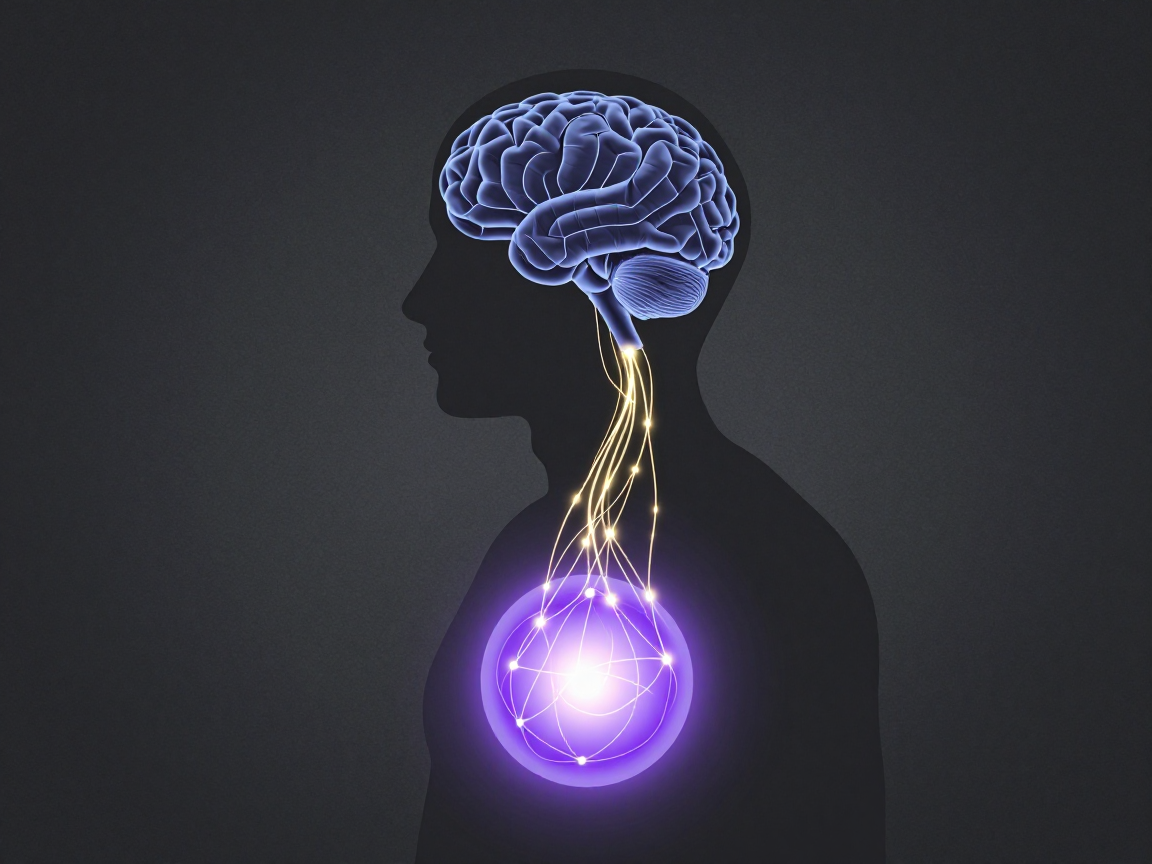
Furthermore, the physical sensation of intuition is real. The human gut is lined with millions of neurons—a network often called the "second brain." This enteric nervous system communicates directly with the head via the vagus nerve. When you feel a "knot" in your stomach or a "sinking feeling," your body is literally processing information. Ignoring these signals is often a mistake, as they represent a biological feedback loop that has been refined over millions of years of evolution. Our bodies often know the answer long before our verbal minds can articulate the reasoning.
When to Trust Your Intuition in Decision Making
While intuition is powerful, it is not infallible. The challenge lies in knowing when to lean into your gut and when to rely on a more analytical approach. Intuition is most reliable when you have a high level of expertise in a particular field. A professional chess player can look at a board and "feel" the best move because they have seen thousands of similar patterns. For a beginner, that same feeling might just be a guess. This is known as "informed intuition."
There are three specific scenarios where intuition in decision making tends to outperform pure logic:
- Complex Situations with Too Many Variables: When there are hundreds of moving parts and no clear "right" answer, the analytical mind can suffer from analysis paralysis. Intuition helps narrow the field by highlighting the most relevant factors.
- High-Pressure, Time-Sensitive Moments: In emergencies, you don't have time to build a spreadsheet. Intuition provides a rapid response based on pattern recognition.
- People and Social Dynamics: Humans are incredibly complex. Logic rarely helps you understand if someone is trustworthy or if a team has the right chemistry. Our intuitive sense is often much better at reading non-verbal cues and micro-expressions.
However, if you are making a decision in a field where you have little experience, or if the situation is entirely new to you, your intuition might be influenced by fear or cognitive biases. In these cases, it is safer to lead with a structured, analytical process. The key is to recognize that intuition is a tool for pattern recognition; if you haven't seen the pattern before, the tool may malfunction.
The R.E.A.L. Framework for Intuitive Balance
To master intuition in decision making, you need a way to verify your gut feelings. You can use the R.E.A.L. framework to test whether your intuition is providing a genuine insight or just a reaction to stress.
- Reflect on the Source: Ask yourself, "Is this feeling coming from a place of experience or a place of fear?" True intuition feels calm and certain, like a quiet "yes" or "no." Anxiety, on the other hand, feels frantic, loud, and physically draining. If the feeling is rooted in past trauma or generalized anxiety, it may not be a reliable guide.
- Evaluate the Environment: Is this a "high-validity" environment? Intuition works best in worlds where there are stable patterns and immediate feedback, such as sports, medicine, or technical crafts. If you are dealing with a "low-validity" environment like the stock market or long-term political forecasting, logic should take the lead because the patterns are too chaotic for the subconscious to map accurately.
- Align with Your Values: Sometimes our gut tells us "no" because a choice violates our core values, even if the logic says it is a great opportunity. If a decision makes sense on paper but leaves you feeling drained or uneasy, check if it aligns with who you are. Intuition in decision making is often our internal moral compass speaking up.
- Listen to the Body: Pay attention to where the feeling is located. Is it a tightness in the chest? A lightness in the heart? A tension in the jaw? Learning your body's specific language of intuition helps you decode the messages it is sending. Practice "checking in" with your physical self before finalizing any major choice.
Common Pitfalls: Why Intuition Can Fail
One of the biggest dangers in using intuition in decision making is confusing a "gut feeling" with a "cognitive bias." Our brains love shortcuts, and sometimes those shortcuts are wrong. For example, the availability heuristic makes us think something is more likely to happen just because we can easily remember a similar event. If you recently read a news story about a plane crash, your intuition might tell you that flying is dangerous, even though statistics prove otherwise. This isn't intuition; it's a memory-based error.
Another pitfall is the confirmation bias. If you already want a certain outcome, your intuition might magically "feel" like that outcome is the right one. This is why it is essential to invite dissenting opinions and look for data that contradicts your gut feeling. If your intuition survives a challenge from the facts, it is much more likely to be correct. We must be wary of using intuition as an excuse to be lazy or to avoid the hard work of thinking.
Finally, beware of the ego trap. Sometimes we want to be the "intuitive genius" who makes bold calls without looking at the data. This can lead to overconfidence. The best decision-makers are humble; they use their intuition in decision making as a starting point for inquiry, not a final verdict that is beyond questioning. They ask, "My gut says X, now how can I prove or disprove that?"
5 Practical Ways to Sharpen Your Intuitive Muscle
Like any muscle, your capacity for intuition in decision making can be strengthened through practice. You don't have to wait for a life-changing crisis to start training. Here are a few ways to refine your inner voice on a daily basis:
- The "Sleep On It" Technique: Your subconscious mind continues to process data while you sleep. By stating your problem clearly before bed and looking for an intuitive nudge in the morning, you give your brain space to synthesize information without the noise of conscious thought.
- Journaling After the Fact: Start a Decision Journal. Record the choice you made, whether you followed your gut or your logic, and what the eventual outcome was. Over time, you will see patterns in when your intuition was right and when it was wrong. This builds the "informed" part of informed intuition.
- Micro-Practice with Low Stakes: Practice using intuition on small things. Which route should you take home? Which dish should you order at a restaurant? By practicing on things that don't matter, you build confidence for the things that do.
- Mindfulness and Silence: It is hard to hear your intuition if your life is constant noise. Even five minutes of silence a day can help clear the mental clutter, making the "quiet" voice of your intuition easier to detect. Intuition rarely shouts; it whispers.
- Body Scanning: Throughout the day, check in with your physical sensations. Are you holding tension? Do you feel expansive? By becoming more literate in your body's physical states, you will be better able to interpret somatic markers when it comes time to make a big decision.
The Power of the Integrated Mind
Ultimately, the goal is not to choose between your head and your heart. The most effective leaders, creators, and thinkers are those who can integrate both. They use logic to set the stage, gather the facts, and eliminate the impossible options. Then, they use intuition in decision making to make the final leap among the remaining possibilities. Logic provides the boundaries, but intuition provides the vision.
Intuition is the bridge between what we know and what we feel. It allows us to move through the world with a sense of flow and confidence, rather than being constantly bogged down by the weight of endless analysis. By respecting the biological reality of your gut feelings and testing them against the rigor of logic, you can turn your decision making into a more holistic, human, and ultimately successful process. Trusting yourself is a skill, and like any skill, it begins with the willingness to listen to that internal resonance that says, "This is the way."