Beyond the Invisible: A Grounded Guide to Understanding How Reiki Works for Deep Healing
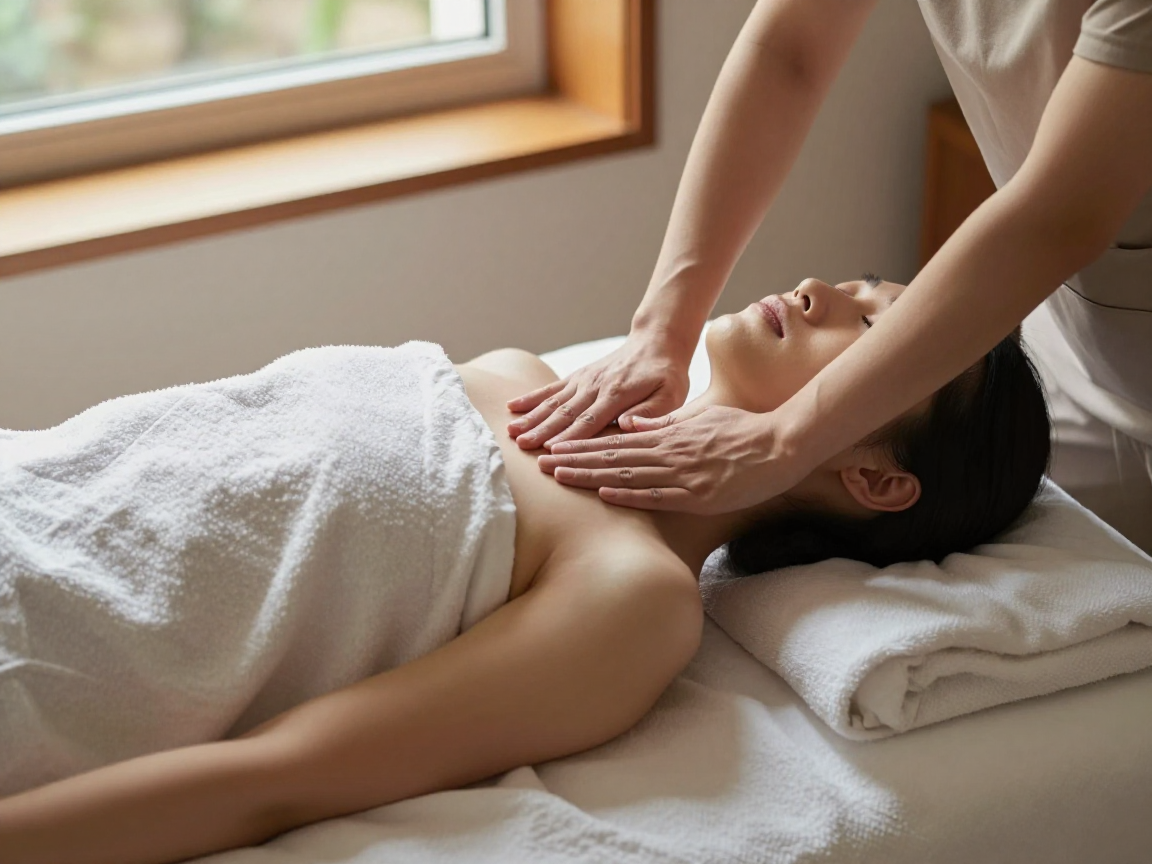
To the uninitiated, a Reiki session can look remarkably simple - perhaps even suspiciously so. A person lies fully clothed on a massage table while a practitioner lightly places their hands on or just above various parts of the body. There is no manipulation of muscle, no needles, and no complex machinery. Yet, millions of people worldwide report profound shifts in their physical pain, emotional clarity, and overall sense of peace after a session. This leads to the inevitable question that bridges the gap between skeptics and seekers: how does reiki work?
At its core, Reiki is a Japanese technique for stress reduction and relaxation that also promotes healing. It is based on the idea that an unseen "life force energy" flows through us and is what causes us to be alive. When this energy is low or blocked, we are more likely to get sick or feel stress. When it is high and flowing freely, we are more capable of being happy and healthy. While that sounds poetic, the actual mechanics involve a sophisticated interplay between the human biofield, the autonomic nervous system, and the subtle energetic pathways that modern science is only beginning to map.
The Concept of Life Force Energy and the Biofield
To understand how does reiki work, one must first accept the premise that the human body is not just a collection of biological parts, but a complex electrical system. Every heartbeat generates an electromagnetic field. Every neuron firing in your brain sends an electrical impulse. In Western medicine, we use this reality to perform EKGs and EEGs. Reiki practitioners refer to this cumulative field as the "biofield" or "aura".
In the tradition of Reiki, which was developed by Mikao Usui in the early 20th century, this energy is referred to as "Ki". You may know it by other names: "Qi" in Chinese medicine or "Prana" in Ayurvedic traditions. When a practitioner performs Reiki, they are not using their own personal energy. Instead, they act as a conduit for the universal energy surrounding us. By placing their hands in specific positions, they help to break up energetic stagnations and encourage a smooth flow of life force through the body's meridians and chakras.
The Science of the Parasympathetic Nervous System
While the concept of "universal energy" can feel abstract, the physical effects of Reiki are very much measurable. One of the most effective ways to answer the question of how does reiki work from a physiological perspective is to look at the autonomic nervous system (ANS). The ANS is divided into two main branches: the sympathetic (fight or flight) and the parasympathetic (rest and digest).
Modern life keeps most of us in a chronic state of sympathetic arousal. We are constantly scanning for threats, meeting deadlines, and processing digital noise. This state suppresses the body's natural healing abilities. During a Reiki session, the gentle touch and focused intent of the practitioner trigger a profound relaxation response. As the body shifts into the parasympathetic state, heart rate slows, blood pressure stabilizes, and the body begins to divert resources toward cellular repair and immune function. In this sense, Reiki works by creating the optimal internal environment for the body to heal itself.
The Entrainment Theory: Tuning the Body
Another fascinating theory regarding how does reiki work involves the principle of entrainment. Entrainment is a phenomenon in physics where two vibrating objects will eventually lock into a common phase or frequency. For example, if you place several pendulum clocks on a wall, they will eventually all swing in unison.
Reiki practitioners are trained to maintain a high - vibrational, calm, and centered state. When they place their hands on a client who is stressed, in pain, or vibrating at a "lower" frequency of illness, the client's energy field may begin to entrain with the practitioner's focused, balanced field. This subtle shift helps the client's body "remember" its natural state of equilibrium. It is similar to how a tuning fork can be used to bring a piano string back into the correct pitch.
What Happens During a Session: A Practical Framework
If you are considering your first session, it helps to have a roadmap of the process. While every practitioner has a unique style, most follow a structured framework to ensure a comprehensive energetic clearing. Here is what you can typically expect:
- The Consultation: You will discuss any physical or emotional issues you are facing. This sets the "intention" for the session.
- Centering: The practitioner begins by centering themselves, often through a brief meditation, to become a clear channel for the energy.
- Scanning: The practitioner may move their hands over your body to feel for "Byosen" - areas where the energy feels cold, hot, tingly, or stagnant.
- Hand Placements: The practitioner uses a series of 12 to 15 standard hand positions, starting at the head and moving down to the feet. They may spend more time on areas that feel particularly blocked.
- Grounding: The session usually ends with a grounding technique to ensure you feel present and stable before standing up.
The Sensations of Reiki: What Does It Feel Like?
Because we are discussing how does reiki work, it is important to address the subjective experience. Unlike a massage, where the pressure provides a constant physical sensation, Reiki is subtle. However, many people experience distinct physical markers during the flow of energy. Common sensations include:
- Heat: Many clients report an intense, soothing heat emanating from the practitioner's hands, even if the hands are not touching the skin.
- Tingling: A "pins and needles" sensation or a feeling of static electricity moving through the limbs.
- Pulsing: A rhythmic vibration or wave - like sensation moving through the torso or head.
- Visuals: Seeing colors, lights, or specific imagery behind closed eyes.
- Emotional Release: It is very common for clients to feel a sudden urge to laugh, cry, or sigh deeply as suppressed emotions are moved out of the energy field.
The Role of Intent and Receptivity
One of the most nuanced aspects of how does reiki work is the role of the recipient. Reiki is not something that is "done" to you; it is a collaborative process. The practitioner offers the energy, but the client's system must be willing to receive it. This is why many people find that the more they practice Reiki, the more sensitive they become to its effects.
Intent acts as a directional force. When a practitioner holds the intent for the "highest good" of the client, it guides the energy to where it is needed most. Interestingly, Reiki is often described as having an "innate intelligence". If a client comes in for a sore shoulder, but the root cause of that pain is actually chronic emotional stress held in the solar plexus, the energy will often flow to the emotional center first. It addresses the source rather than just the symptom.
A Checklist for Your First Reiki Experience
To get the most out of a session and truly see how does reiki work for your unique chemistry, consider this preparation checklist:
- Hydrate well before and after. Energy movement requires water for cellular communication.
- Wear comfortable, loose - fitting clothing. Natural fibers like cotton are often preferred.
- Minimize caffeine intake on the day of your session to keep your nervous system calm.
- Approach the session with an open mind. Skepticism is fine, but active resistance can make it harder to drop into a relaxed state.
- Set a simple intention, such as "I am open to receiving whatever healing I need today".
Bridging the Gap: The Future of Energy Medicine
As we look toward the future, the question of how does reiki work is being explored in hospital settings and clinical trials. Many prestigious institutions, including the Mayo Clinic and Johns Hopkins, now offer Reiki as a complementary therapy for cancer patients, post - operative recovery, and palliative care. Research suggests that while it may not replace conventional medicine, it significantly improves the quality of life, reduces the need for pain medication, and shortens recovery times.
Ultimately, Reiki reminds us that we are more than just biology. We are vibrant, energetic beings whose health is dictated by the flow of our internal resources. Whether you view it through the lens of ancient spiritual wisdom or the emerging field of biofield science, the result remains the same: a return to a state of wholeness.
By quieting the noise of the external world and focusing on the subtle currents within, Reiki provides a pathway back to our natural state. It is a gentle reminder that sometimes, the most profound changes don't require force - they simply require us to get out of our own way and let the energy flow where it is meant to go.