The Lost Art of Lineage: Why Honoring Ancestors Is the Key to Reclaiming Your Inner Strength
In our fast-paced, digital-centric world, it is easy to feel like a solitary island, adrift in a sea of immediate concerns and future anxieties. We often live as if we began the moment we were born, disconnected from the vast, intricate web of lives that converged to make our existence possible. This sense of disconnection is a uniquely modern malady, a form of historical amnesia that leaves many of us feeling ungrounded and unsupported. However, there is a profound remedy waiting in the shadows of our family trees. By intentionally honoring ancestors, we begin to bridge the gap between the present and the past, discovering that we are not alone, but rather the current expression of a lineage that has survived countless challenges.
Honoring ancestors is not about living in the past or hero-worshipping every individual who appears in your genealogy. Instead, it is a practice of recognition. It is the act of acknowledging the biological, emotional, and spiritual inheritance we carry. When we turn our attention back toward those who came before us, we tap into a source of resilience that is literally written into our DNA. Whether through simple daily rituals, the creation of a dedicated space, or the healing of old family wounds, the practice of ancestral veneration offers a pathway to a more grounded and purposeful life.
Understanding the Call to Your Roots
For many, the urge to begin honoring ancestors starts with a vague sense of curiosity or a sudden realization of a pattern that seems to repeat across generations. Perhaps you share a talent for music with a grandfather you never met, or you recognize a specific type of anxiety that has haunted your mother and her mother before her. These are the whispers of the lineage. In many indigenous and traditional cultures, the ancestors are considered the most immediate and accessible spirits—those who have a vested interest in the well-being of their living descendants because their own legacy is at stake.
When we ignore this connection, we miss out on a massive support system. Think of your ancestors as the roots of a tree. If the roots are neglected, the branches cannot flourish. By acknowledging them, you are essentially watering those roots. This isn't just about the well-known names or the great heroes of history; it is about the thousands of ordinary people who endured, survived, and loved so that you could eventually take a breath. Honoring ancestors is an act of gratitude for the sheer survival of your bloodline through famine, war, and hardship.
Signs You Are Being Called to Ancestral Work
If you are wondering whether this path is right for you, look for these common indicators that your lineage is reaching out:
- Recurring Family Themes: You notice the same struggles with money, relationships, or health appearing in every generation.
- Vivid Dreams: You have dreams of people you don’t recognize who feel familiar, or you visit landscapes that feel like "home" despite never having been there.
- A Sudden Interest in History: You find yourself drawn to books, films, or archives related to the specific regions your family originated from.
- Feeling Unanchored: A persistent sense of being a "black sheep" or feeling like you don't belong in your current environment can often be a signal that your soul is seeking its ancestral anchor.
The Psychological Power of Connection and Epigenetics
From a psychological perspective, the practice of honoring ancestors provides a sense of belonging that is essential for mental health. Research in the field of epigenetics suggests that we carry more than just eye color or height from our predecessors; we may also inherit the biological markers of their experiences, including trauma and resilience. When we consciously engage with our lineage, we give ourselves the tools to process these inherited patterns.
By identifying with the strengths of our ancestors, we build what psychologists call a "stronger sense of self." Knowing that you come from a long line of survivors provides a buffer against modern stress. When you feel like you cannot go on, remembering an ancestor who crossed an ocean or survived a Great Depression can provide the necessary perspective. You are the result of a thousand successes. Every one of your ancestors lived long enough to pass on their life force. Honoring ancestors allows you to stand on the shoulders of these giants rather than trying to walk the path entirely on your own.
Overcoming the "Perfect Ancestor" Myth
One of the biggest hurdles people face when they consider honoring ancestors is the reality of family complexity. Not every ancestor was a good person. Some may have been abusive, bigoted, or fundamentally broken. It is a common misconception that to honor your ancestors, you must condone their every action. This is not the case. In fact, a crucial part of ancestral work is acknowledging the "well" and the "unwell" ancestors.
Dealing with Difficult Lineages
If you have a history of trauma in your immediate family, the thought of honoring ancestors might feel heavy or even dangerous. However, if you look back far enough—fifty, a hundred, or a thousand years—you will eventually find "ancestors of integrity." These are the ancient ones who lived in harmony with their communities and the earth. You can choose to bypass the more recent, troubled spirits and focus your energy on these elder guides.
Honoring ancestors can actually be a way to heal the lineage by declaring that the toxic patterns stop with you. You are honoring their potential and their life force, while choosing not to replicate their mistakes. This is often referred to as being the "transitional character" in a family—the one who changes the trajectory of the lineage forever.
A 5-Step Framework for Connecting with Your Lineage
If you are ready to begin, you don't need a complex ritual or an expensive setup. The most important element is your intention. Here is a simple framework to help you start honoring ancestors in a way that feels authentic and manageable.
- Research and Identification: Start with what you know. Write down the names of your parents, grandparents, and great-grandparents. Use genealogy websites or talk to older relatives. Even if you only have a single name or a location, it gives your mind a place to anchor.
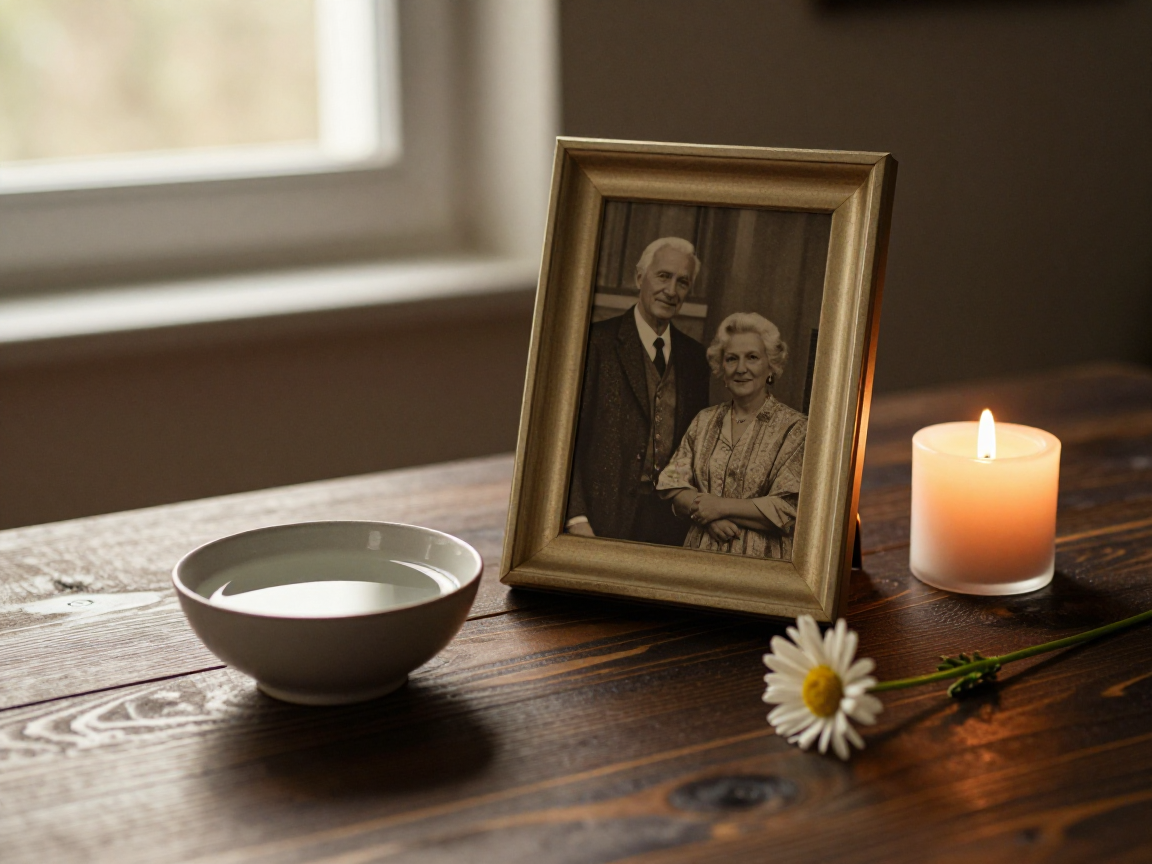
- Creation of a Dedicated Space: You don't need a massive altar. A small shelf or a corner of a desk will do. Place a few items there that represent your lineage—photos, an heirloom, or even a stone from a place they lived.
- The Offering of Water: In many traditions, water is the primary medium for communicating with the dead. Placing a fresh glass of water on your altar daily is a simple, universal way of honoring ancestors. It represents life, clarity, and the cooling of old fires.
- Dialogue and Invitation: Speak to them. You can do this out loud or in your head. Introduce yourself. Tell them about your life, your struggles, and your successes. By speaking their names, you keep their memory active in the physical world.
- Living the Legacy: The highest form of honoring ancestors is living a life that would make the best of them proud. This means cultivating the virtues they possessed and working to heal the wounds they passed down.
Creating a Sacred Space: The Ancestor Altar
Building an altar is a tangible way to make honoring ancestors a part of your daily environment. This isn't about "worship" in a religious sense, but rather about "veneration" and "remembrance." When you walk past your altar, it serves as a visual reminder that you are part of something larger than yourself.
Items to consider for your ancestor altar:
- Photographs: Especially those where the ancestors look happy or at peace. If you don't have photos, write their names in beautiful calligraphy.
- A Candle: To represent the light of consciousness and the warmth of the family hearth. Lighting it signifies that you are "opening" the space.
- Natural Elements: Fresh flowers, a bowl of earth from a family garden, or a branch from a tree that reminds you of home.
- Food and Drink: Traditionally, people might leave a small portion of a meal or a cup of coffee. This is a symbolic way of saying "you are still a guest at my table."
- Heirlooms: A watch, a piece of jewelry, or a simple tool that belonged to a predecessor helps bridge the physical gap between eras.
Keep the space clean. Dusting the photos and changing the water regularly is a form of active meditation. It shows that you value the connection and are willing to put in the effort to maintain it.
Simple Daily Practices for Modern Life
Honoring ancestors doesn't have to be a grand event. In fact, it is often more effective when integrated into your routine. Here are a few ways to keep the connection alive without needing hours of free time:
- The First Sip: Before you take your first sip of coffee or tea in the morning, pause for a second and mentally dedicate it to your ancestors. You might say, "To those who came before me, I thank you for this day."
- Cook Traditional Recipes: Food is one of the strongest links we have to our heritage. Making your grandmother's soup or a traditional bread from your ancestral homeland is a sensory way of honoring ancestors. The smells and tastes act as a bridge across time.
- Tell Their Stories: Share stories about your predecessors with your children or friends. When you tell a story about an ancestor's bravery, humor, or even their quirks, you are effectively bringing them back into the room.
- Genealogy as Meditation: Spend fifteen minutes a week researching a branch of your tree. View it not as a data collection task, but as a way of getting to know your people.
Healing the Future by Honoring the Past
Perhaps the most profound reason for honoring ancestors is the impact it has on the future. When we take the time to heal our relationship with our lineage, we stop passing "ghosts" down to our children. We become a filter, straining out the trauma and passing down only the strength and wisdom. This is often called "ancestral healing."
By acknowledging the struggles your ancestors faced, you gain a deeper compassion for yourself. You begin to see that your own flaws and challenges aren't just personal failings, but perhaps part of a larger story that is still being written. When you stand in your power and honor your roots, you become a "well ancestor" for the generations that will follow you. You are the ancestor that your great-grandchildren will one day look back upon with gratitude.
Conclusion: Finding Your Place in the Line
Honoring ancestors is a journey that never truly ends. It is a shifting, evolving relationship that grows deeper the more you tend to it. As you begin to acknowledge those who paved the way for you, you may find that your sense of isolation begins to dissolve. You are the culmination of thousands of years of survival, love, and hope.
By taking small steps—lighting a candle, researching a name, or simply pausing to say "thank you"—you reclaim a part of yourself that has been missing. You find that you are backed by a silent, invisible army of supporters who want nothing more than for you to succeed. In the end, honoring ancestors is about more than the dead; it is about the living, and how we choose to carry the torch of our lineage into the light of the future.