Is It Intuition or Anxiety? How to Finally Tell the Difference Between Gut Feeling vs Fear
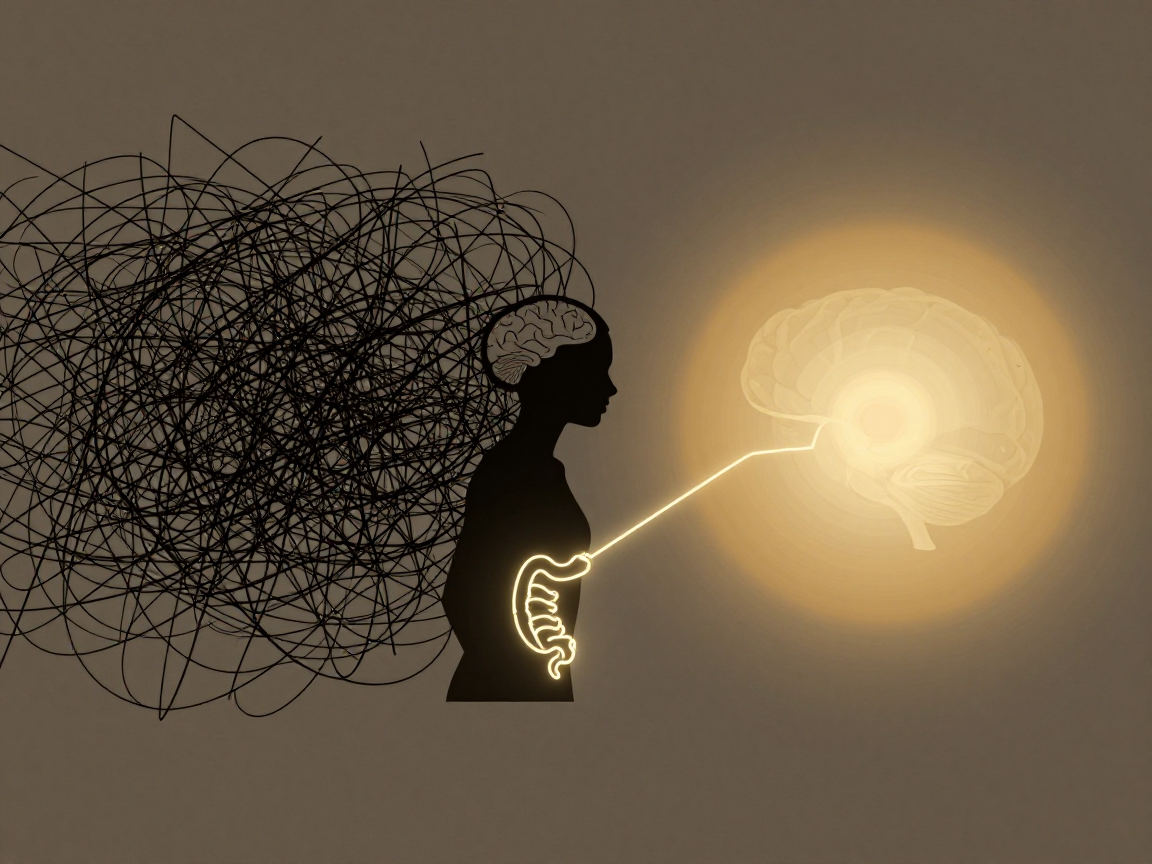
We have all been there. You are standing at a crossroads—perhaps considering a new job offer, a potential partner, or a major move—and you feel a distinct pull in your chest or a knot in your stomach. One voice inside tells you to run, while another suggests this is exactly where you need to be. The confusion that follows is exhausting. You find yourself asking the same question over and over: Is this my inner wisdom protecting me, or is it just my old patterns of anxiety trying to keep me small? This struggle between gut feeling vs fear is one of the most common hurdles in personal development and effective decision-making.
Distinguishing between these two internal signals is a vital skill for living an authentic life. When we mistake fear for intuition, we miss out on growth and stay trapped in our comfort zones. Conversely, when we ignore a genuine gut feeling because we think we are just being "paranoid," we often end up in situations that drain our energy or compromise our values. Learning to decode the language of your body is the only way to navigate this tension with confidence. This guide will explore the biological, psychological, and somatic differences that define gut feeling vs fear, providing you with a roadmap to trust yourself again.
The Biological Reality of the Second Brain
To understand the difference between gut feeling vs fear, we have to look at how the body processes information. The gut is often referred to as the "second brain" because of the enteric nervous system (ENS). This complex network of over 100 million neurons lines your gastrointestinal tract and communicates constantly with the brain in your head via the vagus nerve. This isn't just about digestion; it is about rapid, non-linear data processing.
Your gut feeling is essentially a form of high-speed pattern recognition. Your subconscious mind processes thousands of bits of information every second—things you aren't even consciously aware of, like a person's micro-expressions, a subtle shift in tone, or a tiny inconsistency in a narrative. When the subconscious finds a match or a discrepancy based on your past experiences and innate wisdom, it sends a physical signal. This is why intuition often feels like "knowing" something without being able to explain "why" in the chronological order that logic requires. It is the body providing an answer before the conscious mind has even finished formulating the question.
Fear, on the other hand, is primarily governed by the amygdala, the part of the brain responsible for the fight-or-flight response. While intuition is about subtle patterns and future alignment, fear is about immediate survival. It is an ancient evolutionary mechanism designed to keep you safe from perceived threats. The problem is that the modern brain often confuses a threat to our ego—like public speaking, a career change, or a difficult conversation—with a threat to our physical life. This is where the lines between gut feeling vs fear begin to blur. Fear triggers the sympathetic nervous system, flooding the body with cortisol and adrenaline, which clouds our ability to access the quiet wisdom of the ENS.
Identifying the Somatic Cues of Fear
Fear has a very specific "flavor" in the body. If you want to master the art of discerning gut feeling vs fear, you must become an expert in your own physical sensations. Fear is almost always restrictive and loud. It tends to manifest as a tightening in the throat, a racing heart, or a shallow breath. It feels like a "push" away from something, often accompanied by a sense of urgency or impending doom.
Psychologically, fear is often accompanied by what therapists call a "mental loop." It is repetitive, frantic, and usually starts with the phrase "What if?" Fear draws on past traumas and projects them into the future, creating a worst-case scenario that feels inevitable. Fear demands that you act immediately to stop the discomfort. It is the feeling of being chased by a predator, even if that predator is just a looming deadline or a social interaction. If the sensation you are feeling is frantic, noisy, and makes you feel small, trapped, or "urgent," you are likely dealing with fear rather than intuition.
The Quiet Clarity of Gut Feeling
In contrast, a true gut feeling is remarkably calm. Even when intuition is telling you something "bad" or warning you to walk away from a toxic situation, it does so with a sense of "neutrality." It is more of a "pull" or a "nudge" than a frantic "push." People often describe intuition as a "still, small voice" or a sudden drop of certainty in the center of their being.
While fear is focused on the hypothetical "What if?", gut feeling is focused on the immediate "What is." It exists entirely in the present moment. It doesn't need to argue with you or provide a twenty-page report on why a certain choice is right or wrong; it simply presents a direction. If you feel an expansive sense of "rightness"—even if the path ahead looks difficult or requires courage—you are likely experiencing intuition. The core difference in gut feeling vs fear can be summarized as the difference between being "informed" and being "threatened."
5 Key Differences Between Gut Feeling vs Fear
To help you categorize your experiences in real-time, consider these five distinct markers that separate a genuine intuitive hit from a fear-based reaction:
- The Tone of Voice: Fear is loud, nagging, and often sounds like a harsh critic or a panicked child. Gut feeling is quiet, firm, and matter-of-fact. It doesn't use hyperbole.
- The Feeling in the Body: Fear feels like a clench, a cold chill, or a jittery, buzzing energy. Gut feeling feels like a heavy "thud" of truth or a sense of "opening up" in the chest and stomach.
- The Timing: Fear is often triggered by the thought of the future or a memory of the past. Gut feeling happens in the immediate present, often arriving before you have had time to think through the logistics.
- The Content: Fear is full of "shoulds," "musts," and complex narratives about failure. Gut feeling is a simple "yes," "no," or "wait."
- The Aftermath: Following fear usually leaves you feeling exhausted and still anxious. Following a gut feeling—even if the outcome is uncertain or the decision was hard—usually brings a sense of relief or internal alignment.
The Discernment Framework: A 4-Step Process
When you are caught in the middle of a "gut feeling vs fear" dilemma, your logical brain is often too overstimulated to help. You need a structured way to settle your nervous system and listen to the underlying signal. Use this framework the next time you feel conflicted.
1. Regulate Your Nervous System
Fear thrives in a high-arousal state. If your heart is racing, you cannot hear your intuition. Spend five minutes practicing "box breathing"—inhale for four counts, hold for four, exhale for four, hold for four. By calming the vagus nerve, you quiet the "noise" of the amygdala, making the subtle signal of the gut easier to detect. You cannot distinguish gut feeling vs fear while in a state of active panic.
2. The "Body Test" Technique
Close your eyes and imagine yourself choosing "Option A." Notice how your body reacts. Do you feel a sense of heaviness, or do you feel a sudden constriction? Now, imagine yourself choosing "Option B." Does your stomach tighten, or does your chest feel like it has more room to breathe? Intuition usually speaks through "expansion," while fear speaks through "contraction." Pay attention to the very first half-second of the reaction before your brain starts rationalizing.
3. Check for the "Ego Hook"
Ask yourself: "Is this feeling trying to protect my safety or my ego?" Fear is often about protecting our image, our pride, or our sense of control. It wants to avoid embarrassment or the discomfort of being a beginner. True gut feelings are indifferent to the ego; they are concerned with your soul's growth and your actual well-being. If the "voice" is worried about what people will think, it is almost certainly fear.
4. Apply the "Sleep on It" Rule
Fear is impulsive; it wants you to decide "right now" to end the tension of uncertainty. Gut feeling is patient. It will still be there tomorrow morning. If the "nudge" disappears after a good night's sleep or a walk in nature, it was likely a temporary spike of anxiety. If the feeling remains steady, unchanging, and grounded regardless of your mood, it is your gut.
Why Fear Often Masquerades as Intuition
It is important to acknowledge that fear is a master of disguise. It often wears the mask of "common sense" or "being realistic." This is especially true for those who have experienced past trauma. For someone with a history of heartbreak, the fear of being hurt again might scream, "My gut says this person is bad!"
In these cases, the gut feeling vs fear distinction becomes even more nuanced. You must ask: "Is this a signal about the person in front of me, or is it a signal about my past?" If the feeling is rooted in a "memory" rather than a "perception" of the current moment, it is likely a trauma response, not intuition. Intuition is fresh and context-specific; fear is recycled and general. To heal this, you must teach your nervous system that the present is not the past.
Cultivating a Reliable Inner Compass
Distinguishing gut feeling vs fear is not a one-time event; it is a relationship you build with yourself over time. To strengthen your intuition, you must start by trusting it in small, low-stakes situations. This might mean taking a different route home because you felt a sudden urge to do so, or picking a restaurant based on a "vibe" rather than online reviews.
As you collect "data" on how your intuition feels versus how your fear feels, you will develop a "felt sense" of the truth. You will begin to recognize the specific vibration of an intuitive "yes" and the frantic static of an anxious "no." Over time, the static becomes easier to tune out, and the internal compass becomes your most reliable tool for navigating the complexities of modern life.
Ultimately, the journey of understanding gut feeling vs fear is a journey toward radical self-trust. It is the process of realizing that you have a built-in navigation system that is far more sophisticated than any logic or external advice. By quieting the noise of the world and the frantic whispers of the amygdala, you can finally hear the steady, grounded truth of your own inner voice. Trusting your gut isn't about being certain of the outcome; it is about being certain of yourself.