Beyond the Grind: How to Harness Flow State at Work for Effortless Productivity
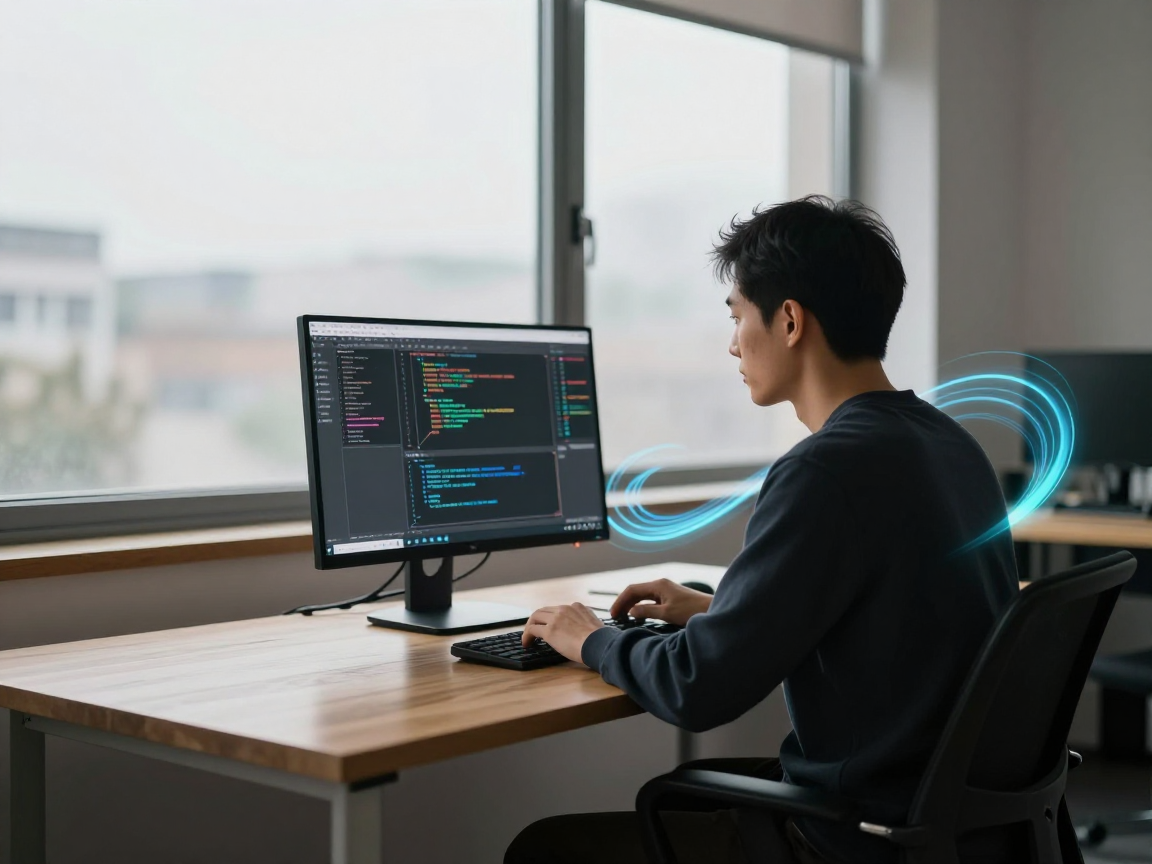
We have all experienced those rare afternoons where the clock seems to vanish. You sit down to tackle a complex project, and suddenly, the background noise of the office fades into a distant hum. Your fingers move across the keyboard with a precision that feels almost automatic, and the problems that seemed insurmountable an hour ago suddenly have clear, elegant solutions. This is not just a good day - it is the experience of flow state at work, a psychological phenomenon where high performance meets total immersion.
In our modern landscape of constant Slack notifications, back - to - back Zoom calls, and the perpetual itch of social media, reaching this level of focus feels increasingly like a superpower. Most professionals spend their days in a state of "fragmented attention" , jumping from one micro - task to another without ever gaining enough momentum to do their best work. Learning how to intentionally trigger flow state at work is the most effective way to bridge the gap between being busy and being truly productive.
The Anatomy of Being in the Zone
Flow was first popularized by psychologist Mihaly Csikszentmihalyi, who described it as a state in which people are so involved in an activity that nothing else seems to matter. When you achieve flow state at work, your brain undergoes a significant shift in how it processes information. Research shows that during these periods, the prefrontal cortex - the area responsible for self - criticism and complex logical thinking - actually slows down. This is known as transient hypofrontality.
When this part of the brain quiets, your "inner critic" goes silent. You stop second - guessing your decisions, and you stop worrying about how others perceive your work. This allows the more creative and intuitive parts of your brain to take over. The result is a sensation of effortless action. You are not pushing yourself to work; rather, the work itself seems to be pulling you forward. It is the peak of human experience, where the challenge of the task perfectly matches your ability to meet it.
The Pillars of Flow State at Work
To move from accidental flow to intentional flow, you must understand the conditions that make it possible. It is rarely a matter of luck. Instead, flow is the result of a specific set of environmental and internal factors that signal to your brain that it is safe - and necessary - to focus deeply.
The Challenge - Skill Balance
If a task is too easy, you will find yourself bored and prone to distraction. If a task is too difficult, you will become anxious and overwhelmed, which triggers a stress response that kills focus. Flow state at work occurs in the "Goldilocks Zone" where the task is just slightly beyond your current comfort level. It requires about 4 percent more effort than your baseline, forcing you to stretch your abilities without breaking your spirit.
Clear Goals and Immediate Feedback
You cannot enter flow if you are confused about what you are supposed to be doing. To trigger flow state at work, you need a defined objective for your current session. This is not a broad goal like "finish the marketing plan" but a specific one like "write the first three pages of the executive summary" . Furthermore, you need a way to see progress in real - time. When you see a problem solved or a paragraph completed, your brain releases dopamine, which reinforces your focus and keeps you locked into the task.
The Elimination of Friction
Every time your phone pings or a colleague asks if you "have a quick minute" , your brain has to expend energy to reorient itself. This is known as attention residue. Even if the interruption only lasts thirty seconds, it can take up to twenty minutes to return to the same level of depth. Reaching flow state at work requires a ruthless commitment to environment design - removing every possible barrier between your intent and your action.
A 5 - Step Framework for Triggering Flow at Work
Consistency is the hallmark of a high performer. Use this structured framework to move through the transition from distracted to deeply focused in a predictable way.
- The Biological Warm - Up
Your brain cannot enter flow if it is in a state of physiological stress. Before you start your deep work session, spend five minutes regulating your nervous system. This could be through box breathing, a quick walk, or simply clearing your physical desk. Hydrate and ensure you have had enough protein; a blood sugar crash is the quickest way to lose your focus.
- The 90 - Minute Fortress
Schedule your flow sessions in 90 - minute blocks. This aligns with your body's ultradian rhythms. During this time, your environment must be a fortress. Put your phone in another room, use website blockers for social media, and wear noise - canceling headphones. Let your team know that you are "going dark" to focus on a priority.
- Identify the Single Point of Entry
Do not sit down and wonder what to work on. Before you start the clock, identify the first physical action you need to take. This could be "open the spreadsheet" or "outline the email" . By lowering the barrier to entry, you bypass the procrastination phase where flow state at work is often lost before it even begins.
- Manage the Struggle Phase
Recognize that every flow session begins with a period of "struggle" . For the first fifteen to twenty minutes, your brain will resist the effort. You will feel an urge to check your phone or clean your desk. This is the neurochemical loading phase where your brain is gathering the information it needs. If you can push through this initial discomfort without switching tasks, you will likely tip over into flow.
- The Deliberate Recovery
Flow is a high - energy state that consumes a lot of glucose and neurochemicals like norepinephrine and dopamine. You cannot stay in flow for eight hours a day. Once your session is over, you must step away completely. Do not switch from a work screen to a phone screen. Instead, look at the horizon, stretch, or do something tactile. This recovery period is what allows you to return to flow state at work again tomorrow.
Common Barriers to Sustainable Focus
Even with the best intentions, certain habits act as "flow killers" that prevent you from reaching your full potential. Identifying these early is key to maintaining a high - performance career without the associated burnout.
- Multi - tasking: This is the antithesis of flow. When you multi - task, you are actually just rapidly switching between tasks, which creates mental fatigue and prevents the "deep dive" required for true immersion.
- Lack of Autonomy: It is difficult to find flow state at work if you feel no ownership over your tasks. If you are being micromanaged or if the "how" and "why" of your work are entirely out of your control, your brain will struggle to find the meaning necessary for deep engagement.
- The Perfectionism Trap: If you are too focused on the end result being perfect, you will stay in the analytical, self - critical part of your brain. Flow requires a willingness to "mess up" during the process so that the creative subconscious can take the lead.
- Chronic Sleep Deprivation: Flow requires significant cognitive resources. If you are running on four hours of sleep, your brain will prioritize basic survival functions over the complex, high - energy demands of flow state at work.
The Role of Office Culture in Facilitating Flow
While flow is a personal experience, the culture of an organization plays a massive role in whether employees are actually able to achieve it. In many modern offices, there is a "cult of availability" where being instantly responsive to messages is valued more than producing high - quality, deep work.
Forward - thinking companies are beginning to realize that flow state at work is their most valuable asset. They encourage "No - Meeting Wednesdays" or designated "quiet hours" . They recognize that five hours of interrupted work is not equal to two hours of flow. As an individual, you can lead this change by setting boundaries and demonstrating the superior quality of work that comes from protected focus time. When your output becomes consistently higher in quality and lower in errors, others will naturally be curious about your methods.
Conclusion: Making Flow Your New Standard
Achieving flow state at work is not about working harder; it is about working more intelligently. It is a shift from the "grind" mentality to a "depth" mentality. By aligning your environment, your tasks, and your biological rhythms, you can move away from the frustration of a fragmented workday and toward a career characterized by mastery and satisfaction.
Remember that flow is a skill. The more often you practice setting the stage for deep focus, the easier it becomes to drop into that state on demand. It is the difference between surviving your work week and actually thriving within it. Start small - commit to just one 60 - minute block of protected time tomorrow - and notice how much more capable and energized you feel when you finally allow your brain to do what it was designed to do!