Why You Carry Burdens That Aren't Yours: The Transformative Power of Family Constellation Work
We often think of our emotional struggles—our anxieties, our patterns of self-sabotage, or our inability to find a lasting partner—as purely individual issues. We assume they are the result of our own childhood experiences or our unique personality traits. However, there is a growing realization in the world of therapy and personal development that many of our heaviest burdens do not actually belong to us. They belong to our ancestors. Family constellation work is a powerful, phenomenological approach designed to uncover these hidden systemic loyalties and release the entanglements that keep us stuck in cycles of suffering.
Developed by the late German psychotherapist Bert Hellinger, family constellation work operates on the premise that we are part of a larger family soul or system. When someone in a previous generation is excluded, forgotten, or treated unfairly, a younger member of the family system may unconsciously step in to represent that person. This creates a systemic entanglement where the individual lives out a fate that is not their own. By bringing these hidden dynamics into the light, family constellation work allows for a resolution that honors the past while freeing the present generation to live their own lives.
The Roots of the System: Understanding Family Constellation Work
Family constellation work is not a traditional form of talk therapy. It does not focus on analyzing the narrative of what happened or assigning blame to parents or grandparents. Instead, it is a process of observation and movement. Hellinger integrated various influences—including Zulu ancestral wisdom, Gestalt therapy, and systemic family therapy—to create a method that looks at the family as a cohesive unit with its own set of natural laws.
At the heart of family constellation work is the concept of the field. Many practitioners refer to this as the "knowing field." This is an energetic or informational space that contains the history and the unresolved traumas of a lineage. During a workshop or individual session, this field becomes accessible, allowing participants to feel and perceive the emotions and physical sensations of family members they may never have even met. It is a profound experience that suggests we are far more connected to our roots than modern Western psychology often acknowledges. This resonance is similar to what biologist Rupert Sheldrake calls "morphic fields," where information is stored in a collective memory that influences individuals within a group.
The Three Orders of Love
Hellinger identified what he called the "Orders of Love." These are the natural laws that govern human systems. When these orders are respected, love flows freely. When they are violated, the system becomes disordered, and symptoms—such as depression, illness, or financial failure—begin to manifest in subsequent generations.
1. The Right to Belong
Every person born into or brought into a family system has an equal right to belong. This includes the "black sheep," the uncle who died in infancy, the aborted child, the previous spouse, or the family member who committed a crime. If someone is excluded or forgotten because of shame or grief, the system will attempt to restore balance by making a later member of the family "remember" them by repeating their behaviors or their fate. This is often seen in cases where a grandchild unconsciously mimics the life of an exiled grandfather.
2. The Law of Order (Hierarchy)
In a family system, those who came before have priority over those who came after. Parents are big, and children are small. Parents give, and children receive. When a child tries to "save" a parent or takes on the role of a parent to their own mother or father (parentification), the order is violated. This creates a heavy burden on the child, who is acting out of a misplaced sense of "blind love" rather than "conscious love." This violation often results in the child feeling chronically exhausted or unable to find their own place in the world as an adult.
3. The Balance of Giving and Taking
In adult relationships, such as between partners, there must be a healthy exchange of giving and taking. If one partner gives too much and the other cannot reciprocate, the relationship often breaks down. The one who receives too much often leaves because the guilt of the debt becomes unbearable. The only exception to this balance is the parent-child relationship, where the flow of life only goes in one direction: from the elder to the younger. Children can never repay their parents for the gift of life; they can only pass it forward to their own children or into their creative work.
How a Constellation Session Unfolds
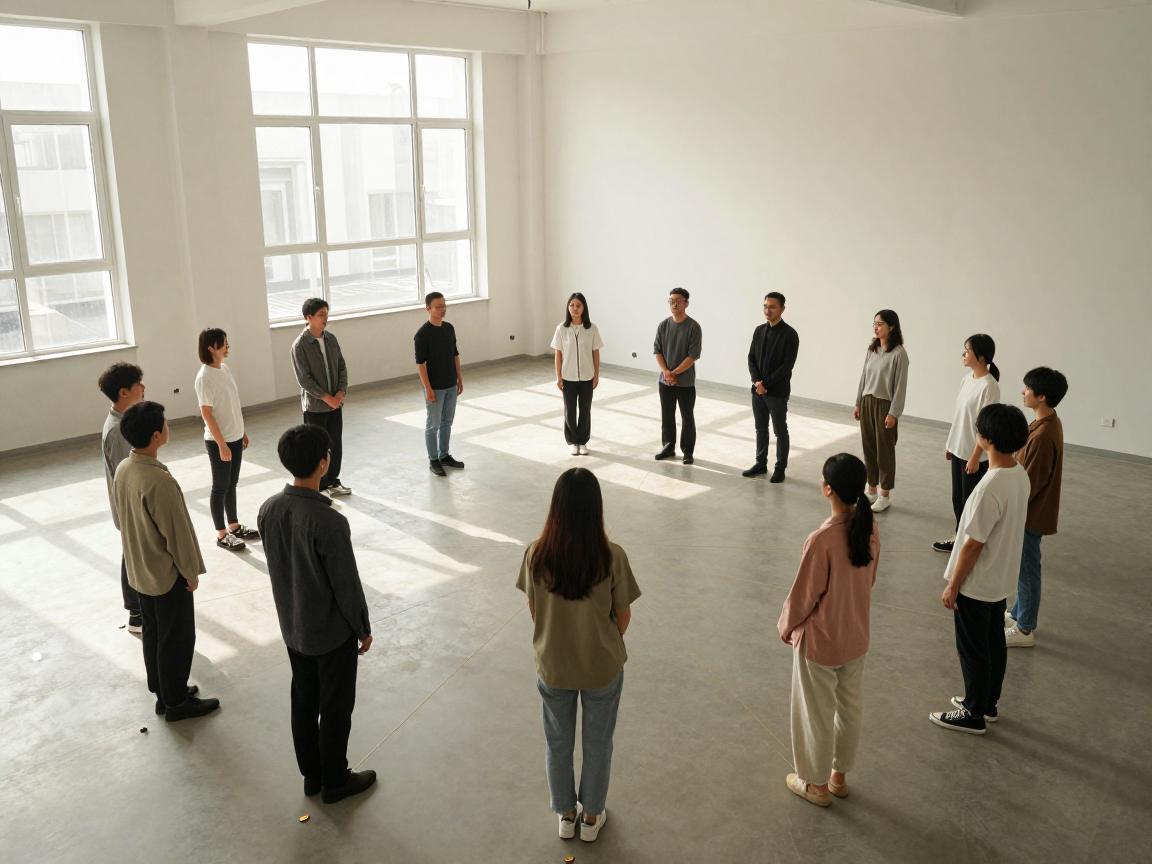
While family constellation work can be done in one-on-one settings using floor markers or figurines, it is traditionally experienced in a group workshop. The process is remarkably simple yet deeply moving. The facilitator, the client, and a group of strangers come together to explore a specific issue the client is facing.
The Step-by-Step Process of a Constellation
- Defining the Issue: The client briefly states their concern. The facilitator asks a few factual questions about the family history—such as who died early, who was excluded, or who suffered a major trauma—rather than focusing on emotional stories.
- Selecting Representatives: The client chooses people from the group to represent themselves and specific family members. They might select a representative for their father, mother, or even an abstract concept like "The Burden" or "Success."
- Spatial Placement: The client places these representatives in the room in relation to one another. They do this intuitively, without thinking. The way the representatives are positioned—where they are looking and how close they are—reveals the hidden dynamics of the system.
- Observation of the Field: Once placed, the representatives simply stand and report what they feel. They might feel a sudden coldness, a desire to look away, or a deep sadness. These sensations are not their own; they belong to the "knowing field" of the client's family.
- The Healing Movement: The facilitator then moves the representatives into a new configuration that restores the Orders of Love. They may introduce "healing sentences" such as "I see you now" or "I honor your fate, but I am the little one and you are the big one." These words act as a catalyst for a deep internal shift within the client.
7 Signs You Are Carrying Ancestral Trauma
How do you know if your current struggles are actually yours, or if you might benefit from family constellation work? Here is a checklist of common indicators that your issue is systemic in nature:
- Unexplained Emotions: You feel a deep sense of grief, anger, or fear that does not seem to have a direct cause in your own life history. It feels like a weight you were born with.
- Repeating Patterns: You find yourself in the same type of toxic relationship or financial crisis repeatedly, despite doing significant "self-work" or years of traditional therapy.
- Feeling "Stuck": You feel like you are being held back by an invisible wall, or you feel a sense of guilt whenever you start to become more successful than your parents or siblings.
- Early Loss or Trauma in the Lineage: Your family history includes the early death of a parent, a child who was never spoken of, or ancestors who were displaced by war or persecution.
- Chronic Health Issues: You suffer from symptoms or illnesses that seem to mirror the physical or emotional pain of a previous generation, or you have a family history of the same illness manifesting at the same age.
- The "Replacement" Feeling: You feel as though you are living your life for someone else, or you have a hard time knowing who you truly are outside of your family's expectations and roles.
- Difficulty with Parents: You have a persistent, heavy conflict with your parents that feels ancient and impossible to resolve through traditional communication or boundary-setting.
The Power of Conscious Love
A primary goal of family constellation work is to transition from "blind love" to "conscious love." Blind love is the unconscious loyalty a child feels that says, "I will suffer like you suffered" or "I will follow you into death." While this love is well-intentioned, it does not help the ancestor and it destroys the life of the descendant. It is a primitive form of loyalty that keeps the family stuck in a loop of pain.
Conscious love, on the other hand, says, "I see what you suffered. I honor your fate. In your memory, I will make something good out of my life." This is the ultimate resolution in family constellation work. It allows the individual to turn their back on the past—not out of avoidance, but out of a deep, respectful acknowledgment—and face their own future. When we take our rightful place in the family hierarchy, we no longer have to carry the weights of those who came before us. Instead, we can feel their strength behind us, supporting our journey forward.
Beyond Biology: The Science of Epigenetics
While family constellation work is often viewed as a spiritual or phenomenological practice, it aligns closely with the emerging field of epigenetics. Science now shows that trauma can leave chemical marks on our DNA, which can be passed down to subsequent generations. Studies on the descendants of Holocaust survivors and those who lived through major famines show that the biological stress responses of the ancestors are present in the children and grandchildren.
Family constellation work provides a way to address these "epigenetic memories" through experience rather than just biology. By resolving the emotional charge associated with the ancestor's trauma, we effectively "turn off" the systemic signal that is forcing us to repeat the pattern. This is why a single session can sometimes feel more impactful than years of cognitive processing; it is working at the level of the nervous system and the ancestral field.
Integration and the Path Forward
Healing through family constellation work is not always an immediate, "lightning bolt" event. It is often a subtle shift that unfolds over weeks, months, or even years. After a session, the client is usually encouraged not to discuss the constellation with others for a period of time. This allows the new image—the healing image of the family in order—to take root in the soul without being picked apart by the analytical mind.
The beauty of this work is that when one person in a system finds their place, it has a ripple effect on the entire family. You do not need your family members to be present or even alive for the healing to occur. By changing your own inner representation of your lineage, you change your relationship to your past, your present, and the future generations that will follow you. Family constellation work reminds us that while we are indeed shaped by those who came before us, we are not destined to be defined by their pain. We can honor them best by living fully, freely, and in our own light.