Beyond Your DNA: Why Epigenetics and Spirituality Are the Keys to Breaking Generational Cycles
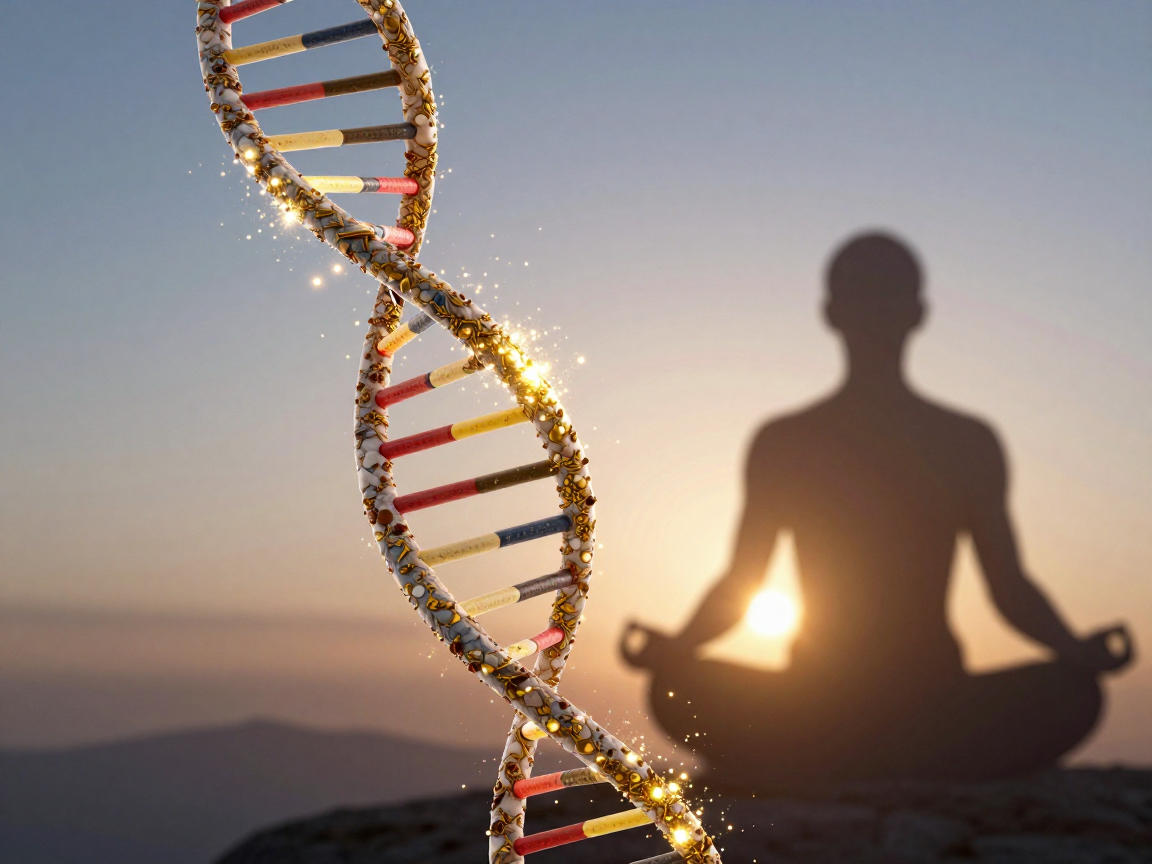
For generations, the prevailing scientific narrative was one of biological predestination. We were told that our DNA was a fixed blueprint, an unchangeable script written at the moment of conception that dictated our health, our temperament, and our ultimate physical fate. If your lineage was marked by anxiety, heart disease, or a specific disposition, you were simply a passenger on a ship steered by your ancestors. This worldview created a sense of "genetic fatalism" that often left individuals feeling powerless over their own well-being. However, a revolutionary shift is occurring at the intersection of molecular biology and ancient wisdom, revealing that we are not victims of our code, but rather the architects of its expression.
The bridge between these two worlds is found in the study of epigenetics—the science of how your behaviors and environment can cause changes that affect the way your genes work. Unlike genetic changes, epigenetic changes do not change your DNA sequence; instead, they change how your body reads a DNA sequence. When we combine the mechanics of epigenetics and spirituality, we find a profound validation of what mystics and healers have claimed for millennia: that our consciousness, our environment, and our inner state of being have the power to reshape our physical reality at the most fundamental level. This isn't just about "positive thinking"; it is about the physiological response to the signals we send our cells every day.
The End of Genetic Determinism
To understand the connection between epigenetics and spirituality, we must first dismantle the myth that DNA is a locked vault. Think of your genome not as a finished book, but as a vast library of possibilities. Epigenetics acts as the librarian, deciding which books are checked out and read and which remain gathering dust on the shelves. This "switching" mechanism is influenced by a variety of factors, including diet, stress levels, and chemical exposures. But perhaps most interestingly, it is also influenced by our internal landscape—our thoughts, beliefs, and emotional states.
This shift in perspective moves us away from a mechanical view of the body and toward a holistic one. In the mechanical view, the body is a machine that eventually breaks down, and we are simply waiting for the gears to fail. In the epigenetic view, the body is a dynamic, responding system that is in constant dialogue with its environment. When we engage in spiritual practices, we are essentially changing the data we are feeding to our cells. We are shifting the "signal" that the cell receives, which in turn alters the chemical environment of our blood and the instructions sent to our nucleus. We are no longer passive recipients of a genetic inheritance; we are active participants in a biological symphony.
How Epigenetics and Spirituality Intersect
The intersection of epigenetics and spirituality lies in the concept of "the biology of belief." Every thought we have produces a chemical cascade in the brain. If we live in a state of chronic fear or "survival mode," our brain pumps out stress hormones like cortisol and adrenaline. These chemicals serve as environmental signals to our cells, often "turning on" genes associated with inflammation and "turning off" genes associated with immune function and repair. Over time, living in this state of high-alert creates a biological profile that mirrors our internal unrest.
Conversely, spiritual practices like deep meditation, prayer, or the cultivation of gratitude produce a different set of signals. These practices activate the parasympathetic nervous system, releasing neurochemicals like oxytocin and dopamine. Science is now showing that these states of "being" can actually lead to favorable epigenetic modifications. For instance, studies on long-term meditators have shown a down-regulation of pro-inflammatory genes and an increase in the activity of telomerase, an enzyme that protects the ends of our chromosomes from aging. This suggests that the peace found in spiritual practice is not just a mental state—it is a cellular command.
The Cell as a Receiver of Consciousness
If we look at the cell through a spiritual lens, we can see it as a sensitive instrument designed to perceive its environment. The cell membrane is not just a plastic wrap; it is a sophisticated "brain" that monitors the signals coming from the outside world. From a spiritual perspective, these signals include the energetic vibrations of our thoughts and the collective consciousness we inhabit.
When we shift our spiritual state, we change the "broadcast" that our cells are receiving. This suggests that spirituality is not just an abstract concept or a Sunday morning ritual, but a biological necessity for optimal gene expression. By consciously choosing our internal state, we are engaging in a form of "biological alchemy" where we transform the heavy lead of stress and trauma into the gold of health and resilience. We are essentially telling our cells that the environment is safe, which allows the body to prioritize healing over defense.
Healing Ancestral Patterns and Intergenerational Trauma
One of the most compelling aspects of epigenetics and spirituality is the light it sheds on ancestral healing. We now know that epigenetic "marks"—the chemical tags that tell genes to turn on or off—can be passed down through generations. This means that the trauma experienced by your grandparents could potentially affect the way your body responds to stress today. This phenomenon, known as intergenerational trauma, provides a scientific basis for the "sins of the father" or the concept of ancestral karma. We carry the echoes of the past in our very marrow.
However, the beauty of epigenetics is that these marks are reversible. If a grandmother’s trauma can leave a mark, then a grandchild’s healing can potentially clear it. Spiritual work that focuses on lineage healing, shadow work, and forgiveness is not just "emotional" work; it is cellular work. When we heal the psychological patterns we inherited, we are likely changing the epigenetic signatures we carry, ensuring that we do not pass the same "survival mode" scripts down to the next generation. This empowers us to be the "circuit breakers" in our family lines, stopping the cycle of inherited suffering through conscious awareness and spiritual intervention.
5 Practical Ways to Influence Your Gene Expression
Integrating the principles of epigenetics and spirituality into your daily life doesn't require a lab coat; it requires a commitment to conscious living. Here is a framework for utilizing spiritual tools to signal your genes for health and vitality.
- Cultivate a Consistent Meditation Practice
Meditation is perhaps the most well-documented spiritual tool for epigenetic change. By quieting the mind, you reduce the "noise" of stress hormones. Aim for 15 to 20 minutes of daily practice where you focus on a sense of peace or "heart coherence." This sends a signal of safety to your cells, allowing them to move from a state of "defense" to a state of "growth."
- Master the Art of Narrative Reframing
The stories you tell yourself act as persistent signals to your biology. If your internal monologue is "I am always sick" or "I am broken," your cells respond accordingly. Spiritual growth involves becoming the observer of these thoughts and reframing them. Use affirmations not as "faking it," but as a conscious effort to change the chemical broadcast your brain sends to your body. When you change the story, you change the signal.
- Engage in Ancestral Clearing and Forgiveness
Since we carry the epigenetic echoes of those who came before us, spiritual practices that involve "honoring the ancestors" or "releasing the past" are vital. This might look like journaling about family patterns, engaging in family constellations therapy, or a simple ritual of forgiveness. Releasing the emotional weight of the past physically lightens the burden on your biological system, potentially cleaning the "tags" on your DNA.
- Curate Your "Nourishment" Beyond Food
Epigenetics teaches us that environment is everything. In a spiritual context, this includes the media you consume, the people you spend time with, and the beauty of your surroundings. Consciously surround yourself with high-vibrational inputs. A walk in nature or time spent in a sacred space changes your physiological state, which in turn influences your gene expression through the reduction of cortisol and the increase of restorative hormones.
- Practice Conscious Breathwork
The breath is the bridge between the conscious and unconscious mind. Deep, rhythmic breathing techniques can immediately shift the body out of a sympathetic "fight or flight" state. This rapid shift in the nervous system provides an immediate "reset" for cellular signaling, encouraging the expression of genes related to longevity and repair. It is the fastest way to signal to your biology that you are in control.
The Ethics of Bio-Spiritual Responsibility
While the marriage of epigenetics and spirituality is empowering, it also brings a new level of responsibility. It can be tempting to use this science to blame individuals for their illnesses, suggesting that they simply didn't "think positively" enough to change their genes. This is a reductive and harmful application of the science that ignores the systemic and environmental factors that affect human health.
Instead, the synthesis of these fields should be viewed through the lens of compassion and agency. We are not to blame for the epigenetic markers we inherited or the environments we were born into. However, we are empowered to make different choices once we become aware. The goal of understanding epigenetics and spirituality is to replace victimhood with stewardship. We are the stewards of our bodies and the guardians of our energetic fields. We recognize that while we cannot control every external variable, we have a profound influence over our internal response.
A Future of Integrated Healing
As we move forward, the divide between the laboratory and the meditation cushion will continue to shrink. We are entering an era where "spiritual health" is recognized as a primary driver of biological health. By understanding that our genes are a flexible, responding system, we can finally let go of the fear that we are trapped by our biology. The emerging field of psycho-neuro-immunology is proving what spiritual traditions have known for centuries: the mind and body are one.
The study of epigenetics and spirituality reminds us that we are part of a grand, interconnected web. Our choices matter—not just for our own lives, but for the generations that will follow. When you choose to heal a trauma, when you choose to sit in silence, and when you choose to believe in your own capacity for transformation, you are doing more than just changing your mind. You are whispering to your very cells that it is safe to thrive. This is the ultimate promise of the new biology: that through the power of spirit and the mechanics of the cell, we can truly write a new story for our lives, one that honors both our scientific reality and our infinite spiritual potential.