Why You Can’t Grind Forever: Mastering the Natural Cycles of Productivity to Prevent Burnout
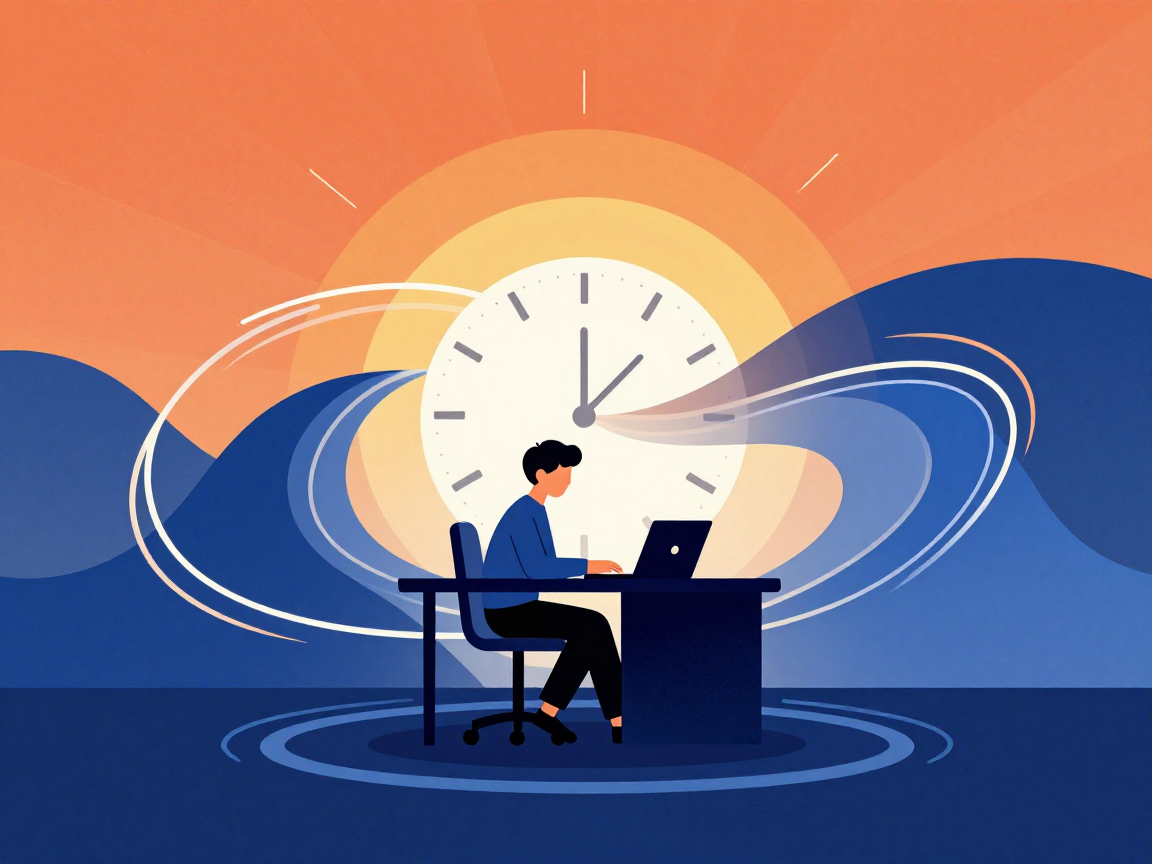
We live in a culture that treats the human brain like a computer processor—something that should be able to run at maximum capacity from the moment we plug it in at 9:00 AM until we shut it down late at night. We feel a deep sense of guilt when our energy dips in the mid-afternoon, or when we have a week where focus feels like an impossible task. This guilt stems from the "industrial" mindset, a lingering belief that productivity is a linear line that should always trend upward. However, anyone who has ever experienced a true "flow state" knows that human output is anything but linear.
To achieve true mastery over your time and output, you must stop viewing your energy as a static resource and start viewing it as a series of waves. These cycles of productivity are governed by your biology, your environment, and even the nature of the work itself. When you learn to stop fighting these natural rhythms and start surfing them, you don't just become more efficient—you become more resilient. You move from a state of constant survival mode into a sustainable rhythm that protects your mental health while allowing for deep, meaningful work. This guide explores how to identify your personal rhythms and restructure your life to honor them.
The Myth of the Linear Workday and the Industrial Overhang
The standard eight-hour workday is a relic of the industrial revolution, designed for assembly lines where physical presence and repetitive motion were the primary metrics of success. In that era, an extra hour on the line resulted in a predictable increase in units produced. In the modern knowledge economy, where our value comes from creativity, problem-solving, and cognitive agility, the factory model is no longer functional. You cannot force a breakthrough in software architecture or a brilliant marketing strategy simply by sitting in a chair for eight consecutive hours.
When we try to force a linear output from a non-linear brain, we run into the law of diminishing returns. After a certain point, every additional hour spent "grinding" actually results in lower quality output, higher rates of error, and a significant emotional tax. This is because we are ignoring our natural cycles of productivity. Instead of working with our internal battery, we are trying to jump-start a car that has run out of fuel. Understanding that productivity is cyclical allows you to forgive yourself for the low moments and strategically maximize the high ones. It is the difference between swimming with the current and exhausting yourself against the tide.
Decoding the Science: Circadian and Ultradian Rhythms
Our bodies are governed by several biological clocks that directly influence how we process information and manage energy. If you feel like you are "hitting a wall" at the same time every day, it is not a personal failing; it is your biology communicating its needs through hormone shifts and metabolic changes.
Circadian Rhythms: Your 24-Hour Energy Map
Most people are familiar with the circadian rhythm, the 24-hour internal clock that regulates sleep and wakefulness. However, this rhythm also dictates our cognitive peaks. For most individuals, there is a sharp increase in alertness in the morning as cortisol levels rise, a "post-lunch dip" in the early afternoon as core body temperature shifts, and a second, smaller peak in the early evening.
Trying to perform deep, analytical work during your afternoon dip is an uphill battle. Research shows that during these troughs, our ability to focus and our reaction times can drop to levels similar to being legally intoxicated. It is much more effective to schedule low-energy tasks—such as clearing your inbox, filing reports, or administrative catch-up—during these natural troughs, saving the high-intensity tasks for your biological prime time.
Ultradian Rhythms: The 90-Minute Focus Window
While circadian rhythms cover the whole day, ultradian rhythms occur in much shorter bursts. Research pioneered by Nathaniel Kleitman suggests that the human brain can only maintain high-intensity focus for about 90 to 120 minutes before it needs a break. This is known as the Basic Rest-Activity Cycle (BRAC). After this period, the brain begins to suffer from "cognitive fatigue."
If you ignore the signals to rest—such as fidgeting, loss of focus, or reaching for caffeine—your body enters a stress response, triggering the sympathetic nervous system. By working in 90-minute sprints followed by 20-minute breaks, you align yourself with these ultradian cycles of productivity. This allows your brain to flush out metabolic waste and prepare for the next burst of focus, preventing the "brain fog" that accumulates when we try to power through four hours of uninterrupted work.
A 4-Phase Framework for Navigating Long-Term Cycles
Productivity does not just happen on a daily or hourly basis; it also happens over longer stretches of time—weeks, months, and even seasons. Whether you are working on a specific project or looking at your output over a month, you will likely notice four distinct phases. Recognizing which phase you are in can help you adjust your expectations and your workload.
- The Initiation Phase (The Spring): This is the period of ideation and planning. Your energy is high, curiosity is piqued, but your focus might be scattered. This is the time for brainstorming, starting new projects, and "big picture" thinking. Do not worry about perfect execution yet; focus on gathering resources and building momentum.
- The Execution Phase (The Summer): This is the peak of your cycles of productivity. You have clarity on what needs to be done, and your energy is channeled into "doing." This is the time for deep work, hitting hard deadlines, and high-output activity. You are effectively in the "groove."
- The Integration Phase (The Autumn): In this phase, your raw energy begins to level off. You might find it harder to start new things but easier to finish existing ones. This is the perfect time for refining what you have built, editing, organizing, and tying up loose ends. It is less about raw power and more about precision and quality control.
- The Recovery Phase (The Winter): This is the most ignored phase in our culture. It is the period of rest, reflection, and "incubation." You might feel "unproductive" here, but this is when your brain processes what it has learned and gathers the energy needed for the next Spring. Without this phase, the next cycle will be weaker, eventually leading to burnout.
5 Ways to Stop Fighting Your Biology
If you want to integrate these cycles of productivity into your life, you need to change your habits and your mindset. Here are five practical steps to start working with your rhythm rather than against it:
- Audit Your Energy, Not Just Your Time: Instead of just tracking how many hours you work, keep a log for three days of how you feel every hour. Rate your energy from 1 to 10. Note when you feel sharp and when you feel foggy. This data will reveal your personal cycles and help you identify your "Peak Performance Hours."
- Match Task Complexity to Energy Levels: Save your hardest, most cognitively demanding "deep work" for your morning peak. Move meetings, social interactions, and "shallow work" to your afternoon troughs when your brain is naturally more suited for less intense tasks.
- Respect the 90-Minute Limit: Use a timer to remind yourself to step away from your screen every 90 minutes. Even a five-minute walk, a stretching session, or a glass of water can reset your ultradian rhythm and prevent the accumulation of stress hormones.
- Create a "Shut Down" Ritual: To help your body transition into the Recovery Phase, have a clear signal that the workday is over. This could be closing your laptop, clearing your desk, or a specific transition activity like a short walk. This tells your brain it is safe to switch from the task-oriented network to the default mode network.
- Stop Moralizing Rest: Remind yourself that rest is not a reward for hard work; it is a biological requirement for it. Taking a nap or a day off is a strategic move to ensure the longevity of your cycles of productivity. You are not being lazy; you are refueling.
Tracking Your Energy: A Practical Exercise
To truly master your cycles of productivity, you need to move from theory to practice. Most of us are so disconnected from our bodies that we do not even realize we are tired until we are utterly exhausted. Over the next week, try this simple tracking exercise to gather your own biological data.
Create a simple spreadsheet or use a notebook with three columns: Time, Energy Level (1 to 10), and Focus Level (1 to 10). Every two hours, take ten seconds to rate yourself. At the end of the week, look for the patterns. Do you always dip at 2:00 PM? Are you surprisingly creative at 8:00 PM?
Once you see the pattern, you can "color-code" your calendar. Use one color (e.g., Green) for High Energy/Deep Work blocks and another (e.g., Yellow) for Low Energy/Administrative blocks. By visually mapping your day to your internal data, you stop the constant struggle of trying to be "on" when your body is biologically "off."
The Power of Strategic Rest and the Default Mode Network
We often think of rest as "doing nothing," but in the context of cycles of productivity, rest is an active process of recharging. There is a significant difference between "passive rest" (scrolling through social media) and "active rest" (a walk in nature, meditation, or a creative hobby). Passive rest often leaves us feeling more drained because it continues to overstimulate our visual and cognitive systems without providing a true mental break.
True recovery allows the "Default Mode Network" (DMN) of the brain to take over. This is the state the brain enters when we are not focused on a specific task. It is during this time that the brain makes creative connections, processes complex emotions, and solves problems in the background. Many of history's greatest thinkers—from Charles Darwin to Albert Einstein—famously integrated long walks, naps, and periods of "idleness" into their schedules. They understood that the "winter" of their productivity cycle was just as essential as the "summer" of their execution. Creativity requires space, and cycles of productivity provide that space.
Embracing a Sustainable Future
Mastering your cycles of productivity is a journey of self-awareness and self-respect. It requires the courage to step away from the toxic "hustle culture" and the wisdom to trust your own body’s signals. You are not a machine, and you should stop demanding that you perform with the rigid consistency of one. By honoring the natural ebbs and flows of your energy, you don't just get more done—you do work that is more thoughtful, more creative, and more meaningful.
Ultimately, productivity is not about how much you can cram into a single day. It is about how well you manage your energy over a lifetime. When you align your schedule with your biology, you create a life where work and rest are not enemies, but partners in a sustainable, fulfilling rhythm. Start small by tracking your energy today, and give yourself the permission to ride the wave instead of trying to hold back the tide.