Beyond Simple Symbols: How Carl Jung Dreams Reveal Your Unconscious Path to Wholeness
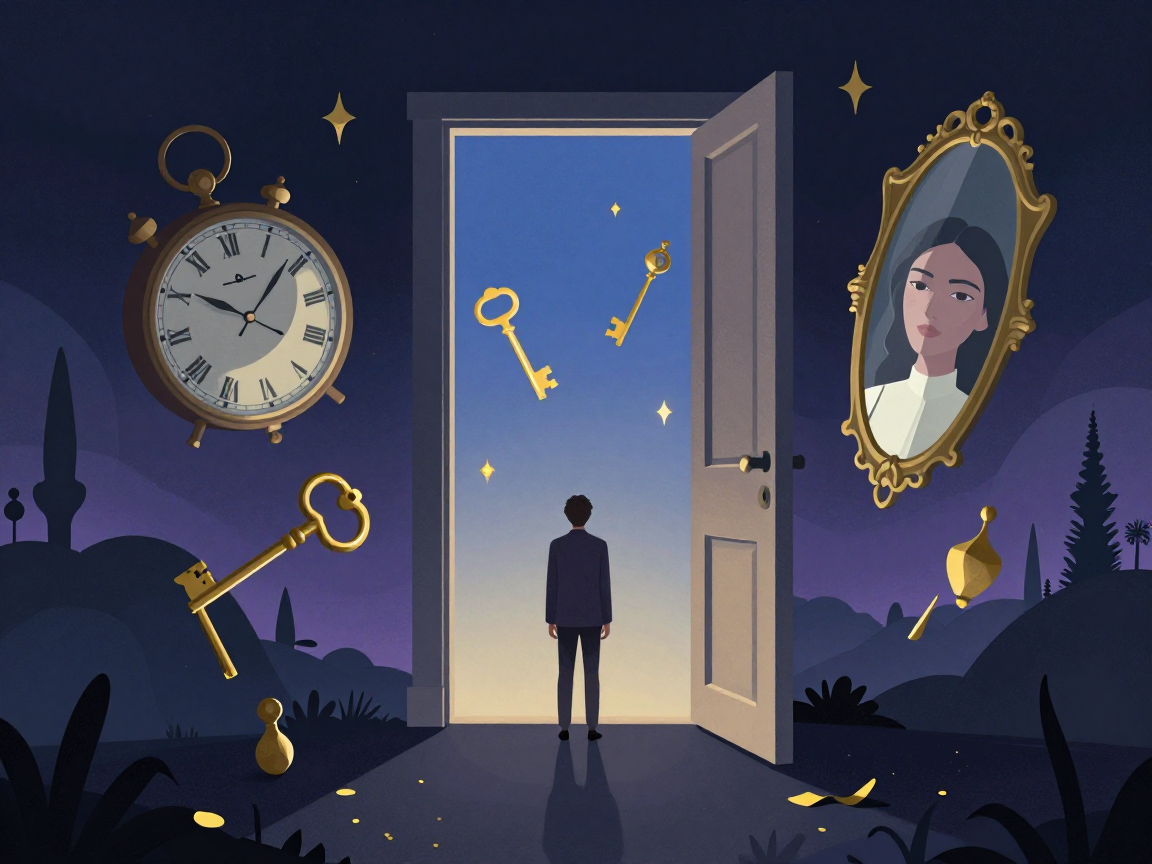
Most of us wake up from a vivid dream, feel a brief moment of confusion or awe, and then let the memory dissolve as we reach for our morning coffee. We tend to treat our dreams like mental static or the brain's way of clearing out the day's digital trash. But for the Swiss psychiatrist Carl Jung, these nightly narratives were anything but random. He believed that our dreams represent a sophisticated, living bridge between our conscious daily lives and the vast, untapped reservoir of the unconscious mind.
To understand carl jung dreams is to recognize that your mind is constantly attempting to heal itself. While his contemporary Sigmund Freud often viewed dreams as a coded language designed to hide repressed desires, Jung saw them as a transparent, honest expression of the psyche's current state. They do not hide; they reveal. By learning to speak the symbolic language of the soul, we can uncover the parts of ourselves we have ignored, suppressed, or forgotten, ultimately moving toward what Jung called individuation - the process of becoming the person we were always meant to be.
The Compensatory Nature of Carl Jung Dreams
At the heart of Jungian theory is the idea of compensation. Jung suggested that the conscious mind - the "I" that makes decisions and navigates the world - often becomes one - sided. We might be too focused on our careers, too rigid in our moralities, or too fearful of our own emotions. When the conscious ego becomes lopsided, the unconscious mind sends a dream to restore balance.
If you spend your waking life being a people - pleaser who never stands up for yourself, you might find your carl jung dreams populated by aggressive figures or scenarios where you are forced to fight. This isn't just a random nightmare; it is the psyche's attempt to introduce the concept of assertiveness into your awareness. The dream provides the "other side" of the story that your waking mind refuses to acknowledge. In this way, dreams act as a biological and psychological regulator, ensuring that the total personality remains healthy and whole.
Meeting the Archetypes: The Cast of Your Inner Drama
One of the most fascinating aspects of carl jung dreams is the appearance of archetypes. Jung noticed that certain characters and themes appeared across cultures, mythologies, and eras, even when the individuals had no knowledge of those stories. These are the contents of the "collective unconscious" - a shared blueprint of the human experience.
When you analyze your dreams, you will likely encounter several recurring archetypal figures:
- The Persona: This is the "mask" you wear in public. In dreams, the persona often appears as clothing (or the lack of it). If you find yourself naked in a public place in a dream, your unconscious is likely commenting on a fear that your social mask is failing or that you feel overexposed.
- The Shadow: Perhaps the most famous Jungian concept, the shadow represents the parts of yourself you find unacceptable. These are often people of the same gender as the dreamer who appear threatening, disliked, or primitive. Acknowledging the shadow in carl jung dreams is the first step toward integrating your hidden strengths.
- The Anima and Animus: Jung believed every human carries an internal image of the opposite gender. The Anima (in men) and the Animus (in women) represent the soul and our ability to relate to the inner world. These figures often appear as a romantic interest, a guide, or even a mysterious stranger who evokes deep emotion.
- The Wise Old Man or Woman: This archetype represents wisdom, intuition, and the "Self". When these figures appear, they often offer guidance or a perspective that the dreamer desperately needs but cannot find in their waking logic.
A 4 - Step Framework for Interpreting Carl Jung Dreams
Unlike modern "dream dictionaries" that claim a snake always means betrayal or a house always means the body, Jung believed that symbols are deeply personal. While a snake might be a threat to one person, it might represent healing or transformation to another. To truly engage with carl jung dreams, you must use a structured approach to unlock their specific meaning for your life.
1. Observation and Record
Before you can interpret a dream, you must respect it. This starts with writing it down in as much detail as possible the moment you wake up. Pay attention to the atmosphere, the colors, and most importantly, the emotions. How you felt in the dream is often more important than what actually happened. Did the dark forest feel terrifying, or did it feel like a sanctuary? Your emotional reaction is the compass that points toward the dream's meaning.
2. Personal Association
Once the dream is recorded, look at each individual element and ask: "What does this mean to me?" If there is a blue car in the dream, don't look up what a blue car means in a book. Instead, ask yourself what blue cars remind you of. Perhaps your grandfather had a blue car, and he represented safety and stability. In this context, the blue car in your carl jung dreams might be a symbol of a need for groundedness.
3. Amplification
This is where Jungian analysis becomes unique. After exploring your personal associations, you look at the "archetypal" or cultural meaning. Does the image appear in myths, fairy tales, or religious stories? If you dream of a labyrinth, you might look at the story of the Minotaur. Amplification allows you to see your personal struggle as part of a larger, universal human journey. It provides a broader context that helps move the problem from a narrow personal ego issue to a meaningful soul experience.
4. Synthesis and Integration
Finally, bring it all together. Look at the dream in the context of your current life situation. What is the dream trying to compensate for? If you combine your associations and the archetypal themes, what is the central message? The goal of analyzing carl jung dreams is not just intellectual understanding; it is to take an action in the waking world. If the dream suggests you are neglecting your creative side, the "integration" might be as simple as buying a sketchbook or spending an hour playing music.
Why Dreams Use Symbols Instead of Plain Language
A common question people ask is: "If my unconscious wants to tell me something, why doesn't it just say it in plain English?" Jung's answer was profound. He argued that the unconscious speaks the language of images because images are more "complete" than words. A single image in carl jung dreams can contain a dozen different meanings, emotions, and histories simultaneously.
Words are tools of the conscious mind - they are linear and limiting. Symbols, however, are "numinous" ! they possess an energy that can bypass our logical defenses. When you see a symbol in a dream, you don't just think about it; you feel it. This emotional impact is what triggers real psychological change. By working with these symbols, we aren't just solving a puzzle; we are participating in a ritual of self - discovery.
Common Themes in Carl Jung Dreams and Their Meanings
While every dream is unique, there are certain motifs that frequently occur as we navigate the path of individuation. Recognizing these can help you identify where you are in your psychological development.
- The House: Often represents the structure of the psyche. Discovering a new room in a house suggests you are uncovering new talents or aspects of your personality. A crumbling house might suggest that your old way of living is no longer sustainable.
- The Journey or Quest: This reflects the process of individuation itself. If you are lost, you may be experiencing a period of transition where the old maps of your life no longer work. If you are being chased, you are likely running away from a "shadow" element that needs to be integrated.
- The Marriage: In carl jung dreams, a wedding often symbolizes the "Coniunctio" - the union of opposites. This is a powerful sign of psychic healing, where the conscious and unconscious, or the masculine and feminine aspects of the self, are coming into harmony.
- Death and Rebirth: Jungian psychology rarely views death in a dream as a literal omen. Instead, it is almost always a symbol of the end of an era. Something in your personality must "die" so that something new can be born.
The Path Forward: Engaging with the Unconscious
Working with carl jung dreams is a lifelong practice. It requires a shift in perspective: from seeing yourself as a master of your mind to seeing yourself as a partner with it. Jung often suggested that we should approach our dreams with "holy awe". Even if a dream is disturbing or confusing, it is an offering from the deepest part of your being.
To begin this journey, you don't need a PhD in psychology. You only need a notebook, a pen, and a willingness to listen. As you start to track your carl jung dreams, you will notice patterns. You will see characters return, landscapes evolve, and themes deepen. This is the conversation of a lifetime. By paying attention to these nightly messages, you move out of the darkness of automatic living and into the light of a conscious, meaningful existence. The door to the secret sanctum of the soul is always open; you only need to remember to look inside.