Beyond the Spreadsheet: Why Your Business Intuition is the Secret Weapon Data Can't Replace
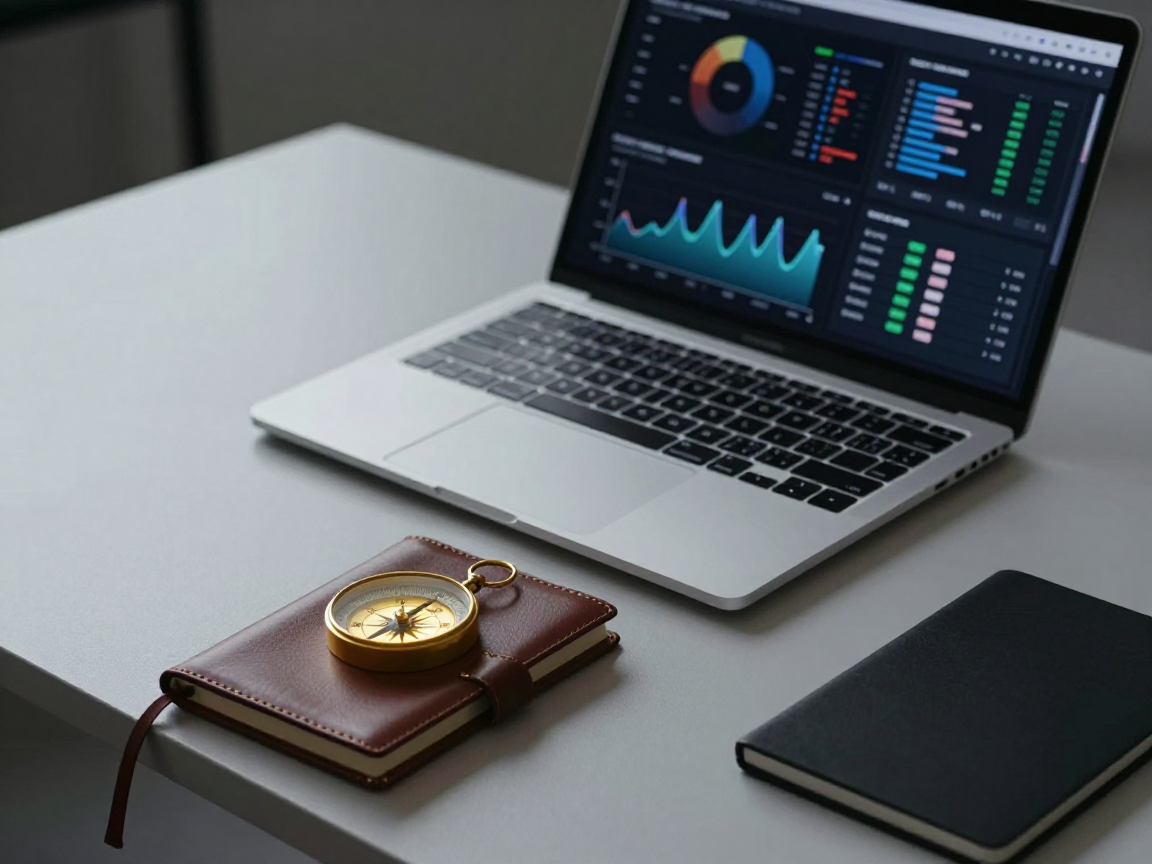
In the modern boardroom, data is treated as the ultimate authority. We have metrics for customer acquisition costs, spreadsheets for five-year projections, and heat maps for user behavior. Yet, many of the most pivotal moments in corporate history were not born from a pivot table, but from a hunch. There is a specific, often undervalued mental faculty that bridges the gap between what the numbers say and what a leader knows to be true. This is business intuition. It is the internal compass that allows a founder to sense a market shift before it appears in a report or a manager to know that a high-performing hire is a cultural mismatch despite a perfect resume.
Developing business intuition is not about abandoning logic or following every whim. Rather, it is about integrating years of observation, failed experiments, and subtle social cues into a rapid-fire decision-making process. When you lean into this skill, you aren't guessing; you are accessing a sophisticated form of pattern recognition that operates faster than the conscious mind can articulate. In a world where everyone has access to the same data sets, your ability to interpret the spaces between the data points becomes your most significant competitive advantage.
Understanding the Anatomy of Business Intuition
To many, the word "intuition" sounds mystical or unscientific. However, cognitive psychologists often describe it as "expert pattern recognition". When you spend years working within an industry, your brain is constantly cataloging cause-and-effect relationships. You see how certain personality types react to stress, how specific marketing hooks fail in certain climates, and how cash flow cycles actually breathe. Over time, these thousands of micro-observations move from your conscious awareness into your subconscious.
Business intuition is essentially the basal ganglia and the enteric nervous system - often called the "second brain" - communicating with your conscious mind. When you feel a "knot in your stomach" about a deal, it is often your subconscious identifying a pattern that matches a previous negative outcome, even if you cannot yet point to the specific red flag. This is why seasoned entrepreneurs can often walk into a room and sense the health of a company within minutes. They aren't psychics; they are simply high-speed processors of environmental data.
The Difference Between Instinct and Impulse
It is crucial to distinguish between true business intuition and mere impulse. An impulse is often driven by a desire for immediate gratification, ego, or a reaction to a temporary trend (like FOMO). Intuition, conversely, feels grounded and quiet. While an impulse is loud and frantic, business intuition often presents as a calm, persistent sense of "knowing". Developing the ability to tell the difference is what separates the visionary leader from the reckless gambler.
Why Data Alone is Often Insufficient
We live in the era of Big Data, yet the more information we have, the more paralyzed we can become. This is known as analysis paralysis. While data is excellent at telling us what happened in the past, it is notoriously poor at predicting the future in a nonlinear world. If everyone relies solely on the same data, everyone arrives at the same conclusions, leading to a sea of identical products and strategies.
Business intuition is the ingredient that allows for innovation. Innovation, by definition, lacks a historical data set. When Steve Jobs decided the world needed a phone without a physical keyboard, the contemporary data suggested consumers liked tactile buttons. It was his business intuition that sensed a deeper, unarticulated human desire for a more versatile interface. Data can validate a path, but intuition is what discovers the path in the first place.
Furthermore, data can be manipulated or misinterpreted. A team can present a set of metrics that look flawless on paper while ignoring the toxic culture or the eroding brand trust that will eventually sink those numbers. Business intuition acts as a filter, allowing you to ask the right questions of the data rather than accepting it at face value. It provides the context that raw numbers lack.
The Strategic Instinct Framework: 4 Pillars of Better Decisions
To effectively use business intuition without falling into the trap of cognitive bias, it helps to use a structured approach. Here is a four-part framework for integrating instinct into your professional life.
- The Baseline Audit: Before trusting a gut feeling, ask yourself if you have enough experience in this specific domain for your intuition to be valid. Intuition is built on the back of experience. If you are entering an entirely new industry, your "gut" might just be fear or excitement. If you have been in the field for a decade, your gut is a refined tool.
- The Somatic Check: Pay attention to where you feel the decision in your body. High-stakes business intuition often manifests as a physical sensation - a tightening in the chest, a lightness in the stomach, or a sudden onset of clarity. If the feeling is localized and consistent, it is more likely to be an intuitive hit.
- The "Pre-Mortem" Test: If your intuition is telling you to take a risk, run a mental simulation where that risk has failed spectacularly. If you still feel a sense of alignment and "rightness" even in the face of potential failure, your intuition is likely coming from a place of deep conviction rather than a desire for a quick win.
- The 24-Hour Silence Rule: Intuition is easily drowned out by the noise of emails, meetings, and opinions. When faced with a major decision where the data and your gut are at odds, step away for 24 hours. The true intuitive answer usually remains steady while the emotional reactions fade over time.
How to Distinguish Intuition from Fear-Based Bias
The greatest danger in relying on business intuition is confusing it with your own biases or fears. Our brains are wired for survival, which means they are naturally loss-averse. Often, what we think is our intuition telling us "don't do it" is actually our fear of failure trying to keep us safe in our comfort zone.
To tell the difference, look at the quality of the thought. Fear is usually repetitive, anxious, and focused on "what if" scenarios involving embarrassment or loss. Business intuition is usually a singular, non-emotional realization. Fear pushes you away from something; intuition pulls you toward a specific truth, even if that truth is uncomfortable.
Ask yourself: "If I were guaranteed not to fail, would I still feel this way?". If the hesitation disappears, it was fear. If the hesitation remains, it is likely your business intuition warning you of a structural flaw in the plan.
5 Practical Exercises to Sharpen Your Business Intuition
Like any muscle, your intuitive faculties require regular exercise to remain sharp. You can actively train your brain to become a more effective pattern-recognition machine through these specific habits.
- Keep an "Intuition Journal": Document moments where you had a strong gut feeling about a business deal, a hire, or a strategy. Write down what you felt, what the data said, and what you eventually decided. Six months later, revisit the entry. You will begin to see patterns in when your intuition was right and when it was clouded by emotion.
- Practice Low-Stakes Guessing: Throughout the day, make quick intuitive predictions about small things. "How long will this meeting actually last?". "Which of these three emails will get a response first?". This primes your brain to look for subtle cues and validates the feeling of being "right" about a hunch.
- Engage in Radical Observation: In your next meeting, stop taking notes for five minutes. Instead, watch the body language of the participants. Who is leaning back? Who is avoiding eye contact? Who is genuinely excited? By focusing on these non-verbal cues, you feed your business intuition the high-quality data it needs to thrive.
- Solitude and Sensory Deprivation: Intuition thrives in quiet. If your day is a constant stream of podcasts, music, and conversation, you are never allowing your subconscious to speak. Try driving to work in silence or taking a twenty-minute walk without your phone. The answers you have been looking for often surface the moment the noise stops.
- The "Two-Option" Visualization: If you are torn between two paths, spend one hour fully committing to Option A in your mind. Act as if the decision is made. Notice how your body feels. Then, switch and do the same for Option B. Usually, one option will leave you feeling energized (even if it is the harder path), while the other will leave you feeling drained.
Cultivating a Culture of Intuition
If you are a leader, it is not enough to develop your own business intuition; you must create an environment where others feel safe to share theirs. This does not mean running a company on vibes. It means encouraging team members to voice their "gut feelings" during the strategy phase, especially if those feelings contradict the prevailing data.
When a team member says, "The numbers look great, but something about this partnership feels off", don't dismiss them. Instead, ask them to help you find the data point that matches their feeling. Often, an intuitive prompt is the catalyst for discovering a hidden risk that everyone else was too blinded by the spreadsheets to see. This integration of human instinct and cold analysis creates a resilient, forward-thinking organization.
Ultimately, business intuition is about trust. It is the trust that your accumulated experience is a valid source of information. It is the courage to stand by a decision that you cannot fully justify with a bar graph yet. In the long run, the most successful leaders are those who treat data as a valuable consultant, but their intuition as the final CEO.