Beyond Sleep Hygiene: How to Use Breathwork for Sleep to Quiet a Racing Mind
There is a specific kind of exhaustion that feels heavy in the limbs yet buzzing in the brain. You have followed all the standard advice: you dimmed the lights, put the phone away, and kept the room cool, yet you are still staring at the ceiling as your thoughts cycle through tomorrow - s to - do list or yesterday - s awkward conversations. In these moments, the issue usually isn - t your environment; it is your physiology. Your nervous system is stuck in a state of high alert, and no amount of wishing for sleep will flip the switch. This is where breathwork for sleep becomes the most effective tool in your wellness toolkit.
Breathwork for sleep is not just a mindfulness practice or a way to pass the time until you drift off. It is a direct, biological intervention. By consciously changing the rhythm, depth, and pace of your breathing, you send a physical signal to your brain that it is safe to downshift. While your mind might be racing, your body can be coached into a state of deep relaxation that eventually pulls the mind along with it. Understanding how to use your breath as a remote control for your nervous system is the difference between tossing for hours and falling into a restorative slumber.
The Science of the Off-Switch: Why Breathwork for Sleep Works
To understand why breathwork for sleep is so effective, we have to look at the Autonomic Nervous System (ANS). The ANS is divided into two main branches: the sympathetic nervous system (the gas pedal or "fight or flight") and the parasympathetic nervous system (the brake or "rest and digest"). Most of us live our modern lives with the gas pedal slightly pressed at all times. Stressful emails, traffic, and constant notifications keep us in a state of low - level sympathetic arousal.
When you lie down to sleep, your body needs to fully engage the parasympathetic branch. The primary highway for this system is the Vagus nerve. The Vagus nerve travels from the brainstem down through the neck to the chest and abdomen. When you take slow, deep breaths - particularly those that emphasize a long exhalation - you physically stimulate the Vagus nerve. This stimulation triggers the release of acetylcholine, a neurotransmitter that tells your heart rate to slow down and your muscles to relax.
Furthermore, breathwork for sleep helps regulate your carbon dioxide (CO2) levels. Many people who struggle with anxiety - induced insomnia are habitual over - breathers. They take shallow, rapid sips of air through the mouth, which offloads too much CO2. Low CO2 levels can actually make the brain more excitable and anxious. By slowing the breath down and breathing through the nose, you balance your blood chemistry, which has a profound calming effect on the brain - s emotional centers.
5 Essential Techniques for Deep Rest
If you are new to the practice, it is best to start with techniques that have clear counts. These counts give the mind something to focus on, acting as an anchor that prevents thoughts from drifting back to stressful topics. Here are five of the most effective methods of breathwork for sleep.
1. The 4-7-8 Technique
Often referred to as a "natural tranquilizer for the nervous system", this technique was popularized by Dr. Andrew Weil. It is specifically designed to reduce anxiety and help the body transition into a sleep state.
- Exhale completely through your mouth, making a whooshing sound.
- Close your mouth and inhale quietly through your nose to a count of 4.
- Hold your breath for a count of 7.
- Exhale completely through your mouth, making a whooshing sound to a count of 8.
- This completes one breath. Repeat the cycle four times.
2. Box Breathing (Square Breathing)
While often used by Navy SEALs to stay calm in high - pressure situations, box breathing is equally effective for clearing the mental clutter that prevents sleep. It provides a very rhythmic, structured pattern that the brain finds soothing.
- Inhale through the nose for 4 seconds.
- Hold the breath in for 4 seconds.
- Exhale through the nose for 4 seconds.
- Hold the breath out (empty) for 4 seconds.
- Repeat for 5 to 10 rounds.
3. The 1:2 Ratio (Extended Exhalation)
This is perhaps the simplest form of breathwork for sleep. The goal is simply to make your exhale twice as long as your inhale. Because the exhale is the part of the breath cycle linked to the parasympathetic nervous system, lengthening it maximizes the relaxation response.
- Inhale for a count of 3 or 4.
- Exhale for a count of 6 or 8.
- If 8 feels too long, start with a 4 - second inhale and a 6 - second exhale, gradually working your way up.
4. Alternate Nostril Breathing (Nadi Shodhana)
This technique comes from the yogic tradition and is excellent for balancing the two hemispheres of the brain. If you feel "scattered" or mentally fragmented, this can help center your energy.
- Use your right thumb to close your right nostril.
- Inhale deeply through your left nostril.
- Close the left nostril with your ring finger and release the right nostril.
- Exhale through the right nostril.
- Inhale through the right nostril, then close it and exhale through the left.
5. Bhramari (Bee Breath)
This technique uses sound vibration to stimulate the Vagus nerve. The humming sound creates a physical resonance in the head and chest that is deeply grounding.
- Inhale deeply through the nose.
- As you exhale, make a low - pitched humming sound (like a bee) for the entire duration of the breath.
- Focus on the vibration in your throat and lips. Repeat for 5 rounds.
A 10-Minute Bedtime Breathwork Protocol
To get the most out of breathwork for sleep, it helps to have a structured routine. You can perform this protocol while lying in bed, ready to drift off.
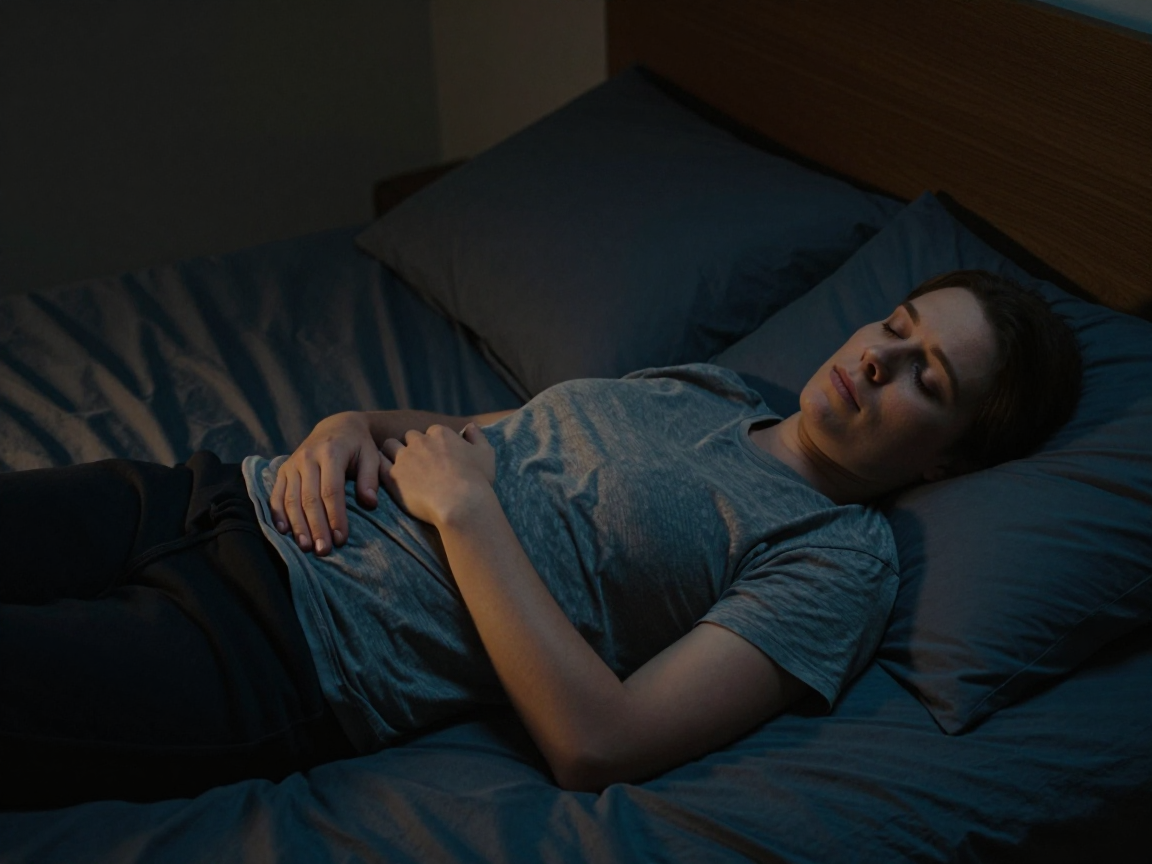
- Preparation (1 minute): Lie flat on your back. Place one hand on your chest and one hand on your belly. Ensure your jaw is relaxed and your shoulders are down away from your ears.
- Diaphragmatic Awareness (2 minutes): Breathe naturally. Notice which hand moves more. Aim to make the hand on your belly rise with each inhale while the hand on your chest remains relatively still. This ensures you are using your diaphragm rather than your secondary respiratory muscles.
- The Transition (3 minutes): Begin the 4 - 7 - 8 technique. Perform 4 to 8 cycles. This acts as a "hard reset" for your nervous system, signaling that the day is officially over.
- The Deep Dive (4 minutes): Shift into the 1:2 Ratio breathing. Do not worry about a strict count if it feels stressful; simply ensure your exhales are long, slow, and effortless. Let your body feel heavier with every breath.
- Release: Let go of all conscious control of the breath. Allow your body to breathe itself as you focus on the sensation of air moving in and out of your nostrils.
Common Mistakes That Hinder Results
Even with the best intentions, certain habits can undermine the effectiveness of breathwork for sleep. If you find yourself still awake after practicing, consider if you are falling into these common traps.
- Mouth Breathing: Breathing through the mouth triggers a mild stress response. Unless a specific technique (like 4-7-8) requires a mouth exhale, always breathe through your nose. It filters the air and helps maintain optimal CO2 levels.
- Over - Efforting: If you are straining to hit a 7 or 8 count, you are actually creating more stress in the body. If a count feels difficult, shorten it. The goal is ease, not performance.
- Waiting Until You Are Desperate: Breathwork for sleep works best as a preventative measure. Don - t wait until you have been awake for three hours to start. Incorporate it into your wind - down routine while you are still feeling relatively okay.
- Inconsistency: Like any physical skill, your nervous system gets better at relaxing the more you practice. Using these techniques every night trains your body to recognize the "breath cues" for sleep.
Why Quality of Breath Equals Quality of Sleep
When we talk about sleep quality, we often focus on duration, but the physiological state we are in during those hours matters just as much. If you fall asleep in a state of high cortisol, your sleep will likely be fragmented and light. You might wake up feeling unrefreshed, even if you were "unconscious" for eight hours.
Breathwork for sleep ensures that you enter the sleep cycle from a place of physiological safety. This leads to more time spent in Deep Sleep (Slow Wave Sleep) and REM sleep, which are the stages responsible for physical repair and emotional processing. By taking control of your breath for just ten minutes before bed, you are essentially setting the blueprint for the entire night of recovery.
Final Thoughts on Restorative Breathing
In a world that demands our constant attention, the ability to consciously slow down is a superpower. Breathwork for sleep is a portable, free, and scientifically proven way to reclaim your rest. It requires no special equipment - only your willingness to pause and listen to the rhythm of your own life force.
As you begin this practice, remember to be patient with yourself. Some nights your mind will be louder than others. On those nights, do not fight the thoughts. Instead, acknowledge them and gently return your focus to the count: Inhale 2, 3, 4... Exhale 2, 3, 4, 5, 6... With time, your body will learn that this rhythm means it is finally time to let go. Sleep is not something you can force; it is something you must invite. Through the power of your breath, you create the perfect invitation for a night of deep, uninterrupted peace.