Beyond the Little White Book: Why Bonding with Tarot Deck is the Secret to Intuitive Accuracy
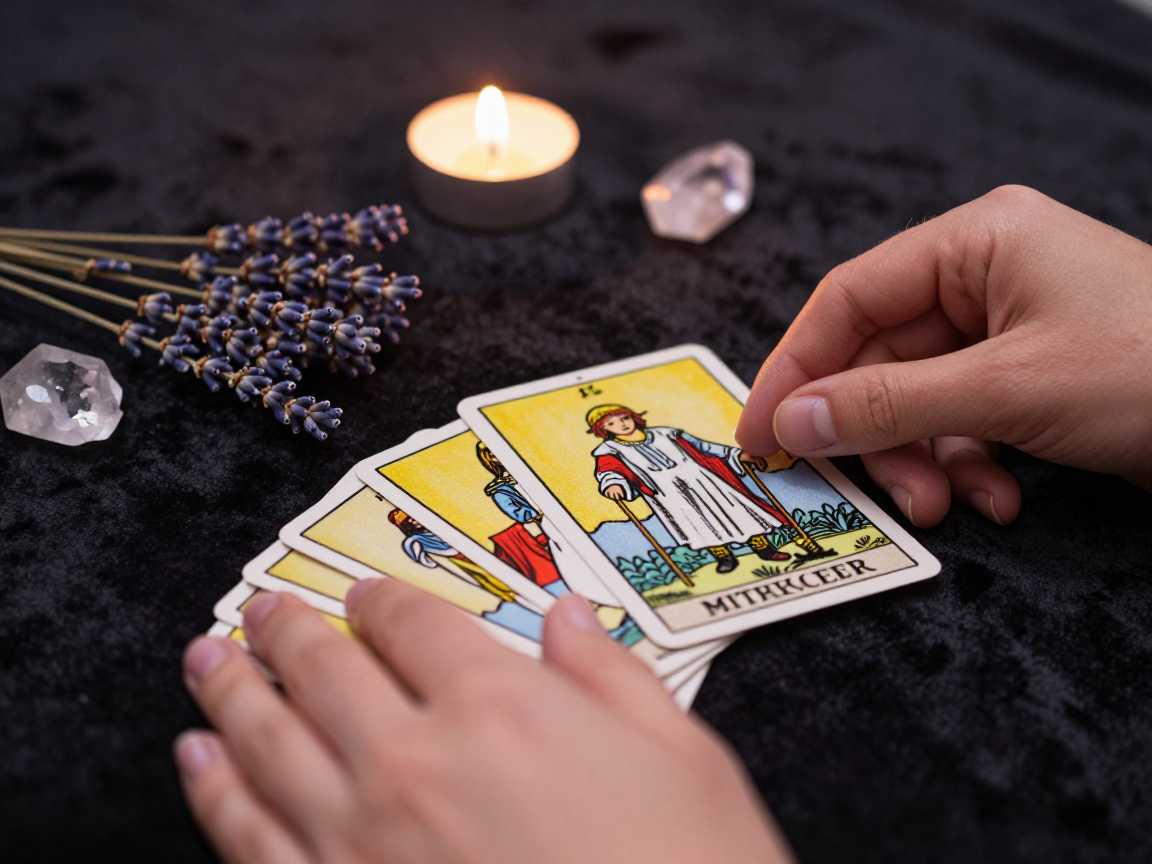
There is a specific, unmistakable feeling that comes with opening a brand-new tarot deck. The box is crisp, the cards are stiff, and the smell of fresh ink is often sharp and inviting. Yet, for many practitioners—whether beginners or seasoned readers—there is also a palpable sense of distance. You look at the beautiful illustrations, but they do not speak to you just yet. They feel like a mass-produced product bought from a shelf rather than a living gateway to your subconscious. This is where the intentional process of bonding with tarot deck begins. It is the necessary transition from merely owning a deck to truly inhabiting it.
Bonding is not just a mystical or esoteric concept; it is deeply psychological. When you spend quality time with a deck, you are essentially training your brain to associate specific artistic symbols, color palettes, and thematic expressions with your internal intuition. Without this connection, your readings may feel mechanical, relying heavily on the guidebook—often referred to as the "little white book"—rather than the fluid, personal insights that make tarot such a transformative tool. To read tarot with authentic depth, you must first build a bridge between your own energetic field and the cardboard in your hands.
The Importance of Energetic Alignment and Personality
Every tarot deck carries its own distinct personality. This personality is a complex combination of the artist's original intent, the cultural lineage of the imagery, and the specific frequency of the symbols used. A deck rooted in the traditional Rider-Waite-Smith system feels fundamentally different from a dark, gothic deck, a minimalist modern deck, or a deck based on Jungian archetypes. Bonding with tarot deck allows you to understand the specific dialect that your new cards speak.
Some decks are blunt and direct, almost clinical in their delivery of truth. Others are gentle, poetic, and focused on emotional healing. If you do not take the time to learn this dialect, you may find yourself misinterpreting the messages during a critical reading. Think of it like a friendship: you wouldn't expect to know a stranger's deepest secrets five minutes after meeting them. It takes observation, listening, and shared time to understand the nuances of their character.
When we talk about energetic alignment, we are talking about comfort and cognitive familiarity. Think of it like breaking in a new pair of high-quality leather boots. At first, they might feel stiff or even give you blisters, but over time, they mold to the unique shape of your feet until you barely notice they are there. A bonded deck feels like an extension of your own mind. When you pull a card, the meaning should hit your gut before your brain has time to rationally process the image. This immediate resonance is the primary goal of the bonding process.
Practical Rituals for Initial Connection
If you have just acquired a new deck, the first few days are the "honeymoon phase." You want to clear away the energy of the factory, the warehouse, and the shipping process, replacing it with your own presence and intention. This doesn't require elaborate ceremonies, though you can certainly make them as complex as you like. Simple, intentional acts are often the most effective ways of bonding with tarot deck.
Cleansing and Clearing the Slate
Before you start reading, it is helpful to clear the energetic slate. Many readers like to pass their cards through the smoke of dried herbs like rosemary, cedar, or mugwort. If you prefer a non-smoke method, you can place a piece of clear quartz or selenite on top of the deck overnight to "reset" the cards.
Another highly effective method is sound clearing. Using a singing bowl, a bell, or even a specific frequency (like 528 Hz) can help vibrate away any lingering static. Some practitioners prefer the "knocking" method: you simply hold the cards in your non-dominant hand and rap your knuckles on the deck three times. The method matters far less than the intention: you are signaling to the deck that it is now under your stewardship, and it is time for it to wake up.
The Deck Interview Spread
One of the most popular and effective ways of bonding with tarot deck is to treat it like a new acquaintance. A "Deck Interview" is a specific spread designed to let the deck introduce itself. Lay out the cards in a simple pattern and ask the following questions:
- What is your most important characteristic? (This reveals the deck’s overall tone.)
- What are your strengths as a deck? (Shows what types of questions it answers best.)
- What are your limitations? (Shows where the deck might be quiet or less effective.)
- What are you here to teach me? (Reveals the spiritual lesson this deck offers.)
- How can I best collaborate with you? (How the deck wants to be handled or used.)
- What is the potential outcome of our working relationship?
Pay close attention to the cards that appear. If the cards are mostly from the suit of Swords, you may have a deck that is very intellectual and logical. If they are mostly Cups, expect a deck that dives deep into emotional and spiritual waters. This exercise provides an immediate sense of the deck’s "voice" and helps you set realistic expectations for your future readings.
Deepening the Bond Through Sensory Immersion
Once the initial introductions are over, you need to spend time in the deck’s world. This is where the actual work of bonding with tarot deck takes place. It requires a mix of active study and passive presence. The more your senses are involved, the more your subconscious will absorb the deck’s unique language.
Visual Meditation and Pathworking
Choose one card each day. Sit in a quiet space and look at it for at least five to ten minutes. Do not look at the guidebook. Simply observe the details. What is the weather like in the card? What is the character looking at? What colors dominate the scene?
By staring at the card, you are bypassing the analytical, left-brain function and letting the image imprint itself on your memory. This is sometimes called "Pathworking," where you imagine yourself stepping into the card's landscape. If you were standing next to the character in the card, what would you smell? What would the air feel like on your skin? This makes it much easier to recall the card’s essence when it appears in a spread later on.
Physical Proximity and "Sleeping on It"
It may sound strange to non-practitioners, but carrying your deck with you can significantly speed up the bonding process. Keep it in your bag as you go about your day, or place it on your nightstand while you sleep. The idea is to keep the deck within your personal energetic field.
Some readers even sleep with the deck under their pillow or on their bedside table to encourage vivid dreams featuring the card imagery. This constant proximity signals to your brain that this object is a significant part of your life and a priority for your subconscious processing. It helps the symbols move from the "external world" to the "internal world."
A 7-Day Roadmap for Bonding with Tarot Deck
If you are feeling overwhelmed by a new deck or find the imagery difficult to grasp, following a structured plan can help. This 7-day roadmap is designed to move you from a total stranger to a confident partner with your cards.
- Day 1: The Formal Introduction. Cleanse the deck using your preferred method. Spend thirty minutes simply shuffling the cards to get a feel for their weight, texture, and cardstock quality. End the day with the Deck Interview spread.
- Day 2: The Sequential Walkthrough. Go through the deck card by card, from the Fool all the way to the King of Pentacles. Look at every single image. Notice patterns in the artwork—repeating symbols (like a specific bird or flower), consistent color schemes, or recurring characters.
- Day 3: The Daily Anchor. Draw one card in the morning with the question "What energy should I focus on today?" Carry that card with you (in its pouch) or keep a photo of it on your phone as a lock screen. At the end of the day, reflect on how that card’s energy manifested in your actual experiences.
- Day 4: Intuitive Storytelling. Pull three cards at random. Instead of looking for a deep spiritual meaning, simply tell a literal story based on what you see. "A woman is standing by the water, she looks at the moon, and then she starts walking toward a distant castle." This builds your narrative muscles and helps you see the cards as a sequence rather than isolated units.
- Day 5: Artistic Comparison. If you have another deck, compare the same card from both. For example, look at the Three of Swords in your new deck and your old deck. How does the emotional impact change? Why did the artist choose this specific depiction? This highlights the unique "opinion" of your new deck.
- Day 6: Shadow Work and Resistance. Sort through the deck and pull out the cards that make you feel uncomfortable, confused, or that you find aesthetically "ugly." These are your shadow cards. Spend time figuring out why they bother you. Bonding with tarot deck means embracing the difficult or scary cards as much as the beautiful ones.
- Day 7: The First Full Reading. Perform a full three-to-five card reading for yourself on a topic you care about. Trust your first instincts before checking the book. Notice if the cards feel more familiar now than they did on Day 1.
The Role of Journaling in the Bonding Process
One of the most overlooked aspects of bonding with tarot deck is the written word. Keeping a "Deck Journal" specifically for your new deck can accelerate your understanding. Write down your first impressions of each card before you read the official meanings.
When you engage in journaling, you are creating a record of your intuitive growth. You might notice that for you, the Two of Pentacles doesn't just mean "balance," but specifically reminds you of the feeling of being overwhelmed by household chores. These personal associations are the "gold" of tarot reading. They are what turn a generic reading into a profound, life-altering insight. By writing these down, you anchor them into your memory, strengthening the bond between your mind and the deck's imagery.
Recognizing the Signs of a Bonded Deck
How do you know when you have successfully bonded? It usually happens in small, subtle ways. You might find that the cards start to feel warm or "vibrant" in your hands, or you might experience a sense of "knowing" the moment you flip a card over.
One of the clearest signs of bonding with tarot deck is when the cards seem to jump out at you during shuffling. These "jumpers" often feel like the deck is actively trying to shout a specific message. Another sign is the emergence of "stalker cards"—cards that appear in almost every reading you do for a period of weeks. When a deck starts giving you the same card repeatedly, it is a sign that it has identified a specific theme in your life and is working with you to resolve it. This level of synchronization only happens when a bridge of trust has been established.
When the Bond Doesn't Happen
It is important to acknowledge that sometimes, despite your best efforts, bonding with tarot deck just doesn't happen. You might find the art distracting, the card stock uncomfortable, or the energy "off." If you have spent a month working with a deck and it still feels like a pile of silent cardboard, it is okay to move on.
Not every deck is meant for every reader. Some decks are temporary teachers, while others are lifelong companions. If a deck doesn't resonate, you can gift it to a friend, trade it, or sell it. Often, a deck that is silent for you will sing for someone else. However, before you give up, ask yourself if the resistance is coming from the deck or from your own state of mind. Sometimes we struggle to bond with a deck because it is challenging us to look at parts of ourselves we would rather ignore. A deck that feels "difficult" might actually be the one you need the most for your personal growth.
Final Thoughts on the Journey
Bonding with tarot deck is an ongoing journey, not a static destination. Even with a deck you have owned for a decade, you can find new layers of meaning as you grow and change as a person. The cards act as a mirror, and as you evolve, the reflection they provide will evolve too.
By treating your deck with respect, curiosity, and consistency, you transform a simple tool into a profound spiritual ally. Whether through daily draws, deep meditation, or the simple act of carrying it in your pocket, the effort you put into bonding will be returned to you in the form of clarity, heightened intuition, and a deeper understanding of the mysteries within yourself. Your deck is waiting to speak to you; all you have to do is learn how to listen.