Why Your Sun Sign Is Just the Beginning: A Deep Dive into the Complexity of Astrology and Personality
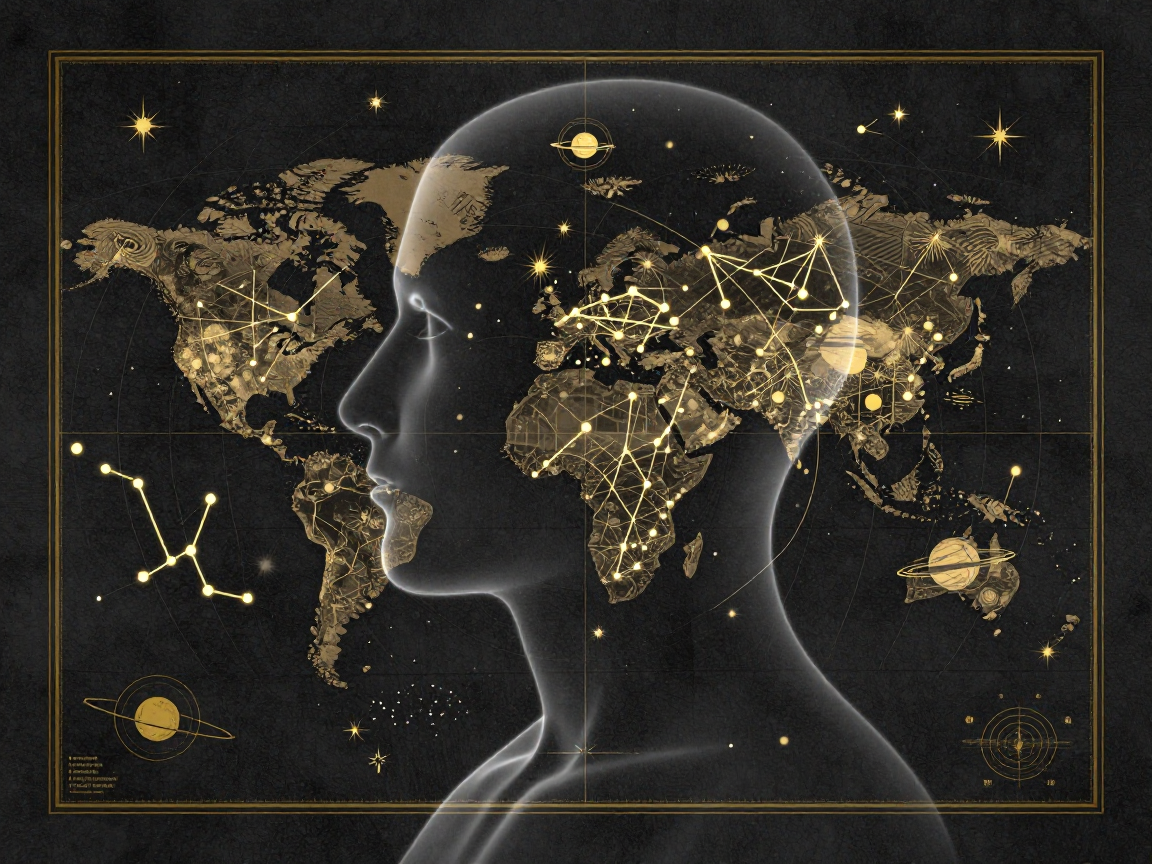
For centuries, humans have looked toward the heavens to find meaning in the patterns of the stars. This ancient practice is more than just a collection of daily predictions in the back of a magazine; it is a complex system that many use as a mirror for their inner lives. When we talk about astrology and personality, we are really discussing a symbolic language that helps individuals categorize their traits, motivations, and emotional responses. Whether you are a skeptic or a true believer, the framework of the zodiac provides a structured way to navigate the often chaotic experience of being human.
In our modern, data-driven world, the resurgence of interest in astrology might seem paradoxical. However, as life becomes increasingly digital and disconnected, the human psyche craves systems that offer a sense of cosmic belonging. The relationship between astrology and personality is not necessarily about the stars forcing us to act in specific ways. Instead, it functions as a tool for self-reflection. By assigning certain archetypal qualities to different planetary positions, astrology offers a vocabulary for things that are otherwise difficult to describe—our hidden fears, our instinctive reactions, and our highest aspirations. It allows us to step outside ourselves and view our character through a wider lens, fostering a sense of connection to something larger than our immediate circumstances.
The Psychology of the Stars: How We Use Astrology to Frame Identity
Psychologically, the draw toward astrology and personality typing stems from a fundamental human need for narrative. We want our lives to make sense, and we want to feel that our specific quirks and struggles are part of a recognizable pattern. Carl Jung, the famous Swiss psychiatrist, frequently explored the concept of archetypes—universal, symbolic patterns that exist within the collective unconscious. Astrology is essentially a map of these archetypes. When someone identifies as a Leo or a Scorpio, they are tapping into a shorthand for a complex set of behaviors and drives.
This framing of identity serves several purposes. First, it provides validation. Seeing your internal struggles reflected in a birth chart can make you feel less alone and more understood. Second, it offers a path for growth. By highlighting both strengths and potential pitfalls, the study of astrology and personality can point toward areas where an individual might need to practice more self-awareness or discipline. It becomes a diagnostic tool for the soul, helping us identify where we are stuck and where we have the potential to shine. Many contemporary therapists have even begun to integrate astrological archetypes into their practice, not as literal truths, but as metaphorical gateways to deeper psychological inquiry.
The Big Three: The Core Components of Astrology and Personality
Most people know their Sun sign, but a true understanding of astrology and personality requires looking at the entire birth chart. The "Big Three"—your Sun, Moon, and Rising signs—form the foundation of your astrological identity. Together, they create a multi-dimensional portrait that explains why two people with the same Sun sign can have vastly different temperaments.
The Sun: Your Ego and Core Identity
The Sun sign is the most well-known aspect of your chart. It represents your basic identity, your will, and the core of who you are. If you think of your personality as a solar system, the Sun is at the center. It defines your fundamental vitality and the way you seek to express yourself in the world. However, while the Sun is vital, it is only one piece of the puzzle. It describes who you are learning to become, rather than the totality of your emotional experience. It is the "hero" of your personal story, representing your conscious mind and outward goals.
The Moon: Your Emotional Landscape
While the Sun is outward-facing, the Moon sign governs your inner world. This is perhaps the most significant placement when considering astrology and personality in a private context. Your Moon sign reflects how you process emotions, what makes you feel safe, and your instinctive reactions to stress. It is the "you" that only those closest to you get to see. Understanding your Moon sign is often the key to unlocking better self-care and more stable relationships, as it reveals your deepest needs and the way you seek comfort.
The Rising Sign: Your Social Mask
The Rising sign (or Ascendant) is the zodiac sign that was rising on the eastern horizon at the moment of your birth. In the context of astrology and personality, the Rising sign represents the "mask" or the "front door" of your personality. It dictates your immediate approach to new environments and how others perceive you upon first meeting. It is the filter through which the rest of your chart is expressed to the world. If the Sun is your internal identity and the Moon is your emotional core, the Rising sign is the style in which you present those parts of yourself.
Moving Beyond Stereotypes: The Four Elements and Character Temperament
To deepen the conversation about astrology and personality, we must look at the four elements: Fire, Earth, Air, and Water. Every zodiac sign belongs to one of these categories, and the balance of these elements in your chart determines your overall temperament. A person with a "Fire-heavy" chart will have a very different energy than someone with a "Water-heavy" chart, even if their Sun signs are technically compatible.
- Fire (Aries, Leo, Sagittarius): Characterized by enthusiasm, intuition, and a drive for action. These individuals are often high-energy and focused on inspiration. They are the catalysts of the zodiac, prone to bursts of creativity but also susceptible to burnout if they lack grounding.
- Earth (Taurus, Virgo, Capricorn): Focused on the material world, practicality, and stability. These types are grounded, reliable, and results-oriented. They excel at building structures and maintaining routines, though they can sometimes become overly fixated on the tangible.
- Air (Gemini, Libra, Aquarius): Driven by intellect, communication, and social connection. They prioritize ideas, logic, and the exchange of information. Air signs are the observers and communicators, often detached enough to see the "big picture" but occasionally struggling with emotional depth.
- Water (Cancer, Scorpio, Pisces): Centered on emotion, empathy, and intuition. These individuals are often sensitive, imaginative, and deeply connected to the psychic undercurrents of life. They navigate the world through feeling, making them incredibly compassionate but also vulnerable to the moods of others.
The Role of the Modalities: How You Take Action
Beyond elements, astrology and personality are further refined by "modalities." Each sign is either Cardinal, Fixed, or Mutable. This explains how you handle change and how you move toward your goals.
- Cardinal Signs (Aries, Cancer, Libra, Capricorn): These are the initiators. They are the people who start projects, lead the way, and embrace the beginning of seasons. They have a natural leadership quality but may struggle to finish what they start.
- Fixed Signs (Taurus, Leo, Scorpio, Aquarius): These are the sustainers. They are known for their persistence and determination. They have the stamina to see things through to the end, though they can be notoriously resistant to change or "stubborn."
- Mutable Signs (Gemini, Virgo, Sagittarius, Pisces): These are the adapters. They are flexible, communicative, and comfortable with transition. They excel at refining and improving things, though they can sometimes feel scattered or indecisive.
Practical Framework: How to Use Your Birth Chart for Self-Growth
Understanding the link between astrology and personality is most useful when it leads to tangible action. You can use your chart as a roadmap for personal development by following these steps:
- Identify Your Dominant Element: Look at your entire chart to see which element appears most frequently. If you lack Earth, you might struggle with grounding; if you have too much Fire, you might struggle with burnout. Work on balancing these energies through lifestyle changes—like gardening for lack of Earth or vigorous exercise for excess Fire.
- Analyze Your Mercury Placement: Mercury governs communication and thought processes. Understanding this helps you see how you learn and how you might be misunderstood by others. If your Mercury is in a Water sign, you communicate with emotion; in an Air sign, you communicate with logic.
- Check Your Saturn Returns: Saturn represents discipline and lessons. Every 29 years, we go through a "Saturn Return" which marks a significant period of maturing. Use these windows to take responsibility for your life path and prune away habits that no longer serve you.
- Observe Your Moon Phases: Track how your energy levels and moods shift in relation to the lunar cycle. This can help you schedule high-energy tasks during the waxing moon and reflective, restorative tasks during the waning moon.
- Reflect on Your Shadow Traits: Every sign has a "shadow" or a lower vibration. Acknowledge the darker side of your sign—such as indecisiveness for Libra or possessiveness for Scorpio—to prevent these traits from sabotaging your progress. Awareness is the first step toward integration.
The Scientific Perspective: Barnum Effects and the Power of Archetypes
It is important to address why astrology and personality seem to align so perfectly for many people. Skeptics often point to the "Barnum Effect" (or Forer Effect), which is a psychological phenomenon where individuals believe that generic personality descriptions apply specifically to them. While this certainly plays a role in casual, mass-market horoscopes, the deeper study of astrology involves highly specific calculations—including houses, aspects, and planetary degrees—that go far beyond vague generalities.
Even if one does not believe in the literal influence of celestial bodies, astrology and personality remain relevant as a form of "narrative therapy." By categorizing our traits into a system, we gain a sense of agency over our character. It allows us to say, "I am acting out my Martian energy right now" instead of "I am just a mean person." This distance provides the psychological space necessary to change behavior. Whether the stars cause the traits or we simply use the stars to map the traits, the utility of the system remains high for those seeking a structured path to self-discovery. It is a mirror, and like any mirror, its value lies in what we do with the reflection we see.
Why Astrology and Personality Matter in Modern Relationships
In recent years, the intersection of astrology and personality has become a staple in how people navigate dating and friendships. Understanding someone else's chart provides a shortcut to empathy. If you know that your partner has a Virgo Moon, you might realize that their tendency to "nitpick" is actually their way of showing love and creating a safe environment. Instead of taking it personally, you can see it as a function of their emotional blueprint.
This doesn't mean you should use astrology to write people off or justify bad behavior. True compatibility is about more than just matching Sun signs. It is about understanding the different ways two people process the world. When we use astrology and personality as a bridge rather than a wall, we can foster deeper connections and more patient communication. It allows us to celebrate the diversity of human experience rather than demanding that everyone think and feel exactly as we do. It encourages us to ask, "How does your world work?" rather than assuming we already know.
Ultimately, the study of astrology and personality is a journey toward the center of the self. It is a lifelong process of uncovering the layers of our identity and finding our place in the cosmic order. By embracing the complexity of our birth charts, we move past the simplistic labels of the past and into a more nuanced, compassionate understanding of what it means to be human in an ever-changing universe. The stars may not dictate our destiny with iron-clad certainty, but they certainly provide a beautiful, ancient language for describing the journey of the soul.