Finding Your Roots: Why Ancestral Veneration is the Missing Link to Modern Belonging
We live in an era of unprecedented mobility and digital connection, yet many of us feel a profound sense of isolation. This isn't just about missing friends or community; it is a deeper, cellular kind of loneliness that stems from being untethered from our history. We are often encouraged to be self-made individuals, as if we sprouted from the earth with no context, no stories, and no biological data preceding us. This cultural amnesia leaves us feeling fragile, as if the weight of the entire world rests solely on our own shoulders.
Ancestral veneration is the ancient practice of honoring those who came before us, and while it might sound like something reserved for history books or specific religious traditions, it is actually a deeply human impulse. By acknowledging our lineage, we begin to heal the fractured sense of self that modern life often creates. Ancestral veneration is not necessarily about worship in the way we think of modern religion - it is about recognition. It is the act of saying, "I see you, I remember you, and I carry you with me"! Whether it is through a formal altar or a simple moment of gratitude before a family meal, these acts bridge the gap between the past and the present, providing a sense of continuity that stabilizes the psyche.
What is Ancestral Veneration? (Beyond the Stereotypes)
At its core, ancestral veneration is the practice of maintaining a relationship with our deceased family members and broader lineage. It is found in nearly every culture on Earth, from the Obon festival in Japan to the Dia de los Muertos in Mexico, and the intricate lineage masks of West Africa. While the rituals vary wildly, the underlying philosophy is the same: the dead are not truly gone, and our lives are the continuation of their efforts.
In many Western societies, we have been conditioned to see death as a hard stop. Once someone passes, they are a memory, but they are no longer an active part of our lives. Ancestral veneration challenges this by suggesting that the connection is ongoing. Our ancestors live on in our DNA, in our temperament, in our traditions, and, for many, in a spiritual capacity. By engaging in this practice, we acknowledge that we are part of a long, unbroken chain of survivors. You are the result of thousands of people who managed to live long enough to pass on their life force. That realization alone can be a powerful antidote to modern feelings of inadequacy.
The Psychological and Spiritual Benefits of Connecting with Your Lineage
Psychologically, the practice of ancestral veneration provides a framework for what researchers call the "Ancestors Effect". Studies have shown that simply thinking about our ancestors can boost our confidence and performance in stressful situations. When we realize that our predecessors survived famines, wars, and migrations, our own daily stressors begin to feel more manageable. We feel backed by a "team" rather than standing alone.
Spiritually and emotionally, it allows for a unique form of healing. Many of us carry burdens that do not belong to us - patterns of anxiety, scarcity mindsets, or specific relationship dynamics that have been passed down through generations. Ancestral veneration creates a space to work through this "intergenerational trauma". By connecting with the ancestors, we can begin to differentiate between what is our own and what we have inherited. We can honor the strengths they passed down while gently deciding to lay down the heavy weights they were forced to carry.
Overcoming the "Perfect Family" Myth
A common roadblock for people interested in ancestral veneration is the reality of a difficult family history. Not everyone has a lineage of saints and heroes. Many of us come from families with histories of addiction, abandonment, or abuse. It can feel counterintuitive, or even dangerous, to want to connect with people who caused harm.
However, ancestral veneration distinguishes between the "troubled dead" and the "elevated ancestors". You do not have to honor the specific actions of a person who caused pain. Instead, you can reach back further to the "well ancestors" - those ancient ones who existed before the trauma patterns began. You can also approach the practice with the intent of being the person who heals the line. By acknowledging the pain of the past, you are performing a service for your lineage, ensuring that the buck stops with you. You are not venerating the abuse; you are venerating the life force that survived through it and the potential for that life force to be healthy once again.
A 5-Step Framework for Starting Your Own Practice
You do not need to be an expert in genealogy or a member of a specific faith to begin. The most important element of ancestral veneration is intentionality. Here is a practical framework to help you start your journey.
1. Research and Documentation
Start with what you know. Talk to living relatives, look at old photos, and write down names. If you are adopted or have no access to your biological history, do not despair. You can connect with "Ancestors of Spirit" - people who paved the way for your profession, your hobbies, or your values. The goal is to establish a sense of historical context.
2. Creating a Dedicated Space
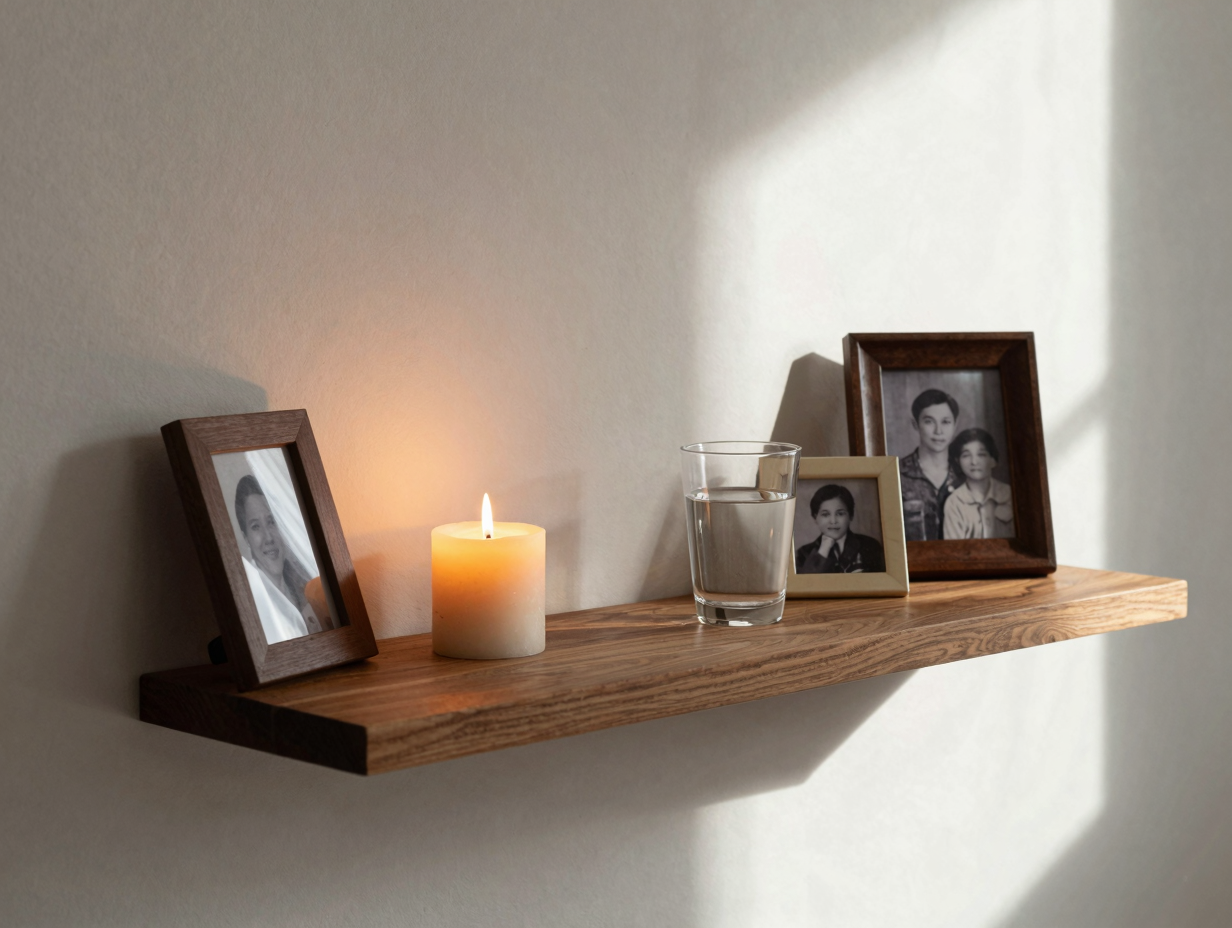
Many practitioners find it helpful to have a physical location for their practice. This does not have to be an elaborate altar. A small shelf with a few photos, a candle, and a glass of fresh water is a traditional starting point. The water represents the flow of life and the clarity of communication. This space serves as a psychological "anchor" that reminds you of your connection to your roots.
3. The Act of Offering
In many traditions, offering something to the ancestors is a way of feeding the relationship. This is rarely about the physical item itself, but rather the energy of the gift. Lighting a candle, burning incense, or placing a small portion of a meal on the altar are common practices. It is a way of saying, "I have enough, and I want to share it with you".
4. Dialogue and Reflection
Speak to them. You can do this out loud or in your head. Tell them about your day, ask for their guidance, or simply thank them for the gift of life. This may feel strange at first, but over time, it develops into a form of meditative reflection. You might find that "answers" or insights come to you more clearly when you are in this state of connection.
5. Living the Legacy
The highest form of ancestral veneration is how you live your life. When you take care of your health, pursue your passions, and act with integrity, you are honoring the efforts of everyone who came before you. Your joy is their success. Ask yourself, "What would my ancestors be proud of?" and let that guide some of your decisions.
Everyday Ways to Keep the Connection Alive
Ancestral veneration doesn't have to be a somber or time-consuming ritual. It can be integrated into your daily life through small, meaningful gestures.
- Cook Family Recipes: Food is one of the strongest links to our past. Making a grandmother's stew or a traditional holiday bread is a sensory way to commune with your history.
- Maintain Family Heirlooms: Taking care of an old watch, a piece of jewelry, or even a simple handwritten letter keeps the physical link intact.
- Visit Ancestral Lands: If possible, visiting the places where your ancestors lived can provide a profound sense of grounding and "geological belonging".
- Tell Their Stories: Keep the names of the deceased alive by sharing their stories with the younger generation. Even the funny or mundane stories contribute to the fabric of the family identity.
- Clean Their Graves: If you live near where your ancestors are buried, the act of physical maintenance - pulling weeds or leaving flowers - is a powerful form of respect.
The Role of Silence and Listening
One aspect of ancestral veneration that is often overlooked is the importance of listening. We live in a world of constant noise and "doing". This practice invites us into a space of "being". When you sit at your ancestral space or look at old photos, try to stay in the silence for a few minutes.
What feelings arise? Do you feel a sense of warmth, or perhaps a specific memory pops into your head? Many practitioners believe that the ancestors communicate through intuition, dreams, and synchronicities. By quieting your mind, you make it easier to receive the subtle support they may be offering. It is a practice of developing your "inner ear" to hear the whispers of the past.
Ancestral Veneration as a Tool for the Future
It might seem paradoxical to look backward in order to move forward, but ancestral veneration is ultimately about the future. By understanding where we came from, we become more intentional about what we are passing on. We become the ancestors of the future.
Every choice we make today - how we treat others, how we care for the environment, how we manage our mental health - becomes the legacy of those who will come after us. When we practice ancestral veneration, we are reminded that we are part of a story that is much larger than our individual lives. This perspective shifts us from a mindset of short-term gratification to one of long-term stewardship. We aren't just living for ourselves; we are living for the ones who came before and the ones who have yet to arrive.
Conclusion: Your Place in the Line
Ancestral veneration is a journey back to yourself. It is a way to reclaim the parts of your identity that have been lost to time or cultural shifts. Whether you are looking for spiritual guidance, psychological grounding, or simply a way to feel less alone in the world, your ancestors are a permanent resource you can tap into at any time.
You don't need a perfect lineage to start. You only need the willingness to remember. By lighting a single candle and acknowledging the names of those who carried the torch of life before you, you begin to heal the disconnect. You are not a solitary island; you are a vibrant, living branch on an ancient and resilient tree. Embrace your roots, and you may find that you can grow taller than you ever thought possible.