Beyond the Surface: Why the 3 Card Tarot Spread Is the Most Powerful Tool in Your Arsenal
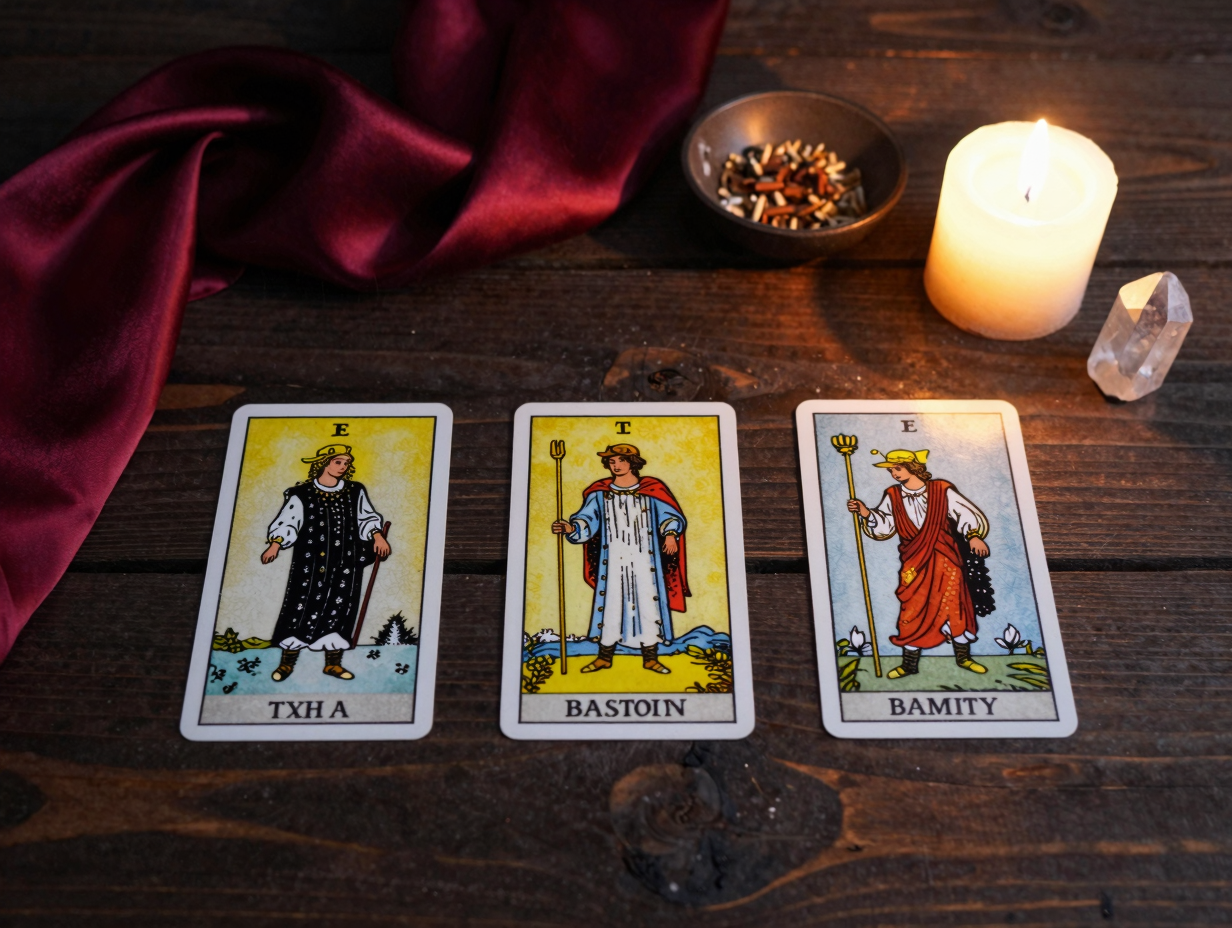
In the world of professional divination, there is a common misconception that more cards equate to a deeper reading. We see massive, intricate layouts like the Celtic Cross or the Tree of Life and assume that complexity is the only way to capture the nuance of a human life. However, many seasoned practitioners eventually return to the elegant simplicity of the 3 card tarot spread. This layout acts as the Swiss Army knife of the tarot world—compact, versatile, and remarkably sharp when you need to cut through the noise of a busy mind.
The beauty of the 3 card tarot spread lies in its narrative structure. Humans are storytelling creatures; we perceive our lives through the lens of beginnings, middles, and ends. When we lay down three cards, we are not just looking at isolated symbols. We are building a bridge between where we have been and where we are going. Whether you are a total beginner trying to memorize card meanings or a long-time reader looking for a quick daily check-in, mastering the three-card pull is the most effective way to sharpen your intuition without getting overwhelmed by a dozen conflicting messages.
The Philosophy of the Triangle: Why Three Cards Work
There is a reason the number three appears so frequently in mythology, religion, and mathematics. It represents the first stable structure—the triangle—and symbolizes the concept of synthesis. In a 3 card tarot spread, the first two cards often represent opposing forces or a progression of time, while the third card offers the resolution or the path forward. This prevents the reading from feeling static. It creates movement.
When you pull just one card, you get a snapshot. It is a single data point that can feel heavy or unmoored. When you pull two, you get a comparison or a duality—good versus bad, this versus that. But when you use a 3 card tarot spread, you introduce a third element that acts as a catalyst. This structure allows the reader to see the "flow" of energy. You can observe how a challenge in the first position is being met by an internal resource in the second, leading to a likely outcome in the third. It provides enough context to be useful without the "data fatigue" that often accompanies larger spreads where the central message gets buried under minor details.
From a psychological perspective, the 3 card tarot spread mirrors the way we process information. We look at the context (the past), the current problem (the present), and the potential resolution (the future). By limiting the scope, we force the brain to make meaningful connections rather than getting lost in the minutiae of ten different cards. It is about quality of insight over quantity of information.
Essential Variations of the 3 Card Tarot Spread
One of the biggest advantages of this layout is its adaptability. You can change the "labels" of the positions to fit almost any question or situation. By defining your parameters before you shuffle, you give the deck a clear container in which to speak. Here are several ways to categorize your 3 card tarot spread depending on your current needs.
The Linear Time Spread
This is the classic "Past, Present, Future" layout. It is the most common use of the 3 card tarot spread because it provides a grounded timeline of events.
- Position 1 (Past): The foundational energies, previous choices, or karmic events that led to the current situation.
- Position 2 (Present): The immediate energy surrounding the querent right now—what is currently in their control or awareness.
- Position 3 (Future): The most likely outcome if the current trajectory continues, or the next step in the evolution of the situation.
The Decision-Maker Spread
When you are stuck between two choices, this variation helps illuminate the path. It replaces the timeline with a logical comparison.
- Position 1 (Option A): The likely outcome or energy of the first path.
- Position 2 (Option B): The likely outcome or energy of the second path.
- Position 3 (What you need to know to decide): The "tie-breaker" or a hidden factor you haven't considered that affects both choices.
The Relationship Dynamic Spread
Tarot is frequently used to navigate the complexities of human connection. This spread helps look at the "we" instead of just the "me."
- Position 1 (You): Your current energy and what you are bringing to the relationship.
- Position 2 (The Other Person): Their current energy and their perspective on the connection.
- Position 3 (The Relationship): The combined energy or the shared lesson currently manifesting between you both.
How to Perform a 3 Card Tarot Spread: A 5-Step Framework
To get the most out of your 3 card tarot spread, it is helpful to follow a consistent ritual. This signals to your subconscious that it is time to shift from logical thinking to intuitive "seeing." Following a structured framework ensures that your readings remain objective and clear.
- Clear the Static: Before touching the cards, take three deep breaths. If you have had a stressful day, acknowledge those feelings and then set them aside. You want to approach the 3 card tarot spread with a neutral, curious mind. Some people like to light a candle or use a specific cloth to mark the space as sacred.
- Define Your Positions Clearly: Decide exactly what each of the three spots will represent before you shuffle. This is the most critical step. If you are vague about what the third card means, the answer will be equally vague. Say it out loud: "Card one is my block, card two is my strength, card three is my advice."
- Shuffle with Focused Intention: As you shuffle, repeat your question or the names of your positions in your head. Stop when it "feels" right—your hands will usually give a subtle signal of resistance or completion. There is no wrong way to shuffle, whether you prefer the overhand method or spreading them out on the table in a "wash."
- The Layout and Revelation: Place the cards face down from left to right. Flip them over one by one, allowing yourself to take in the imagery of each card before moving to the next. This allows the individual messages to land before you try to synthesize the whole.
- Look for the Narrative Thread: Before looking up individual card meanings in a book, look at the images as a whole. Do the figures in the cards face each other? Is the color palette consistent? This initial "gut feeling" is often the most accurate part of the 3 card tarot spread. Ask yourself: What is the story being told here?
The Art of the Narrative: Reading the "Bridge"
A common mistake when performing a 3 card tarot spread is reading the cards as three separate, disconnected entries in an encyclopedia. To truly unlock the power of this layout, you must learn to read the "bridge"—the space between the cards. This is where the true magic of tarot happens.
For example, if you pull the Three of Swords (heartbreak) in the past position and the Ace of Pentacles (new opportunity) in the present, the "bridge" tells a story of resilience. The story isn't just "I was sad and now I have a job." The story is "The pain of the past has cleared the ground, functioning as a necessary purging that allowed for this physical, tangible new beginning." The bridge is the how and the why.
Look at the direction of the characters. If a character in the first card is looking toward the second card, they are carrying energy forward, perhaps seeking a solution. If they are looking away, they are trying to leave that energy behind or are refusing to acknowledge the current reality. These visual cues and the interaction between the cards are what transform a basic 3 card tarot spread into a deep, personalized consultation.
A Checklist for Better Interpretations
If you find yourself stuck or confused by the cards you have pulled, run through this quick checklist to find your bearings. These questions help focus the mind when the intuition feels cloudy.
- Major vs. Minor Arcana: Are there any Major Arcana cards? If two or three are present, the situation involves a larger "life lesson" or archetypal shift rather than just a temporary circumstance.
- Suit Dominance: Do you see a lot of Cups (emotions), Swords (intellect/conflict), Wands (passion/action), or Pentacles (finances/health)? This tells you where the primary focus of the 3 card tarot spread lies.
- The Middle Card as the Pivot: In almost any layout, try reading the middle card as the "advice" or the bridge. Even in a past/present/future spread, the present card is the only one you have direct control over. What does it suggest you do?
- The Hidden Fourth (The Shadow): Some readers like to look at the card on the bottom of the deck after laying out their 3 card tarot spread. This is often called the "shadow card" and represents the underlying theme or subconscious motivation that you might be ignoring.
- Numerical Progression: Look at the numbers on the cards. Are they increasing (e.g., 2 to 5 to 9)? This suggests growth and building momentum. Are they decreasing? This might suggest a need to simplify or de-escalate.
Why Context is King in a 3 Card Spread
It is important to remember that the 3 card tarot spread does not exist in a vacuum. The context of your life is what breathes meaning into the symbols. The cards provide the syntax, but you provide the vocabulary. If you are asking about a career change and you pull the Lovers card, it might not mean a romantic interest. Instead, in the context of a 3 card tarot spread about work, it likely signifies a choice between two paths that require total alignment with your values, or a partnership that is vital to your professional success.
Don't be afraid to sit with the cards for a few minutes. Sometimes the meaning of a 3 card tarot spread doesn't click immediately. It might take an hour or even a day for the symbols to align with your reality. Many practitioners find it helpful to take a photo of their layout or write the card names down in a journal. Looking back on a 3 card tarot spread a week later often provides a "Eureka!" moment that was missed in the heat of the reading. Reflection is where the wisdom is integrated.
Final Thoughts on the Power of Three
The 3 card tarot spread is more than just a beginner's tool; it is a master's discipline. It teaches us to be concise, to look for connections, and to trust our first instincts. By limiting the number of cards, we force ourselves to look deeper into the archetypes presented to us. We stop looking for more "proof" in extra cards and start looking for the truth in the ones we already have.
Next time you feel overwhelmed by a situation or simply want a bit of guidance for the day ahead, resist the urge to pull half the deck. Lay down three cards, define your positions clearly, and listen to the story they want to tell. You might find that the most profound "answers" are the ones that are stripped of unnecessary complexity. The 3 card tarot spread reminds us that clarity isn't about having all the information—it is about having the right information and the courage to act upon it.