Beyond the Brunch: Why Women’s Circles Are the Antidote to Modern Loneliness
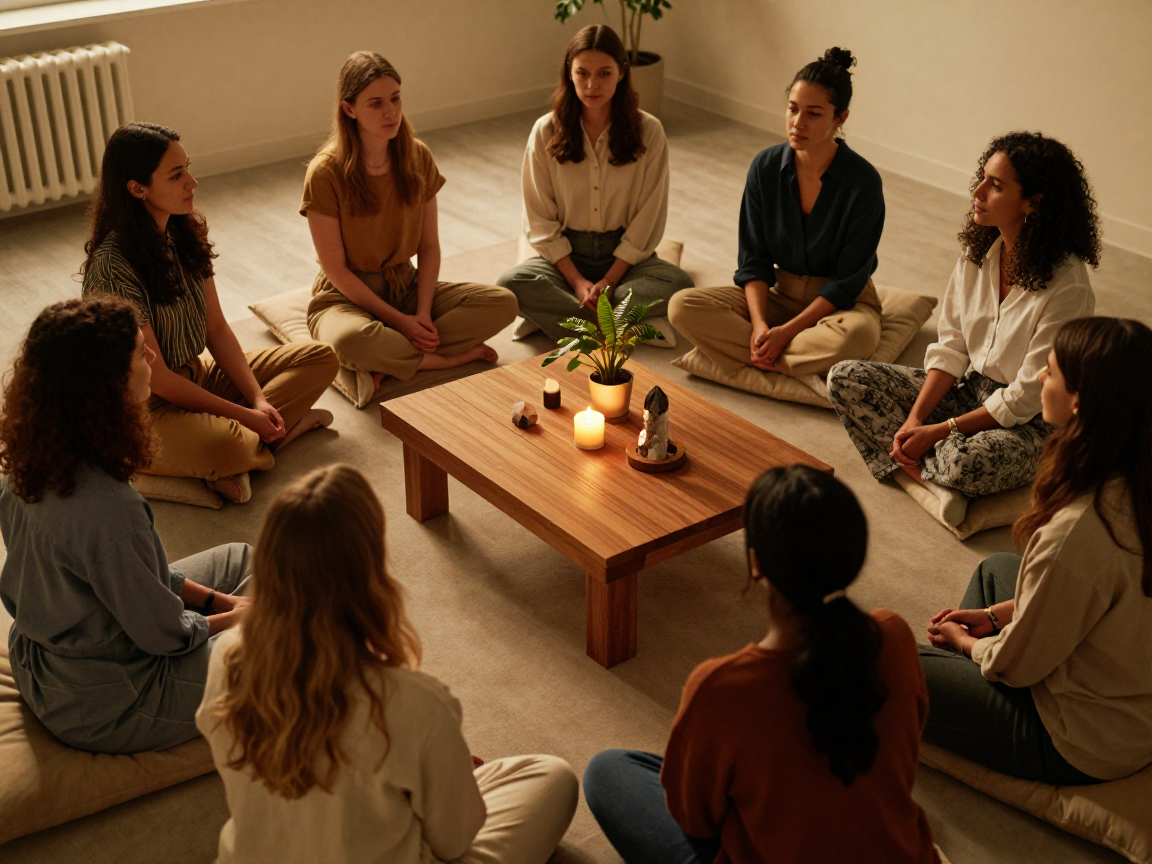
In an era defined by infinite scrolls and surface-level digital interactions, many women feel a persistent, quiet ache for something deeper. We are technically more connected than any generation in history, yet the rates of loneliness, anxiety, and burnout continue to climb. This is not a personal failing or a lack of social effort; it is the systemic result of losing the communal spaces that once sustained our ancestors. For centuries, women gathered around fires, wells, and looms to share stories, transfer wisdom, and share the heavy lifting of life. These gatherings were not just social—they were essential for survival, emotional regulation, and the preservation of culture.
Today, we are witnessing a massive global resurgence of women's circles. This is not a trend or a passing fad, but a collective remembering. As the pace of modern life accelerates, the need for a slow, intentional, and non-judgmental space becomes a necessity rather than a luxury. By stepping into a circle, women are reclaiming a form of sisterhood that prioritizes being over doing and vulnerability over performance. These spaces offer a rare sanctuary where the constant pressure to achieve, caretake, and "keep it together" can finally be set aside.
Understanding the Essence of Women's Circles
At its core, a women's circle is a safe and sacred space where women gather to share their experiences, listen without judgment, and support one another. Unlike a casual happy hour or a networking event, women's circles are defined by their structure and intention. They are traditionally egalitarian, meaning there is no hierarchy or designated "expert." While there is usually a facilitator to hold the space and manage the flow, every woman in the circle is viewed as an equal contributor of wisdom.
In these spaces, the focus shifts from the external world to the internal landscape. In our daily lives, we are often required to wear many masks—the professional, the mother, the partner, the achiever. Inside women's circles, those masks are invited to drop. The primary goal is to create a container where truth can be spoken and witnessed. This act of "witnessing" is a powerful psychological tool; when a woman sees her own struggles reflected in the stories of others, the shame associated with those struggles begins to dissolve. This realization that "I am not alone" is often the first step toward profound personal healing.
Reclaiming the Red Tent: A Brief History
To understand the power of these gatherings, we must look at their historical roots. Many indigenous and ancient cultures practiced versions of what we now call women's circles. One of the most famous historical archetypes is the "Red Tent" or menstrual hut—a space where women would retreat during their cycles. Far from being a place of exile, historical research suggests these were spaces of rest, empowerment, and the passing of sacred knowledge from elders to younger women. When modern women gather, they tap into this ancient lineage of shared wisdom that was largely disrupted by industrialization and the nuclear family model.
The Emotional and Physiological Benefits of Gathering
There is a biological component to why women's circles feel so uniquely nourishing. While the traditional stress response is often categorized as "fight-or-flight," research from UCLA suggests that women often engage in a distinct response called "tend-and-befriend." This mechanism involves nurturing offspring and seeking out social groups for protection and emotional regulation during times of stress.
When women gather in a supportive, safe environment, their bodies release oxytocin—the "bonding hormone." This chemical surge helps to lower cortisol (the stress hormone) and induce a state of physiological calm. Furthermore, the act of shared vulnerability activates our mirror neurons, allowing us to feel a deep sense of empathy and connection. Beyond the hormones, the emotional benefits are profound. In a world where we are constantly interrupted by notifications or the needs of others, being truly heard is a form of medicine. It validates our existence and our experiences, leading to increased self-esteem and a significant reduction in the feelings of isolation that fuel depression.
Healing the "Sister Wound"
Many women carry what psychologists and sociologists call the "sister wound"—a deep-seated mistrust of other women born from societal conditioning. From a young age, we are often taught that other women are our primary competitors for resources, attention, and success. This results in lateral violence: gossip, comparison, and exclusion. Women's circles actively work to dismantle this narrative. By fostering an environment of radical support, these circles teach us that another woman's success is not our failure, and her struggle is not a reason to look away. In the circle, we learn that there is enough room for all of us to shine.
The Five Pillars of a Transformative Women's Circle
To ensure that women's circles remain a safe and effective space for growth, they generally adhere to a set of core principles. Whether you are joining an established group or looking to start your own, these five pillars provide the foundation for a healthy container.
- Confidentiality: What is shared in the circle stays in the circle. This is the most critical pillar for building trust. Without the absolute assurance of privacy, participants cannot be fully vulnerable.
- Non-Judgmental Listening: In a circle, we do not listen to respond; we listen to understand. This means refraining from giving unsolicited advice or trying to "fix" someone else's problems. The goal is to witness, not to manage.
- The Use of "I" Statements: Participants are encouraged to speak from their own experience rather than speaking in generalities or projecting onto others. This keeps the focus on personal truth and prevents the conversation from turning into debate.
- Equality and Circularity: The physical shape of a circle is intentional. It represents the fact that no one is at the head. Everyone is equally vital to the energy of the group, and eye contact is shared among all.
- Intentionality and Ritual: Circles often begin and end with a simple ritual—such as lighting a candle, a guided meditation, or a collective breath. This helps to mark the transition from the busy, "doing" world into the sacred, "being" space.
How to Start Your Own Women's Circle: A 6-Step Action Plan
You do not need to be a therapist or an expert to host a circle. You simply need the desire to create a space for connection. If you are feeling the call to bring women together, follow this framework to help you build a sustainable group.
1. Define Your Purpose and Theme
Before inviting anyone, get clear on the "why." Is this a general support circle? A seasonal gathering (like a New Moon or Solstice circle)? Or perhaps a circle focused on a specific life stage, such as motherhood or career transitions? Having a clear intention helps attract the right participants and sets the tone.
2. Curate Your Guest List Intentionally
Start small. A group of 4 to 8 women is often ideal for ensuring everyone has enough time to speak deeply. You might invite close friends, or you might choose to open it up to acquaintances to expand your community. Ensure that the women you invite are open to the concept of a structured, intentional gathering rather than just a casual chat.
3. Set the Logistics
- Frequency: Will you meet once a month? Once a season? Consistency is key to building the trust necessary for deep sharing.
- Location: A quiet living room is usually best, but a private back room of a community center or even a quiet spot in nature can work. The space should feel private and comfortable.
- Duration: Most circles last between 90 minutes and 2 hours.
4. Create an Opening and Closing Ritual
Rituals provide a "container" for the experience. Opening rituals (like lighting a candle or a three-breath meditation) signal to the brain that it is time to drop into a deeper state of presence. Closing rituals (like a shared word of gratitude or blowing out the candle) help participants ground themselves before returning to their daily lives.
5. Establish the "Talking Piece"
In many women's circles, a physical object—a stone, a feather, or a piece of wood—is used as a talking piece. The person holding the object is the only one allowed to speak, and others listen in silence. This prevents interruptions and ensures that even the quietest voices have a dedicated space to be heard.
6. Prepare Prompts
While open sharing is valuable, having a few "heart-opening" prompts can help the flow. For example: "What are you currently celebrating that you usually keep hidden?" or "What is a burden you are ready to put down tonight?"
Navigating Challenges: The Facilitator's Role
Even with the best intentions, challenges can arise. One common issue is the "fixer" personality—a woman who wants to solve everyone’s problems. The facilitator’s role is to gently remind the group of the pillar of non-judgmental listening. Another challenge is the "monopolizer" who takes up a disproportionate amount of time. Using a timer or a talking piece helps keep the energy balanced.
If you find yourself feeling nervous about attending or hosting your first circle, remember that most women feel the same way. It takes courage to be vulnerable. However, the discomfort is usually short-lived, replaced by a profound sense of relief. As many participants note, they didn't realize how much weight they were carrying until they were in a room where they were finally allowed to set it down.
The Long-Term Impact of Shared Wisdom
When we participate in women's circles, we are doing more than just chatting; we are participating in a global movement of emotional intelligence. The wisdom shared in these spaces often ripples out into our families, our workplaces, and our wider communities. A woman who feels supported and heard is more likely to lead with empathy and less likely to burn out.
Ultimately, women's circles remind us that we were never meant to navigate the complexities of life in isolation. They provide a soft landing spot in a hard world. Whether you find a circle in your local neighborhood or decide to gather a few friends in your own living room, the act of showing up and being seen is a radical act of self-care. In the circle, we find the strength to return to our lives with more grace, more clarity, and the profound knowledge that we are backed by a community of sisters.