The Biology of Focus: How Your Visual Cortex and RAS Filter Reality and Shape Your World
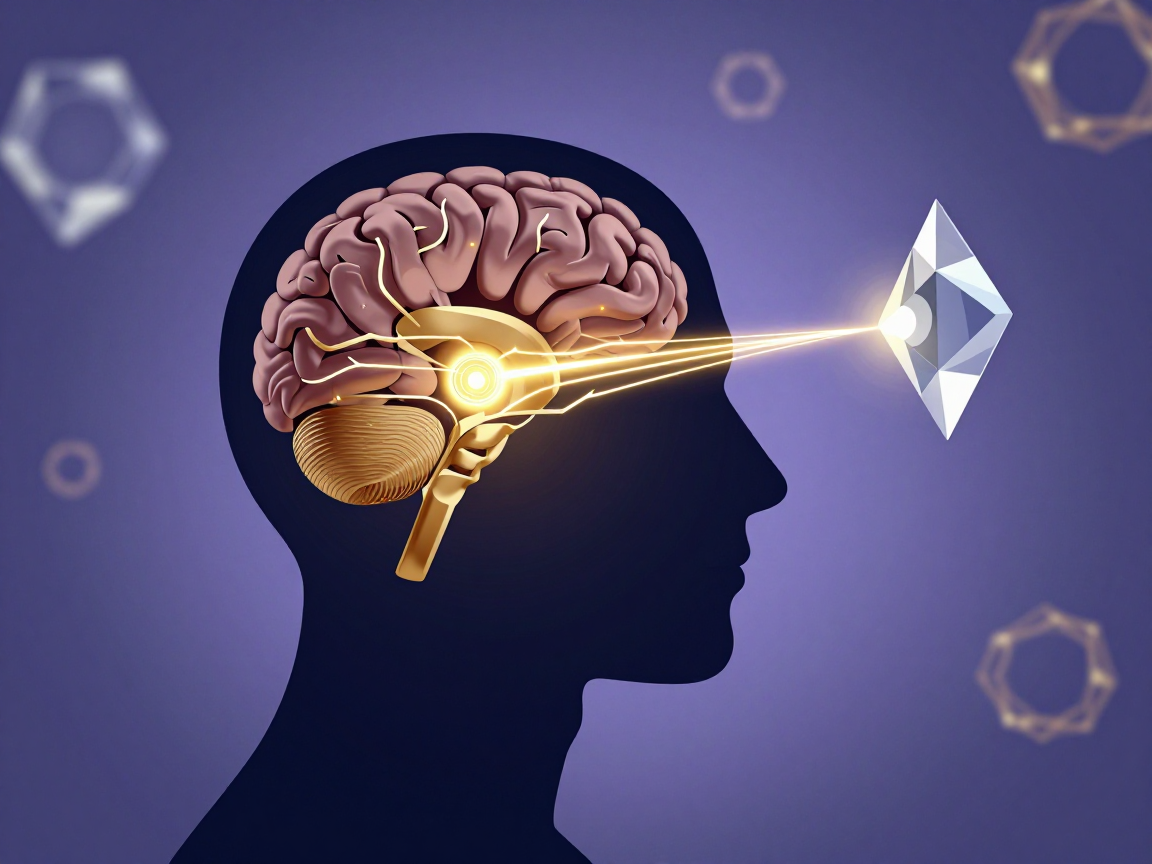
Every single second, your senses are bombarded by approximately 11 million bits of information. From the subtle hum of a refrigerator to the texture of the fabric against your skin, the world is a chaotic symphony of data. Yet, your conscious mind only processes about 40 to 50 bits of that information per second. If you were aware of everything at once, your nervous system would experience an immediate and catastrophic meltdown. To prevent this, your brain employs a sophisticated security system designed to decide what is relevant and what is noise.
This security system relies on a profound partnership between two distinct regions: the Reticular Activating System (RAS) and the visual cortex. While the visual cortex is responsible for interpreting the light that enters your eyes, it does not work in a vacuum. It is steered, primed, and toggled by the RAS. Understanding the relationship between the visual cortex and ras is not just an exercise in anatomy - it is the key to understanding why two people can look at the same room and see two completely different sets of opportunities, threats, or details.
The Gatekeeper: Understanding the Reticular Activating System
Located in the brainstem, the Reticular Activating System is a bundle of nerves that acts as the gateway to the cerebral cortex. Think of it as the nightclub bouncer of your brain. It is the primary regulator of arousal and consciousness, deciding which sensory inputs are important enough to "wake up" the rest of the brain. Without the RAS, you would not be able to transition from sleep to wakefulness, nor would you be able to maintain a state of alertness during the day.
The RAS is remarkably efficient because it is programmed to look for specific types of information. Historically, this meant survival - related data: the sound of a rustling bush that might hide a predator, the smell of smoke, or the sight of a familiar face. In the modern world, the RAS has adapted to filter for things that align with our current goals, beliefs, and emotional states. It functions as a biological search engine that scans the environment for anything it has been told is important.
The Processor: How the Visual Cortex Interprets the World
At the back of the brain lies the occipital lobe, home to the visual cortex. This is the region where raw electrical signals from the retina are transformed into the shapes, colors, and motions that we perceive as reality. The visual cortex is organized into different layers, from the primary visual cortex (V1) which handles basic edges and orientations, to higher - order areas (V3, V4, and V5) that process complex forms and movement.
However, the visual cortex is surprisingly passive on its own. It is a massive processing engine, but it requires direction. It cannot focus on everything within its field of view with equal clarity. This is where the interaction between the visual cortex and ras becomes critical. The RAS sends ascending signals that effectively "light up" certain pathways in the visual cortex, making it more sensitive to specific stimuli while dampening its response to others.
The Neurological Handshake Between the Visual Cortex and RAS
The synergy between the visual cortex and ras is what allows for selective attention. This is a top - down and bottom - up loop. When the RAS identifies a stimulus as high - priority, it triggers a release of neurotransmitters like norepinephrine. These chemicals increase the "signal - to - noise" ratio in the visual cortex. Essentially, the RAS turns up the volume on the things you care about and mutes the background chatter.
This is why, when you decide you want to buy a specific model of a red car, you suddenly see that exact car everywhere. The cars were always there, but your RAS was filtering them out as irrelevant noise. Once you assigned value to that image, your RAS began priming the visual cortex to recognize that specific shape and color. This phenomenon demonstrates that we do not see the world as it is; we see the world as we are conditioned to see it.
The Role of the Thalamus
In this communication loop, the thalamus acts as the relay station. The RAS sends signals to the thalamus, which then gates the flow of visual information to the cortex. If you are in a state of low arousal - bored, tired, or disengaged - the thalamus restricts the flow. This is why you can "stare" at a page of a book for five minutes and not process a single word. Your visual cortex is receiving the light, but the RAS has not signaled that the information is worth the metabolic cost of high - level processing.
How to Prime Your Brain: A Framework for Focused Awareness
Since the visual cortex and ras work together based on the priorities you set, you can intentionally "program" this system to help you achieve goals or improve your well - being. This isn't mysticism; it is high - level cognitive training. By providing the RAS with clear instructions, you change the sensitivity of your visual processing.
- Define Your Visual Anchors: The brain responds better to images than abstract concepts. If you want to find a new home, don't just think "house". Visualize the specific architectural style or a unique feature. This gives the RAS a concrete pattern to match in the environment.
- Utilize Intentional Priming: Each morning, spend two minutes identifying the three most important things you need to notice today. This act of "priming" tells the RAS to lower the threshold for these specific triggers in the visual cortex.
- Minimize Sensory Clutter: A cluttered environment forces the RAS to work overtime to filter out distractions, which can lead to cognitive fatigue. By simplifying your visual field, you allow the visual cortex and ras to dedicate more energy to high - value targets.
- Reflect on Selective Perception: Periodically ask yourself, "What am I currently missing?". This disrupts the automated filtering process and can force the RAS to allow different types of information through the gate.
The Impact of Stress and Overstimulation
When we are chronically stressed, the RAS becomes hyper - vigilant. It begins to prioritize threats above all else. In this state, the interaction between the visual cortex and ras shifts. The visual cortex becomes highly sensitive to signs of conflict, disapproval, or danger, often at the expense of seeing beauty, opportunity, or nuanced detail. This is known as "tunnel vision" and it is a biological survival mechanism that can become a hindrance in modern life.
Overstimulation from digital screens also plays a role. The rapid - fire visual changes in social media and video games keep the RAS in a state of constant high arousal. Over time, this can desensitize the system, making it harder to focus on slow - moving, deep tasks that require sustained visual attention. Restoring the balance between the visual cortex and ras often requires "sensory fasting" or spending time in nature, where the visual patterns are more fractal and less demanding of an immediate dopamine response.
Practical Applications: From Productivity to Mental Health
Understanding this neurological link offers practical benefits across several domains of life:
- Learning and Memory: You are more likely to remember what you see if the RAS is engaged. This is why curiosity is the best precursor to learning. When you are curious, the RAS opens the gates wide for the visual cortex to record data.
- Goal Achievement: Success is often a matter of noticing the right opportunity at the right time. By keeping your goals top - of - mind, you ensure that your RAS is constantly scanning for the "red cars" of your industry or personal life.
- Emotional Regulation: If you find yourself only noticing the negative aspects of your surroundings, your filter may be biased. Consciously looking for "glimmers" - small moments of joy or safety - can eventually retrain the RAS to flag these for the visual cortex more frequently.
A Checklist for Mental Clarity
- Is my physical environment supporting my current focus?
- Have I clearly defined what "success" looks like today?
- Am I giving my RAS periods of rest from digital overstimulation?
- Am I aware of the specific biases my brain is currently using to filter reality?
The Future of Neuro - Optimization
As neuroscience advances, we are finding new ways to influence the visual cortex and ras through technology. From biofeedback loops to specialized visual entrainment, the ability to manually adjust our internal filters is becoming a reality. However, the most powerful tool remains our own conscious intention. By understanding that our perception is a curated experience, we move from being passive observers of our reality to active architects of it.
The relationship between the visual cortex and ras serves as a reminder that the world is far more vast than we can imagine. There are opportunities, solutions, and beauties surrounding us at all times that we simply haven't "tuned in" to yet. By refining our focus and understanding the biological machinery behind our sight, we can begin to see the world not just as a collection of objects, but as a field of endless, filtered potential.