The Loneliness of the Solo Seeker: Why a Conscious Spiritual Community is the Missing Link in Your Growth
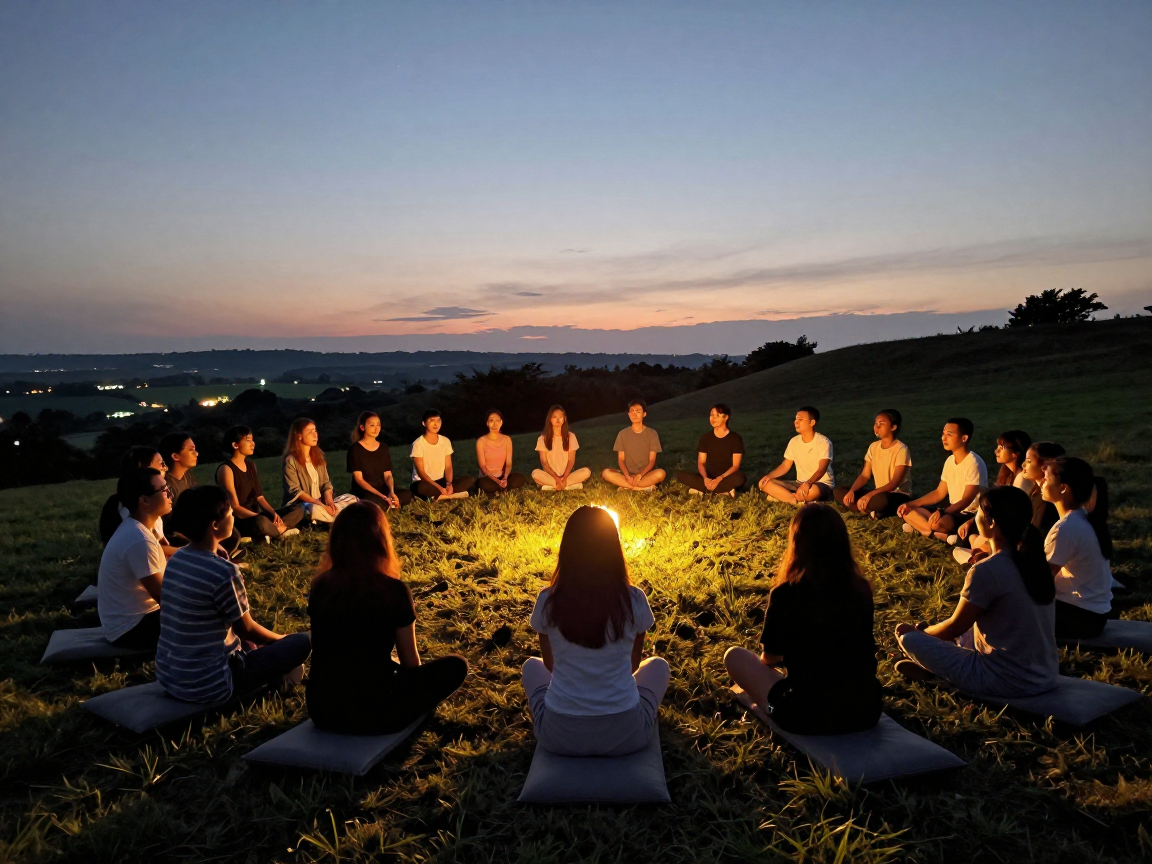
There is a persistent myth in the modern world that spiritual awakening is a solitary pursuit. We envision the monk in a remote Himalayan cave, the yogi on a lonely cliffside, or the modern seeker sitting alone in a darkened room with a meditation app. We are taught that the path to enlightenment is an internal journey—a solo flight into the depths of the self where no one else can follow. While it is true that no one can do your inner work for you, there is a profound limitation to the do-it-yourself approach to transformation. Eventually, every solo seeker hits a wall that can only be scaled with the help of others. This is where the concept of a spiritual community becomes not just a luxury, but a necessity for sustained evolution.
In our current era of hyper-individualism, we have largely traded village squares for digital feeds and communal rituals for personal playlists. We might have thousands of followers or digital acquaintances, yet we often feel a gnawing sense of isolation in our deepest inquiries about life, purpose, and the soul. A spiritual community offers a vital remedy to this existential loneliness. It provides a sacred container where your internal shifts are witnessed, where your struggles are normalized, and where your growth is reflected back to you by those walking a similar path. Without this external mirror, it is all too easy to fall into the traps of the ego, mistaking intellectual understanding for actualized wisdom.
The Evolution from Individual Insight to Collective Resonance
Most spiritual journeys begin in private. Perhaps it starts with a book that shatters a limited worldview, a sudden moment of clarity during a walk in nature, or a period of intense personal suffering that demands a deeper answer. In this initial phase, solo practice is essential. You need the quiet to hear your own voice and the space to deconstruct old identities without external interference. However, there comes a point where the insights gained in solitude must be tested in the laboratory of human relationship. Insights that remain purely internal are like seeds kept in a jar; they have potential, but they cannot grow until they are planted in the soil of community.
This is the primary function of a spiritual community. It moves the practice from the conceptual mind into the lived heart. When you are alone, it is easy to believe you are patient, compassionate, and detached. It is only when you are in a circle with others—navigating different personalities, triggers, and perspectives—that you truly discover the depth of your progress. The community acts as a catalyst, accelerating growth by bringing your unconscious patterns to the surface where they can be seen and healed in the light of shared awareness.
Furthermore, there is a specific energetic phenomenon that occurs when people gather with a shared intention. Ancient traditions have long recognized this as the power of the "sangha" or the "ekklesia." It is the idea that the collective energy of a group is exponentially greater than the sum of its parts. When a spiritual community breathes, meditates, or explores together, a field of resonance is created that can carry individuals into deeper states of consciousness than they might reach on their own. This collective field provides a safety net during difficult transitions, holding the space when an individual feels too weak to hold it for themselves.
Why Your Practice Hits a Ceiling Without Support
One of the most significant challenges of the solo path is the lack of accountability. When you are the only one monitoring your progress, it is incredibly easy to engage in "spiritual bypassing"—the tendency to use spiritual ideas and practices to avoid facing unresolved emotional issues or psychological wounds. You might spend hours meditating on "oneness" while remaining deeply judgmental of your neighbors, or use "non-attachment" as an excuse to avoid intimacy.
Within a healthy spiritual community, these blind spots are much harder to maintain. True companions on the path will lovingly challenge your narratives. They offer the "holy friction" necessary to smooth the rough edges of the ego. Without this friction, a solo practice can become a feedback loop of self-validation, where you only seek out information that confirms what you already believe. A community introduces diverse perspectives that force you to expand your capacity for nuance and empathy.
Additionally, the solo seeker often lacks a roadmap for the "dark night of the soul" or periods of intense spiritual emergency. When the structures of your old life begin to crumble, it can feel like a mental health crisis rather than a spiritual breakthrough. Having a spiritual community means having access to elders and peers who have navigated these waters before. They provide the context and the reassurance that what you are experiencing is a natural, albeit painful, part of the unfolding process. They offer the grounded presence that keeps you tethered when the internal world feels chaotic.
The Five Pillars of a Life-Changing Spiritual Community
Not all groups are created equal. To find or build a space that truly fosters growth, look for these five essential pillars that define a high-integrity spiritual community:
- Shared Intentionality: The group is not gathered for social status or entertainment, but for a clear, shared purpose—such as the pursuit of truth, the cultivation of compassion, or the service of humanity. This shared "why" acts as the north star for all interactions.
- Radical Presence and Active Listening: Members practice being fully present with one another. This means listening without the intent to fix, judge, or interrupt. In this container, individuals feel seen and heard at a level that is rare in everyday life.
- Reciprocal Accountability: There is a culture of "calling up" rather than "calling out." Members hold each other to their highest potential while offering grace for the human journey. This includes honest feedback delivered with kindness.
- Integration of Shadow and Light: A healthy community does not demand "good vibes only." It provides space for grief, anger, and doubt. It recognizes that the "dark" parts of the human experience are just as sacred and informative as the "light" ones.
- Sovereignty within Unity: While the group provides support, it never demands the surrender of individual critical thinking or personal agency. It encourages each person to find their own unique expression of the truth rather than conforming to a rigid dogma.
Discernment in the Modern Age: Green Flags vs. Red Flags
In the search for a spiritual community, discernment is your most valuable tool. The rise of "spiritual but not religious" movements has led to a beautiful explosion of new groups, but it has also created a landscape where charismatic leaders can easily exert undue influence. Understanding the difference between a supportive circle and a restrictive hierarchy is crucial.
Green Flags to Look For
- Transparency: Leadership is open about finances, decision-making, and organizational structure.
- Intellectual Freedom: Questions and doubts are welcomed as signs of sincere engagement rather than lack of faith.
- External Connections: The community encourages you to maintain and nourish your outside relationships with family and friends.
- Practical Application: There is a focus on how spiritual values translate into better conduct in daily life, work, and relationships.
- Empowerment: You feel more capable, grounded, and "more like yourself" after spending time with the group.
Red Flags to Avoid
- Exclusivity: An atmosphere of "us vs. them," where the group believes they are the only ones with the "truth."
- Love-Bombing: An overwhelming amount of affection and attention when you first join, which is later withdrawn if you don't conform.
- Isolation: Subtle or direct pressure to distance yourself from friends or family who aren't part of the community.
- Unquestionable Authority: The leader is treated as infallible or is beyond criticism.
- Financial Pressure: Constant demands for money that feel coercive or disproportionate to the services provided.
How to Cultivate Your Own Circle of Support
If you cannot find a spiritual community that feels right in your immediate area, you may be called to start one. This does not require a temple, a formal title, or an advanced degree; it simply requires a commitment to authentic connection. You can begin by inviting two or three like-minded individuals to meet once a month to discuss a specific text, share their current challenges, and sit in silence together.
Start small and prioritize depth over numbers. A circle of four people who are deeply committed to vulnerability and truth is far more transformative than a lecture hall of five hundred people who are merely passive observers. Use local platforms, community centers, or interest-based groups to find those who are asking the same questions you are. Remember that a spiritual community can take many forms: a meditation group, a conscious movement class, a philosophy book club, or even a committed group of friends who agree to interact with a higher level of intentionality.
The key is consistency. Transformation is rarely the result of a single "aha" moment; it is the result of showing up week after week, even when you don't feel like it, even when the "newness" has worn off. It is in the mundane consistency of communal practice that the deepest roots of change are established.
The Ripple Effect of Collective Awakening
The impact of a spiritual community extends far beyond the individuals within it. When a group of people commits to living with greater awareness, compassion, and integrity, they become a "micro-culture" that influences the larger society. They model a different way of being—one based on cooperation rather than competition, and presence rather than distraction.
In a world that feels increasingly fragmented and polarized, the act of coming together in a conscious spiritual community is a radical act of healing. It proves that we are not separate islands, but part of a vast, interconnected ocean. By doing the work together, we lighten the load for everyone. We realize that the spiritual path is not about escaping the world, but about becoming more fully present in it, supported by the hands and hearts of those who walk beside us.
As you continue your journey, ask yourself: Who are the people who make me feel more awake? Who are the friends who challenge me to be my best self? If those people aren't in your life yet, make finding them your primary practice. Your growth depends on it. The solitary seeker may go fast, but the communal seeker goes far.