Why Your Brain Wants to Believe: Navigating the Thin Line of Science vs Pseudoscience
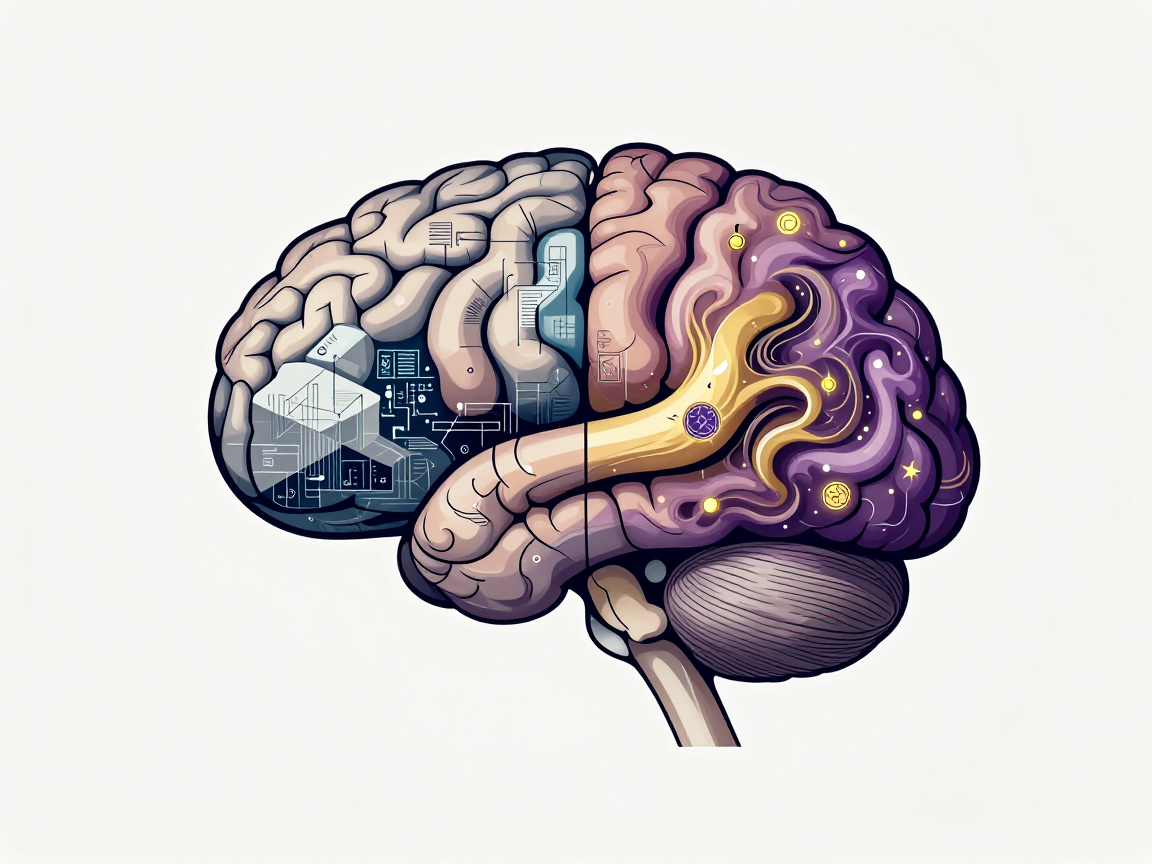
We live in an age where the boundaries of knowledge are expanding faster than our ability to process them. Every day, we are bombarded with headlines promising revolutionary health breakthroughs, ancient secrets to success, or "miracle" technologies that defy the laws of physics. In this sea of information, the distinction between science vs pseudoscience becomes more than just an academic exercise—it becomes a vital survival skill for the modern world. When we cannot tell the difference between a peer-reviewed study and a well-packaged marketing pitch, we risk more than just our time; we risk our health, our finances, and our collective understanding of reality.
Understanding science vs pseudoscience requires us to look past the aesthetics of authority. Just because someone wears a white lab coat or uses complex terminology does not mean they are practicing science. True science is a rigorous, often tedious process of trying to prove yourself wrong. Pseudoscience, by contrast, is usually a polished attempt to prove oneself right. To navigate this landscape, we must understand the fundamental pillars that hold up the scientific method and the cracks that reveal the presence of "woo-woo" masquerading as wisdom. This guide dives into the mechanics of belief, the markers of validity, and how to sharpen your skeptical edge.
The Demarcation Problem: Defining the Boundary
Philosophers have debated the "demarcation problem" for decades—the question of how to distinguish between science vs pseudoscience. At its core, science is not a body of facts, but a methodology. It is a system of inquiry built on the foundation of empirical evidence, reproducibility, and, perhaps most importantly, humility. A scientist makes an observation, forms a hypothesis, and then subjects that hypothesis to the most brutal testing possible. If the data does not support the idea, the idea is discarded or modified.
Pseudoscience operates in the opposite direction. It often begins with a conclusion—perhaps a deeply held belief or a product to be sold—and then works backward to find evidence that supports it. This is known as "cherry-picking." In the realm of science vs pseudoscience, the former embraces the unknown, while the latter fears it. Science is comfortable saying, "We don't know yet," whereas pseudoscience often provides easy, absolute answers to complex questions.
One of the most famous distinctions was proposed by Karl Popper, who argued that "falsifiability" is the hallmark of true science. For a theory to be scientific, there must be a way to prove it wrong. If a claim is so vague or all-encompassing that no possible evidence could ever refute it, it falls into the category of pseudoscience. For example, if a practitioner claims a treatment works because of "unmeasurable energy," and if it fails, it's because the patient had "negative vibrations," the claim is unfalsifiable. If a theory explains everything, it actually explains nothing.
The Red Flags of Pseudoscience
Identifying pseudoscience in the wild requires a keen eye for specific patterns. While science is characterized by self-correction and progress, pseudoscience tends to remain static or move only in circles, often doubling down on original claims despite contradictory evidence. When evaluating a claim, look for these common indicators that you are dealing with something other than rigorous science:
- Over-reliance on Anecdotes: Science relies on large sample sizes and controlled environments. Pseudoscience relies on "testimonials." While a story about someone's "miraculous recovery" is emotionally compelling, it is not evidence. Anecdotes cannot account for the placebo effect, natural recovery, or other variables like the regression to the mean.
- Lack of Peer Review: Scientific findings are subjected to the scrutiny of experts in the field before they are accepted. Pseudoscience often bypasses this process, moving straight to social media, self-published books, or "infomercials." If a discovery is too big for the journals, it's usually because it didn't pass the smell test.
- The Appeal to Antiquity: This is the claim that something is true or effective simply because it has been used for "thousands of years." Longevity is not a proxy for accuracy. Bloodletting was practiced for centuries, but that did not make it an effective treatment for infection. Science values what works now, based on current data.
- Vague or "Science-y" Language: Terms like "quantum," "energy," "vibration," or "toxins" are often used in pseudoscience to sound authoritative without providing any specific, measurable definitions. In science, these words have very narrow, technical meanings. When they are used to explain everything from weight loss to financial success, you are likely looking at pseudoscience.
- The "Secret Knowledge" Narrative: Many pseudoscientific claims suggest that "Big Pharma" or "The Establishment" is suppressing the truth. While institutional bias exists, the idea of a global conspiracy to hide a simple, cheap cure is a classic hallmark of a non-scientific claim. Science thrives on the fame of those who overturn established dogmas; if a secret cure existed, someone would be winning a Nobel Prize for it.
The Psychology of Why We Believe
If the difference between science vs pseudoscience is so clear under scrutiny, why do so many of us fall for it? The answer lies in our evolutionary psychology. Our brains are hardwired to find patterns, even where none exist. This is called "apophenia." In the wilderness, it was safer to assume a rustle in the grass was a predator (a false positive) than to assume it was just the wind and be wrong (a false negative). We are the descendants of the paranoid.
This pattern-seeking behavior makes us suckers for "alternative" explanations that offer a sense of control. Pseudoscience often targets our deepest fears and desires—health, longevity, and certainty. When we feel vulnerable, the rigid, cautious, and often confusing language of science can feel cold. In contrast, the bold, confident, and simple promises of pseudoscience can feel like a lifeline. We want the world to make sense, and we want to feel like we have a secret edge over the chaos.
Furthermore, the "Dunning-Kruger effect" plays a role. This is a cognitive bias where people with limited knowledge in a subject overestimate their own competence. In the debate of science vs pseudoscience, this leads people to believe they have "done their own research" by reading a few blog posts, even though they lack the foundational training to interpret the data correctly. This overconfidence, combined with confirmation bias—the tendency to search for information that supports what we already believe—creates a fortress around pseudoscientific beliefs that is very hard to penetrate.
A 6-Step Framework for Evaluating Extraordinary Claims
To protect yourself from misinformation, you can apply a systematic approach whenever you encounter a new claim. Use this checklist to determine where the claim sits on the spectrum of science vs pseudoscience:
- Check the Source: Is the claim coming from a reputable, peer-reviewed journal, or a website selling a supplement? Does the person making the claim have relevant expertise in that specific field? A Nobel Prize in physics does not make someone an expert in nutrition.
- Look for Falsifiability: Ask yourself, "What evidence would it take to prove this person wrong?" If the answer is "nothing could prove them wrong," then you are looking at a belief system, not science.
- Assess the Magnitude of the Claim: Carl Sagan famously said, "Extraordinary claims require extraordinary evidence." If a new device claims to provide limitless energy or cure all cancers, the evidence must be equally groundbreaking and corroborated by independent parties. If it sounds too good to be true, it almost certainly is.
- Examine the Methodology: Was it a double-blind, placebo-controlled study? Was the sample size large enough to be statistically significant? Or was it a "pilot study" on six people in a lab that the author owns? Transparency is the hallmark of science; opacity is the hallmark of the con.
- Watch for Logic Gaps: Does the claim rely on logical fallacies? Common ones include the "Naturalistic Fallacy" (the idea that natural equals good) or the "Ad Hominem" (attacking the character of critics rather than their arguments). If they can't defend the data, they will attack the skeptic.
- Seek Consensus: While science does have lone geniuses who change the world, they are the rare exception. Usually, scientific truth is built through a consensus of thousands of researchers across the globe. If one person claims to have found a "truth" that everyone else is missing, be extremely skeptical.
The Gray Areas: When Science and Pseudoscience Blur
It is important to acknowledge that the line between science vs pseudoscience isn't always a clean, sharp edge. There is a "fringe" area where legitimate scientific inquiry begins to push boundaries. This is often called "protoscience." For example, the study of continental drift was once considered a fringe idea before it was eventually proven and accepted as the foundation of modern geology. At the time, it lacked a mechanism, but the proponents followed the scientific method to find one.
Similarly, some practices that are currently labeled as pseudoscience may contain "grains of truth" that science has yet to fully explain. For instance, some herbal remedies have led to the development of powerful pharmaceuticals. However, the difference remains in the approach. A protoscience researcher will use the scientific method to try and prove their "wild" idea. A pseudoscientist will ignore the data that contradicts their "wild" idea and continue to sell it as a certainty.
We must also be wary of "scientism"—the belief that science is the only way to access any kind of truth. While science is the best tool we have for understanding the physical world, it is not a tool for determining morality, aesthetics, or the "meaning" of life. Pseudoscience often tries to fill this gap by wrapping metaphysical questions in the cloak of scientific authority, which does a disservice to both fields. True intellectual clarity comes from knowing which tool to use for which question.
The High Cost of the "Difference"
Why does it matter if people want to believe in astrology, home remedies, or "energy healing"? On an individual level, it might seem harmless. However, the cumulative effect of a society that cannot distinguish science vs pseudoscience is profound. It leads to the erosion of public trust in essential institutions, the decline of public health (as seen in the resurgence of preventable diseases), and the slowing of actual progress.
When we prioritize "feel-good" narratives over empirical evidence, we lose our ability to solve the massive problems facing our species. Climate change, pandemics, and resource scarcity cannot be prayed away or solved with "vibrational frequencies." They require hard data, rigorous testing, and the uncomfortable willingness to be wrong. Pseudoscience provides a false sense of security while the real world continues to operate by the laws of physics, regardless of our beliefs.
The Path Toward Intellectual Clarity
Developing a "scientific" mindset does not mean you have to be a professional researcher. It simply means adopting a posture of curious skepticism. It means being more interested in what is true than in being right. It means understanding that our brains are easily fooled and that we need a "manual"—the scientific method—to help us see through the illusions.
In the ongoing battle of science vs pseudoscience, the greatest weapon is education and a commitment to critical thinking. By learning to spot the red flags and applying a rigorous framework to the information we consume, we empower ourselves to make better decisions. We move away from the anxiety of being misled and toward the clarity of understanding the world as it actually is, rather than how we wish it would be.
Ultimately, science is a celebration of reality. It is a testament to human curiosity and our refusal to be satisfied with easy answers. By choosing science over pseudoscience, we choose a path of genuine discovery, acknowledging that while the truth may be complex and ever-evolving, it is the only thing worth building our lives upon. Reality has a beauty that no myth can match, but only if we have the courage to look at it without filters.