Why Your Habits Feel Permanent (And How to Start Rewiring the Brain for Real Change)
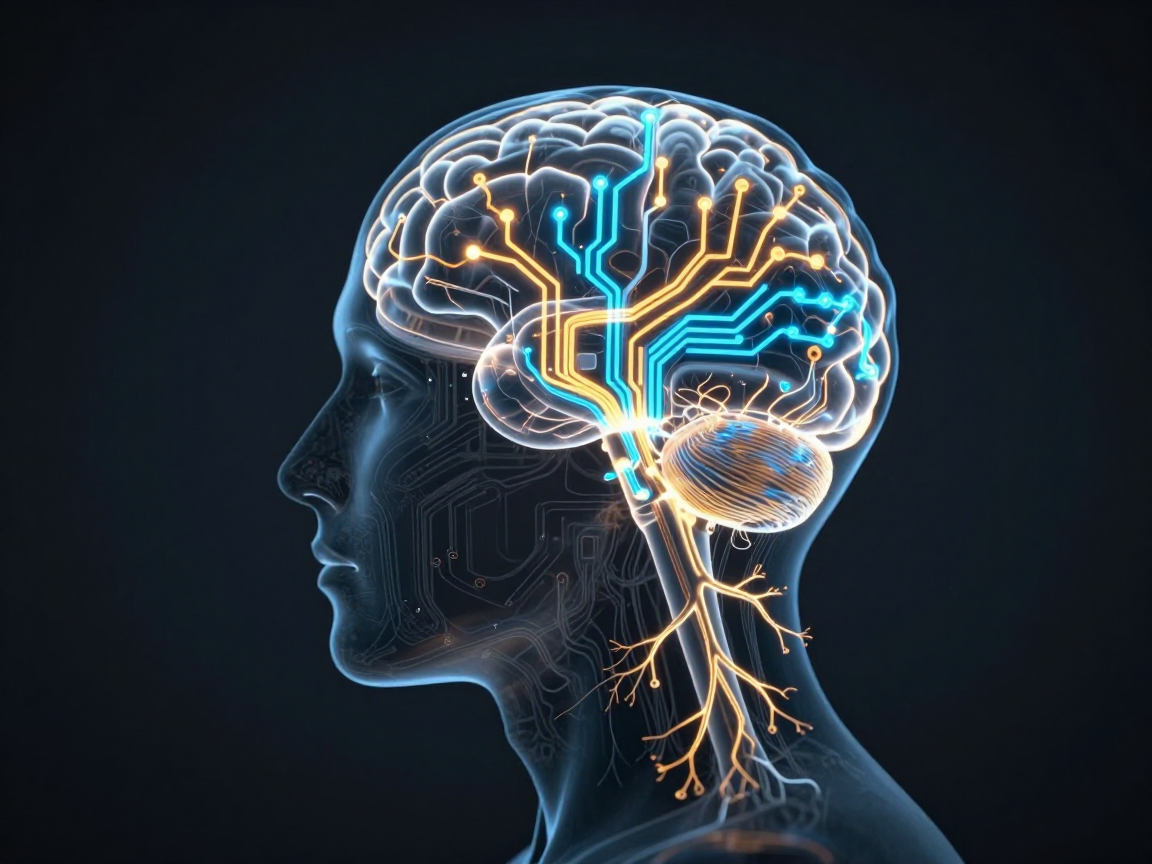
We often feel like passengers in our own lives, driven by impulses and reactions that seem to occur before we even have a chance to think. Whether it is the reflexive reach for a smartphone during a moment of boredom or the surge of anxiety that follows a minor mistake at work, these patterns feel like they are written into our very DNA. For decades, the prevailing scientific belief was that the adult brain was a static organ - that once we reached maturity, the circuitry was fixed and our cognitive habits were permanent. We were told that we were simply stuck with the hand we were dealt.
Fortunately, modern neuroscience has debunked the myth of the rigid brain. We now know that the human brain is remarkably plastic, possessing the ability to reorganize itself by forming new neural connections throughout life. This process, known as neuroplasticity, is the biological foundation for personal transformation. Rewiring the brain is not a metaphorical concept or a self-help gimmick; it is a physical reality. By understanding the mechanics of how our neural pathways are formed and strengthened, we can move from being passive observers of our habits to active architects of our mental landscape.
The Architecture of Habit: How Neural Pathways Form
To understand the process of rewiring the brain, we must first understand how the brain builds its current structures. Every thought, emotion, and behavior we repeat creates a physical path in the brain. Think of these paths like trails in a dense forest. The first time you walk through the woods, the path is difficult to navigate. You have to push through brush and navigate uneven terrain. However, if you walk that same path every day, the grass eventually dies, the stones are pushed aside, and a clear, smooth trail emerges.
This is essentially what happens at the cellular level. Neurons - the primary signaling cells of the brain - communicate with one another through synapses. When a specific behavior or thought pattern is repeated, the synaptic connection between the participating neurons becomes stronger. This is often summarized by Hebb’s Law: "neurons that fire together, wire together" . As these connections strengthen, the brain becomes more efficient at performing that specific task or producing that specific reaction. Eventually, the path becomes so well-worn that the brain chooses it automatically, bypassing the need for conscious decision-making. This is why habits feel so effortless and why breaking them feels like such an uphill battle.
Rewiring the brain requires us to stop traveling the old, overgrown paths and begin the laborious work of carving out new ones. This involves a dual process: weakening the old connections through disuse (synaptic pruning) and strengthening new connections through intentional practice. It is a biological renovation project that requires patience, consistency, and a deep understanding of the brain’s resistance to change.
Why We Get Stuck: The Survival Mechanism of the Brain
The brain’s primary objective is not your happiness or personal growth; it is your survival. To conserve energy, the brain is designed to automate as many processes as possible. Thinking takes a massive amount of glucose and oxygen. By turning behaviors into habits, the brain saves its metabolic resources for unexpected threats. This is why, even when a habit is clearly detrimental to our well-being - like chronic procrastination or negative self-talk - the brain resists changing it. To the primitive parts of the brain, the "known" is safe, even if it is painful, while the "unknown" is a potential threat.
Furthermore, many of our most stubborn neural pathways were formed during childhood or periods of high stress. During these times, our brains are in a state of hyper-plasticity, quickly encoding lessons about how to stay safe. If you learned early in life that being quiet and invisible was the best way to avoid conflict, your brain built a high-speed highway for that behavior. Decades later, when you try to speak up in a boardroom, you are fighting against a neural structure that has been reinforced thousands of times. Rewiring the brain in these instances requires more than just willpower; it requires a systematic approach to overriding the survival system.
A 5-Step Framework for Rewiring the Brain
Transformation does not happen through a single epiphany. It happens through the consistent application of new inputs. If you are ready to begin the work of rewiring the brain, use this structured framework to guide your progress.
1. Conscious Observation and Labeling
You cannot change a pattern you cannot see. The first step in rewiring the brain is to move the behavior from the subconscious "automatic" mind to the conscious "prefrontal" mind. This is often achieved through mindfulness. When you feel a reactive urge - such as the urge to complain, overeat, or distract yourself - stop and label it. Say to yourself, "I am having the thought that I need to check my phone" . This simple act of labeling creates a "gap" between the stimulus and the response, weakening the automaticity of the neural fire.
2. Pattern Interruption
Once you have identified the old pathway, you must physically or mentally interrupt it. Neural pathways are triggered by specific cues. If you always eat junk food while sitting on a specific chair, that chair has become a cue for that neural path. To interrupt the pattern, you must change the environment or the sequence of events. If you feel the old habit taking over, stand up, stretch, take five deep breaths, or move to a different room. This creates a momentary "glitch" in the circuit, preventing the old path from completing its cycle.
3. Conscious Redirection
Interrupting the old path is only half the battle; you must immediately provide the brain with a new path to follow. If you stop a negative habit but do not replace it with anything, the brain will eventually gravitate back to the old, easy trail. If you are trying to rewire the brain to stop reacting with anger, you must choose a specific replacement behavior, such as taking a deep breath and asking a clarifying question. The key is to have this replacement behavior decided in advance so you don't have to think about it in the heat of the moment.
4. Emotional Anchoring
New neural pathways are fragile. To make them "stick" , you need to flood the brain with neurochemicals that signal importance. Dopamine is the brain’s primary tool for reinforcement. When you successfully choose the new path, even in a small way, give yourself a moment of genuine celebration. Feeling a sense of accomplishment or pride releases dopamine, which acts like a biological glue, hardening the new synaptic connection. Without this emotional reward, the brain sees the new behavior as a chore rather than an upgrade.
5. Strategic Repetition (The Rule of 66)
While the popular myth suggests it takes 21 days to form a habit, research suggests the average is closer to 66 days, depending on the complexity of the behavior. Rewiring the brain is a game of volume. You must repeat the new behavior until it becomes more efficient than the old one. Consistency is more important than intensity. Doing a new practice for five minutes every day is far more effective for neural change than doing it for two hours once a week.
The Role of Environment and Physiology
We do not rewire the brain in a vacuum. Our biological state significantly impacts how easily our neurons can form new connections. If the brain is in a state of chronic stress, it produces high levels of cortisol, which can actually shrink the hippocampus - the area of the brain responsible for learning and memory - and make the brain more rigid. To optimize the process of rewiring the brain, we must attend to the basics of brain health:
- Sleep: During deep sleep, the brain performs "synaptic scaling" , essentially cleaning up the day’s neural activity and cementing new learning. Without sleep, the brain cannot physically lock in the changes you worked on during the day.
- Novelty: The brain craves new experiences. Trying new things - such as learning a language, traveling to a new place, or even brushing your teeth with your non-dominant hand - stimulates the production of BDNF (Brain-Derived Neurotrophic Factor). BDNF is often described as "Miracle-Gro for the brain" because it encourages the growth of new neurons and synapses.
- Movement: Physical exercise increases blood flow to the brain and further boosts BDNF levels. A brain that is physically active is significantly more "plastic" and easier to rewire than a sedentary one.
- Nutrition: The brain is composed of roughly 60 percent fat. Consuming healthy omega-3 fatty acids and antioxidants provides the raw materials needed to build new cell membranes and protect existing neural structures.
Navigating the Dip: When Change Feels Impossible
There is a specific phase in the process of rewiring the brain known as the "extinction burst" . This occurs when you have consistently denied an old habit for a period of time, and the brain makes one last, desperate attempt to revert to the old way. You might experience a sudden, intense craving or a feeling that all your progress has been lost. Many people quit during this phase because they believe they have failed.
In reality, the extinction burst is a sign that the old neural pathway is dying. It is the "last stand" of the old habit. If you can push through this period of intense resistance, the old pathway will begin to prune away significantly. Understanding this phenomenon allows you to view your struggle not as a sign of weakness, but as a sign of biological progress. The resistance you feel is the literal sensation of your brain being reshaped.
The Long-Term Perspective on Mental Flexibility
Rewiring the brain is a lifelong endeavor. It is not about reaching a state of perfection where you never have a negative thought or a bad impulse again. Rather, it is about developing the "meta-skill" of mental flexibility. The more you consciously change your habits, the better your brain becomes at the process of change itself. You are not just changing a single habit; you are training your brain to be more adaptable, resilient, and responsive to your conscious will.
As you embark on this journey, remember to be patient with the biological machinery. You are undoing years, perhaps decades, of reinforcement. Every time you catch yourself in an old pattern and choose a different response, you are performing a small miracle of biological engineering. You are proving that you are not a finished product, but a work in progress - a dynamic system capable of infinite evolution. The trails you walk today are the highways you will travel tomorrow. Choose your paths with intention, and the brain will follow.