Why You See What You Look For: How RAS Awareness Can Reprogram Your Reality
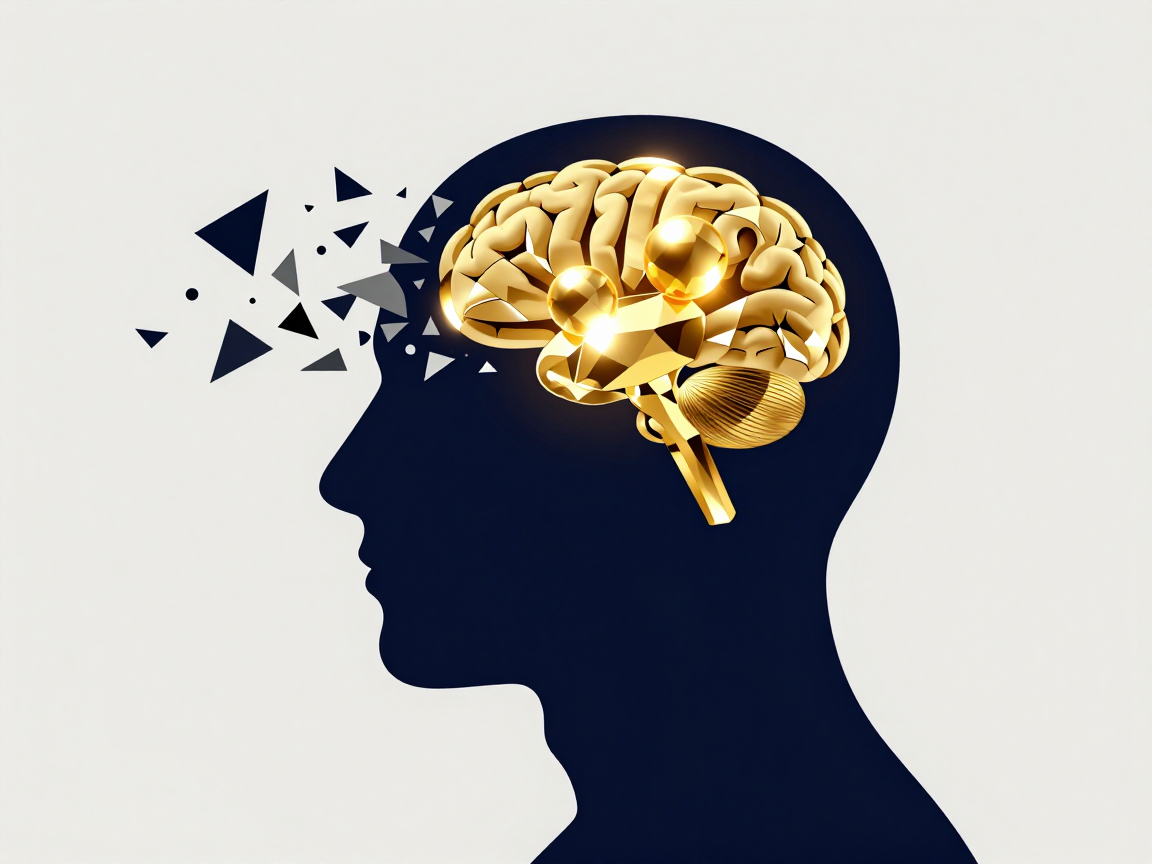
Have you ever decided to buy a specific model of car, perhaps a silver sedan or a vintage jeep, only to suddenly see that exact vehicle everywhere you go? It feels as if the world has been flooded with them overnight. This phenomenon is not a glitch in the matrix or a cosmic coincidence. It is the result of a small, powerful bundle of nerves at the base of your brain known as the Reticular Activating System.
At any given moment, your brain is bombarded with millions of bits of data. If you were to process every sound, smell, sight, and tactile sensation simultaneously, your conscious mind would collapse under the weight of the information. To prevent this, your brain employs a sophisticated gatekeeper. Building ras awareness is the process of understanding how this filter works and, more importantly, learning how to tell it what to look for. When you understand the mechanics of your focus, you transition from a passive observer of your life to an active architect of your reality.
The Gatekeeper of the Mind: What Is the RAS?
The Reticular Activating System is a network of neurons located in the brainstem that connects the spinal cord, cerebrum, and cerebellum. It serves as the bridge between your subconscious and conscious mind. Its primary function is to filter incoming sensory information and determine what is important enough to warrant your attention.
Think of the RAS as a high - level security guard at a busy nightclub. The guard lets in the VIPs - the information that aligns with your current goals, beliefs, and survival needs - while turning away the "noise" that doesn't matter. This is essential for survival. If you are walking through a crowded terminal, your RAS filters out the hum of voices until you hear your own name called over the loudspeaker. This is known as the "cocktail party effect", and it is a prime example of your brain's filtering system in action.
However, the RAS is not just reactive; it is programmable. It looks for what you tell it is important. If you are constantly worried about failure, your RAS will prioritize evidence of potential pitfalls. If you are focused on growth, it will begin to highlight resources, connections, and ideas that support that growth. This is why ras awareness is so foundational to personal development; you cannot change your life if your brain is tuned to a frequency that only picks up the things you want to avoid.
Why Most People Are Stuck in a Negative Filter
For many, the RAS is inadvertently programmed for survival rather than thriving. From an evolutionary perspective, this makes sense. Our ancestors needed a filter that prioritized threats - the sound of a rustling bush that might be a predator or the scent of smoke. In the modern world, this survival instinct often manifests as a hyper - awareness of social rejection, financial instability, or personal flaws.
When you lack ras awareness, you may fall into the trap of confirmation bias. This is the psychological tendency to search for, interpret, and recall information in a way that confirms one's preexisting beliefs. If you believe "people are generally unkind", your RAS will dutifully ignore the dozens of small acts of kindness you encounter daily and instead zoom in on the one person who cut you off in traffic.
This creates a self - sustaining loop. Your filter finds the evidence, your belief is strengthened, and your filter becomes even more efficient at finding that specific type of evidence. Breaking this cycle requires a conscious intervention. You must step back and realize that what you are seeing is not the "whole truth" but rather a curated version of reality provided by your internal gatekeeper.
The Mechanics of Reprogramming Your Filter
Reprogramming your brain sounds like science fiction, but it is a fundamental aspect of neuroplasticity. The RAS responds to specific inputs. By intentionally feeding your brain new directives, you can shift the parameters of what it considers "important". Here are the primary ways to cultivate ras awareness and begin the reprogramming process.
Clear Intent Setting
The RAS cannot function effectively with vague commands. If you tell yourself "I want to be successful", your brain doesn't know what to look for. Success is an abstract concept. However, if you define success as "finding three new clients who value my creative input", you have given your RAS a specific target. Suddenly, you might find yourself noticing a LinkedIn post you would have normally scrolled past, or remembering a contact you haven't spoken to in years.
Affirmations That Work
Affirmations are often dismissed as "wishful thinking", but their true value lies in RAS stimulation. When you repeat a statement of intent, you are essentially briefing your security guard on who to let into the club. The key is to use affirmations that feel believable to your nervous system. Instead of saying "I am a millionaire", which might trigger a rejection response in your brain, try "I am becoming more aware of financial opportunities every day". This invites the RAS to search for those opportunities without the cognitive dissonance of a blatant lie.
A 5-Step Framework for Developing RAS Awareness
To move from theory to practice, you can use the following framework to actively engage your brain's filtering system. Consistency is key here, as you are essentially competing with years of subconscious programming.
- Identify the Current Filter: For one day, carry a small notebook and jot down the recurring themes of your thoughts. Are you noticing things that make you feel small, capable, frustrated, or inspired? This is your baseline.
- Declare a Search Objective: Every morning, decide on one specific thing you want to notice. It could be "instances of people being helpful" or "creative solutions to problems". This is like giving your RAS a "wanted" poster.
- Visualization with Emotion: Spend five minutes visualizing your desired outcome. The RAS cannot distinguish between a vivid imagination and reality. By feeling the emotions associated with your goal, you signal to your brain that this state is important.
- The Evening Audit: Before bed, list three pieces of evidence you found during the day that support your new objective. This reinforces the filter and tells the brain "Yes, this is what I want you to keep finding".
- Refine and Repeat: As you get better at spotting what you want, get more specific. Transition from "noticing opportunities" to "noticing opportunities for career advancement in the tech sector".
The Role of RAS Awareness in Mental Health and Regulation
Beyond goal achievement, ras awareness is a powerful tool for emotional regulation and anxiety management. Anxiety is often the result of an RAS that is stuck in a "threat - detection" loop. When your brain is convinced that the world is dangerous, it filters out all signs of safety. This keeps the nervous system in a state of high alert, or "fight or flight".
By practicing ras awareness, you can learn to manually override this system. This doesn't mean ignoring real problems, but it does mean intentionally looking for "glimmers" - the opposite of triggers. Glimmers are small moments of safety, beauty, or connection. When you train your brain to look for glimmers, you are teaching your nervous system that it is okay to downshift from survival mode into a state of regulation.
This shift is biological. When the RAS stops prioritizing threat signals, it allows the prefrontal cortex - the part of the brain responsible for logic, creativity, and calm - to take the lead. You become less reactive and more responsive. You start to see that even in difficult circumstances, there are resources and paths forward that you simply could not see when you were stuck in a fear - based filter.
Practical Exercises to Sharpen Your Focus
If you want to test your ras awareness in real - time, try these simple exercises. They help strengthen the neural pathways between your conscious intent and your subconscious filter.
- The Color Challenge: While walking or driving, pick a rare color - like bright purple or lime green. Commit to finding five things of that color. Notice how quickly your brain finds them once the command is given.
- The Gratitude Spotter: Throughout your workday, try to find three things your coworkers did well. This forces your RAS to look past personal annoyances and find value in others.
- The "How Might This Work?" Game: When faced with a problem, instead of saying "This won't work", ask your brain "How might this work?". This simple shift in phrasing forces the RAS to search for solutions rather than obstacles.
Overcoming the "Wait and See" Mentality
Many people live with a "wait and see" mentality. They wait for things to get better before they change their outlook. However, neurobiology suggests that we must change our outlook to see the things that will make life better. Without ras awareness, you are effectively wearing a blindfold and wondering why the room is dark.
It is important to remember that the RAS is a neutral tool. It doesn't care if it's looking for misery or magic; it simply follows the instructions provided by your dominant thoughts and beliefs. If you don't take charge of those instructions, they will be set by your past experiences, your fears, or the media you consume.
Taking control of your RAS is not about toxic positivity or ignoring the complexities of life. It is about cognitive efficiency. It is about making sure that when an opportunity, a solution, or a moment of peace presents itself, you actually have the eyes to see it. By building ras awareness, you reclaim the power of your attention. You stop being a victim of your environment and start becoming a conscious participant in your own evolution. The world hasn't changed, but because your filter has, your experience of it will be fundamentally transformed.