How to Hack Your Brain's Filter: The Science of RAS and Visualization for Real Change
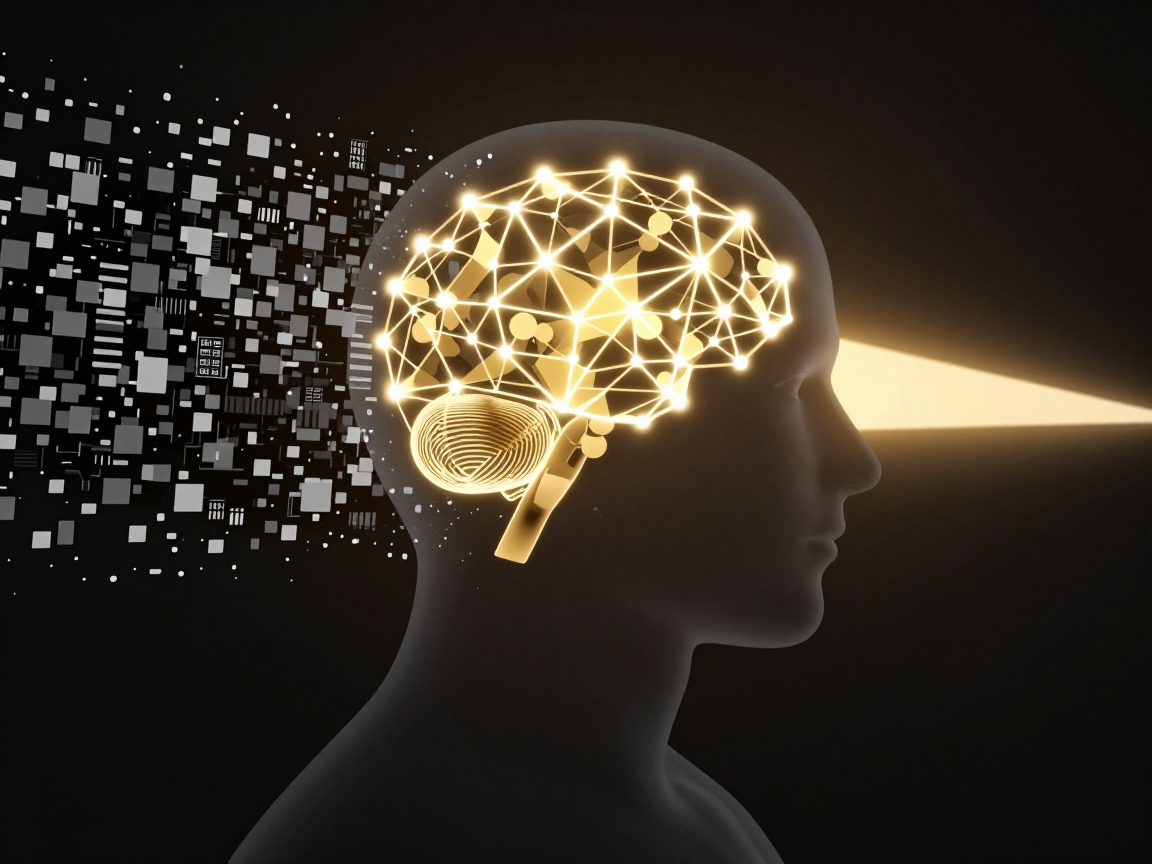
Every second you are awake, your brain is bombarded by millions of bits of data. From the subtle hum of the refrigerator to the texture of your socks against your skin, your sensory organs are constantly relaying information to your mind. If you had to process all of this consciously, your brain would likely short - circuit within minutes. To prevent this overwhelm, the human brain evolved a sophisticated filtering system known as the Reticular Activating System (RAS). This bundle of nerves at our brainstem acts as a gatekeeper, deciding what information is important enough to reach your conscious awareness and what should be discarded as background noise.
Understanding the synergy between the ras and visualization is the key to moving from a state of passive observation to active creation. When you learn how to program this filter, you stop being a victim of your environment and start becoming an architect of your reality. This is not about magic or mystical manifestations; it is about neurobiology. By intentionally directing your focus, you can train your brain to spot opportunities, resources, and solutions that were previously invisible to you. This guide will explore how to master the connection between the ras and visualization to bridge the gap between where you are and where you want to be.
Understanding the Bouncer of the Brain: What is the RAS?
The Reticular Activating System is a network of neurons located in the brainstem that mediates overall levels of consciousness. Think of it as the bouncer at the door of an exclusive club. The club is your conscious mind, and the crowd outside is the massive influx of data from the world. The RAS has a very specific set of instructions on who to let in. Usually, it prioritizes things that are necessary for survival, such as your name being called in a crowded room or the sound of a predator - or in modern times, a car horn - approaching.
However, the RAS also filters for things that you have deemed important through your thoughts and beliefs. This is why, when you decide you want to buy a specific model of a silver car, you suddenly see that exact car everywhere. The cars were always there, but your RAS was filtering them out because they were not relevant to your current focus. By changing your internal settings, you change what you perceive in the external world. This fundamental biological function is what makes the relationship between the ras and visualization so potent.
The Intersection of RAS and Visualization
Visualization is the practice of mentally rehearsing a specific outcome or behavior. When you engage in high - quality visualization, you are not just daydreaming; you are providing your RAS with a new set of instructions. The brain is remarkably poor at distinguishing between a vividly imagined event and a real one. When you visualize, you activate the same neural pathways that would fire if you were actually experiencing the event.
By consistently practicing ras and visualization techniques, you are essentially telling your brain, "This is important to me" . As a result, your biological filter begins to look for evidence that supports this new mental image. If you visualize yourself becoming a successful public speaker, your RAS will start to notice workshops, books on communication, or even small opportunities to speak that it would have otherwise ignored. This creates a powerful feedback loop where your internal focus dictates your external discoveries.
The Selective Attention Phenomenon
Psychologists often refer to this as selective attention or the "Baader - Meinhof phenomenon" . It is the cognitive bias where something you recently learned or focused on suddenly seems to appear everywhere. While it can feel like a coincidence, it is actually your RAS working at peak efficiency. When we apply this to intentional goal setting through ras and visualization, we are leveraging a natural brain function to accelerate our progress. Instead of hoping for luck, we are tuning our biological hardware to pick up the specific frequencies of our goals.
Why Most Visualization Fails to Program the Brain
Many people attempt visualization but see very little change in their reality. This usually happens because they are treating visualization as a passive wish rather than a programming command. For the RAS to accept a new instruction, the visualization must be intense, consistent, and emotionally charged. The brain prioritizes information that is tied to strong emotions because, from an evolutionary standpoint, things that make us feel strong emotions are usually tied to survival.
If you visualize a goal but feel doubt, fear, or a lack of connection to the image, your RAS receives conflicting signals. It defaults to your old programming because that programming feels safer and more established. To successfully integrate ras and visualization, you must bridge the gap between the mental image and your physiological state. You must convince your brain that the future you are imagining is already a reality in the present moment.
A Five - Step Framework to Program Your RAS
To effectively use ras and visualization to change your life, you need a structured approach. Simply closing your eyes for thirty seconds once a week is not enough to override years of default filtering. Follow this framework to create lasting neurological shifts.
- Define Your Filter Parameters with Precision
The RAS cannot filter for "success" because the word is too vague. You must provide specific, concrete details. Instead of visualizing "wealth" , visualize the specific number in your bank account, the texture of the paper on a contract you are signing, or the specific view from your new office window. The more detail you provide, the clearer the instruction to your brain.
- Engage All Five Senses
Effective ras and visualization requires more than just sight. To fully trick the brain into believing an event is real, you must incorporate sound, smell, touch, and even taste. What does the air feel like in your desired future? What is the specific sound of the voices around you? Engaging multiple senses creates a richer neural map, making it easier for the RAS to identify similar patterns in the real world.
- Anchor the Vision with High - Intensity Emotion
Emotion is the fuel for the RAS. While visualizing, you must cultivate the feeling of gratitude or excitement as if the event has already happened. This emotional state signals to the brain that this information is of the highest priority. If you can feel the joy of achievement now, your brain will work tirelessly to close the gap between your current reality and that feeling.
- Repeat the Programming Daily
Neural pathways are like trails in a forest. The more you walk them, the clearer and more permanent they become. Daily repetition of your ras and visualization practice ensures that the new filter remains active. The best times for this are immediately upon waking and right before sleep, as the brain is in a more suggestive theta or alpha state during these transitions.
- Look for "Evidence" and Act Immediately
Once you have set the filter, you must be prepared to act. Your RAS will begin to highlight opportunities. You might see a specific headline, hear a snippet of a conversation, or have a "random" thought to call someone. These are not accidents; they are the filtered results of your programming. When these signals appear, you must take action to reinforce the new neural pathway.
The Role of Cognitive Dissonance in Change
As you begin to master the link between the ras and visualization, you may experience a sense of discomfort known as cognitive dissonance. This occurs when your new internal vision clashes with your current external reality. Many people take this discomfort as a sign that their visualization is not working. In reality, it is a sign that the brain is beginning to reorganize itself.
Your RAS is trying to resolve the conflict between what you are visualizing and what you are seeing. By staying consistent with your visualization, you force the brain to find ways to align the external world with the internal one. This is where the "luck" associated with successful people often comes from. They aren't necessarily luckier; their RAS is simply tuned to a higher resolution for opportunity than the average person.
Checklist: Maximizing Your Practice
To ensure your ras and visualization sessions are as effective as possible, use this checklist before you begin:
- Environment: Are you in a quiet space where you won't be interrupted? External distractions can break the sensory immersion needed for RAS programming.
- Presence: Are you visualizing in the first person? You should see the world through your own eyes, not as if you are watching a movie of yourself. This is crucial for neural rehearsal.
- Consistency: Have you scheduled a specific time for your practice? Consistency is more important than duration.
- Believability: While your goals should be big, they must be something your brain can accept as possible. If the leap is too great, your RAS may reject the instruction as "noise" . Start with a challenging but reachable version of your vision.
- Release: After your session, can you let go of the "how"? Your job is to set the filter; the RAS's job is to find the path. Over - analyzing the process can create stress that shuts down the creative filtering process.
Moving Beyond the Mind: Real World Integration
The ultimate goal of ras and visualization is to change your behavior. While the internal work is foundational, it must be met with external effort. The RAS makes the path visible, but you still have to walk it. When you notice a new opportunity because your brain has been primed to see it, the speed at which you move toward that opportunity determines your success.
Think of the RAS as a high - performance GPS system. Visualization is how you input the destination. Once the coordinates are set, the GPS will show you the turns, the shortcuts, and the hazards to avoid. However, the GPS cannot drive the car for you. By combining the biological power of the ras and visualization with disciplined, real - world action, you create an unstoppable momentum toward your desired life.
Final Thoughts on the Reticular Activating System
We often think of our perception as an objective reflection of the world, but it is actually a highly curated experience. We do not see the world as it is; we see the world as we are programmed to see it. By taking control of the ras and visualization process, you are effectively taking the wheel of your own consciousness.
You have a biological superpower sitting at the base of your brain, waiting for instructions. Stop letting it be programmed by the news, social media, or past failures. Instead, use the science of visualization to give your RAS a new mission. When you change your filter, you change your results. The world is full of the very things you are looking for - you just need to tell your brain to stop ignoring them.