Why Your Brain Clings to What Isn't True: A Deep Dive into the Psychology of Belief
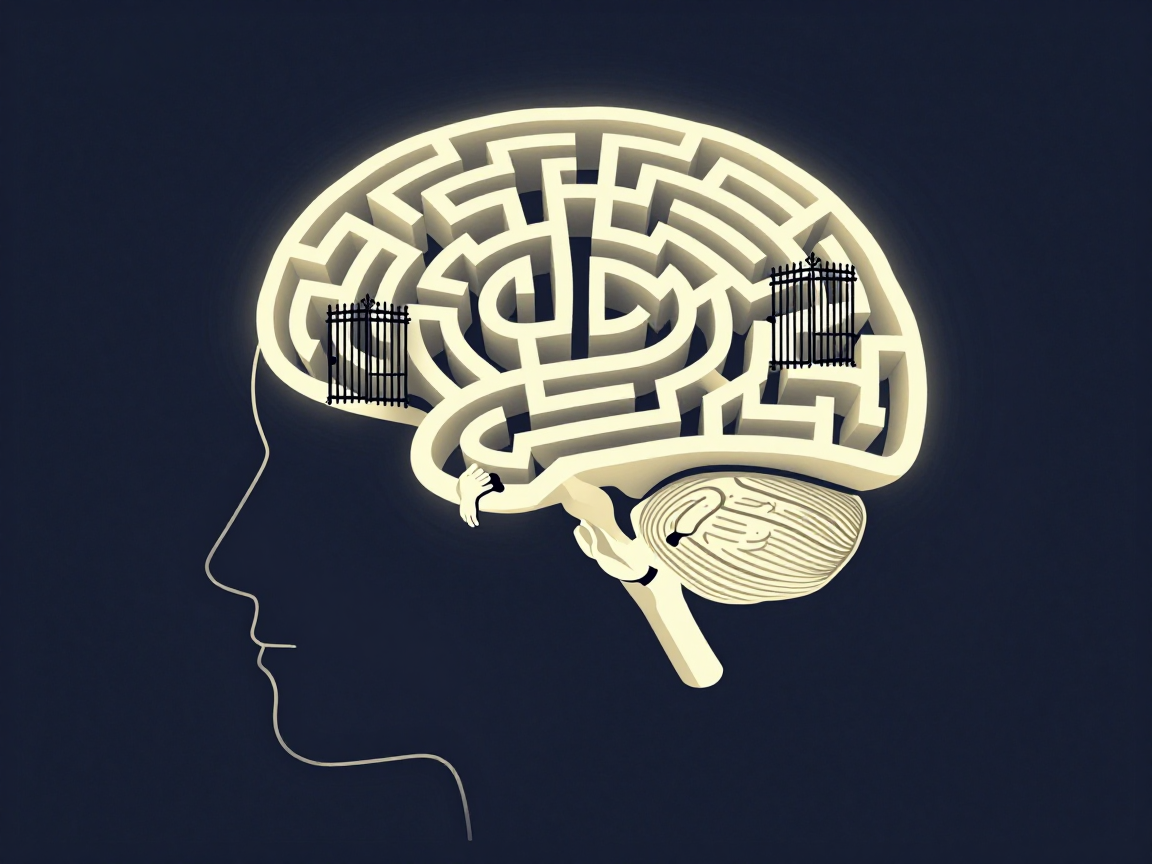
We like to think of ourselves as rational observers of reality, gathering facts and weighing evidence before reaching a logical conclusion. In our own minds, we are the heroes of a story driven by objective truth. However, decades of cognitive research suggest a much different reality. The psychology of belief reveals that our convictions are rarely the result of cold, hard logic. Instead, they are complex tapestries woven from emotional needs, social pressures, and biological shortcuts designed for survival rather than accuracy.
At its core, the psychology of belief is about how the human brain manages uncertainty. To the brain, the unknown is a threat. By forming a belief—whether it is about a political ideology, a religious tenet, or a personal capability—we create a mental map that helps us navigate a chaotic world. These maps do not have to be perfectly accurate to be useful; they just have to be consistent enough to keep us moving. Understanding this mechanism is the first step toward reclaiming agency over our own minds and questioning the scripts we have been following for years.
The Architecture of Conviction: How the Psychology of Belief Shapes Our Reality
Beliefs are not just abstract thoughts; they are neurological shortcuts. The brain is an energy-hungry organ, and processing every new piece of information from scratch would be incredibly inefficient. To save energy, the brain relies on heuristics—mental shortcuts that allow us to make quick judgments. The psychology of belief explains that once a belief is formed, it acts as a filter for all subsequent information. This is known as "top-down processing," where our existing concepts dictate how we perceive new sensory data.
When we encounter information that fits our existing mental map, our brain rewards us with a hit of dopamine. It feels good to be right. Conversely, when we face information that contradicts our core beliefs, the brain’s alarm system—the amygdala—lights up. This is the same part of the brain that responds to physical threats. In a very literal sense, having our deeply held beliefs challenged feels like a physical attack. This neurological foundation explains why it is so difficult to change someone’s mind using only facts; you aren't just arguing against an idea, you are triggering a survival response.
Furthermore, the psychology of belief suggests that our brains are "prediction engines." We are constantly trying to anticipate what will happen next. A stable belief system allows for more accurate (or at least more confident) predictions. If we were to constantly update our beliefs based on every new piece of data, we would live in a state of perpetual cognitive overload. Stability, even if built on a flawed foundation, is often prioritized over the volatility of truth.
Why Truth Often Takes a Backseat to Comfort and Consistency
One of the most powerful drivers within the psychology of belief is the need for internal consistency. Leon Festinger, a renowned psychologist, coined the term "cognitive dissonance" to describe the mental discomfort we feel when we hold two conflicting beliefs or when our behavior contradicts our values. To resolve this tension, we rarely change our behavior; instead, we change our beliefs or find ways to justify the inconsistency.
This leads us to the most famous of all cognitive traps: confirmation bias. This is the tendency to search for, interpret, and remember information in a way that confirms our preconceptions. In the digital age, this bias is amplified by algorithms that feed us exactly what we want to hear. The psychology of belief suggests that we are not actually looking for the truth; we are looking for permission to keep believing what we already believe.
Consider how this plays out in personal growth. If a person believes they are inherently "bad with money," they will subconsciously notice every financial mistake they make while ignoring instances of responsible saving. Their brain is actively curating their reality to ensure the belief remains intact. To the brain, being "right" about being a failure is safer than the uncertainty of trying to succeed. This self-reinforcing loop is a cornerstone of the psychology of belief, creating a psychological "gravity" that makes it hard to escape old patterns.
The Social Glue: Belief as an Identity Marker and Tribal Signal
We cannot talk about the psychology of belief without discussing our need for belonging. For the vast majority of human history, being cast out of a tribe meant certain death. Consequently, our brains evolved to prioritize social cohesion over individual accuracy. We often adopt the beliefs of our community not because we have vetted them, but because they serve as a "social password" that grants us entry and safety.
When a belief becomes tied to our identity, it becomes almost impossible to dislodge. If you identify as a member of a specific group, and that group holds a specific belief, rejecting that belief feels like rejecting your people. The psychology of belief shows that in these cases, the "truth" is secondary to the "utility" of the belief. The belief isn't there to describe the physical world; it is there to signal loyalty and shared values.
This social pressure explains why highly intelligent people can believe seemingly irrational things. Intelligence is no shield against the psychology of belief; in fact, smart people are often better at "motivated reasoning"—the act of using their cognitive skills to come up with complex justifications for their existing biases. They aren't using their brain to find the truth; they are using it to protect their social standing and internal narrative.
The Anatomy of Resistance: 7 Reasons Your Brain Rejects Facts
Understanding why we stay stuck requires looking at the specific mechanisms the brain uses to deflect challenges. This is often referred to as the "Backfire Effect," where being presented with contradictory evidence actually strengthens a person’s original conviction. In the context of the psychology of belief, these are the primary defense mechanisms:
- Identity Protection: If the belief is a pillar of who you are, the brain treats the evidence as a virus to be destroyed.
- Emotional Anchoring: Many beliefs are formed during times of high emotion or trauma, making them "stickier" than those formed through logic.
- The Cost of Being Wrong: Admitting a mistake can feel like a loss of status or a waste of the time and energy already invested in the old belief (Sunk Cost Fallacy).
- Narrative Complexity: We prefer simple stories over complex truths. If a new fact ruins a simple narrative, the brain is likely to discard the fact to keep the story neat.
- Cognitive Ease: It is mentally "expensive" to rebuild a belief system. The brain naturally chooses the path of least resistance, which is staying the course.
- Social Ostracization: The fear that changing a mind will result in losing a support network or being viewed as a traitor to the group.
- Selective Perception: The brain literally filters out sensory details that don't match our expectations, meaning we might not even "see" the evidence in front of us.
A Practical Framework for Intellectual Humility: How to Update Your Mental Maps
While the psychology of belief reveals how easily we are misled, it also provides a roadmap for how to be better. Developing "intellectual humility"—the recognition that your beliefs might be wrong—is a skill that can be practiced. Use the following framework to begin auditing your own convictions.
- Step 1: Identify the "Body Map": Pay attention to your physical reactions during a debate or when reading an article. If you feel your chest tighten, your jaw clench, or your face get hot, you are no longer in a logical state. You are in a defensive state. Step back until the physical "threat" response fades.
- Step 2: The "Steel Man" Exercise: Instead of attacking the weakest version of an opposing view (straw manning), try to build the strongest possible version of it. Can you explain the other side so well that an advocate of that view would say, "Yes, that is exactly what I believe!"? If you can't, you don't understand the issue well enough to have a firm belief.
- Step 3: Separate Identity from Idea: Practice language that detaches your ego from your thoughts. Say, "I currently hold the view that..." rather than "I am a..." When you treat beliefs as tools rather than identity markers, they become much easier to upgrade when a better tool comes along.
- Step 4: Actively Search for Disconfirming Evidence: Make it a habit to look for reasons why you might be wrong. If you are convinced a certain lifestyle choice is the only healthy one, spend time reading the strongest scientific arguments against it. The goal isn't necessarily to change your mind, but to soften the rigid edges of your certainty.
- Step 5: Audit Your Information Diet: Are you only consuming content that makes you feel "right" and morally superior? Introduce variety to break the feedback loops that the psychology of belief thrives on.
The Role of Emotional Resonance in Shifting Mindsets
If logic doesn't change beliefs, what does? The answer is often found in the realm of emotion and experience. Because beliefs are frequently anchored in our emotional history, they usually require an emotional "unseating" to change. This is why storytelling is such a powerful tool for persuasion. A story bypasses the logical filters and appeals directly to our empathy and shared humanity.
In personal transformation, shifting a belief often requires what psychologists call a "corrective emotional experience." For example, a person who believes they are "unlovable" will not be convinced otherwise by a list of their good qualities or a logical argument. They change that belief when they experience a consistent, safe relationship that contradicts their internal narrative over time. The psychology of belief tells us that we must feel the new truth before we can fully think it. Change happens when the cost of holding onto the old belief becomes more painful than the fear of the unknown.
Toward a More Flexible Mind
Understanding the psychology of belief is not about becoming a person who believes in nothing. It is about becoming a person who holds their beliefs with a lighter grip. Our mental maps are essential for functioning, but we must remember that the map is not the territory. The world is far more complex, beautiful, and nuanced than any single belief system can capture.
When we stop viewing our beliefs as "us" and start viewing them as "current working hypotheses," we open the door to genuine growth. We become less reactive, more curious, and more capable of connecting with people who see the world through a different lens. In the end, the goal of studying the psychology of belief is to move from a state of blind conviction to a state of conscious awareness—where we choose our perspectives based on values, empathy, and evidence rather than fear and habit.