The Architecture of Desire: Why We Love Who We Love and the Deep Psychology of Attraction
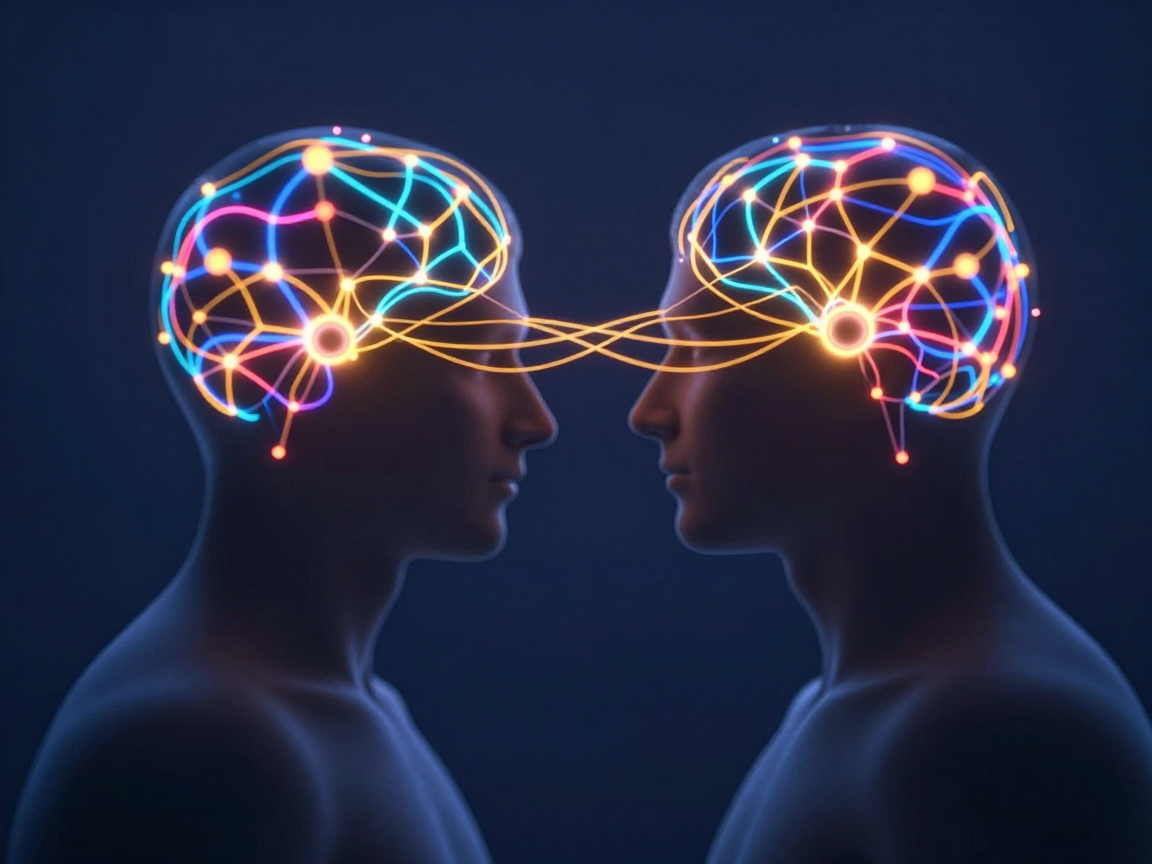
We have all felt it at some point—that sudden, inexplicable pull toward another person that defies logic. It is the feeling of walking into a crowded room and having your eyes lock onto someone, sensing an immediate and undeniable charge in the air. We often call this magic, chemistry, or fate, but behind these romantic labels lies a complex web of biological signals, childhood imprints, and social conditioning. The psychology of attraction is not nearly as random as it feels; instead, it is a sophisticated internal guidance system that helps us navigate the social world to find a partner who meets our deepest, often hidden, needs.
Understanding the psychology of attraction is about more than just decoding dating habits. It is an exploration into the very core of human nature. Why are we drawn to certain faces? Why do we find ourselves repeating the same relationship patterns with different people? By peeling back the layers of our subconscious preferences, we can gain a clearer picture of how our brains decide who is worth our time and affection. This journey into the human psyche reveals that while the heart has its reasons, the mind has a blueprint it has been building since the day we were born. When we understand these blueprints, we move from being passive participants in our romantic lives to active, conscious architects of our connections.
The Biological Foundation: Why We Are Wired for Connection
Long before we ever consider a person’s personality or career goals, our biology is hard at work making split-second assessments. From an evolutionary perspective, the psychology of attraction is primarily concerned with survival and reproduction. Our ancestors needed to identify partners who were healthy, fertile, and capable of providing resources or protection. While our modern dating landscape has changed, these primitive instincts remain deeply embedded in our nervous system, operating as a background program we rarely notice.
Physical indicators play a massive role in this initial biological vetting. Research consistently shows that we are attracted to facial symmetry because it is often interpreted by our subconscious as a marker of genetic health and developmental stability. This does not mean a person has to look like a supermodel to be attractive; rather, our brains are looking for a sense of balance. Additionally, the role of scent is often underestimated. We are subconsciously drawn to the pheromones of individuals whose immune system genes differ from our own, a phenomenon known as the Major Histocompatibility Complex (MHC) effect. This biological mechanism ensures that potential offspring would have a more robust immune system, proving that the psychology of attraction is happening at a molecular level before a single word is even spoken.
Beyond just genes, we are also susceptible to the "Halo Effect." This is a cognitive bias where we perceive physically attractive people as having other positive traits, such as intelligence, kindness, or honesty. When we find someone visually appealing, our brain’s reward center—the ventral striatum—fires up, releasing dopamine. This creates a feedback loop that encourages us to stay near the person, even before we know their name. In essence, our biology creates a "yes" or "no" signal that sets the stage for everything that follows.
The Similarity Principle: Why We Seek Our Reflection
There is a common cliché that "opposites attract," but when we look at the actual psychology of attraction, the opposite is usually true. While a person who is our total polar opposite might seem exciting for a brief period, long-term connection is almost always built on the "Similarity-Attraction Effect." We are fundamentally drawn to people who share our values, background, interests, and even our level of physical attractiveness. This is sometimes called assortative mating, and it serves a vital psychological function: it provides us with a sense of validation.
When we meet someone who shares our worldview, it reinforces our own sense of reality. It feels safe and comfortable. We are less likely to experience the friction of constant disagreement, and we can build a shared life more easily when our goals align. This similarity extends to subtle things as well, such as communication styles and even the pace at which we move through life. In the grand scheme of the psychology of attraction, similarity creates a bridge of understanding that makes the vulnerability of love feel slightly less risky.
Psychologists also point to the "Matching Hypothesis," which suggests that people are most likely to form committed relationships with those who are about as attractive as they are. This isn't just about vanity; it’s about social equilibrium. When we are with someone of a similar "social value," we feel less insecure about the relationship’s stability. While we might admire someone we perceive as "out of our league," the psychology of attraction usually steers us toward someone who feels like a peer, reducing the threat of rejection or abandonment.
The Mere Exposure Effect: The Power of Familiarity
One of the most fascinating aspects of how we form connections is the "Mere Exposure Effect." This psychological phenomenon suggests that we tend to develop a preference for people simply because they are familiar to us. In classic studies, researchers found that students were more likely to be attracted to peers they saw frequently in class, even if they never spoke to them. This is why many romances blossom in workplaces, apartment buildings, or friend groups where people are consistently in each other’s orbits.
From a survival standpoint, familiarity equals safety. If we see someone repeatedly and they do not harm us, our brains categorize them as safe. This is a crucial pillar in the psychology of attraction because it explains why "the spark" is not always instantaneous. Sometimes, attraction is a slow burn that builds as a person’s presence becomes a predictable and comforting part of our daily life. The more we see someone, the more our brain processes their features with ease, leading to a positive emotional response that we eventually interpret as attraction. This is why the person you found "just okay" on a first date might become incredibly attractive after six months of shared coffee breaks and casual conversation.
Attachment Theory and the Psychology of Attraction
If biology and social proximity set the stage, our childhood experiences write the script. Attachment theory is perhaps the most significant framework for understanding the psychology of attraction in adulthood. Developed by John Bowlby and Mary Ainsworth, this theory suggests that the bond we formed with our primary caregivers creates an "internal working model" for all future relationships.
Those with a secure attachment style tend to be attracted to people who are reliable, warm, and emotionally available. However, for those with insecure attachment styles—such as anxious or avoidant—the psychology of attraction can take a more turbulent turn. Someone with an anxious attachment style might find themselves magnetically drawn to avoidant partners who pull away, as this dynamic mirrors the inconsistent love they may have experienced as children. In these cases, what we call "chemistry" is actually the subconscious recognition of a familiar trauma.
We are often attracted to people who give us a second chance to solve our oldest emotional wounds, even if that process is painful. This is why some people feel a lack of "chemistry" with healthy, available partners; their nervous system is so habituated to the high-stakes chase of an unavailable person that stability feels like boredom. Recognizing this is a pivotal moment in mastering the psychology of attraction, as it allows us to distinguish between a healthy pull and a trauma-informed reaction.
The Misattribution of Arousal: Why Drama Feels Like Love
A surprising quirk in the psychology of attraction is known as the "Misattribution of Arousal." In a famous study by Dutton and Aron, men were more likely to find a woman attractive if they met her while crossing a shaky, high suspension bridge than a low, stable one. Why? Because the physiological symptoms of fear—increased heart rate, sweaty palms, and shortness of breath—are nearly identical to the symptoms of romantic attraction. Their brains mislabeled the fear of the height as the excitement of a new connection.
This explains why "drama" can be so addictive in relationships. If a dynamic is filled with conflict, uncertainty, or high-intensity situations, our brains may interpret the resulting physical arousal as deep passion. It’s also why many people find themselves falling for others in high-stress environments, such as during a crisis or a demanding project at work. When we understand the psychology of attraction, we can pause and ask: "Am I attracted to this person, or am I just in a high-intensity situation with them?"
6 Steps to Understanding Your Own Romantic Magnetism
To move from passive attraction to conscious choice, it is helpful to have a framework for self-observation. Here is a step-by-step guide to decoding your own patterns within the psychology of attraction:
- Audit Your Relationship History: List your last five major crushes or partners. What traits do they share? Look for patterns in personality, emotional availability, and even their flaws. Do they all have a similar "vibe"?
- Identify the Feeling: When you feel a spark, ask yourself what it feels like. Is it a sense of calm and safety, or is it an anxious, "butterfly" feeling in your stomach? Often, high-anxiety chemistry is a sign of an insecure attachment trigger rather than true compatibility.
- Map Your Core Values: Write down your top five non-negotiable values (e.g., honesty, growth, family, freedom). Does the psychology of attraction usually lead you to people who embody these, or are you prioritizing surface-level traits like status or appearance?
- Observe Your Reaction to Consistency: Pay attention to how you feel when someone is consistently available and kind. Do you find it "boring"? If so, your brain may be habituated to the high-highs and low-lows of emotional instability.
- Question the "Type": We often say we have a "type," but this is usually just a collection of subconscious preferences based on past familiarity. Try to date outside this self-imposed boundary to see if attraction can grow from a different, healthier foundation.
- Practice Mindful Dating: Slow down the process of falling in love. Give yourself time to see a person in different contexts—when they are stressed, when they are with family, or when things don't go their way—before deciding that they are "the one."
Why Chemistry Can Sometimes Be a Warning Sign
We are taught by movies and music that "chemistry" is the ultimate goal. However, in the realm of the psychology of attraction, intense, overwhelming chemistry can sometimes be a red flag. When we meet someone and feel an immediate, obsessive pull, it often means that they have successfully triggered our subconscious defenses or old wounds. This is sometimes called "the trauma bond" or "the anxious-avoidant trap."
True, sustainable attraction often looks different than the chaotic fire of a Hollywood romance. It involves a steady build of mutual respect, shared humor, and emotional safety. While initial physical attraction is important, it should ideally be the starting point rather than the entire destination. When we understand the psychology of attraction, we realize that the most successful relationships are often those where the "spark" is accompanied by a deep sense of friendship and ease. If a person makes you feel constantly off-balance or causes you to lose sleep from the very beginning, it might not be love; it might just be your nervous system reacting to a perceived threat or a familiar pattern of neglect.
Mastering the Art of Attraction
The psychology of attraction is a beautiful, intricate puzzle that blends our evolutionary past with our personal history. It is driven by the ancient parts of our brain seeking survival and the newer parts of our brain seeking meaning and emotional fulfillment. By learning why we are drawn to certain people, we can begin to take the reins of our romantic lives. We can move away from the "fate" mindset and toward a more empowered approach to connection.
Ultimately, attraction is a conversation between two people that happens on many levels—physical, intellectual, emotional, and spiritual. It is rarely a single lightning bolt and more often a series of conscious and subconscious signals that tell us, "This person is worth the risk of vulnerability." By staying curious about your own reactions and understanding the hidden forces at play, you can cultivate relationships that are not only exciting but also deeply nourishing. The spark is just the beginning; the real magic lies in the conscious choice to build a life with someone who truly mirrors the best parts of who you are and who you want to become.