Why Your Brain Distorts the Truth: Navigating the Gap Between Perception vs Reality for Lasting Clarity
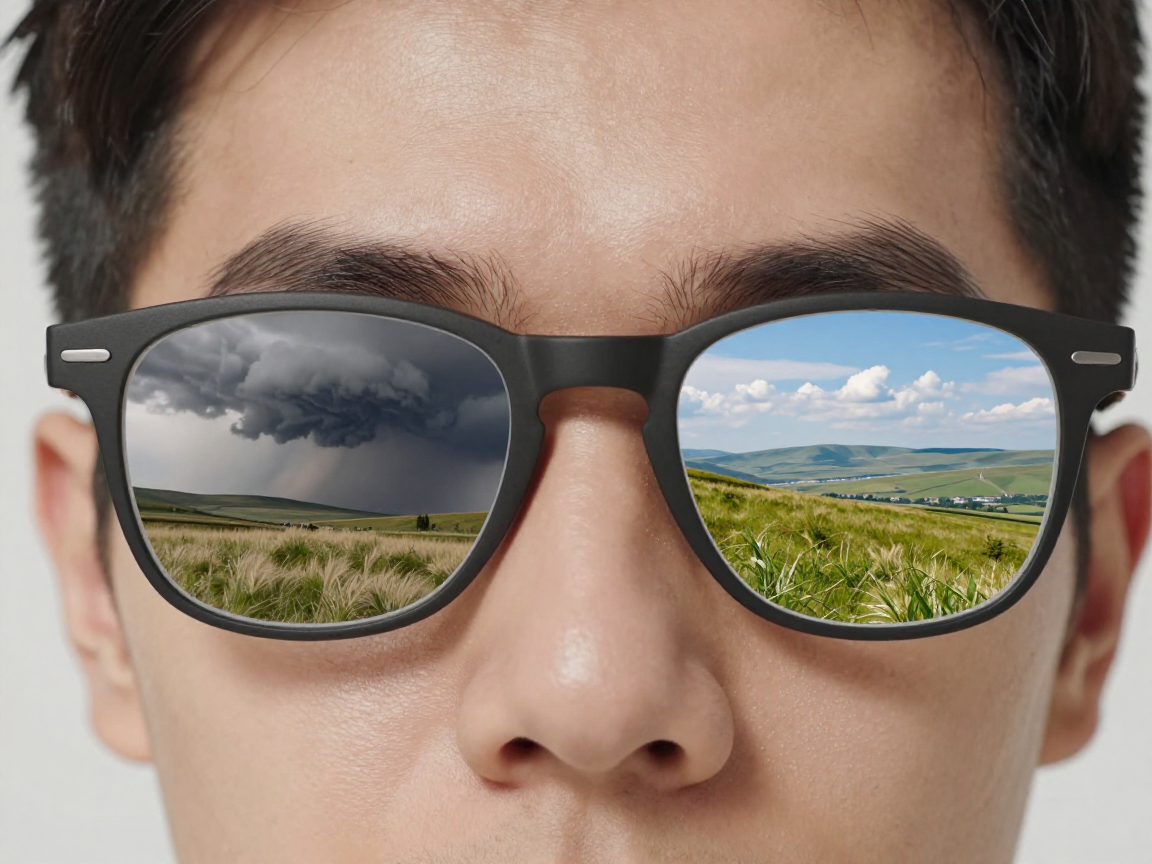
We move through the world under the assumption that our eyes and ears are impartial witnesses to the truth. We believe that if we see something, it is real, and if we feel something, it must be justified by the facts of our environment. However, the disconnect between perception vs reality is one of the most profound and persistent challenges of the human experience. What we perceive is not a direct video feed of the world—it is a heavily edited, filtered, and narrated interpretation constructed by a brain that prioritizes survival over accuracy.
Understanding the friction between perception vs reality is the first step toward emotional intelligence and mental clarity. When we realize that our personal perspective is just one possible version of the truth, we open the door to better communication, reduced stress, and a more grounded way of living. This exploration is not about doubting everything you see, but about developing the discernment to know when your internal map does not match the external territory. To truly understand our lives, we must acknowledge that our brains are not passive observers; they are active storytellers, constantly filling in the gaps of our sensory input with assumptions, memories, and expectations.
The Biological Lens: How Your Brain Filters the World
The human brain is a master of efficiency. Every second, our senses are bombarded with millions of bits of information. If we tried to process all of it consciously, our systems would crash under the weight of the data. To prevent this, the brain uses a complex filtering system known as the Reticular Activating System (RAS). This system acts as a high-level gatekeeper, deciding what is relevant and what can be safely ignored. This is the primary engine behind the gap between perception vs reality.
Your brain is essentially a "prediction machine." Instead of waiting for all the data to come in, it makes an educated guess based on past experiences. This process, known as predictive coding, means that much of what you "see" is actually what you "expected" to see. If you have spent your life in environments where you were criticized, your brain will "perceive" a neutral look from a stranger as a judgmental one. The reality is that the stranger might just be tired, but your perception creates a completely different experience. This happens in milliseconds, long before your conscious mind has a chance to intervene. By the time you feel the sting of rejection, your brain has already finished its creative interpretation of the facts.
This biological filtering means that two people can stand in the same room, witness the same event, and leave with two entirely different stories. One person sees an opportunity for growth, while the other sees a threat to their security. Neither is lying; they are simply trapped within the confines of their own neurobiology. To bridge the gap between perception vs reality, we must first accept that our initial "gut feeling" is often more about our history than the present moment. Our neurobiology is designed to keep us safe, not to keep us objective.
Naïve Realism: The Illusion of Objectivity
One of the most dangerous psychological hurdles in the perception vs reality debate is a phenomenon called "naïve realism." This is the human tendency to believe that we see the world around us objectively, and that people who disagree with us must be uninformed, irrational, or biased. We assume that our "perception" is a clear window into "reality," when in fact, it is more like a stained-glass window, colored by our culture, upbringing, and temperament.
Naïve realism creates a significant barrier to empathy. When we are convinced that our view is the only "correct" one, we lose the ability to negotiate or understand others. We become rigid. To overcome this, we must adopt a posture of intellectual humility. This means acknowledging that our perspective is limited by our physical location in the world, our specific life experiences, and the current state of our nervous system. Reality is often far more complex than a single human perspective can capture.
Perception vs Reality in the Digital Age
In the modern world, the divide between perception vs reality has been widened by technology. We are the first generation to live in a dual existence: the physical reality of our daily lives and the curated perception of our digital identities. Social media is a factory for "perceived reality." We see the highlight reels of others—their vacations, their successes, their perfectly lit selfies—and our brains instinctively compare them to our messy, unedited "reality."
This creates a psychological phenomenon known as relative deprivation. Even if your life is objectively going well, the "perception" that everyone else is doing better can lead to genuine feelings of failure and depression. We forget that a digital profile is a performance, not a documentary. The struggle of perception vs reality online is that we compare our "insides" to everyone else's "outsides." This leads to a distorted worldview where we feel constantly behind, even when we are exactly where we need to be. We are effectively competing with a phantom reality that doesn't exist for anyone, including the people posting the content.
Furthermore, algorithms are designed to reinforce our existing perceptions. By showing us content that aligns with our current beliefs, they create a feedback loop—an echo chamber—that makes our subjective "perception" feel like an objective "reality." This is why it has become increasingly difficult to have productive conversations across different viewpoints; we are no longer just disagreeing on opinions, we are perceiving entirely different sets of facts, curated by different algorithms.
Common Cognitive Biases That Warp Your Truth
To understand why perception vs reality is such a constant struggle, we have to look at the cognitive "shortcuts" our brains take. These biases are like smudges on the lens through which we view the world. They distort the light, but because we have lived with them for so long, we forget the smudges are even there.
Confirmation Bias: The Echo Chamber of the Mind
Confirmation bias is perhaps the most famous driver of the perception vs reality gap. It is the tendency to search for, favor, and recall information in a way that confirms our pre-existing beliefs. If you believe a coworker is lazy, you will notice every time they take a long lunch break but ignore the three times they stayed late to finish a project. Your perception creates a self-fulfilling prophecy where you only see what you are looking for, reinforcing your distorted version of reality.
The Halo Effect: Why First Impressions Persist
The Halo Effect occurs when our overall impression of a person influences how we feel and think about their character in specific areas. If we perceive someone as physically attractive or charismatic, we are more likely to "perceive" them as intelligent, kind, or trustworthy, regardless of the objective "reality" of their behavior. This bias clouds our judgment and leads us to make decisions based on superficial perceptions rather than tangible evidence, often resulting in hiring or relationship mistakes.
The Availability Heuristic: The Power of the Recent
Our brains give more weight to information that is easy to recall. If you just watched a news report about a plane crash, your "perception" of the danger of flying skyrockets, even though the statistical "reality" remains that flying is the safest form of travel. We mistake the vividness of a memory for the frequency of an occurrence. This creates a state of perpetual anxiety based on outliers rather than averages.
A 5-Step Framework for a Reality Check
Since we cannot simply turn off our biological filters, we need a reliable system to check our perceptions against the facts. This framework can help you navigate the gap between perception vs reality when emotions run high.
- Identify the Triggering Perception: Start by naming the thought or feeling. For example, "I perceive that my boss is unhappy with my performance because they didn't reply to my email immediately."
- Isolate the Objective Facts: List only what can be proven in a court of law. Fact: I sent an email at 10:00 AM. Fact: It is now 4:00 PM. Fact: I have not received a reply. Everything else—the "why" and the "meaning"—is perception, not reality.
- Generate Three Alternative Interpretations: Force your brain to look outside its current filter. Alternative A: My boss is in back-to-back meetings. Alternative B: My boss read it, approved it, and moved on without thinking a reply was needed. Alternative C: The email went to the spam folder or was buried under 50 other messages.
- Evaluate the Emotional Cost: Ask yourself, "What is the cost of holding onto my current perception?" If your perception is causing you hours of unnecessary anxiety, but the reality is unknown, is it worth the price of your peace of mind?
- Look for Disconfirming Evidence: Actively search for facts that contradict your perception. Have there been recent times when your boss praised your work? Does this person typically take a long time to reply to everyone? Often, the "reality" is that the person is just busy, and it has nothing to do with you.
By following these steps, you move from a reactive state to an analytical one. You are not dismissing your feelings, but you are refusing to let your "perception" masquerade as an absolute "reality."
Emotional Regulation and the Shift in Perspective
Our internal state heavily dictates the struggle of perception vs reality. When we are in a state of "fight or flight," our perception narrows. We become hyper-vigilant, looking for threats in every shadow. In this state, a friendly joke can be perceived as a pointed insult. Conversely, when we are in a state of calm and safety, our perception expands. We can see the "big picture" and integrate more information, allowing us to see reality more accurately.
This is why mindfulness and somatic practices are so vital. If you can change your physiological state, you change your perception. Taking ten deep breaths doesn't change the objective "reality" of a stressful situation, but it changes your "perception" of your ability to handle it. When the nervous system is regulated, the gap between perception vs reality begins to shrink because the brain no longer needs to distort the truth to keep you safe from a perceived—but non-existent—threat.
It is also helpful to recognize that "reality" is often more neutral than we think. We add the "flavoring" of good or bad, right or wrong, through our perceptions. A rainstorm is just a rainstorm—it is a reality of the weather. To the farmer, it is a perceived blessing; to the bride at an outdoor wedding, it is a perceived disaster. The reality remains the same, but the perception creates two entirely different lives. Learning to sit with the neutrality of reality can be a powerful way to find peace in a chaotic world.
Navigating the Path Forward
Mastering the balance of perception vs reality is not a destination, but a continuous practice. It requires a certain level of intellectual humility—the willingness to admit that you might be wrong about what you see and feel. It involves questioning your narratives and being curious about the perspectives of others without feeling threatened.
When we bridge the gap between perception vs reality, we become more resilient. We stop being victims of our own mental projections and start becoming observers of the truth. This clarity allows us to make better decisions, build deeper relationships, and experience a sense of freedom that only comes from seeing the world as it truly is, rather than how we fear it might be.
Ultimately, the goal is not to eliminate perception—which is impossible—but to refine it. By understanding our biases, checking our facts, and regulating our internal states, we can ensure that our "perception" serves as a useful tool for navigating "reality," rather than a wall that keeps us from it. Seek the truth, stay curious, and remember that the story your brain is telling you is just one of many possibilities. In the space between what we think we see and what is actually there lies the opportunity for profound growth.