Beyond Positive Thinking: How Neuroplasticity Healing Rewrites Your Brain for Lasting Change
For decades, we were told that the adult brain was a static, unchanging organ. The prevailing wisdom suggested that once you reached a certain age, your neural pathways were essentially set in stone. If you were prone to anxiety, had a quick temper, or struggled with chronic patterns of self-sabotage, you were simply 'wired that way.' This deterministic view created a sense of helplessness for millions of people trying to overcome mental health hurdles or deep-seated habits. It suggested that our personalities and reactions were permanent architectural features of our biology rather than flexible states of being.
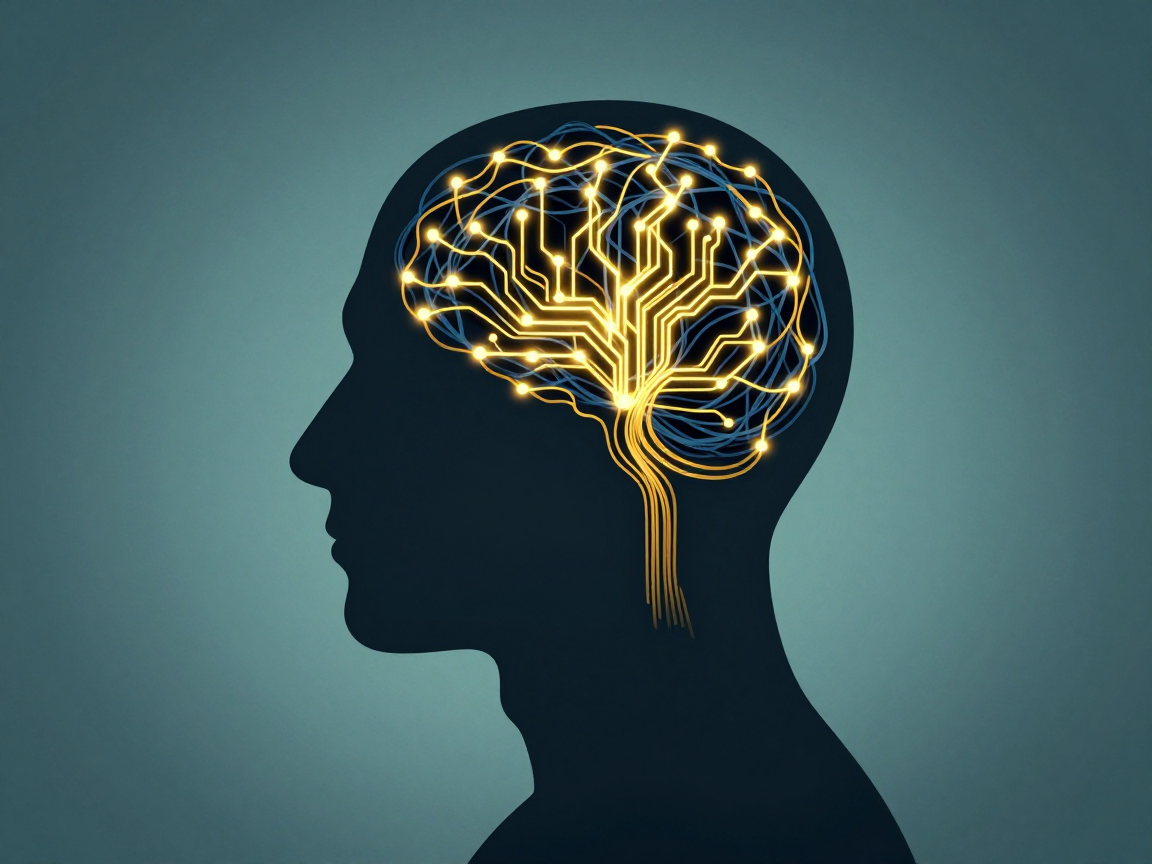
Fortunately, modern neuroscience has dismantled this myth, revealing one of the most hopeful truths about the human body: the brain is remarkably plastic. This capacity for change, known as neuroplasticity healing, means that your brain is constantly reorganizing itself by forming new neural connections throughout life. It is not a fixed machine, but a living, breathing landscape that can be pruned, replanted, and redesigned. By understanding the mechanics of how our thoughts and behaviors physically shape our gray matter, we can move from being passive victims of our biology to active architects of our minds.
Understanding the Mechanics of Neuroplasticity Healing
At its core, neuroplasticity healing is the process of intentionally directing your brain's natural ability to change. Every time you think a thought, perform a task, or feel an emotion, a specific set of neurons fires off an electrical signal. When you repeat these actions, those neurons fire together more frequently. Over time, the connection between them strengthens—a phenomenon often summarized by the phrase "neurons that fire together, wire together."
This wiring isn't just a metaphor. It involves physical changes in the brain's structure. When a pathway is used often, the brain coats the connecting fibers in a fatty substance called myelin, which acts like high-speed insulation. This makes the signal travel faster and with less effort. This is why habits feel automatic—they are the paths of least resistance. Conversely, when we stop using a pathway, the brain engages in 'synaptic pruning,' eventually weakening and dismantling the unused connection. Neuroplasticity healing leverages this 'use it or lose it' principle to consciously dismantle harmful circuits and build supportive ones.
However, it is important to recognize that neuroplasticity is a double-edged sword. It is value-neutral. If you spend years practicing worry, your brain will become exceptionally efficient at worrying. If you spend years in a high-stress environment, your brain will rewire itself to stay in a state of hyper-vigilance. Healing involves the deliberate intervention in these automatic processes, choosing to steer the brain's growth in a direction that serves your well-being rather than your survival-based fears.
The Survival Brain vs. The Growth Brain
To engage in effective neuroplasticity healing, we must understand the tug-of-war between the different parts of our nervous system. The primal parts of our brain, like the amygdala, are designed for survival. Their job is to scan for threats and initiate the fight, flight, or freeze response. When we experience trauma or prolonged stress, these survival circuits become 'thickened' through repetitive use. We find ourselves stuck in a loop of reactivity where even small inconveniences feel like existential threats.
This 'stuckness' is a physical reality. The prefrontal cortex—the part of the brain responsible for logic, empathy, and emotional regulation—can actually shrink or become less active when the survival brain is overactive. Healing requires us to dampen the signals from the survival brain while simultaneously 'bulking up' the prefrontal cortex. This is not about suppressing emotions, but about strengthening the regulatory systems that allow us to process them without becoming overwhelmed.
Identifying Your Ghost Circuits
Before you can change your brain, you must identify the 'ghost circuits' that are currently running the show. These are the automated responses that no longer serve you but continue to fire because they are so well-insulated. You might notice them as:
- Automatic negative self-talk that triggers an immediate drop in mood.
- Physical tension in the jaw or shoulders when opening your email.
- The urge to reach for a distraction the moment you feel a difficult emotion.
- A 'blanking out' or dissociation when faced with interpersonal conflict.
- The immediate assumption of the worst-case scenario in uncertain situations.
Awareness is the first step in neuroplasticity healing because it creates a 'micro-gap' between the stimulus and your reaction. In that gap, you have the power to choose a different response, which is exactly how a new neural pathway begins to form. Without awareness, the brain simply follows the established grooves of the past.
The 5 Pillars of Neural Restructuring
Sustainable neuroplasticity healing does not happen through willpower alone. It requires a specific set of conditions that make the brain more 'malleable.' Think of it like heating up a piece of metal before trying to bend it; without the right environment, the brain remains rigid.
- Focused Attention: The brain only rewires what it focuses on. Multitasking is the enemy of neuroplasticity. To change a circuit, you must bring intense, mindful presence to the new behavior or thought pattern. Deep work and meditation are excellent tools for building this 'attentional muscle.'
- Emotional Charge: Neurons wire together more effectively when there is an emotional component. Positive emotions like gratitude, awe, or a sense of safety act like 'superglue' for new neural connections. When you experience a moment of peace, lean into it—feel it in your body to help it stick.
- Novelty: Doing something new stimulates the release of neurotrophic factors (like BDNF), which act like fertilizer for the brain. This is why learning a new skill, taking a different route to work, or even using your non-dominant hand can jumpstart the healing process by signaling to the brain that it needs to adapt.
- Repetition and Duration: A single 'good thought' won't change your brain. You need to hold the thought and repeat the behavior. Science suggests that focusing on a new, positive state for at least 15 to 30 seconds helps it move from short-term memory into long-term neural structure.
- Quality Sleep: The actual physical restructuring of the brain happens while you sleep. This is when the brain clears out metabolic waste through the glymphatic system and solidifies the connections you practiced during the day. Without sleep, neuroplasticity healing is significantly stunted.
A Step-by-Step Framework for Neuroplasticity Healing
If you want to move from theory to practice, you can use the following four-step framework to begin rewiring a specific habit or emotional response. Let us use the example of overcoming a 'scarcity mindset' or chronic anxiety about the future.
Step 1: Relabel the Impulse
When the familiar 'alarm' of anxiety begins, do not identify with it. Instead of saying "I am anxious!", say "My survival brain is firing an old circuit!" or "This is just a neural pathway firing." By relabeling the experience as a biological event rather than a personal truth, you reduce its power over you and create the necessary distance for change.
Step 2: Reframing the Narrative
Directly challenge the circuit. Ask yourself "Is this signal actually true right now?" or "What else could be true?" Provide your brain with an alternative piece of data. For example, if you feel a surge of panic about money, remind yourself of three times you were able to solve a problem in the past. This forces the prefrontal cortex to 'come online' and engage with the amygdala, shifting the brain from reaction to reflection.
Step 3: Refocusing on a Generative Action
This is the most critical step for neuroplasticity healing. You must do something else. Shift your attention to a different activity for at least 15 minutes. This could be a hobby, a physical walk, or a work task. By diverting the electrical energy away from the 'anxiety circuit' and toward a productive one, you are actively starving the old pathway of its fuel and strengthening a new one.
Step 4: Revaluing the Progress
At the end of the day, spend one minute acknowledging that you successfully diverted a circuit. This 'micro-win' releases dopamine, which reinforces the new pathway. You are telling your brain "This new response is valuable, keep it!" Over time, the brain will prioritize the new response because it has been tagged with a reward signal.
Biological Catalysts: Feeding the Plastic Brain
While the cognitive steps of neuroplasticity healing are vital, we cannot ignore the biological hardware. Certain lifestyle factors act as catalysts, making the brain more responsive to our efforts to rewire it. One of the most important molecules in this process is Brain-Derived Neurotrophic Factor (BDNF). Often called 'Miracle-Gro for the brain,' BDNF supports the survival of existing neurons and encourages the growth of new ones.
Ways to Naturally Boost BDNF:
- Aerobic Exercise: Even 20 minutes of vigorous movement can significantly spike BDNF levels, making the hours following your workout the ideal time for practicing new mental habits.
- Intermittent Fasting: Brief periods of calorie restriction have been shown to trigger cellular repair mechanisms and increase the brain's resilience to stress.
- Omega-3 Fatty Acids: High-quality fats, particularly DHA found in fish oil, provide the structural building blocks for the myelin sheaths that insulate our neural pathways.
- Sunlight Exposure: Vitamin D and natural light help regulate the circadian rhythms that govern sleep and metabolic health, both of which are foundational for neuroplasticity healing.
Overcoming the Resistance to Change
It is vital to understand that neuroplasticity healing often feels 'wrong' at first. Because the old pathways are so well-insulated, they feel like the 'truth.' When you try to think differently or act in a new way, your brain may interpret this as a threat. You might feel a sense of internal friction, fatigue, or the sensation that you are 'faking it.'
This resistance is actually a sign that you are reaching the 'threshold of change.' Real neural growth requires effort and metabolic energy. It is not always a peaceful process. In fact, many people give up right as the brain is beginning to prune the old connections because the discomfort feels like a sign of failure. It is helpful to view this friction as 'neural soreness'—similar to the muscle soreness you feel after a heavy workout.
To stay the course, focus on 'micro-adjustments.' You do not need to rewrite your entire personality in a weekend. You are looking for a one percent shift in your reactivity each day. Over months and years, these one percent shifts compound into a completely different neural architecture. This is why consistency is more important than intensity. A five-minute daily practice of mindfulness or cognitive reframing is more effective for neuroplasticity healing than a five-hour seminar once a year.
The Path Forward: Patience and Plasticity
The journey of neuroplasticity healing is one of the most profound acts of self-care a human can undertake. It is the literal reclamation of your own mind. While the process requires discipline and a willingness to sit with discomfort, the payoff is a level of freedom that 'positive thinking' alone can never provide. You aren't just trying to feel better; you are building a better brain.
You are not a finished product. You are a work in progress with the biological capacity to change your internal world at any age. By consistently choosing new thoughts, leaning into novelty, and practicing the four-step framework, you can dismantle the 'ghost circuits' of your past and build a brain that is resilient, flexible, and truly yours. The brain is waiting for your direction; it is time to start the work of rewiring.