Beyond the Blame Game: The Essential Guide to Navigating Misunderstandings in Any Relationship
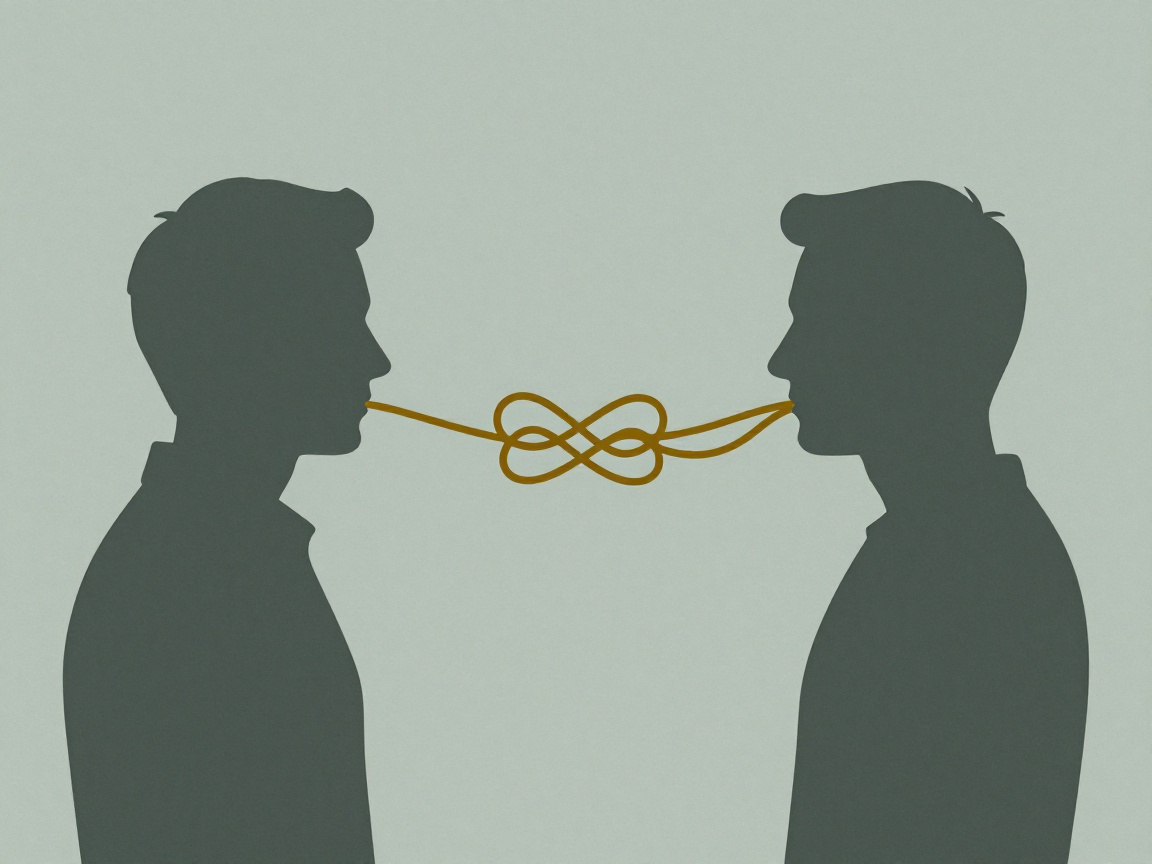
We have all experienced that sudden, sinking feeling in the chest when a conversation goes sideways. You say something with the best of intentions, but the person across from you reacts with hurt, anger, or confusion. In an instant, the bridge of connection is replaced by a chasm of silence or defensive posturing. This is the reality of the human experience—our internal worlds are so vast and varied that it is almost a miracle when we understand each other perfectly. Navigating misunderstandings is not just a soft skill for the workplace; it is a fundamental requirement for maintaining healthy, long-term relationships in every area of our lives.
The challenge is that most of us were never taught how to bridge these emotional gaps. We were taught how to use grammar and how to build a vocabulary, but we were rarely taught how to handle the psychological fallout when those words fail us. We often view a misunderstanding as a personal failure or a sign of incompatibility, rather than seeing it as a natural byproduct of two different people with two different life histories trying to align their perspectives. By shifting our approach to navigating misunderstandings, we can transform these moments of friction into opportunities for deeper intimacy, clearer collaboration, and lasting trust.
The Hidden Architecture of Miscommunication
To begin navigating misunderstandings effectively, we must first understand why they happen so frequently. Every person operates with a unique internal map of reality, shaped by their upbringing, cultural background, past traumas, and current stress levels. When we speak, our message passes through our own filters. When the other person listens, that message passes through their filters. By the time the information lands, it has often been distorted beyond recognition by the listener's own biases and expectations.
Psychologists often refer to this as the "Intent-Impact Gap." Your intent is what you meant to happen; the impact is how the other person actually felt. In the heat of a disagreement, we tend to judge ourselves by our intentions while judging others by their impact on us. This creates a cycle of defensiveness where one person says, "But I did not mean it that way!" and the other responds, "But this is how it felt!" Both perspectives are valid, but until the focus shifts from being "right" to being "understood," the conflict will remain unresolved. Navigating misunderstandings requires us to hold space for both the intent and the impact simultaneously.
Another layer of this architecture is the "Ladder of Inference," a model developed by Chris Argyris. This is a mental process where we take a small piece of data—such as a partner not answering a text for three hours—and rapidly climb a ladder of assumptions. We select data, add meanings, draw conclusions, and adopt beliefs. By the time they finally call, we have already reached the top of the ladder, concluding that they do not value our time or are perhaps hiding something. Navigating misunderstandings requires us to climb back down that ladder and look at the raw data before the story we built around it took hold.
Why Navigating Misunderstandings Requires Emotional Intelligence
The most difficult part of navigating misunderstandings is the physiological response that accompanies them. When we feel misunderstood, our brain often perceives it as a social threat, which is processed in the same area as physical pain. The amygdala, the part of the brain responsible for the fight-or-flight response, can take over. Suddenly, we are no longer trying to solve a problem; we are trying to survive an attack. This is why simple conversations often devolve into shouting matches or icy withdrawals.
Emotional intelligence in these moments means recognizing that your nervous system has been activated. It is nearly impossible to have a productive conversation when your heart rate is elevated and your perspective has narrowed to a "win or lose" binary. True mastery in navigating misunderstandings begins with the ability to pause. Taking a few deep breaths or stepping away for ten minutes allows the prefrontal cortex—the logical part of the brain—to come back online. This pause is the difference between reacting from a place of fear and responding from a place of wisdom.
Beyond self-regulation, navigating misunderstandings also requires empathy for the other person’s nervous system. If they are shouting or shutting down, they are likely feeling just as threatened as you are. Approaching the situation with the goal of lowering the "threat level" in the room is often more effective than trying to litigate the facts of who said what. When people feel safe, they become curious. When they feel curious, the misunderstanding begins to dissolve, and real communication can resume.
The RESET Framework for Navigating Misunderstandings
When you find yourself in the middle of a communication breakdown, it helps to have a structured way to find your way back to solid ground. The RESET framework is a five-step process designed for navigating misunderstandings with grace, clarity, and intentionality.
1. Regulate Your Response
Before you say another word, check in with your body. Are your shoulders tight? Is your jaw clenched? If you are in a state of high agitation, you are not in a state to resolve a conflict. Acknowledge the feeling by saying to yourself, "I am feeling defensive right now." This simple act of labeling the emotion can reduce its intensity. If necessary, ask for a "time-out" to cool down before continuing the discussion. Navigating misunderstandings is a marathon, not a sprint.
2. Evaluate Your Assumptions
Ask yourself: "What story am I telling myself about why they said that?" This is the moment to climb down the ladder of inference. Is it possible there is another explanation? Is it possible they are tired, stressed, or triggered by something that has nothing to do with you? By identifying your own assumptions, you prevent them from being presented as objective facts. This creates the mental flexibility needed to hear their actual perspective.
3. Seek Clarity Through Questions
Instead of making statements or accusations, start asking open-ended questions. Phrases like, "Can you help me understand what you meant when you said...?" or "I noticed I am feeling a bit hurt by that comment; could you clarify your perspective?" are powerful tools. Navigating misunderstandings is much easier when you stop trying to read minds and start asking for a map. Listen to their answer without preparing your rebuttal.
4. Express Your Intent vs. Impact
Acknowledge the gap between what you intended and what occurred. You might say, "My intention was to be helpful, but I see now that it came across as critical. I am sorry for that impact." This validates the other person’s feelings without requiring you to admit you were being "malicious." It separates what you meant from what they felt, allowing both truths to coexist and lowering the defensive barriers.
5. Target a Shared Resolution
Once the emotions have settled and clarity has been reached, focus on how to avoid this specific trap in the future. Does the other person need more context before you give feedback? Do you need them to use a different tone? Navigating misunderstandings should always lead to a "repair" that makes the relationship stronger than it was before the glitch occurred. Focus on the future behavior rather than ruminating on the past mistake.
Common Pitfalls in Navigating Misunderstandings
Even with the best intentions, it is easy to fall into habits that prolong the conflict rather than resolving it. Recognizing these common traps is a vital part of navigating misunderstandings successfully:
- The "Never/Always" Trap: Using absolutes like "You never listen" or "You always do this" immediately puts the other person on the defensive. It expands a single misunderstanding into a total character assassination.
- Kitchen Sinking: This involves bringing up every grievance from the last six months during a single argument. If you want to succeed in navigating misunderstandings, stay focused on the current issue.
- Tone Policing: Focusing more on how someone said something than what they actually said can be a way of avoiding the core issue. While tone matters, sometimes we use it as a shield to deflect from a valid point.
- The "Correcting the Record" Obsession: Many people get stuck on the minor details of the timeline or specific word choices. While accuracy is good, being "factually correct" is often less important than being "emotionally connected."
- Digital Distortion: Attempting to resolve complex emotional issues via text or email is a recipe for disaster. Without vocal tone, facial expressions, and body language, the brain often fills in the blanks with the most negative interpretation possible.
Navigating Misunderstandings in a Digital World
In our modern era, a significant portion of our communication happens through screens, which has made navigating misunderstandings more difficult than ever. Texting lacks the prosody of speech—the rhythm, stress, and intonation that signal meaning. A simple "Okay" can be read as an agreement, a shrug, or a sarcastic snub depending on the recipient’s current mood or stress level.
If you find a digital thread starting to fray, the best move is to change the medium immediately. Moving from text to a phone call, or from a phone call to a video chat or in-person meeting, adds back the layers of data our brains need to feel secure. A simple rule for navigating misunderstandings online is: "If the conversation requires more than three back-and-forth exchanges to clarify a point, pick up the phone." This prevents the "negativity bias" of digital communication from taking hold and causing unnecessary damage.
Turning Conflict into Connection
It sounds counterintuitive, but some of the strongest relationships are those that have survived the most misunderstandings. This is because every time we successfully navigate a gap in understanding, we build "relational capital." We learn more about the other person’s triggers, their values, and their unique way of processing the world. We prove to each other that the relationship is resilient enough to handle friction.
Navigating misunderstandings is ultimately an act of vulnerability. It requires us to admit that we do not have all the answers and that our perspective is limited by our own experiences. It requires us to put down our emotional armor and prioritize the "us" over the "me." When we stop fearing misunderstandings and start seeing them as signposts for where we need to grow, the quality of our connections changes fundamentally.
Next time you feel that familiar flash of frustration during a conversation, remember that it is just a signal that a bridge needs to be built. Take a breath, ask a curious question, and begin the process of navigating misunderstandings with empathy instead of judgment. You might find that what started as a conflict ends as the most honest and transformative conversation you have ever had.