Beyond the Lone Wolf: Why Men's Groups Are the Vital Architecture of Modern Masculinity
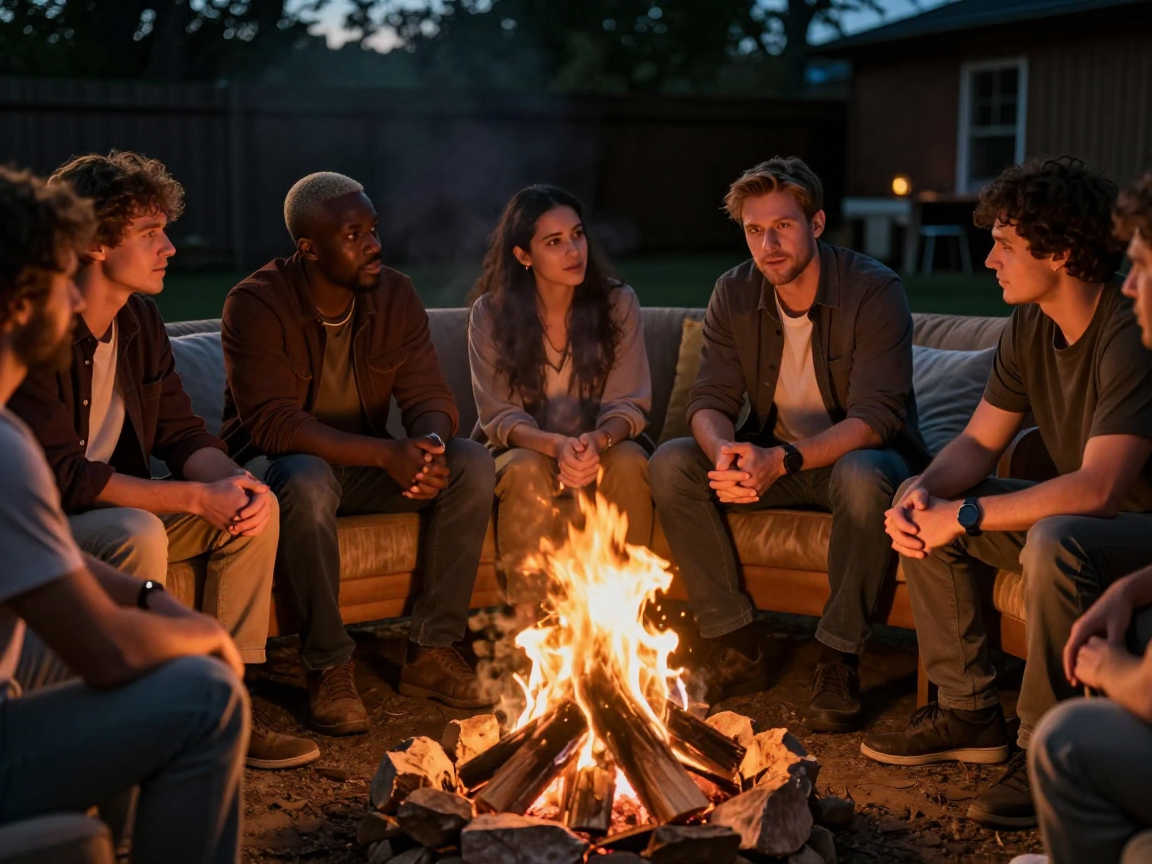
For generations, the cultural script for manhood has been written in the ink of self-reliance. We are taught from a young age that a man’s value is found in his ability to endure, to provide, and to solve his problems in the quiet of his own mind. This "lone wolf" archetype is often romanticized in cinema and literature, but in the context of the 21st century, it is becoming a recipe for a quiet, desperate isolation. While men are more connected than ever through digital platforms, many find that their social circles are a mile wide and an inch deep. They have coworkers, gym buddies, and online acquaintances, yet they lack a space where they can be truly seen and challenged. This is the void that men's groups are designed to fill.
The rise of intentional men's groups is a direct response to what many sociologists call the "loneliness epidemic." Unlike casual hangouts or hobby-based clubs, these groups are structured environments where men gather with the explicit purpose of personal growth, emotional fluency, and mutual support. They are not simply places to complain; they are laboratories for developing a more integrated, purposeful way of living. By stepping into a circle of peers, men often find that the very things they felt they had to hide—their fears, their failures, and their uncertainties—are actually the keys to their greatest strengths.
The Silent Pandemic: Understanding the Male Isolation Crisis
Statistics regarding male mental health and social isolation are sobering. Studies consistently show that men are less likely than women to seek help for emotional distress and are significantly more likely to report having no close friends. This lack of social scaffolding has tangible physical consequences. Loneliness has been linked to increased levels of cortisol, higher risks of cardiovascular disease, and a shorter lifespan. However, the cost isn't just physical; it is existential. When a man feels he must carry the weight of his world alone, he often defaults to "survival mode," where his primary focus is simply getting through the day rather than thriving.
Traditional male socialization often emphasizes "shoulder-to-shoulder" activities—watching a game, playing sports, or working on a car. While these are healthy forms of bonding, they rarely provide the depth required to navigate life's more complex transitions, such as career shifts, fatherhood, or the breakdown of a relationship. In these moments, the absence of a dedicated support structure becomes a crisis. Men's groups provide the "face-to-face" interaction that is often missing, creating a container where the masks of competence can be removed in favor of something more durable and honest.
The Anatomy of the Circle: What Happens Inside Men's Groups?
A common misconception is that men's groups are aimless talk therapy sessions where men sit around in a state of perpetual grievance. In reality, the most effective groups are highly disciplined and operate with a clear set of protocols. Whether the group is part of a national organization or a local grassroots effort, most follow a specific rhythm designed to move beyond surface-level conversation.
The Typical Session Framework
To understand why these groups work, one must look at the structural elements that define a typical meeting. Most sessions last between 90 minutes and two hours and follow a variation of the following framework:
- The Intentional Check-In: The meeting begins with each member sharing his current state. This isn't a casual "I'm fine." Instead, men are encouraged to identify their current emotional weather or a specific challenge they are facing. This establishes a baseline of honesty for the rest of the meeting.
- Clearing and Conflict Resolution: If there is tension between members, it is addressed immediately. This teaches men how to handle conflict directly and respectfully, a skill that translates immediately to their marriages and workplaces.
- The Deep Dive (The "Work"): One or two men are given the floor to bring a specific issue to the group—a struggle with an addiction, a parenting challenge, or a loss of career direction. The group does not immediately offer advice. Instead, they listen deeply and ask clarifying questions that help the individual find his own clarity.
- Mirroring and Feedback: After the man has shared, the group provides "mirrors." They reflect back what they heard, seen, and felt. This often reveals blind spots—patterns of behavior that the individual was unable to see for himself.
- The Actionable Commitment: Before the circle closes, the man identifies a specific action he will take before the next meeting to address his challenge. This turns the emotional insight into a practical, real-world result.
Radical Accountability and the Power of the Mirror
One of the most potent elements of men's groups is the concept of radical accountability. In our private lives, it is remarkably easy to negotiate with ourselves. We make excuses for why we didn't go to the gym, why we were short with our partners, or why we haven't started that business we’ve been talking about for years. When we are isolated, our inner critic and our inner negotiator can keep us stuck in a loop of mediocrity.
A men’s group changes this dynamic by providing a circle of peers who know your story, your potential, and your bullshit. There is a specific kind of "fierce love" that exists in these spaces—a commitment to seeing a man live up to his highest standards. When a group of men holds you to your word, you find a level of discipline that is nearly impossible to maintain on your own. This isn't about shame or punishment; it is about the dignity of being held to the person you said you wanted to be.
Furthermore, the "mirroring" process helps men develop a more accurate self-image. We often view ourselves through the lens of our past traumas or current stresses. When five or ten other men reflect back your strength, your integrity, or even your self-sabotage, it provides a balanced perspective that helps you move forward with more confidence. You realize that your struggles are not unique, which ironically makes them much easier to solve.
The Ripple Effect: Better Fathers, Partners, and Leaders
The benefits of participating in men's groups are rarely confined to the meeting room. In fact, the true value of the work is measured by the quality of a man's life outside the circle. When a man has a safe place to process his anger, grief, or fear, he is far less likely to dump those emotions onto his spouse or children. He returns home with a regulated nervous system and a clearer mind.
Impact on Relationships
Partners of men in these groups often report a significant improvement in communication and presence. By learning to identify and express his needs in a group of men, a man becomes better equipped to listen to his partner’s needs without becoming defensive. He learns that vulnerability is not a sign of weakness, but a requirement for intimacy.
Impact on Career and Leadership
In the professional world, the emotional intelligence cultivated in men's groups is a competitive advantage. Men who can navigate high-pressure situations with calm, who can give and receive feedback without ego, and who take full responsibility for their actions are the leaders people want to follow. The groups serve as a training ground for the "soft skills" that are increasingly recognized as the most difficult—and most valuable—skills in the modern economy.
A Practical Guide to Finding Your Tribe
If you recognize the need for more depth in your life, the next step is finding a group that aligns with your values. Not all men's groups are the same, and the "flavor" of the group will depend on its underlying philosophy.
- Identify Your Focus: Are you looking for spiritual growth, professional accountability, emotional healing, or traditional masculine virtues? Some groups are more "warrior" focused, while others are more "healer" or "king" focused. Knowing what you need will help you filter your options.
- Explore Established Organizations: There are several global organizations that provide structured entry points. The Mankind Project (MKP) is famous for its intensive initiation weekends and ongoing "I-Groups." Evryman focuses on somatic awareness and emotional fluency. Order of Man focuses on leadership and tactical life skills. Researching these can provide a solid foundation.
- The Trial Period: Commit to attending at least three to five sessions. The first meeting is often awkward as you adjust to the level of honesty in the room. It takes time for the trust to build and for you to see the tangible benefits in your daily life.
- Consider Starting Your Own: If you cannot find a group that fits, consider inviting three or four men you respect to start a monthly or bi-weekly meeting. You don't need a master's degree in psychology to facilitate; you simply need a shared commitment to honesty and a basic set of ground rules regarding confidentiality and non-judgment.
Conclusion: Stepping Into the Circle
The path of the lone wolf is a path of diminishing returns. While it may provide a temporary sense of safety, it eventually leads to a plateau where growth ceases and isolation takes root. Men's groups offer an alternative: the path of the integrated man. This is a man who is strong enough to be vulnerable, disciplined enough to be accountable, and wise enough to know that he cannot reach his full potential alone.
By joining a group, you are not admitting that you are broken; you are acknowledging that you are human. You are choosing to invest in the social architecture that will support you through life's inevitable storms. In the company of brothers, you will find that the weight of the world is much lighter when it is shared, and the vision for your life is much clearer when it is reflected back to you by men who refuse to let you settle for anything less than your best self.