Beyond Relaxation: The Physical Reality of How Meditation Changes Brain Structure
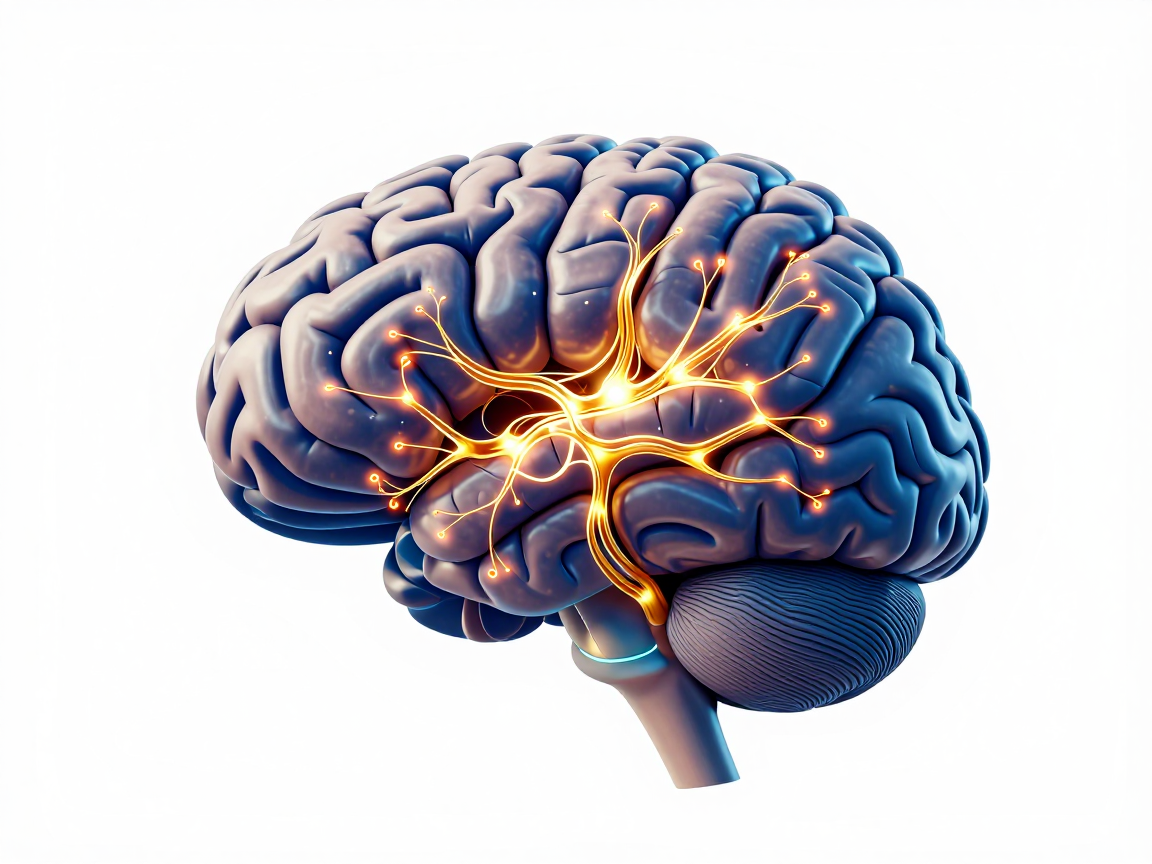
For a long time, the scientific community viewed the human brain as a static organ. The prevailing wisdom suggested that once you reached adulthood, your neural hardware was essentially locked in place. You were born with a certain amount of potential, and as you aged, that potential would slowly but inevitably decline. This 'hardwired' view of the brain led many to believe that our personality traits, our cognitive limits, and our emotional predispositions were permanent. However, the discovery of neuroplasticity flipped this script entirely. We now know that the brain is more like a muscle than a computer chip. It can grow, shrink, and rewire itself based on how we use it. Perhaps the most compelling evidence for this phenomenon is found in the way meditation changes brain structure through consistent practice.
When we talk about meditation today, we are moving beyond the realm of spirituality or self-help tropes. We are talking about a biological intervention. Just as lifting weights creates microscopic tears that lead to larger muscle fibers, focused mental training creates new neural pathways and alters the density of gray matter in specific regions. It is no longer a question of whether the mind can influence the body; the question is how far we can consciously drive these structural changes to improve our mental health, cognitive performance, and emotional resilience. This article explores the neuroanatomy of the meditative mind and the specific ways in which a regular practice physically rebuilds the organ between your ears.
The Gray Matter Revolution: Reshaping the Cortex
One of the most significant ways meditation changes brain structure is through the increase of gray matter density. Gray matter is the tissue containing the cell bodies of neurons—it is essentially the processing power of the brain. In 2011, a landmark study led by Sara Lazar at Harvard University utilized MRI scans to look at the brains of participants before and after an eight-week Mindfulness-Based Stress Reduction (MBSR) program. The results were staggering. Even in that short window, researchers observed a measurable increase in gray matter density in several key areas.
The most notable growth occurred in the left hippocampus. This is the region responsible for learning, memory, and emotional regulation. In people suffering from chronic stress, PTSD, or clinical depression, the hippocampus often appears shrunken or atrophied. By engaging in mindfulness, practitioners effectively reversed this trend, physically fortifying the part of the brain that helps us stay grounded and retain information. This structural shift explains why many long-term meditators report improved memory and a greater ability to learn new skills as they age. It suggests that cognitive decline is not an inevitable downhill slide, but a process that can be actively mitigated.
Furthermore, the study found increased density in the temporoparietal junction (TPJ). This area is involved in empathy and compassion. It is the part of the brain that allows us to take another person's perspective and navigate social complexities. As this area thickens, our social intelligence increases. We become less reactive to interpersonal conflict because our brain is physically better equipped to process the complex nuances of human interaction. The structural change here suggests that kindness and empathy are not just personality traits; they are cognitive skills that can be physically built through the 'reps' of meditation.
Shrinking the Fear Center: The Amygdala and Stress Resilience
While some parts of the brain grow larger with meditation, others actually shrink—and that is a very good thing. The amygdala is a small, almond-shaped structure deep within the brain that serves as our 'alarm system' or 'fear center.' It is responsible for the 'fight or flight' response, triggering the release of cortisol and adrenaline when it perceives a threat. In a world where we are constantly bombarded by emails, notifications, and social pressures, many of us live with an overactive amygdala that is perpetually stuck in high gear.
Research has shown that meditation changes brain structure by decreasing the gray matter density in the amygdala. This physical reduction correlates directly with a decrease in perceived stress levels. It is not that the external world becomes less stressful; it is that the brain's hardware for processing fear becomes less reactive. When the amygdala shrinks, the 'alarm' doesn't go off quite as loudly or as often. Practitioners report a sense of 'space' between a stressful event and their reaction to it. This space is the physical result of a less dense amygdala.
This change is particularly important because of the relationship between the amygdala and the prefrontal cortex. Think of the prefrontal cortex as the wise 'CEO' of the brain and the amygdala as the 'emergency responder.' In a stressed brain, the amygdala often hijacks the CEO, leading to impulsive decisions and emotional outbursts. As meditation changes brain structure, the connection between these two areas strengthens, but the amygdala's dominance weakens. This allows for a top-down regulation where the logical mind can more easily calm the emotional mind, leading to what psychologists call 'affective resilience.'
Strengthening the Executive Suite: The Prefrontal Cortex
If the amygdala is getting smaller, the prefrontal cortex is getting sturdier. This area, located right behind your forehead, is the seat of executive function. It manages complex planning, decision-making, and the moderation of social behavior. It is essentially what makes us human. When we practice focused-attention meditation, we are training the prefrontal cortex to maintain a single point of focus despite internal or external distractions.
Studies on long-term meditators—specifically those with over 10,000 hours of practice—show significant thickening in the prefrontal cortex. This is especially vital because this area is usually the first to thin as we age. Age-related cognitive decline is often characterized by the literal thinning of the prefrontal folds, leading to forgetfulness and poor impulse control. However, meditation appears to act as a neuroprotective agent. In some studies, 50-year-old meditators had the same prefrontal cortex thickness as 25-year-old non-meditators. This suggests that meditation could be a powerful tool in the fight against dementia and other age-related neurological conditions.
This structural integrity translates to better focus and attention span in daily life. In a 'distraction economy' where our attention is the most valuable commodity, having a physically stronger prefrontal cortex is a massive competitive advantage. It allows you to stay on task, resist impulsive distractions, and maintain a sense of 'meta-awareness'—the ability to observe your own thoughts without being swept away by them. By changing the structure of the prefrontal cortex, meditation changes the way we experience reality.
The Default Mode Network: Quieting the Monkey Mind
Beyond the density of specific regions, meditation changes brain structure by altering the 'wiring' between regions. One of the most important networks involved is the Default Mode Network (DMN). The DMN is active when we are not focused on the outside world and our mind is wandering from thought to thought. This is often referred to as the 'monkey mind.' It is associated with self-referential thought, rumination about the past, and anxiety about the future.
In non-meditators, the DMN is often overactive and highly coupled with the areas of the brain that process emotion. This means that a wandering mind often leads to a worrying mind. However, brain scans of meditators show a significant decrease in DMN activity. More importantly, they show a stronger connection between the DMN and the areas responsible for self-regulation. This means that even when the mind starts to wander, the meditator's brain is better at noticing the drift and gently bringing it back to the present moment. By physically pruning the overactive connections in the DMN, meditation reduces the habit of chronic rumination.
The Timeline of Change: From State to Trait
A common question for those looking to start a practice is how long they must wait before these physical shifts occur. While the brain is highly plastic, it does require consistency. Neuroscience distinguishes between 'states' (temporary shifts during a session) and 'traits' (lasting structural changes). The 'magic number' in most clinical research for trait-level change is eight weeks.
- Week 1 - 2: Initial changes are mostly functional. You may feel calmer, but the structural density hasn't shifted significantly yet. You are experiencing a 'state' of relaxation.
- Week 4 - 6: Neural pathways begin to reinforce. Communication between the amygdala and the cortex becomes more efficient. You might notice you are less reactive to traffic or minor annoyances.
- Week 8 and beyond: This is where MRI scans begin to show increased gray matter density in the hippocampus and measurable shrinkage in the amygdala. These are 'trait' changes—physical alterations that persist even when you aren't actively meditating.
It is important to note that you do not need to sit in a cave for ten hours a day. Most of the studies showing that meditation changes brain structure utilized a daily practice of roughly 20 to 30 minutes. Consistency is far more important than intensity. A short daily session is better for 'brain sculpting' than a long, three-hour session once a week because the brain requires the repeated signal of 'importance' to justify the energy expenditure of physical restructuring.
The Neuroplasticity Protocol: A 4-Step Framework
To effectively leverage the way meditation changes brain structure, you need a protocol that targets the right areas. Here is a framework designed to maximize structural neuroplasticity:
- Select a Focused Attention Technique: Choose a single point of focus, such as the breath or a physical sensation. When your mind wanders, gently bring it back. This repetitive act of 'returning' is what builds the prefrontal cortex, much like a bicep curl for the brain.
- Establish a Minimum Effective Dose: Commit to at least 12 minutes of practice per day. Research from neuroscientist Amishi Jha suggests that 12 minutes is the threshold where significant cognitive benefits begin to manifest. It is short enough to be sustainable but long enough to signal the brain to adapt.
- Incorporate Open Monitoring: After 10 minutes of focused breath work, spend 5 minutes simply 'observing' whatever thoughts or feelings arise without judging them. This helps decrease the reactivity of the amygdala by training the brain to see thoughts as 'just data' rather than 'threats.'
- Prioritize Frequency Over Duration: Never skip two days in a row. The brain requires the signal of importance to maintain new neural connections. Daily repetition sends that signal and keeps the process of neurogenesis active.
Checklist for Maximizing Brain Benefits
If you want to ensure your practice is actually facilitating physical change, keep these points in mind:
- Minimize Distractions: Your brain needs to enter a specific state of deep focus to trigger plasticity. Turn off your phone and find a quiet space.
- Track Your Progress: Use a journal or an app to track consistency. Seeing the 'streak' helps keep the prefrontal cortex engaged in the habit-building process.
- Posture Matters: A tall, upright spine promotes alertness. Slouching can trigger a 'dullness' in the mind that makes it harder for the brain to engage its focus centers.
- Be Patient with the 'Void': There will be days when it feels like nothing is happening. Remind yourself that structural change is microscopic. You cannot feel your hippocampus thickening any more than you can feel your fingernails growing.
- Incorporate Novelty: Once a technique becomes too easy, slightly change your environment or focus. Plasticity is often triggered by the challenge of something new.
Conclusion: Becoming the Architect of Your Mind
The fact that meditation changes brain structure has profound implications for how we treat mental health and education. If we can physically rewire the brain to be less fearful and more focused, we have a tool that is more sustainable than many pharmacological interventions. This is not to say meditation replaces medicine, but it provides a biological foundation that makes all other forms of healing more effective. It shifts the paradigm from 'managing symptoms' to 'rebuilding the system.'
Ultimately, the science of how meditation changes brain structure is a message of hope. It tells us that we are not stuck with the brain we have today. We are not victims of our genetics or our past traumas. We are the architects of our own neural landscape. Through the simple, repetitive act of directing our attention, we can physically prune away the pathways of anxiety and forge new, resilient structures for peace, clarity, and wisdom. The brain you have tomorrow is being built by the thoughts you choose to focus on today.