Cells That Fire Together, Wire Together: The Hidden Science of How We Learn and Change
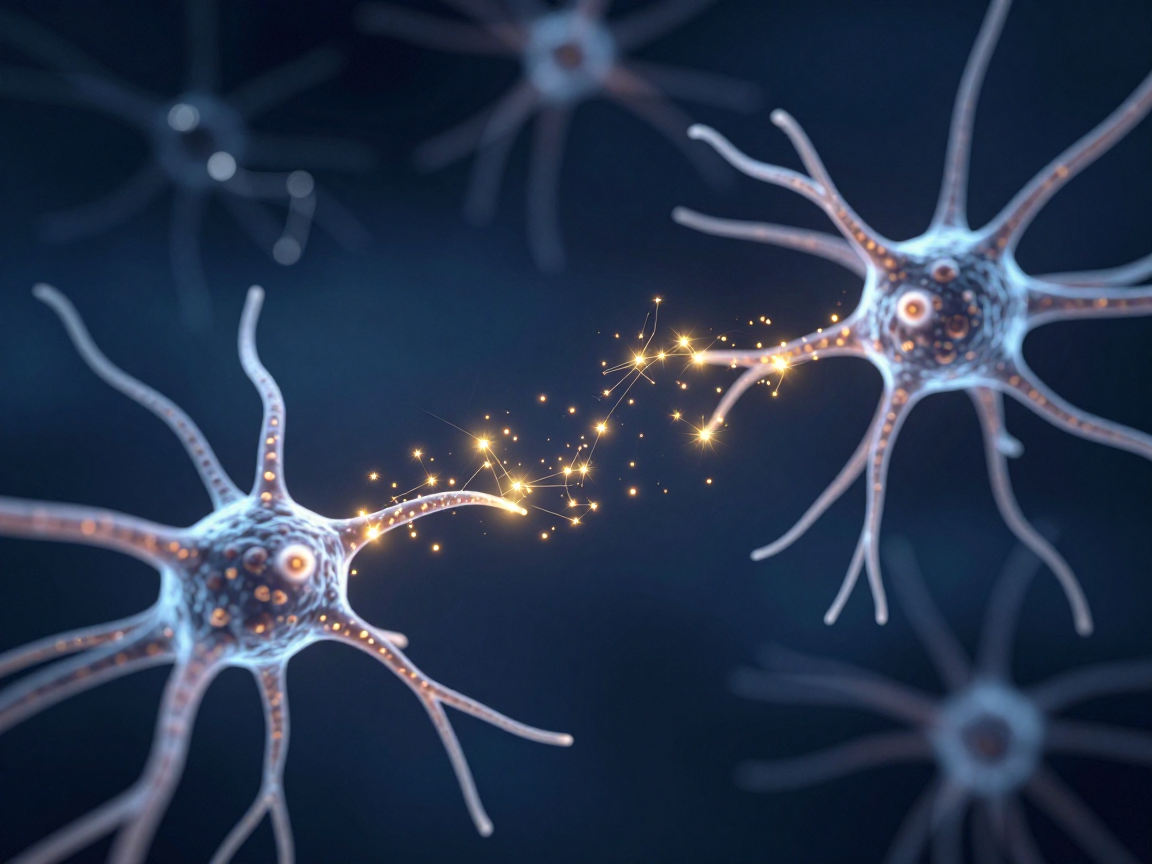
Every time you pick up a guitar, repeat a new vocabulary word, or succumb to a familiar wave of anxiety, your brain is physically transforming. For decades, scientists and psychologists have sought to understand the exact mechanism that turns a fleeting experience into a permanent memory or a stubborn habit. The answer lies in a deceptively simple principle known as Hebbian learning. Named after the Canadian psychologist Donald Hebb, who proposed the idea in 1949, this theory provides the biological foundation for how we adapt to the world around us.
At its core, Hebbian learning explains that the brain is not a static organ but a dynamic, self-organizing system. It suggests that when two neurons are activated simultaneously, the connection between them strengthens. This process turns a temporary spark of electrical activity into a durable physical bridge. By understanding the mechanics of this process, we gain more than just scientific knowledge; we gain a roadmap for intentional change. If our brains are wired by our experiences, then by curated experience, we can effectively rewire our brains.
The Origins of the Hebbian Rule
To understand hebbian learning, we have to look back at the state of neuroscience in the mid-twentieth century. At the time, the prevailing view of the brain was somewhat mechanical. Most researchers focused on behaviorism - the idea that humans simply react to external stimuli. Donald Hebb challenged this by looking inside the "black box" of the mind. In his groundbreaking work, The Organization of Behavior, he proposed that the secret to learning was located in the gaps between neurons, known as synapses.
He famously wrote that when an axon of Cell A is near enough to excite a Cell B and repeatedly or persistently takes part in firing it, some growth process or metabolic change takes place in one or both cells such that A's efficiency, as one of the cells firing B, is increased. In the decades that followed, this observation was distilled into the catchy neuroscientific mantra: "Cells that fire together, wire together".
This was a revolutionary shift. It moved the focus from the individual neuron to the relationship between neurons. Hebbian learning suggested that memory is not stored in a single "spot" in the brain like a file on a hard drive. Instead, memory is a distributed network of connections. The more often a specific pathway is used, the more efficient that pathway becomes. This is why the first time you try to drive a car, it feels overwhelming and disjointed, but after a year, the process becomes so fluid that you can do it while holding a conversation.
The Biological Machinery: Long - Term Potentiation
While Donald Hebb had the right idea in 1949, he didn't have the technology to see the physical changes he described. It took several more decades for researchers to discover the molecular mechanism behind hebbian learning, a process now known as Long - Term Potentiation (LTP). LTP is the actual physical strengthening of the synapse that occurs when two neurons communicate frequently.
When a neuron fires, it releases chemicals called neurotransmitters, primarily glutamate, into the synapse. On the receiving neuron, there are specific docking stations called NMDA receptors. These receptors are unique because they act as "coincidence detectors". They only fully activate if two things happen at once: the sending neuron releases glutamate AND the receiving neuron is already electrically excited.
When these conditions are met, a flood of calcium enters the receiving neuron. This calcium serves as a chemical signal to "build more docks". The cell actually begins to manufacture more receptors and place them on its surface. Now, the next time the first neuron fires, the second neuron is much more likely to respond because it has more equipment to catch the signal. This is hebbian learning in its most literal, physical form. The path has been cleared, the bridge has been widened, and the communication becomes faster and more reliable.
The Dark Side of Wiring: Why Bad Habits Stick
Hebbian learning is an indifferent architect. It does not distinguish between a "good" connection and a "bad" one; it simply responds to repetition and intensity. This explains why destructive habits and negative thought patterns can become so deeply ingrained. If you spend years responding to stress by reaching for a sugary snack or spiraling into self - criticism, you are effectively training your brain to make those responses easier to access.
Every time you repeat a negative thought, you are performing a session of hebbian learning. You are making the "self - criticism" circuit more efficient. This is why breaking a habit feels like fighting against the current of a river. You aren't just fighting "willpower"; you are fighting a physical infrastructure that your brain has spent years building. The neurons involved have become so tightly wired that they fire almost automatically.
This principle also plays a significant role in chronic pain and trauma. In some cases, the brain can become "too good" at feeling pain. If pain signals are sent frequently enough, the brain may rewire itself to be hyper - sensitive to those signals, leading to a state where the brain "learns" to be in pain even after the physical injury has healed. Understanding this is the first step toward intervention. If the brain can learn its way into a trap, the theory of neuroplasticity suggests it can also learn its way out.
A Framework for Conscious Rewiring
If hebbian learning is the process by which our brains are shaped, how can we take the steering wheel? We cannot simply "will" our neurons to disconnect, but we can leverage the rules of biology to create new pathways that eventually compete with the old ones. Here is a practical framework for applying hebbian learning to personal growth:
- Identify the Trigger - Response Loop: You cannot change a circuit you haven't mapped. Pay attention to the "firing" patterns in your daily life. What specific event triggers the habit you want to change?
- Conscious Interruption: The moment the trigger occurs, there is a tiny window of opportunity. By consciously pausing, you prevent the old circuit from firing in its usual, seamless way. This is often called "the gap".
- Novel Firing: While the old circuit is interrupted, you must introduce a new behavior. This is the "firing together" part of the equation. If you usually reach for your phone when bored, pick up a book or do a breathing exercise instead. You are forcing a new pair of neurons to communicate.
- High - Attention Engagement: Hebbian learning is significantly accelerated by attention and emotional engagement. The chemical acetylcholine, which acts like a "save" button for the brain, is released when we are intensely focused. Don't just go through the motions; engage deeply with the new behavior.
- Consistency and Sleep: Biology takes time. One or two repetitions won't create a lasting bridge. Furthermore, the actual "wiring" often happens during REM sleep. Consistent daily practice followed by quality rest allows the brain to solidify the new synaptic connections.
Hebbian Learning in the Age of Artificial Intelligence
The influence of hebbian learning extends far beyond biology. It has become a cornerstone of modern Artificial Intelligence (AI) and Machine Learning. Early computer scientists looked at the human brain as the ultimate model for intelligence and asked: "Can we build a machine that learns like a human?"
This led to the development of Artificial Neural Networks. In these systems, "neurons" are digital nodes and "synapses" are mathematical weights. When a developer trains an AI using hebbian principles, the system increases the "weight" of connections between nodes that are activated at the same time. This is known as unsupervised learning. Unlike other forms of AI that require a human to label every piece of data, a hebbian - based AI can find patterns on its own by simply noticing which data points "fire together".
While modern AI often uses more complex algorithms like backpropagation, the biological inspiration of hebbian learning remains a vital area of research. It represents the quest to create "neuromorphic" computing - chips and software that mimic the energy efficiency and adaptive power of the human brain. We are finding that the rules Donald Hebb scribbled down in the 1940s are just as applicable to silicon as they are to gray matter.
The Power of Selective Attention
One of the most profound takeaways from the study of hebbian learning is the power of our attention. Since our brains are constantly wiring based on what is "firing", then what we choose to focus on becomes the literal architect of our neural structure. If we spend our time focused on fear, resentment, and scarcity, we are building a brain that is expertly tuned to those frequencies.
Conversely, practicing gratitude or mindfulness isn't just a "feel - good" exercise; it is a neurobiological intervention. By intentionally focusing on positive outcomes or the present moment, we are forcing those specific circuits to fire. Over time, through the laws of hebbian learning, these states become traits. The effort required to be mindful decreases as the physical connection between the relevant neurons increases.
We are not merely passive observers of our mental lives. We are the lead engineers of a massive, ongoing construction project. Every thought we think and every action we take is a vote for the person we are becoming. The brain is remarkably forgiving and incredibly plastic. It is never too late to start firing the circuits you want to keep and letting the ones you no longer need fade away through disuse.
Embracing the Process of Change
Understanding hebbian learning removes the shame often associated with the difficulty of change. When we struggle to break a habit, it isn't necessarily a failure of character; it is a testament to how well our brains have learned. We have simply become very efficient at being who we have been.
Real change is slow because biological growth is slow. It requires the physical synthesis of proteins and the movement of receptors. But the beauty of the hebbian rule is its reliability. If you continue to fire the new pattern, the wiring will eventually follow. The "path of least resistance" in your mind can be moved. By leaning into the science of how we learn, we can move away from the frustration of "trying harder" and move toward the wisdom of "training smarter". Our brains are waiting for the next signal; the choice of what to fire is ours.