Breaking the Cycle: How Family Systems Theory Basics Reveal the Hidden Patterns in Your Relationships
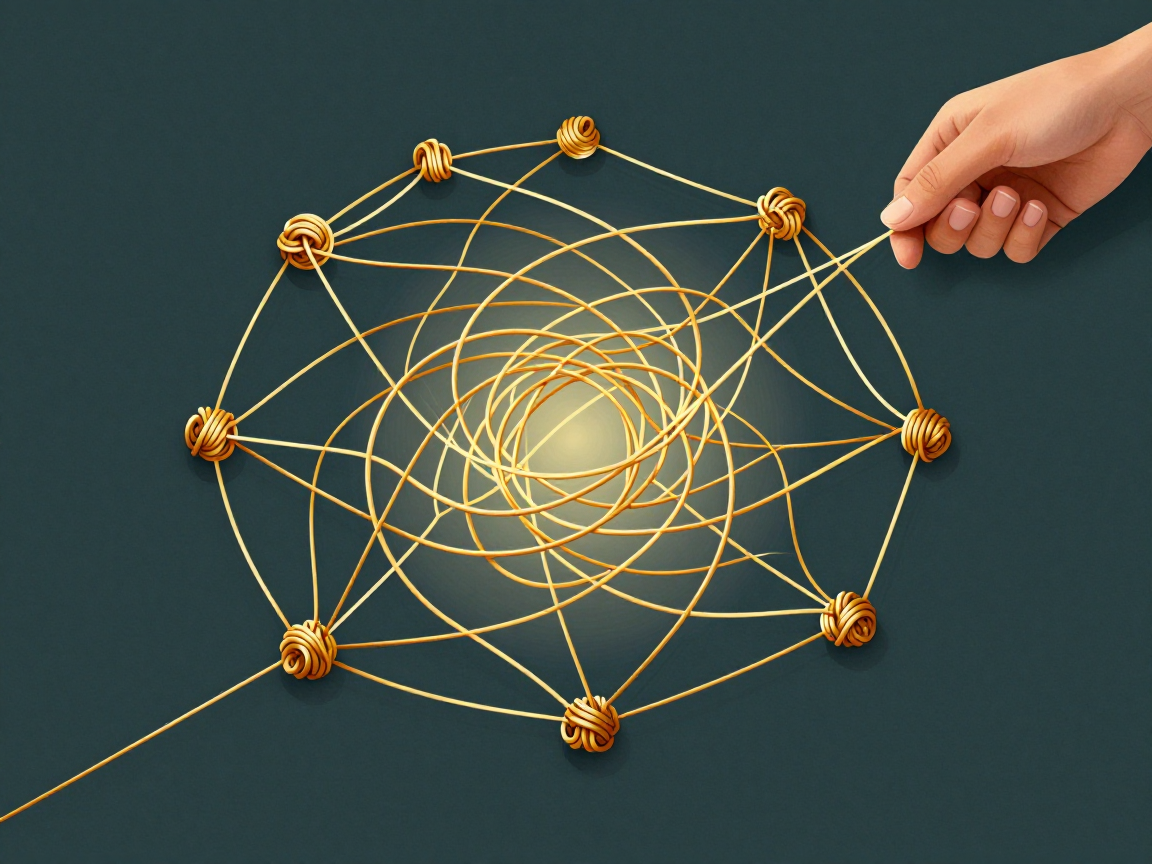
Most of us like to think of ourselves as independent agents—individuals who make choices based on our own logic, desires, and unique personalities. We believe that if we are anxious, it is because of our current job; if we are angry, it is because of our partner’s recent mistake. However, if you have ever felt like you were regressing into a frustrated, pouting teenager the moment you stepped into your parents’ house for a holiday dinner, you have experienced the invisible gravity of a system. You weren’t just an individual in that moment; you were a component in a complex, interlocking emotional machine.
Understanding family systems theory basics allows us to step back from the immediate frustration of a messy relationship and see the larger architecture at play. Developed by psychiatrist Dr. Murray Bowen in the 1950s, this framework suggests that a family is not just a collection of people, but a single emotional unit. To truly understand any one person’s behavior, you must understand the system they belong to. When we learn to identify the gears of this system, we stop reacting blindly to the people around us and start making conscious choices about who we want to be. It is the difference between being a pinball bounced around by others' emotions and being the player at the controls.
The Core Philosophy: The Family as a Living Organism
The fundamental shift in thinking when you study family systems theory basics is moving from "individual psychology" to "systems thinking." In traditional psychology, if a child is acting out at school, a therapist might look at the child’s internal struggles, brain chemistry, or personal trauma. In systems theory, the therapist looks at the child as the "identified patient"—the person who is expressing the anxiety of the entire family. The child's behavior is a symptom of a larger imbalance.
Think of a family like a mobile hanging over a crib. If you tug on one string, every other piece of the mobile moves, even the ones on the opposite side. This is because the system is always seeking a state of equilibrium, or "homeostasis." Homeostasis isn't necessarily a state of health; it is simply a state of familiarity. When one member changes—perhaps they stop drinking, start setting boundaries, or seek therapy—the rest of the system often works subconsciously to pull them back into their original role to maintain that balance. This is why "self-improvement" can sometimes feel so difficult; you aren't just fighting your own habits, you are fighting the collective gravitational pull of your family’s expectations and shared history.
The Eight Pillars of Family Systems Theory Basics
Murray Bowen identified eight interlocking concepts that form the foundation of this theory. Each one offers a different lens through which we can view our interactions and the "stuck" points in our lives. Understanding these pillars is essential for anyone looking to navigate complex relational waters with more grace and less reactivity.
1. Differentiation of Self
This is perhaps the most important concept in all of family systems theory basics. Differentiation is the ability to maintain your own sense of self while remaining emotionally connected to the group. A highly differentiated person can hold onto their values and goals even when the family is in a state of high anxiety. They can say "no" without feeling crushing guilt. Conversely, a person with low differentiation is "fused" with the system—their emotions are entirely dependent on how others are feeling. If their mother is upset, they feel a physical need to fix it. If their partner is distant, they feel they are literally disappearing.
2. Triangles
Bowen argued that a two-person relationship is inherently unstable because it cannot handle high levels of tension. To stabilize the relationship, a third person (or thing, like a job, a hobby, or an addiction) is brought in. This is called "triangulation." If two parents are fighting, they might focus all their energy on a "troubled" child to avoid dealing with their own marital issues. The tension is diverted, and the system stays stable, but the underlying problem is never addressed. Triangles are the most common way we manage anxiety in groups, often through gossip or venting to a third party rather than speaking directly to the person we are frustrated with.
3. Nuclear Family Emotional Process
This describes the four basic patterns that people use to manage anxiety within their immediate family unit. These patterns include:
- Reactive Distance: One or both partners withdraw to avoid conflict.
- Marital Conflict: Open, repetitive arguing that serves to discharge tension.
- Dysfunction in One Spouse: One person takes on a "sick," "weak," or "irresponsible" role, while the other becomes the "over-functioner."
- Impairment of One or More Children: The parents focus their shared anxiety onto a child, leading that child to struggle socially or academically.
4. Family Projection Process
This is the mechanism by which parents pass their own emotional problems and insecurities onto their children. If a parent is deeply insecure about their social standing, they may become hyper-focused on their child’s popularity. The child then begins to embody that anxiety, confirming the parent’s fear and creating a self-fulfilling prophecy. This process often targets the child who is most "attuned" to the parents' emotions.
5. Multigenerational Transmission Process
Patterns don't start with us. They are handed down through the generations. This concept explains how small differences in differentiation between parents and children can lead to significant variations in functioning over several decades. Your "short fuse" or your tendency to go silent when stressed might be a trait that has been refined and passed down since your great-grandparents lived through a specific era of trauma or scarcity. We are often living out scripts written 100 years ago.
6. Sibling Position
Bowen was heavily influenced by the work of Walter Toman regarding birth order. He believed that our position in the family (oldest, youngest, middle, or only) often dictates the roles we play and how we handle responsibility and leadership. For instance, oldest children often become the "over-functioners" of the system, while youngest children may be more comfortable being cared for. While not a rigid rule, these positions offer vital clues into how we manage anxiety in our adult relationships and workplaces.
7. Emotional Cutoff
When the anxiety in a family becomes too much to bear, some people choose to "cut off"—they move across the country, stop answering calls, or simply shut down emotionally while in the same room. While it feels like a solution or an act of independence, family systems theory basics suggest that cutoff is actually a sign of high fusion. You are so affected by the family that you have to physically remove yourself to survive. True differentiation, by contrast, involves staying in the room while remaining your own person.
8. Societal Emotional Process
This extends the theory to the world at large. Just like families, societies go through periods of high and low anxiety. In times of high societal stress—such as economic depressions or pandemics—people become more reactive, less thoughtful, and more prone to the same patterns of triangulation and scapegoating seen in small family units. Understanding this helps us see political and social movements through a systemic lens rather than an individualistic one.
The Invisible Architecture: Why We Repeat the Past
Understanding these family systems theory basics reveals why we often find ourselves in the same "type" of relationship over and over again. If you grew up in a family where tension was managed through triangulation, you are likely to unconsciously recreate those triangles in your workplace or with your friends. You might find yourself constantly playing the "mediator" between two coworkers, not realizing that you are simply repeating a role you learned at age six to keep your parents from fighting.
The beauty of this theory is that it removes the "villain" from the narrative. Instead of seeing a "toxic" mother or a "lazy" husband, we see individuals who are reacting to the systemic pressure of the emotional unit. This doesn't mean we excuse bad behavior, but it does mean we gain the clarity needed to stop the cycle. When we understand the architecture of the system, we can stop trying to change other people—which is usually impossible—and focus on changing our own position within the system. If you change your part in the dance, the other person must eventually change their steps or stop dancing altogether.
A 4-Step Framework for Analyzing Your System
If you want to move beyond the theory and start applying these family systems theory basics to your own life, you can use the following framework to gain a new perspective on your dynamics.
- Observe the Patterns (The "What"): For one week, try to be a "researcher" of your own life. When tension arises, don't just react. Ask yourself: Who is involved? Is a third person being brought in? Am I taking on someone else's anxiety? Look for the repetitive loops in your conversations, especially the ones that feel like they have been scripted.
- Create a Genogram (The "Whence"): A genogram is a complex family tree that tracks emotional patterns rather than just names and dates. Map out three generations of your family. Note where the cutoffs are, who the "over-functioners" are, and where the "under-functioners" (the ones who struggle) are. You will likely see the multigenerational transmission process in high definition. Look for patterns of divorce, addiction, or specific career paths.
- Identify Your Level of Reactivity (The "How"): Notice what happens to your body and mind when a family member or partner is upset. Do you feel a desperate need to fix it? Do you want to run away? Do you get defensive or preachy? This is your "reactivity," and it is the enemy of differentiation. Recognizing the physical sensation of reactivity is the first step toward slowing down and choosing a different response.
- Define Your "I" Position (The "Who"): Practice stating what you believe or what you will do, without making it an attack on others. This is the hallmark of a differentiated person. Instead of saying, "You always make me feel guilty about work," an "I" position sounds like, "I have decided to stay late this evening to finish this project, even though I know it means I will miss dinner." It is a statement of self, not a demand for others to change.
Moving From Reactivity to Response
The goal of learning family systems theory basics isn't to achieve a perfect, conflict-free family. That doesn't exist. The goal is "differentiation"—becoming a person who can be part of a group without losing themselves. When you are differentiated, you can listen to a family member's criticism without it shattering your self-worth. You can be present for someone else's pain without feeling the need to "fix" it just so you can feel more comfortable.
As you begin to change your behavior, the system will likely try to pull you back. This is often called "change back" pressure. If you have always been the one to mediate family fights and you suddenly stop, others may get angry with you, accuse you of being cold, or tell you that you've "changed for the worse." This is actually a sign that your work is having an impact. The equilibrium of the system has been disturbed, and you are no longer playing your assigned role.
By staying the course and maintaining your "I" position through the discomfort of the "change back" phase, you eventually force the system to find a new, hopefully healthier, equilibrium. You become the one who stops the transmission of anxiety to the next generation. It is difficult, often lonely work, but it is the most profound form of personal growth there is. Understanding the basics of the system is the first step toward true emotional freedom. When we see the strings, we finally have the chance to decide which ones we will continue to pull—and which ones we will let go.