The Invisible Fence: 15 Practical Emotional Boundaries Examples to Reclaim Your Mental Space
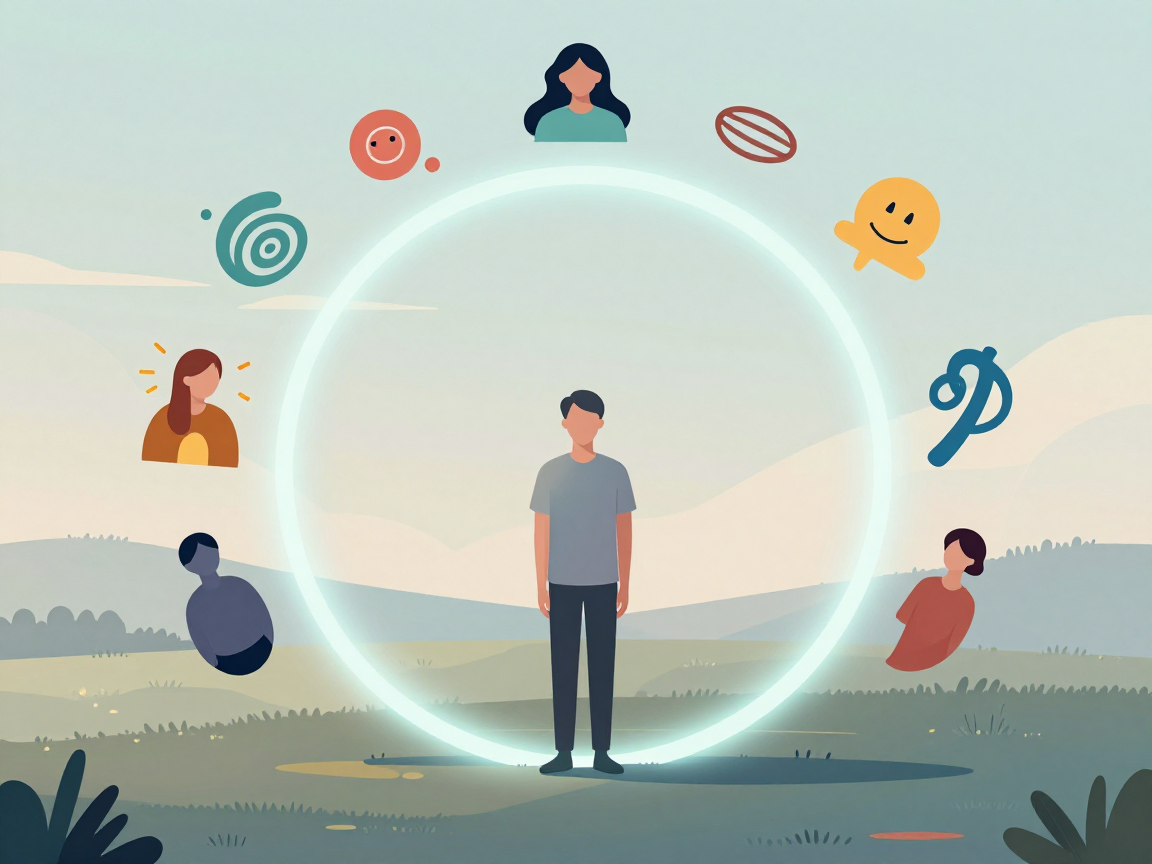
We have all been there—that sinking feeling in the pit of your stomach when a phone screen lights up with a specific name, or the exhausted silence that follows a conversation where you felt more like a sponge for someone else's drama than a participant. This heavy, drained sensation is often the first sign that your internal borders have been breached. Unlike physical boundaries, which are marked by doors and locks, emotional boundaries are invisible. They are the mental and energetic lines we draw to define where we end and where someone else begins.
Without these lines, we often find ourselves living in a state of chronic "emotional enmeshment." We take on the stress of our partners, the anxieties of our parents, or the urgent demands of our bosses as if they were our own. Learning how to implement emotional boundaries examples in your daily life isn't about building a wall to keep people out; it is about building a gate that allows you to decide what stays out and what is allowed in. It is the fundamental difference between being an empathetic listener and becoming an emotional dumping ground.
The Science of Emotional Sovereignty
To understand why we need emotional boundaries, we must first look at the concept of emotional sovereignty. This is the state of being the primary authority over your own internal world. When your sovereignty is compromised, you become "reactive" rather than "active." You spend your day reacting to the moods of others, trying to fix feelings that aren't yours to fix, or feeling guilty for needs that are perfectly valid.
Healthy emotional boundaries examples serve as a protective layer for your nervous system. When you know where your responsibility ends, your brain can step out of "fight or flight" mode. You no longer feel the biological urge to "fawn"—a trauma response where we over-accommodate others to avoid conflict. Instead, you develop a sense of self-containment. This doesn't mean you stop caring; it means you care from a place of abundance rather than depletion. You realize that you can be compassionate toward someone's struggle without drowning in the deep end alongside them.
Psychologically, boundaries are divided into three types: porous, rigid, and healthy. Porous boundaries lead to over-sharing and difficulty saying no. Rigid boundaries lead to isolation and a refusal to be vulnerable. Healthy boundaries are flexible; they protect you while still allowing for intimacy. The goal is to move toward the middle ground where you are both safe and connected.
15 Essential Emotional Boundaries Examples for Daily Life
Implementing these boundaries often feels awkward at first. You might feel like you are being "mean" or "cold." However, clarity is kindness. By being clear about what you can and cannot take on, you are actually making your relationships more sustainable. Here are several practical emotional boundaries examples categorized by where they are most often needed.
Boundaries with Family and Parents
Family dynamics are often the most difficult place to start because the patterns are so deeply rooted. You might have spent decades playing a specific role, such as the "fixer" or the "listener." Breaking those patterns requires specific, firm language.
- The "Not Today" Boundary: "I love you and I want to hear about what is going on, but I don't have the emotional capacity to discuss this specific topic right now. Can we talk about something else?"
- The Unsolicited Advice Boundary: "I appreciate that you are trying to help, but I am not looking for advice on my career right now. I just need you to listen and support me as I figure it out."
- The Venting Limit: "I can listen to you vent about your sister for ten minutes, but after that, I need to change the subject for my own peace of mind."
- The Guilt-Trip Block: "I understand you're disappointed I can't come over this weekend, but I won't engage in a conversation where I'm made to feel like a bad person for needing rest."
Boundaries in Romantic Relationships
In a partnership, it is easy to lose yourself in the other person's world. Healthy emotional boundaries examples in romance ensure that both partners remain individuals rather than becoming a single, blurred entity.
- The Processing Space Boundary: "I can see that you are upset, but I am starting to feel overwhelmed. I need to take twenty minutes of alone time to calm down before we continue this conversation."
- The Ownership Boundary: "I understand you are frustrated with your job, but I cannot be the person who fixes your mood every evening. I need you to find a therapist or a hobby to help manage that stress."
- The Digital Boundary: "I don't want to discuss serious relationship issues over text message. Let's wait until we are face to face."
- The Social Energy Boundary: "I know you want to go to the party, and I want you to go and have fun, but I need to stay home tonight to recharge. I'll see you when you get back."
Boundaries in the Workplace
Work is a major source of "emotional leakage." We often feel pressured to be "on" at all times, leading to burnout and resentment.
- The Availability Boundary: "My working hours end at 5 PM. I won't be checking my emails after that time so I can focus on my family and recovery."
- The Urgency Filter: "I understand this feels like a crisis, but I am currently focused on a high-priority task. I can look at this tomorrow morning."
- The Emotional Labor Boundary: "I enjoy our team chats, but I'd prefer to keep our conversations focused on professional matters rather than personal drama."
- The Feedback Boundary: "I value your input, but I would prefer if we could schedule a time for feedback sessions rather than having them brought up spontaneously in front of the team."
Internal and Social Boundaries
These are the boundaries we set with ourselves and our broader social circles.
- The Oversharing Boundary: "I'm not comfortable sharing the details of my medical situation right now, but thank you for asking."
- The Negative News Boundary: "I am taking a break from social media and the news this week to manage my anxiety levels."
- The Time Commitment Boundary: "That sounds like a wonderful cause, but I don't have the bandwidth to volunteer right now. I'll reach out if that changes in the future."
The Resentment Radar: How to Know When a Boundary is Missing
One of the most effective ways to identify where you need to apply emotional boundaries examples is to check your "Resentment Radar." Resentment is a powerful internal signal. It usually surfaces when you have said "yes" when you wanted to say "no," or when you feel someone is overstepping into your private mental space.
If you find yourself feeling bitter toward a friend who always calls to complain, or if you feel a sense of dread before a weekly meeting, that is your intuition telling you that a boundary has been crossed. Other signs include:
- Walking on Eggshells: Feeling like you must curate your every word to avoid triggering someone else’s reaction.
- The Expectation Trap: Wishing people would just "know" what you need without you saying it.
- The Emotional Hangover: Feeling physically or mentally exhausted after spending time with specific individuals.
- Chronic Justification: Over-explaining your choices or justifying why you can't help someone instead of giving a simple "no."
When these feelings arise, don't judge yourself. Instead, treat them as data. They are pointing directly to the areas of your life that require more structure and protection.
A 5-Step Action Plan for Setting Firm Boundaries
Setting a boundary is a skill that must be practiced. It is not a one-time event but a continuous process of self-advocacy. Use this framework to move from feeling overwhelmed to feeling empowered.
1. Identify the Breach
Pinpoint the exact moment you start to feel drained or resentful. Is it a specific person? A specific topic? A specific time of day? Clarity is the first step toward change.
2. Define the Need
Ask yourself: "What do I need right now to feel safe and respected?" This might be silence, physical distance, a change in conversation, or a limit on how much time you spend on a task.
3. Use the "I" Statement
Frame your boundary around your own experience rather than the other person's behavior. This reduces defensiveness. Instead of saying "You always dump your problems on me!", try "I feel overwhelmed when our conversations are primarily about heavy topics, and I need to lighten the mood today."
4. Communicate Clearly and Briefly
Use one of the emotional boundaries examples mentioned above. Keep it short. Do not over-explain. The more you justify your boundary, the more it sounds like a negotiation rather than a limit. You do not need a three-page essay to justify your need for peace.
5. Maintain the Line with Action
This is the hardest part. If the person ignores the boundary, you must follow through with an action. For example: "I mentioned I can't talk about this right now, so I'm going to hang up the phone. I'll call you tomorrow when I'm in a better headspace."
Navigating the "Pushback" Period
When you start implementing emotional boundaries examples, people who benefited from you having no boundaries will likely push back. This is a natural, if uncomfortable, part of the process. In psychology, this is known as an "extinction burst." When a person is used to getting a certain result (your compliance) and suddenly doesn't get it, they may ramp up their efforts—guilt-tripping, anger, or passive-aggression—to get you to return to the old status quo.
It is vital to realize that their reaction to your boundary is not your responsibility. Their discomfort is a sign that the boundary was necessary. If someone truly cares about you, they will eventually respect your need for space and sovereignty. If they don't, that is valuable information about the health and viability of the relationship itself. You are not responsible for managing their reaction to your health.
The Long-Term Benefits of Emotional Health
Choosing to live with clear emotional boundaries examples in mind transforms your life from the inside out. You will notice that your energy levels stabilize. You will find that you have more "genuine" empathy to give because you aren't constantly running on empty. When you stop leaking energy into every person and problem that comes your way, you finally have the capacity to invest in your own goals and joy.
Boundaries are not a way to control others; they are a way to control your own environment. By defining what is "you" and what is "not you," you create the mental space necessary for growth, creativity, and true connection. Start small—choose one relationship or one situation this week where you can state a clear limit. You might be surprised at how much lighter you feel when you finally put down the bags that never belonged to you in the first place. Over time, these small acts of self-respect build a life that feels like your own again.