Why You Feel Like a Teenager Around Your Parents: A Guide to Differentiation from Family
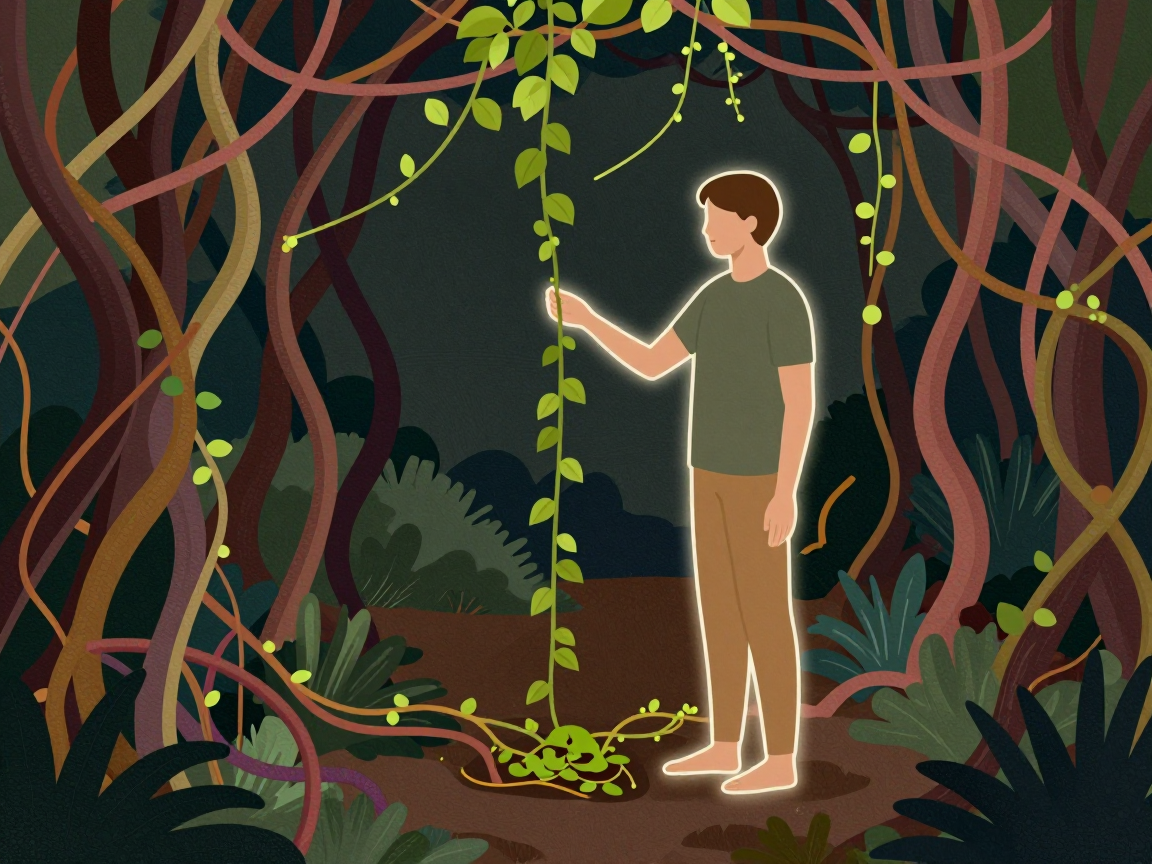
It is a phenomenon nearly everyone has experienced at least once. You are a functional, independent adult with a career, a mortgage, and perhaps children of your own. You navigate complex social dynamics and make high - stakes decisions every day. Yet, the moment you walk through the front door of your childhood home, you feel the years peel away like old paint. Within twenty minutes, you are arguing with your mother about the way you load the dishwasher or feeling the familiar, stinging resentment of being overlooked by your father. You have, quite literally, regressed.
This emotional time travel is the result of a lack of differentiation from family. In the world of family systems therapy, differentiation is the process of becoming an individual while remaining emotionally connected to the group. It is the delicate balance of being a 'me' within a 'we'. When we fail to differentiate, we remain 'enmeshed' - a state where our emotional well - being is entirely dependent on the approval, moods, and expectations of our relatives. Learning to achieve differentiation from family is not about cutting people off or becoming cold; it is about developing a solid sense of self that does not dissolve the moment a sibling makes a sarcastic comment or a parent expresses disappointment.
The Psychological Anatomy of Differentiation
The concept of differentiation from family was pioneered by psychiatrist Murray Bowen. He viewed the family as an emotional unit, much like a single organism. In a highly 'fused' family, if one person gets anxious, everyone gets anxious. If one person is angry, everyone walks on eggshells. There is a silent, often unconscious demand for togetherness that overrides the need for individual identity. In these systems, being different is often perceived as a betrayal or an act of hostility.
Differentiation of self exists on a spectrum. On one end, you have individuals who are highly 'fused'. These people have a 'pseudo - self' that shifts depending on who they are with. They may say what others want to hear just to keep the peace, or they may become incredibly reactive, fighting against their family just to prove they are separate. On the other end of the spectrum is the well - differentiated person. This individual can hold onto their own values, beliefs, and emotions even when the family system is under pressure. They can stay in the room during a heated argument without taking the bait or feeling responsible for everyone else's feelings.
Achieving differentiation from family is a lifelong journey. It requires us to move away from 'emotional reactivity' - that knee - jerk response where we yell, cry, or shut down - and move toward 'thoughtful response'. It involves recognizing that your mother's anxiety is her own, and you do not have to carry it for her to be a 'good' son or daughter.
Signs You Are Struggling with Differentiation from Family
How do you know if you are still emotionally fused with your family of origin? Often, the signs are subtle and disguised as 'loyalty' or 'closeness'. However, true closeness allows for disagreement, whereas enmeshment demands conformity. Here are some common indicators that you might need to work on your differentiation from family:
- Emotional Contagion: If your parents are having a bad day, your entire mood is ruined, even if you are miles away from them.
- The Need for Constant Approval: You find it impossible to make a major life decision - such as buying a house or changing careers - without first ensuring your family agrees with the choice.
- Chameleon Behavior: You find yourself changing your opinions, your political views, or even your tone of voice to match your family members when you are around them.
- Fear of Conflict: You avoid bringing up certain topics or setting boundaries because you are terrified of the 'fallout' or the emotional distance it might create.
- Taking Sides: You find yourself constantly pulled into 'triangles' where you are forced to mediate between two other family members, such as a mother and a brother.
- Extreme Reaction: You find yourself either exploding in anger or completely shutting down (emotional cutoff) during family interactions, rather than being able to state your perspective calmly.
Differentiation vs. Emotional Cutoff: The Great Misconception
A common mistake people make when trying to achieve differentiation from family is confusing it with emotional cutoff. When the pain of enmeshment becomes too much, many people decide to stop calling, stop visiting, and block their family members entirely. While there are certainly toxic or abusive situations where no - contact is necessary for safety, a 'cutoff' is often just the flip side of enmeshment.
If you have to run away from your family to feel like yourself, you are still being controlled by them. Your identity is still being defined in reaction to them. True differentiation from family means you can be in the same room as your difficult relatives, hear their criticisms, and not feel your sense of self crumble. It is the ability to say, "I hear that you are disappointed in my choice, and I am okay with you feeling that way", without needing to change your choice to soothe their disappointment. Cutoff is a physical solution to an internal emotional problem. Differentiation is an internal solution that allows for physical presence.
A 5-Step Framework for Practicing Differentiation
Building a separate self within a family system is like strengthening a muscle. It requires intentionality and a willingness to be uncomfortable. You can use the following framework to begin the process of differentiation from family.
1. Observe the Patterns (The Researcher Phase)
The first step is to become a 'researcher' of your own family. The next time you are at a family gathering, try to detach yourself emotionally and simply watch. Who talks to whom? What topics are off - limits? Who starts the 'triangles'? When do you feel your heart rate spike? By observing rather than reacting, you create a small gap of space between the stimulus and your response.
2. Define the 'I' Position
Practice making 'I' statements that reflect your own thoughts and feelings rather than 'You' statements that blame or 'We' statements that assume consensus. Instead of saying, "You always make me feel guilty about work", try saying, "I have decided that my career is a priority right now, and I understand if that is hard for you to hear". The 'I' position is about stating your reality without demanding that others validate it.
3. Decrease Emotional Reactivity
When a family member says something 'triggering', your body likely goes into a fight - or - flight response. Differentiation from family requires you to regulate this physical response. Take slow breaths. Remind yourself, "I am an adult, and I am safe". If you can stay calm, you deny the family system the 'fuel' it needs to maintain the old, dysfunctional cycle.
4. Step Out of Triangles
Triangling happens when two people are in conflict and they pull in a third person to relieve the tension. If your father complains to you about your mother, he is triangling you. To differentiate, you must politely decline the role. You might say, "That sounds like something you should talk to Mom about. I don't want to be in the middle of your relationship". It will feel 'mean' at first, but it is actually the healthiest thing you can do for the system.
5. Allow Others to Be Responsible for Their Feelings
This is perhaps the hardest part of differentiation from family. You must accept that your family members might be unhappy, angry, or disappointed by your boundaries. Their feelings are their responsibility, not yours. If you set a boundary and your mother cries, her tears are her way of processing her reality. You do not have to 'fix' her sadness to be okay yourself.
Navigating the Pushback: The 'Change Back' Phenomenon
When you begin the work of differentiation from family, the system will almost certainly push back. Family systems seek homeostasis - they want things to stay exactly as they have always been. When you stop playing your assigned role (the 'caretaker', the 'rebel', the 'black sheep'), the other members will feel anxious.
They may use guilt, shame, or even sudden crises to pull you back into your old patterns. Psychologists call this the 'Change Back!' reaction. It sounds like, "You've changed, you're so selfish now", or "We used to be so close, what happened?". Recognizing this pushback as a sign of progress, rather than a sign that you are doing something wrong, is vital. If you can withstand the pressure to 'change back' without becoming defensive or aggressive, the system will eventually be forced to adjust to the 'new you'.
The Freedom of the Differentiated Self
Ultimately, differentiation from family leads to a much deeper and more authentic form of intimacy. When you are no longer afraid of losing yourself in your family, you can actually enjoy them more. You can appreciate your parents as flawed human beings rather than all - powerful figures whose approval you must win. You can engage with your siblings as peers rather than rivals for attention.
Differentiation is the path to a life where your choices are driven by your own internal compass rather than the inherited anxieties of your ancestors. It is a quiet, internal revolution that transforms the way you move through the world - not just within your family, but in your friendships, your workplace, and your romantic relationships as well. You stop looking for others to complete you or define you, because you have finally done the hard work of defining yourself.