Why Belonging Still Feels Out of Reach: The Deep Work of Cultivating Community
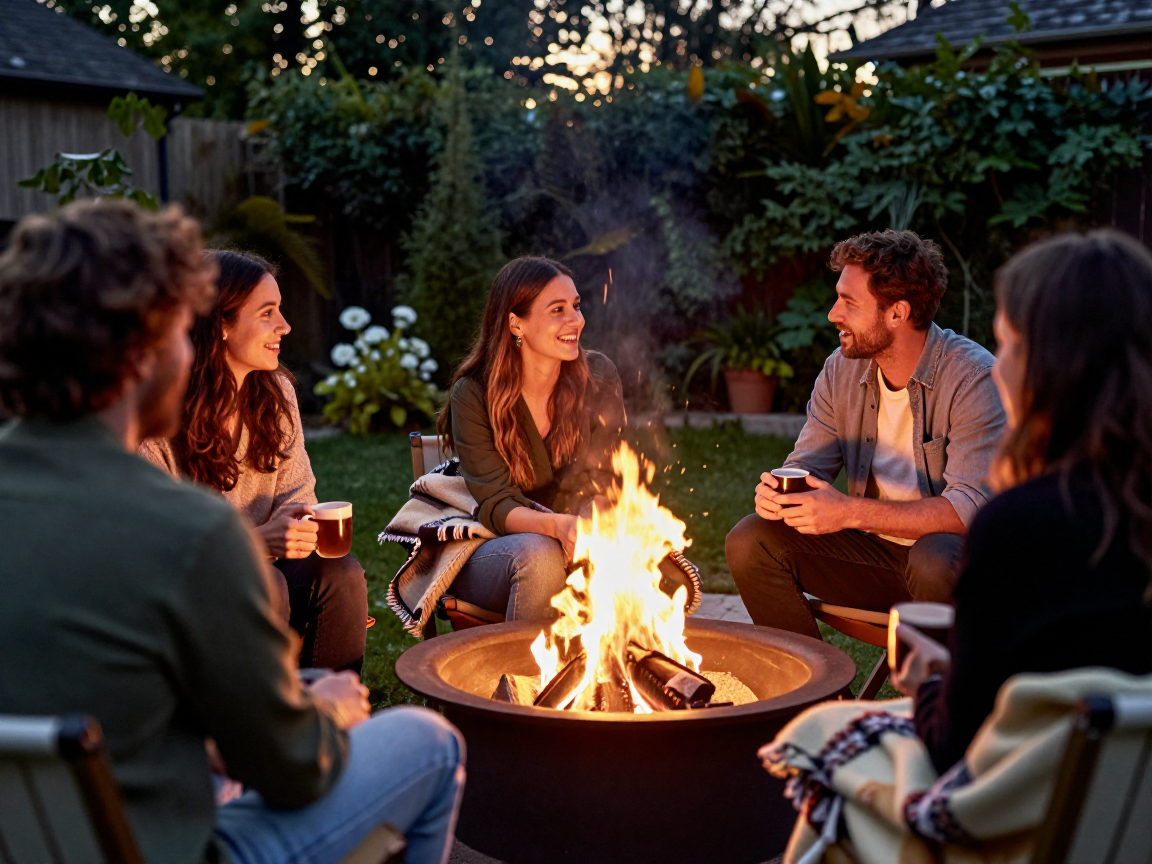
We live in an era of unprecedented connectivity that somehow leaves us feeling more isolated than ever before. We can broadcast our thoughts to thousands of people with a single tap, yet many of us struggle to name a single person we could call at three in the morning during a crisis. This paradox exists because we have confused proximity and digital interaction with the slow, deliberate process of cultivating community. While a network is something you use, a community is something you belong to - and that distinction makes all the difference in our mental and emotional well-being.
Cultivating community is not a passive event. It is not something that happens to you because you moved into a certain neighborhood or joined a specific gym. Rather, it is a persistent, organic practice that requires the same patience and attention as gardening. It involves tilling the soil of shared values, planting the seeds of vulnerability, and weathering the inevitable storms of conflict. To move from a life of surface-level interactions to one of deep belonging, we must understand the underlying architecture of human connection and commit to the long-form work of building a support system that sustains us.
The Architecture of True Belonging
To begin the journey of cultivating community, we first have to deconstruct the myth that community is a destination. We often speak of finding our tribe as if they are a hidden treasure waiting to be discovered in a specific coffee shop or online forum. In reality, community is a set of behaviors. It is the repeated decision to show up, even when it is inconvenient, and to be seen, even when it feels risky.
Social scientists often point to the concept of the "Third Place" - a term coined by sociologist Ray Oldenburg. These are the spaces outside of home (the first place) and work (the second place) where people gather to exchange ideas and enjoy company. In recent decades, these third places have eroded, replaced by digital environments that prioritize engagement over embodiment. When we are cultivating community in the modern world, we are often working against a cultural current that favors individual convenience over collective commitment. To build something that lasts, we must prioritize physical or intentional presence over the transactional nature of most modern social interactions.
The Three Pillars of a Flourishing Circle
Deep connection does not arise from shared hobbies alone. You can be in a room full of people who love the same music as you and still feel completely alone. Cultivating community requires a foundation built on three specific pillars: consistency, vulnerability, and mutual responsibility.
Consistency and the Power of the Mundane
Trust is not built in high-stakes moments of drama; it is built in the mundane repetition of showing up. This is why childhood friendships often feel so deep - they were forged in the thousands of hours of "nothing" that occur in school hallways and summer afternoons. As adults, we have to manufacture this consistency. Cultivating community requires creating rituals - a weekly dinner, a monthly book club, or even a standing Saturday morning walk - that do not require a new invitation every time. When the event is a given, the energy moves from the logistics of meeting to the depth of the connection.
Reciprocal Vulnerability
There is a common misconception that we should only show our best selves to others until we know them well. However, vulnerability is the very currency of connection. When you share a struggle, a fear, or a failure, you give others permission to do the same. In the process of cultivating community, vulnerability acts as the bridge between being an acquaintance and being a confidant. This does not mean oversharing with strangers, but it does mean being the first one to drop the mask of "I am doing great" in favor of something more honest.
Mutual Responsibility and Care
A group becomes a community when the members feel responsible for one another. This is the shift from "I am here for the activity" to "I am here for the people". Cultivating community means noticing when someone is absent. It means reaching out when you know a friend has a big presentation at work or a difficult anniversary. It is the transition from a consumer mindset - what can this group do for me? - to a contributor mindset - what do these people need from me?
A Five-Step Framework for Cultivating Community
If you feel starting from scratch is overwhelming, follow this structured approach to begin cultivating community in your own life. This framework moves from internal reflection to external action, ensuring that the bonds you build are aligned with who you actually are.
- Identify Your Core Values: Community is most resilient when built on shared values rather than just shared interests. Ask yourself: What do I value most? Is it growth, service, creativity, or family? When you lead with your values, you attract people who see the world through a similar lens.
- Audit Your Current Circles: Look at the people already in your life. Is there a spark of connection with a coworker or a neighbor that you have ignored? Cultivating community often starts with deepening existing relationships rather than constantly seeking new ones. Identify two or three people who you would like to know better.
- Initiate the Ritual: Don't wait for the perfect invitation; create it. The secret to cultivating community is being the "initiator". Propose a low-pressure, recurring gathering. It could be as simple as "I am going to be at this park every Thursday at 5 PM if anyone wants to join". By removing the need for constant planning, you lower the barrier to entry.
- Embrace the Awkward Middle: Every new community goes through an "awkward phase". The initial excitement wears off, and the deep intimacy has not yet developed. This is where most people quit. Cultivating community requires pushing through the silence, the small talk, and the fear that no one actually likes you. Consistency is the only cure for this phase.
- Navigate Friction with Grace: Real community is messy. People will let you down, say the wrong thing, or have different political views. Rather than ghosting or exiting at the first sign of conflict, use these moments to practice healthy communication. A community that has survived a disagreement is often ten times stronger than one that has only known harmony.
Common Pitfalls to Avoid
While the desire for connection is universal, the path to cultivating community is filled with common traps that can stall your progress. Recognizing these early can save you months of frustration.
- The Expectation of Instant Intimacy: Deep bonds take time. Research suggests it takes about 50 hours of time together to move from acquaintance to casual friend, and over 200 hours to become a close friend. Be patient with the clock.
- Over-Curating Your Life: If you only show the "Instagram version" of your life, people can only connect with that version. Cultivating community requires the courage to be messy and imperfect.
- The Passive Participant Trap: Many people join groups and wait to be "welcomed" or "included". True belonging is an active sport. If you want to feel included, look for the person in the room who looks even more nervous than you and welcome them.
- Prioritizing Quantity Over Quality: It is better to have four people who truly know you than forty people who only know your name. Don't spread your emotional energy too thin.
The Role of Ritual in Sustaining Connection
Once the initial work of cultivating community has begun, the challenge shifts to sustainability. Life gets busy, people move, and priorities shift. The only way to keep a community alive over years and decades is through the power of ritual. A ritual is more than just a habit; it is a habit infused with meaning.
Whether it is an annual camping trip, a specific way of celebrating birthdays, or a text thread where everyone shares one thing they are grateful for every Friday, these rituals serve as the "connective tissue" of the group. They remind the members that they belong to something larger than themselves. In the process of cultivating community, these rituals become the landmarks that people look forward to when the rest of life feels chaotic. They provide a sense of continuity that is increasingly rare in our fast-paced world.
Identifying a Healthy Community: A Checklist
As you invest your time and heart into cultivating community, use this checklist to ensure the environment you are building is healthy and life-giving:
- Do you feel more energized or more drained after spending time with this group?
- Is there room for dissenting opinions, or is there a pressure to conform?
- Can you share a failure without the fear of being judged or mocked?
- Is the support reciprocal, or is one person doing all the emotional labor?
- Does the group encourage your individual growth, even if it means you might change?
- Is there a healthy balance between focusing on the group and welcoming newcomers?
The Long Game of Belonging
Cultivating community is perhaps the most significant investment you can make in your long-term health. Studies have shown that social isolation is as damaging to our physical health as smoking fifteen cigarettes a day. But beyond the biological benefits, there is a profound spiritual and emotional peace that comes from being known.
We were never meant to carry the weight of existence alone. We were meant to share the load, to laugh at the absurdity of our challenges, and to provide a mirror for one another's strengths. The work of cultivating community is often slow, sometimes thankless, and occasionally painful. But when you find yourself in a circle of people who truly see you - and who you truly see in return - you realize that every ounce of effort was worth it. Start small, be consistent, and keep your heart open. The community you are looking for is likely looking for you, too.