The Secret of the Flow: Why Mastering the Circulation of Wealth is the Real Key to Abundance
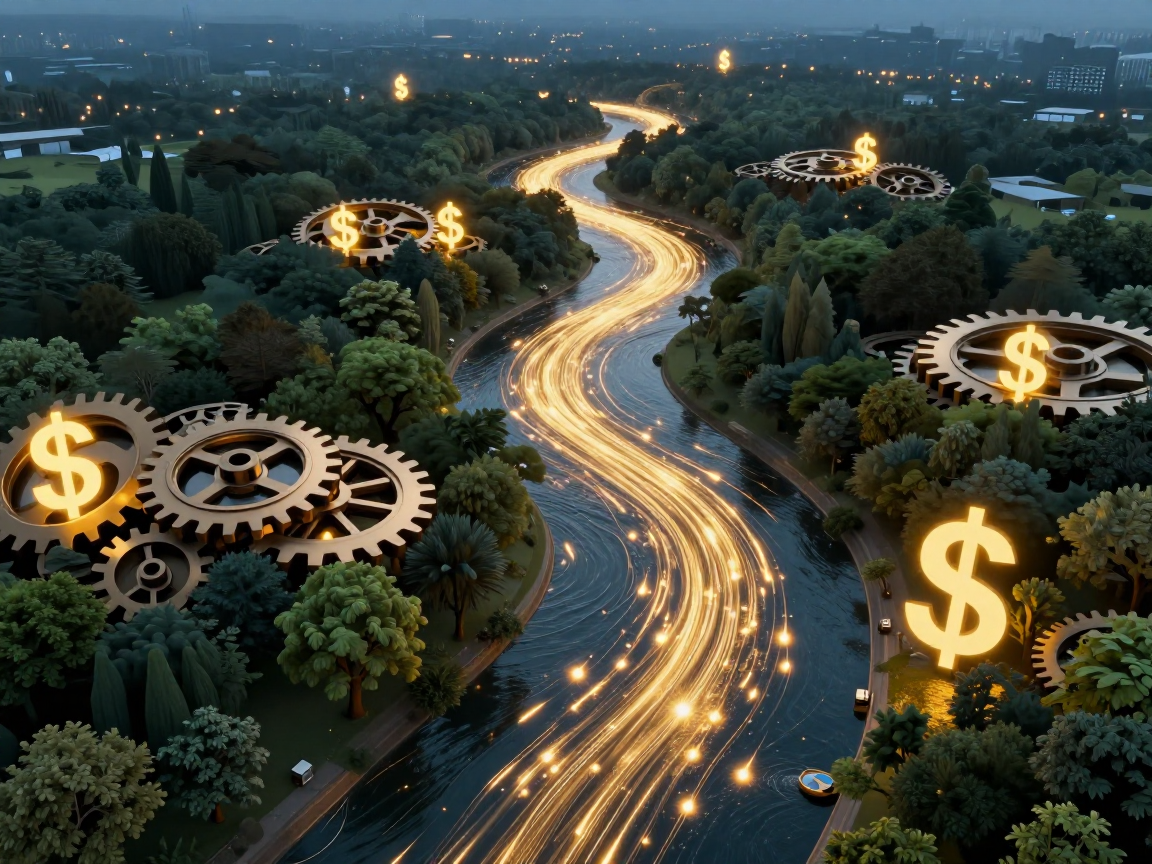
Most people view wealth as a destination—a static mountain of gold or a specific number in a bank account. We are taught to gather, to hoard, and to protect. While the impulse to save is a fundamental pillar of financial health, focusing solely on accumulation often leads to a phenomenon known as "financial stagnation." In reality, money is more like water than gold. When water sits still, it becomes stagnant and loses its life-sustaining properties. When it flows, it generates power, nourishes ecosystems, and remains fresh. This movement is what economists and philosophers alike call the circulation of wealth.
Understanding the circulation of wealth requires a profound shift in perspective. It asks us to move away from a scarcity mindset—the pervasive fear that there is a finite amount of money that must be captured and kept—and toward a mindset of stewardship and utility. True prosperity is not found in the quantity of currency one sits upon, but in the velocity and direction of that currency as it moves through your life and the lives of others. The word "currency" itself shares a root with "current," implying a flow. By mastering this flow, you transition from being a mere collector of coins to an active participant in a dynamic economic engine.
The Fundamental Mechanics of Wealth in Motion
At its core, the circulation of wealth is the continuous movement of capital through an economy. When you spend, invest, or donate, you are not simply losing money; you are participating in a cycle that provides income for others, who then spend that money elsewhere. This creates what is known as the multiplier effect. A single dollar, when moved effectively, can facilitate dozens of transactions, supporting multiple families and businesses along the way. In a healthy system, wealth is never "gone"; it is simply in someone else's hands, creating value before eventually returning to the pool of opportunity.
However, this concept applies to the individual level just as much as the national level. If your assets are tied up in non-productive forms—such as cash hidden under a mattress or high-fee accounts that offer no real growth—you are effectively removing that capital from the circulation of wealth. This creates a personal drag on your financial potential. To build real abundance, your money must be "working"—which is simply another way of saying it must be circulating into productive ventures that create more value than they consume. This distinguishes "wealth," which is the capacity to generate value, from "money," which is merely the medium of exchange.
Economists often measure the health of an economy by the velocity of money. A high velocity means money is changing hands frequently, indicating a vibrant, healthy market. A low velocity suggests that people are hoarding cash out of fear, which leads to recessions. On a personal level, your own financial velocity determines your growth. Are you moving your capital into assets that appreciate, or is your wealth stuck in a holding pattern that barely keeps pace with inflation? High-velocity individuals understand that money is a tool meant to be used, not a trophy to be displayed.
The Psychology of the Flow vs. The Fear of Loss
One of the greatest barriers to the circulation of wealth is the psychological grip of scarcity. Many individuals grow up with the belief that money is a limited resource that, once spent, is gone forever. This often stems from ancestral patterns or traumatic financial experiences where resources were truly scarce. This leads to a defensive posture where every penny is guarded with anxiety. While fiscal responsibility is vital, this level of fear actually constricts your ability to recognize opportunities. When you are focused entirely on what is leaving your pocket, you lose the peripheral vision necessary to see what could be coming in.
Mastering the circulation of wealth involves adopting the role of a steward rather than a hoarder. A steward understands that they are a temporary custodian of value. Their job is to direct that value into places where it can grow, help, and transform. This mindset shift reduces the "cortisol spike" often associated with spending. Instead of seeing an expense as a loss, the steward sees it as an exchange or an investment. They understand that by letting go of a smaller amount now, they are clearing the path for a larger flow later.
This does not mean reckless spending. In fact, reckless spending is a poor form of circulation because it often directs wealth toward depreciating assets or exploitative systems that do not return value to the cycle. It is a leak, not a current. True circulation is intentional. It is about choosing to move wealth into channels that reflect your values and long-term goals. When you stop "clutching" your money, you create the mental and emotional space to attract more of it. You become a conduit for wealth rather than a dead end for it. This psychological openness allows you to pivot when the market changes, rather than drowning with the sinking ship of a dead asset.
The 5-Pillar Framework for Healthy Wealth Circulation
To move from theory to practice, you need a structured way to manage the flow of your resources. The following framework provides a roadmap for ensuring that the circulation of wealth remains a positive force in your life.
1. Productive Investment
This is the most traditional form of circulation. By placing your capital into stocks, bonds, real estate, or small businesses, you are providing the fuel that these entities need to grow. In exchange for the use of your "stored value," they provide you with a return. This keeps the money moving through the productive sectors of society while increasing your personal net worth. The goal here is to select vehicles that have their own internal circulation, such as companies that reinvest their profits to innovate.
2. Strategic Consumption
Not all spending is created equal. Strategic consumption involves spending money on goods and services that provide high utility, improve your quality of life, or support local and ethical ecosystems. When you buy a high-quality tool that lasts ten years instead of a cheap one that breaks in six months, you are practicing a smarter form of circulation. You are supporting craftsmanship, reducing waste, and ultimately saving your future self from unnecessary costs. This is about being a conscious participant in the market.
3. Generative Giving (Philanthropy)
Giving is often misunderstood as a net loss, but in the context of the circulation of wealth, it is a powerful unblocker. Generosity breaks the psychological grip of scarcity and signals to the subconscious that there is more than enough. On a practical level, it supports the social infrastructure—such as education, health, and the arts—that makes a high-functioning economy possible. Many of the most successful individuals in history have viewed giving as a necessary part of their financial "breathing" cycle: you must exhale to inhale.
4. Self-Improvement Capital
One of the most effective ways to ensure the continued circulation of wealth is to invest it back into your own "human capital." This means paying for education, skill development, health, and experiences that expand your perspective. Unlike physical assets, the knowledge and health you gain cannot be taken away, and they significantly increase your future capacity to generate and circulate value. This is the only investment with a guaranteed 100% ownership stake and zero maintenance costs outside of your own time.
5. Operational Liquidity
Finally, you must maintain a portion of your wealth in a liquid state. This is not for hoarding, but for "agility." True circulation requires the ability to seize unexpected opportunities. If all your wealth is "locked" and cannot move, you cannot participate in new cycles of growth when they appear. This liquidity acts as the lubricant for your entire financial machine, ensuring that when the right deal or life change appears, you have the "fuel" ready to move immediately.
Why Stagnation is the Enemy of Growth
What happens when the circulation of wealth stops? In nature, a pond without an inlet or outlet becomes a breeding ground for bacteria and eventually dries up or becomes toxic. In a household, stagnant wealth often leads to a "preservation" mindset that prevents any risk-taking. Without risk, there is no innovation. Without innovation, there is no growth. Wealth that is strictly guarded eventually loses its vitality, as the holder becomes more concerned with protecting what they have than creating what could be.
Stagnation often manifests as "dead assets." These are things you own that cost you money to maintain but provide no return, either financial or emotional. An old car sitting in the driveway, a collection of items you no longer use, or a savings account with an interest rate lower than inflation are all examples of stalled circulation. By liquidating these dead assets, you free up the "trapped energy" within them, allowing you to reinvest that value into something that actually moves your life forward. This clearing process is essential for making room for new prosperity.
Furthermore, when wealth does not circulate, it tends to lose its "purchasing power" over time. Inflation is the natural enemy of the hoarder. By keeping money out of circulation, the hoarder ensures that their wealth will slowly evaporate. The only way to outpace this natural decay is to keep the wealth moving into assets that grow faster than the rate of currency devaluation. Movement is the only true form of protection in an inflationary world.
Breaking the Blocks: A Practical Action Plan
If you feel that your financial life is stuck, it is likely that the circulation of wealth has been interrupted somewhere in your system. Use this checklist to identify where the blockage might be:
- Audit Your "Dead" Assets: Identify three things you own that are currently providing no value. Can they be sold or traded to put that capital back into a productive cycle? This includes physical objects and neglected financial accounts.
- Evaluate Your "Fear Spends": Look at your monthly expenses. Are you spending money out of fear (e.g., over-insurance, unnecessary security, hoarding supplies) or out of a desire for growth? Reallocate 10% of fear-based spending toward growth-based investment.
- Set a "Flow Ratio": Determine a percentage of your monthly income that must go toward circulation—whether that is through investment, charity, or self-development—before you pay for your basic "static" needs. This prioritizes the movement of money.
- Support Local Ecosystems: The next time you make a purchase, consider the "path" that money will take. Does it go to a giant corporation where it might sit in a cash reserve, or does it go to a local business owner who will spend it back into your own community? Supporting local increases the likelihood of that wealth returning to you through a stronger local economy.
- Refresh Your Education: Dedicate a specific "circulation budget" to learning a new skill this quarter. This keeps your mind as dynamic as your bank account and ensures your human capital stays relevant.
The Macro Effect: Your Role in the Global Engine
It is easy to feel that your individual financial choices do not matter in the grand scheme of things. However, the global economy is nothing more than the sum of billions of individual decisions regarding the circulation of wealth. When you choose to invest in a green energy company, buy from a neighbor, or donate to a scholarship fund, you are casting a vote for the type of world you want to live in. Your choices dictate which industries thrive and which ones wither.
Every time you allow wealth to flow through you rather than stopping at you, you are strengthening the network. This creates a more resilient environment for everyone, including yourself. A society where wealth circulates freely is one characterized by high employment, rapid innovation, and social mobility. By contrast, a society where wealth is trapped in a few hands or hidden in unproductive "silos" eventually faces systemic failure. You are not just a consumer; you are a node in a global network of value exchange.
Furthermore, the circulation of wealth fosters social cohesion. When money flows into community projects, education, and shared infrastructure, it builds trust. Trust is the ultimate lubricant of any economy. When people trust that the system is fair and that wealth is moving, they are more likely to innovate and collaborate. By maintaining your own personal flow, you contribute to the collective trust that keeps the modern world functioning.
A Final Thought on Prosperity
True wealth is not a number; it is a capacity. It is the capacity to live well, to contribute to others, and to adapt to a changing world. This capacity is fueled by the circulation of wealth. By shifting your focus from "how much can I keep" to "how well can I move what I have," you unlock a different level of financial existence. This is not just about money; it is about your energy, your time, and your attention. All of these are resources that must circulate to remain healthy.
Abundance is a byproduct of movement. When you align your personal habits with the natural laws of flow and utility, you find that you rarely "run out." Instead, you become part of a larger, self-sustaining system that rewards participation over preservation. Stop trying to build a dam to hold your money back; instead, build a channel that allows it to reach its highest potential. The more you allow wealth to circulate, the more you will find it returning to you in unexpected, life-affirming, and sustainable ways. Your financial legacy is not defined by what you leave behind, but by how much you moved while you were here.