Beyond the Noise: How to Recalibrate Your Attention Filter for a Clearer Life
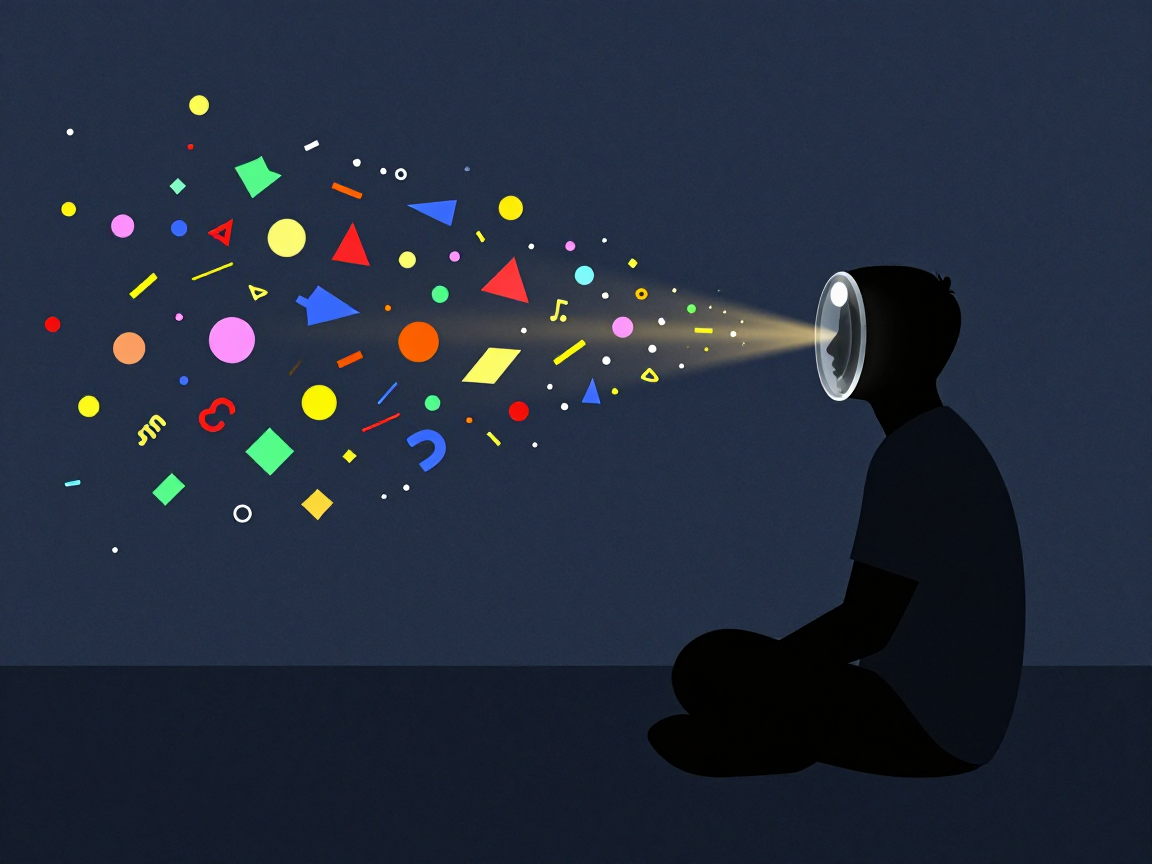
Every second, your brain is bombarded by roughly 11 million bits of data. From the subtle hum of the refrigerator and the feeling of your clothes against your skin to the flickering notifications on your smartphone and the complex social cues of a conversation, the sheer volume of external stimuli is staggering. If you were consciously aware of every single one of these data points, your cognitive processing would crash within seconds. This is where the attention filter comes into play - an elegant, biological gatekeeper that decides which fragments of reality deserve your awareness and which should be discarded into the subconscious shadows.
However, the modern world is designed to hack this very mechanism. We live in an economy of attention where every app, advertisement, and news cycle is optimized to bypass your natural barriers and seize control of your cognitive resources. When your attention filter becomes clogged or miscalibrated, the result is a chronic sense of overwhelm, decision fatigue, and the feeling that you are perpetually reacting to life rather than directing it. Reclaiming this filter is not just about productivity - it is about protecting the quality of your internal experience.
The Biology of Selective Awareness
At the heart of your ability to focus lies a network of neurons known as the Reticular Activating System (RAS). Located in the brainstem, the RAS acts as the physical seat of your attention filter. It serves as a triage center, sorting through the flood of sensory information to determine what is relevant to your survival, your goals, or your current interests. When you decide to buy a specific model of car and suddenly start seeing that car everywhere, you are witnessing your RAS in action. The cars were always there - your attention filter simply stopped hiding them from you because they were labeled as "relevant" .
Psychologists have debated exactly how this filtering process occurs for decades. Early models, like Donald Broadbent - s Filter Model, suggested that we process information linearly and simply block out everything that does not pass through a narrow bottleneck. Later theories, such as Anne Treisman - s Attenuation Model, proposed a more sophisticated version: we do not completely block out the background noise; instead, we "turn down the volume" on it. This explains why you can be in a crowded room, ignoring dozens of conversations, yet instantly snap your focus if someone mentions your name. Your filter is always scanning for high - priority signals, even when you are focused elsewhere.
Why the Modern Attention Filter is Breaking
For most of human history, the attention filter was optimized for a low - information environment. Its primary job was to detect threats (a rustle in the grass) or opportunities (the sight of a berry bush). In the 21st century, we have overwhelmed this system with an unprecedented density of artificial signals. Digital platforms are specifically engineered to mimic the traits that our brains are evolved to prioritize - novelty, social validation, and perceived threats.
This creates a state of "cognitive friction" . When the environment is too loud - both literally and metaphorically - the attention filter works overtime. This leads to a phenomenon often called "information obesity" , where we consume more data than we can possibly metabolize. When the filter is chronically overloaded, it begins to lose its precision. We start losing the ability to distinguish between a trivial email and a meaningful project, leading to a flat, grey state of existence where everything feels equally urgent and nothing feels truly important.
The Cost of a Misaligned Filter
When your attention filter is poorly calibrated, you pay a "focus tax" that compounds over time. This tax manifests in several ways:
- Decision Fatigue: Because your filter is letting too much through, your conscious mind has to manually sort through options that should have been automated. By noon, your ability to make high - level choices is depleted.
- Fragmented Thinking: Constant interruptions prevent the brain from entering "flow state" , the deep immersion where our best work happens. Every time your filter is breached, it takes an average of 23 minutes to return to the original task with the same level of intensity.
- Emotional Dysregulation: A filter that is tuned to negativity or outrage (often reinforced by social media algorithms) keeps the body in a state of low - level fight - or - flight, increasing cortisol levels and anxiety.
A Framework for Recalibrating Your Attention Filter
Restoring your ability to focus requires a two - pronged approach: reducing the external load and sharpening the internal mechanism. Think of it as cleaning a lens that has been covered in grime. Here is a five - step framework to begin the process of recalibration.
1. The Input Audit
Before you can fix the filter, you must understand what is hitting it. Spend three days observing what pulls your attention away from your intended tasks. Is it the ping of a notification? The presence of a coworker? Or an internal thought about a future worry? Document these "breaches" to identify patterns. You will likely find that 80% of your distractions come from 20% of your inputs.
2. Define the Signal
Your RAS needs clear instructions. If you do not define what is important, your brain will default to what is loudest. Every morning, identify your "Signal of the Day" - the one or two outcomes that truly matter. By explicitly stating these priorities, you are essentially programming your attention filter to prioritize information related to those goals and discard the rest.
3. Implement Attentional Barriers
Do not rely on willpower alone to filter the world. Use physical and digital barriers to assist your brain. This includes:
- Turning off all non - human notifications on your devices.
- Using noise - canceling headphones to signal to both yourself and others that you are in a deep - work mode.
- Creating a "clean" physical workspace that lacks visual clutter, which acts as passive noise for your visual processing system.
4. Practice Intentional Single-Tasking
Multitasking is a myth; it is actually rapid task - switching, which shreds the attention filter. To strengthen the filter, you must practice the skill of holding one object in your mind at a time. Start with small intervals - 20 minutes of reading a physical book or 10 minutes of eating a meal without a screen. This re - trains the brain to sustain focus despite the background urge for novelty.
5. The Evening Shutdown
Just as a physical filter needs to be rinsed, your cognitive filter needs sleep and downtime to clear metabolic waste. A strict "digital sunset" - turning off screens an hour before bed - allows the nervous system to shift from a state of scanning for information to a state of internal processing. This ensures that when you wake up, your filter is fresh and ready for the new day.
The Role of Mindfulness in Filtering
Mindfulness is often misunderstood as a way to "empty the mind" , but in the context of cognitive science, it is actually the ultimate training for the attention filter. Meditation is the practice of noticing when your attention has drifted and gently bringing it back to a chosen anchor, such as the breath.
Every time you catch your mind wandering and return to your anchor, you are performing a "bicep curl" for your prefrontal cortex. This strengthens the top - down control of your attention, allowing you to stay aware of the background noise without being hijacked by it. Over time, this creates a "buffer zone" between a stimulus (like a notification) and your response, giving you the split - second required to let your filter do its job.
Environmental Architecture: Externalizing the Filter
We often think of focus as an internal struggle, but our environment dictates much of our behavior. To optimize your attention filter, you must become an architect of your surroundings. If your phone is on your desk, even if it is face down, a portion of your cognitive energy is spent actively ignoring it. This is known as "brain drain" . By simply moving the phone to another room, you remove the need for the filter to work on that specific stimulus, freeing up resources for the task at hand.
Consider the "low - information diet" . Just as we are careful about the food we put into our bodies, we must be discerning about the information we allow into our minds. Unsubscribe from newsletters that don - t add value, unfollow accounts that trigger comparison or anger, and limit your consumption of breaking news. By reducing the volume of the world, you allow your internal attention filter to function with much higher fidelity.
Conclusion: The Sovereignty of Focus
In the end, your life is the sum of what you paid attention to. Every time you allow a triviality to bypass your filter, you are giving away a small piece of your life's potential. Mastering the attention filter is not about becoming a robot or ignoring the beauty of the world; it is about having the sovereignty to choose what enters your consciousness.
As you begin to recalibrate your focus, be patient with the process. Your brain has likely been conditioned by years of high - speed digital stimulation. It will take time to lower the baseline of what feels "interesting" . But as the noise recedes, you will find something far more valuable: the ability to engage deeply with your work, the capacity to be truly present with the people you love, and the mental space to hear your own thoughts once again.