Beyond the Push and Pull: How to Recognize and Break the Anxious Avoidant Trap
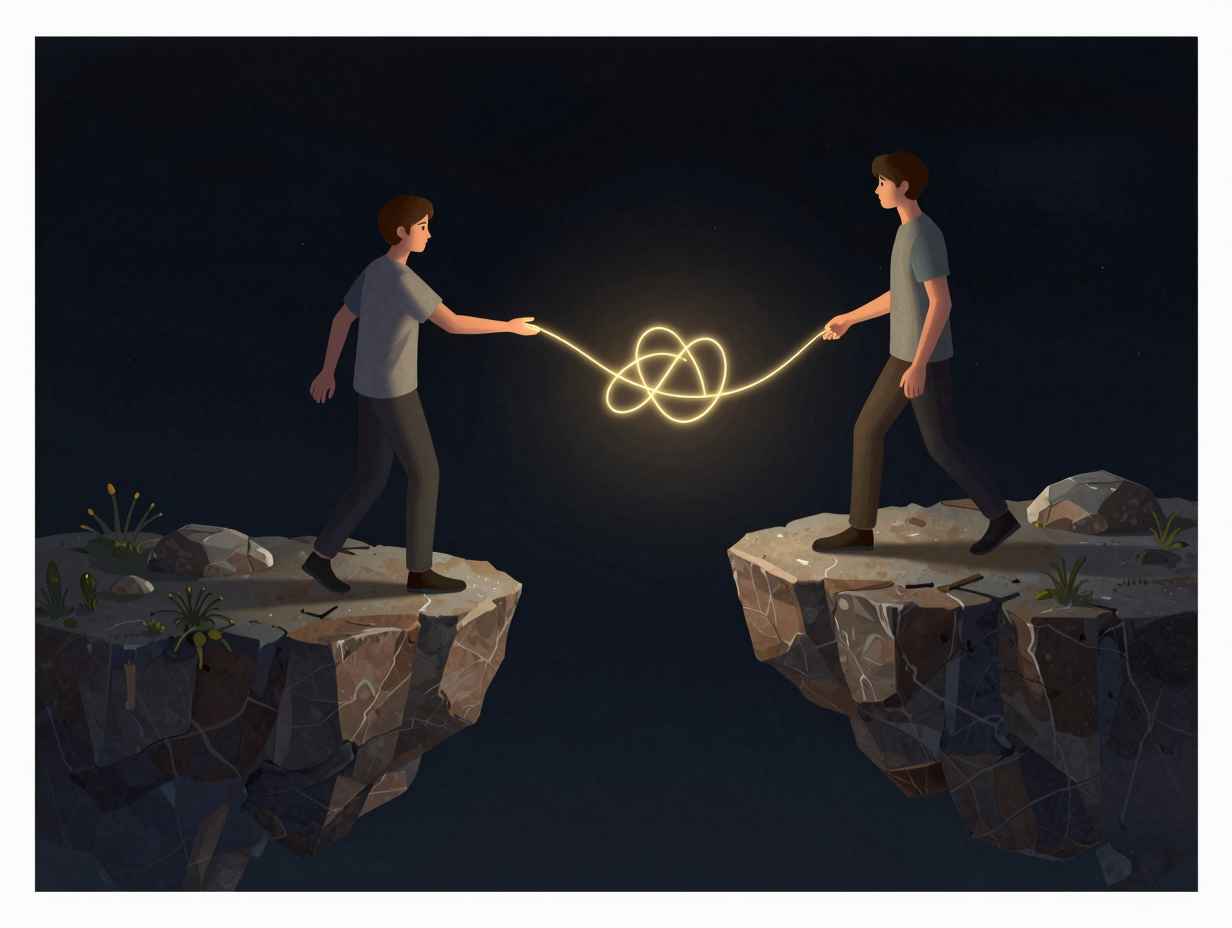
It starts with a spark that feels like destiny. You meet someone who seems fascinating, independent, and perhaps a bit mysterious. The chemistry is undeniable, often described as electric or "soulmate-level." But as the relationship progresses, a predictable and painful pattern begins to emerge. One partner seeks more closeness, more reassurance, and more time together, while the other begins to feel suffocated and pressured, pulling away to regain a sense of autonomy. This is the beginning of the anxious avoidant trap, a psychological stalemate that can leave both partners feeling exhausted, misunderstood, and profoundly lonely.
The anxious avoidant trap is more than just a simple disagreement about how much time to spend together. It is a collision of two different survival strategies formed in early childhood. When these two attachment styles bond, they create a self-reinforcing loop where the very thing one person does to feel safe makes the other person feel threatened. To break this cycle, you must first understand the invisible forces at play and why your brain often mistakes this high-octane drama for "true love."
The Science Behind the Anxious Avoidant Trap
To understand why this trap is so difficult to escape, we have to look at Attachment Theory, originally developed by John Bowlby and Mary Ainsworth. Our attachment style is essentially the internal working model we use to navigate intimacy. It is formed based on how our primary caregivers responded to our needs when we were infants. While there are several styles, the anxious avoidant trap specifically involves the pairing of the Anxious-Preoccupied style and the Dismissive-Avoidant style.
The anxious partner generally grew up with inconsistent caregiving. Sometimes their needs were met; other times they were ignored. This created a hyper-vigilant nervous system that is always scanning for signs of abandonment. In adulthood, this manifests as a deep need for intimacy and a tendency to become preoccupied with the relationship. When they feel a lack of connection, their "attachment system" goes into overdrive, leading to what psychologists call protest behaviors—such as calling repeatedly, picking fights to get attention, or seeking constant reassurance. For the anxious individual, the anxious avoidant trap feels like a desperate fight for emotional survival.
On the other hand, the avoidant partner often grew up with caregivers who were emotionally unavailable, intrusive, or discouraged the expression of feelings. They learned that the only way to stay safe was to rely solely on themselves. As adults, they value independence above all else. When a partner gets too close, it feels like a threat to their identity or their safety. Their natural response is to "deactivate"—they withdraw, become cold, or focus on their partner's flaws to create emotional distance. When the anxious partner pursues, the avoidant partner retreats further, which triggers more pursuit, and the anxious avoidant trap is locked into place.
Why the Attraction Feels So Strong
One of the most confusing aspects of the anxious avoidant trap is why these two types are so magnetically drawn to one another. You would think that someone seeking closeness would look for a secure partner who is comfortable with intimacy. Instead, they often find themselves bored by secure individuals, describing them as "nice but lacking chemistry."
This happens because the "spark" many people feel in the anxious avoidant trap is actually their nervous system recognizing a familiar form of stress. For the anxious person, the avoidant partner's distance feels like the inconsistency of their childhood, which they are subconsciously trying to "fix" by finally winning the person over. For the avoidant person, the anxious partner's pursuit confirms their belief that others are "needy" or "suffocating," which justifies their need to remain guarded and self-reliant.
Psychologically, this is known as a repetition compulsion. We are drawn to people who trigger our core wounds because it gives us a second chance to master the situation. Unfortunately, without conscious intervention, we usually just end up repeating the trauma instead of healing it. The "highs" of the reconciliation phase in this trap are chemically addictive, releasing a flood of dopamine that makes the subsequent "lows" feel worth enduring—until they aren't.
The Anatomy of the Loop: A 5-Stage Framework
To break the anxious avoidant trap, you must be able to identify which stage of the cycle you are in at any given moment. This loop typically follows a five-stage progression that repeats indefinitely until the relationship either evolves or ends.
- The Honeymoon and Idealization: The relationship begins with intense passion. The avoidant partner is on their "best behavior," and the anxious partner feels they have finally found the deep connection they crave. Boundaries are low, and the connection feels effortless. At this stage, the anxious avoidant trap is invisible.
- The Trigger: A small event—a weekend spent together, a conversation about the future, or a moment of vulnerability—triggers the avoidant partner's fear of engulfment. They begin to feel "trapped" and subconsciously start to pull back.
- The Withdrawal: The avoidant partner becomes busy, distant, or critical. They might stop texting back as quickly or prioritize hobbies and work over the relationship. They are deactivating their attachment system to feel safe.
- The Anxious Pursuit: The anxious partner senses the shift immediately. Their abandonment alarm goes off. They respond by leaning in harder—asking "What's wrong?", demanding more time, or becoming emotionally volatile. This confirms the avoidant partner's fear that their partner is "too much," causing them to withdraw further.
- The Breaking Point and Reconciliation: Eventually, the tension becomes unbearable. They may have a massive blowout fight or a temporary breakup. This creates enough distance for the avoidant partner to feel "safe" again, and the anxious partner, exhausted by the chase, may temporarily give up. Seeing the partner walk away often triggers the avoidant partner's own hidden fear of loneliness, leading them to reach back out. The reunion is blissful, and the cycle resets to Stage 1.
How to Break the Anxious Avoidant Trap
Breaking the anxious avoidant trap requires both partners to take radical responsibility for their own attachment triggers rather than blaming the other. It involves moving from a "reactive" state to a "reflective" state. If only one partner changes, the dynamic will shift, but for the relationship to thrive, both must understand their roles.
For the Anxious Partner
- Learn to Self-Soothe: When you feel the urge to "chase" or demand reassurance, your nervous system is in a state of fight-or-flight. Practice grounding techniques, journaling, or exercise to lower your physiological arousal before communicating. Recognize that the urge to reach out is a biological alarm, not a command.
- Build a Life Outside the Relationship: The anxious avoidant trap thrives when the anxious partner makes the relationship their entire world. Invest in your friendships, career, and hobbies so that your partner's moods are not your only source of stability. When you are fulfilled elsewhere, your partner's need for space feels less like a catastrophe.
- Identify Protest Behaviors: Make a list of the things you do when you feel disconnected (e.g., checking their social media, sending multiple texts, acting cold to get a reaction). Commit to stopping these behaviors and instead state your needs clearly and calmly. Say: "I'm feeling a bit disconnected today; could we spend some quality time together tonight?"
- Set Boundaries for Yourself: Decide what level of inconsistency you are willing to tolerate. If a partner cannot meet your basic needs for communication after you have expressed them clearly over a long period, you must be willing to walk away to protect your own peace.
For the Avoidant Partner
- Recognize Your Deactivation Strategies: Notice when you start focusing on your partner's flaws or when you feel the urge to "disappear." Acknowledge that this is a protective mechanism—a shield you built as a child—rather than an accurate reflection of your feelings for your partner today.
- Communicate the Need for Space: Instead of just disappearing, learn to provide a "roadmap" for your absence. Say: "I'm feeling a bit overwhelmed and I need an hour to myself to recharge. I'm not leaving you, and I'll be back to check in at 7 PM." This simple act prevents the anxious partner's abandonment alarm from going off.
- Lean Into Vulnerability: The anxious avoidant trap stays locked because you fear that being truly known will lead to being controlled. Practice sharing small, "unfiltered" thoughts or feelings with your partner. You will likely find that being vulnerable actually creates more freedom because you no longer have to hide.
- Stop Comparing to the "Phantom Ex": Avoidant individuals often pine for a past relationship or an idealized "perfect partner" who doesn't exist. This is a distancing tactic used to avoid being present with the person in front of you. Focus on the reality of your current partner, including their strengths.
Moving Toward Earned Secure Attachment
Is it possible for a couple stuck in the anxious avoidant trap to find happiness? The answer is yes, but it requires a commitment to "earned secure attachment." This is the process of consciously developing the habits of a secure person through therapy, self-awareness, and consistent practice. It is not about changing your personality; it is about changing your reactions to stress.
A secure relationship is not one without conflict or triggers. Rather, it is a relationship where both partners feel safe enough to express their needs without fear of judgment or abandonment. In a secure dynamic, the "trap" is replaced by a "secure base." The avoidant partner learns that they can be close to someone and still maintain their identity—that intimacy does not equal loss of self. The anxious partner learns that they can be separate from someone and still be loved—that distance does not equal abandonment.
If you find yourself repeatedly falling into the anxious avoidant trap, take a step back and look at the "dance" you are performing. You are not a victim of your chemistry or your partner's behavior alone; you are a participant in a pattern. By choosing to stop your part of the dance—whether that is the chasing or the running—you break the cycle.
It may feel uncomfortable at first, like learning a new language, but it is the only path toward the deep, stable intimacy that you truly deserve. Relationships should be a source of support and growth, not a constant battle for emotional survival. Breaking the trap is the first step toward finally coming home to yourself and to a partner who can truly see and hold you. It requires patience, but the reward of a secure connection is worth the discomfort of the journey.