The Ghost in the Room: How Ancestral Healing Family Work Breaks Cycles of Intergenerational Pain
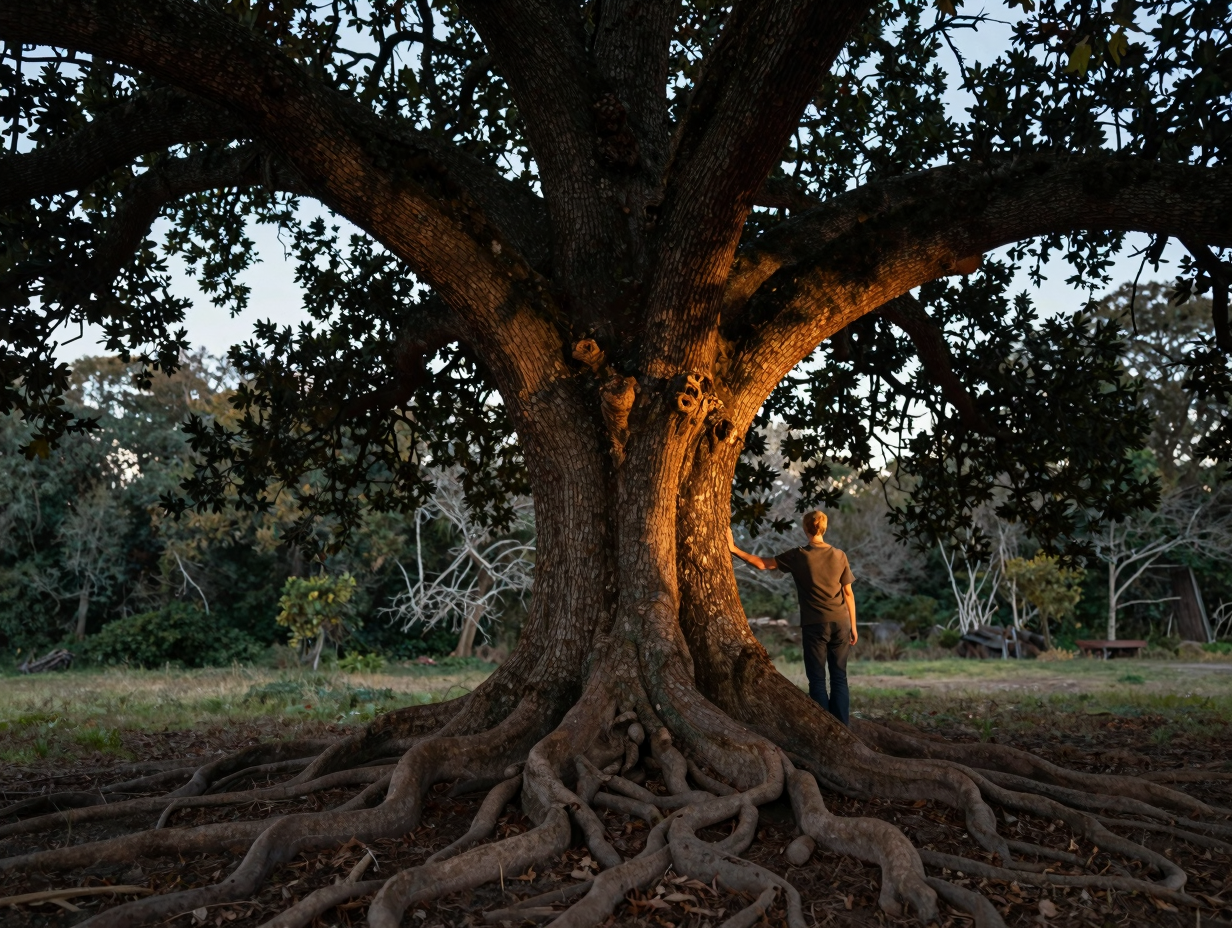
We often think of ourselves as self-contained individuals, the masters of our own choices and the sole authors of our destinies. However, anyone who has spent time observing their own recurring patterns - the way they handle money, the way they react to conflict, or the quiet anxieties that surface without an obvious trigger - knows that we are rarely acting alone. We carry the echoes of those who came before us. We are the living embodiment of our lineage, carrying not just the color of our eyes or the shape of our hands, but also the emotional blueprints of our parents, grandparents, and ancestors. When these blueprints are heavy with unresolved trauma, we find ourselves in need of ancestral healing family work.
Ancestral healing is the process of identifying, acknowledging, and resolving the burdens that have been passed down through generations. It is based on the understanding that trauma does not simply disappear when a person passes away; if it is not processed, it is often outsourced to the next generation to resolve. This can manifest as unexplained depression, a persistent sense of scarcity, or a deep-seated fear of abandonment that does not seem to match our current life circumstances. By engaging in an ancestral healing family practice, we begin to differentiate between what belongs to us and what belongs to the past, allowing us to finally set the weight down.
The Science and Soul of Inherited Trauma
For a long time, the idea of carrying a grandparent's pain was relegated to the realm of the mystical. Today, however, the field of epigenetics provides a scientific framework for why we feel what we feel. Researchers have discovered that environmental factors - including extreme stress and trauma - can leave chemical marks on our DNA. While the DNA sequence itself remains the same, the way genes are expressed can change. These changes can be passed down to offspring, essentially pre-programming a nervous system to be on high alert for a threat that happened decades before they were born.
When we look at ancestral healing family dynamics through this lens, we see that our survival instincts are often finely tuned to a world our ancestors lived in, rather than the one we occupy now. A family that survived a famine may pass down a physiological preoccupation with food security or financial hoarding. A lineage that experienced systemic oppression might carry a collective hyper-vigilance or a reflex to stay small and unnoticed to remain safe. These are not character flaws; they are biological adaptations that were once necessary for survival but have now become obstacles to thriving.
Beyond the biological, there is the psychological concept of the "unspoken". In many families, the most painful events are the ones never discussed. These "ghosts" in the family system create a vacuum that the younger generations often feel compelled to fill. We might find ourselves unconsciously re-enacting a grandfather's exile or a great-grandmother's grief simply because it was never given a voice. Ancestral healing family work aims to bring these shadows into the light so they no longer have the power to dictate our behavior from the dark.
Signs You Are Carrying Ancestral Weight
Recognizing that you are a candidate for ancestral healing family work usually begins with a feeling of "stuckness" that defies logic. You might have done years of traditional talk therapy or self-help work, yet certain themes remain stubbornly persistent. Identifying these signs is the first step toward decoupling your identity from the family's historical narrative.
Common indicators include:
- Repeating Relationship Dynamics: You find yourself in partnerships that mirror the exact dysfunctions of your parents or grandparents, even though you consciously vowed to do things differently.
- Unexplained Emotional States: A persistent sense of grief, guilt, or shame that has no clear origin in your personal life experiences.
- Financial Blocks: A "glass ceiling" regarding your ability to earn or keep money, often linked to ancestral experiences of poverty, loss, or sudden displacement.
- Somatic Symptoms: Chronic tension, digestive issues, or autoimmune conditions that seem to flare up during family-related milestones or holidays.
- Hyper-Responsibility: A feeling that you must "save" your family or carry the emotional weight of everyone around you, often at the expense of your own well-being.
The Cycle-Breaker’s Roadmap: A Practical Framework
If you recognize these patterns, you are likely the "cycle-breaker" of your lineage. This is a courageous role, but it can be isolating. To move through ancestral healing family work effectively, it helps to have a structured approach that balances emotional processing with practical boundary setting.
1. Mapping the Lineage
Start by creating a genogram or a modified family tree. Go beyond names and dates. Note the themes: Who died young? Who was the "black sheep"? Who lost everything? Who was never spoken about? Look for the intersections of tragedy and the coping mechanisms that followed. This visual map helps move the trauma from an internal feeling to an external observation.
2. Differentiating the Energy
Practice a regular internal check-in. When a strong emotion arises - such as an intense fear of lack - ask yourself, "Is this mine?". Visualize the emotion and see if it feels like your own experience or if it feels like an old, heavy coat handed down to you. Simply acknowledging, "This belongs to my grandmother", can create enough space for you to choose a different response.
3. The Act of Witnessing
Ancestral wounds fester in silence. One of the most powerful aspects of ancestral healing family work is simply witnessing what happened without judgment. You might write a letter to an ancestor, acknowledging the hardships they faced and the strength they used to survive. This isn't about forgiving abuse; it is about acknowledging the context of the pain so it can stop seeking expression through you.
4. Symbolic Release
Ritual can be a profound way to speak to the subconscious mind. This could be as simple as lighting a candle for the "unseen" members of your family or as involved as a formal ceremony where you symbolically return a burden to the past. The goal is to communicate to your nervous system that the "war" or the "famine" or the "exile" is over, and it is safe to stand down.
Healing the Nervous System in the Present
While understanding the past is crucial, ancestral healing family work must ultimately land in the body. If your nervous system is still stuck in a state of "inherited" fight-or-flight, cognitive insights will only go so far. This is where somatic practices become essential. We must teach the body that the ancestral threat is no longer present.
This involves grounding techniques that pull you into the current moment. When you feel the ancestral "ghosts" rising - perhaps as a sudden wave of panic - use sensory anchors. Look at your modern surroundings, feel the texture of your clothes, and remind yourself of the date and time. You are here, in the present, and you have resources that your ancestors did not. By regulating your nervous system, you are not just healing yourself; you are changing the energetic frequency of the entire family line.
Furthermore, setting healthy boundaries is a physical manifestation of ancestral healing. In many families, "loyalty" is synonymous with "suffering together". Choosing to be happy, healthy, and prosperous can feel like a betrayal of the ancestors who struggled. Overcoming this "guilt of the survivor" is a major milestone. You must realize that your ancestors' greatest wish - if they were healed and whole - would be for you to live the life they couldn't. Your joy is the ultimate tribute to their struggle.
The Legacy of the Healed Lineage
The beauty of ancestral healing family work is that it functions in both directions. When you heal a pattern in yourself, you are not only liberating your own life; you are preventing that pattern from moving forward into your children and grandchildren. You become the filter that stops the poison from flowing further down the stream.
This work turns "family baggage" into "family wisdom". Once the trauma is processed, you can begin to access the strengths of your lineage - the resilience, the creativity, and the endurance that allowed your ancestors to survive long enough for you to exist. You stop being a victim of your history and start being the intentional steward of your future.
In the end, ancestral healing family work is an act of profound love. It is an acknowledgment that we are part of something larger than ourselves, and a commitment to ensuring that the "ghosts" in our rooms are finally allowed to rest in peace. As you clear the debris of the past, you create a spacious, light-filled home for the generations yet to come, allowing them to start their journeys with a clean slate and a regulated heart.